Warsh’s moment
Start of the Week previews activities across global financial markets, providing useful charts, links, data and a calendar of key events to help with more informed asset allocation and trading decisions.
Start of the Week previews activities across global financial markets, providing useful charts, links, data and a calendar of key events to help with more informed asset allocation and trading decisions.

Geoff Yu
Time to Read: 7 minutes
Jackson Hole in focus: Markets will spend the week anticipating Kevin Warsh’s first Jackson Hole speech as Fed Chair. The symposium’s theme, financial innovation, has little direct connection to recent market turbulence. But with long-end bonds still febrile, investors want to know how the Fed will respond to the Treasury’s actions. July PCE on Wednesday raises the stakes. The question is whether official efforts to manage financial conditions complicate the inflation mandate or simply buy policymakers more time. Watch the data, then watch Warsh.
Europe can wait: Inflation remains the core issue in Europe. Activity is improving, but tightening too early would be a mistake. The European Central Bank’s (ECB) latest inflation survey shows expectations are anchoring more firmly, while the euro is near cyclical highs and already doing some of the tightening. That gives the Governing Council room to wait rather than react mechanically to every improvement in the data.
Asia tests tolerance: Asia has the busiest central bank calendar this week, led by the closely-watched Bank of Korea (BOK). A hike is expected as the semiconductor boom feeds into domestic demand and inflation expectations. More broadly, the region’s high-savings economies are moving toward stronger currencies. As the dollar softens, central banks will have to decide how much appreciation they are willing to tolerate.
Selective carry: Carry still works but is growing more discriminating. ZAR is rallying strongly alongside gold, but Latin America continues to struggle, and positioning is moving closer to flat. Our data show little evidence of fresh carry demand. Rate volatility is spilling into the trade, but cleaner positioning improves the risk-reward for eventual reentry.
Bottom line: Geopolitics has faded; policy signaling is dominant. Central bankers gathering in Wyoming will try to reinforce credibility, but inflation data will decide if markets listen.
North America: PCE warm-up, Jackson Hole the main event
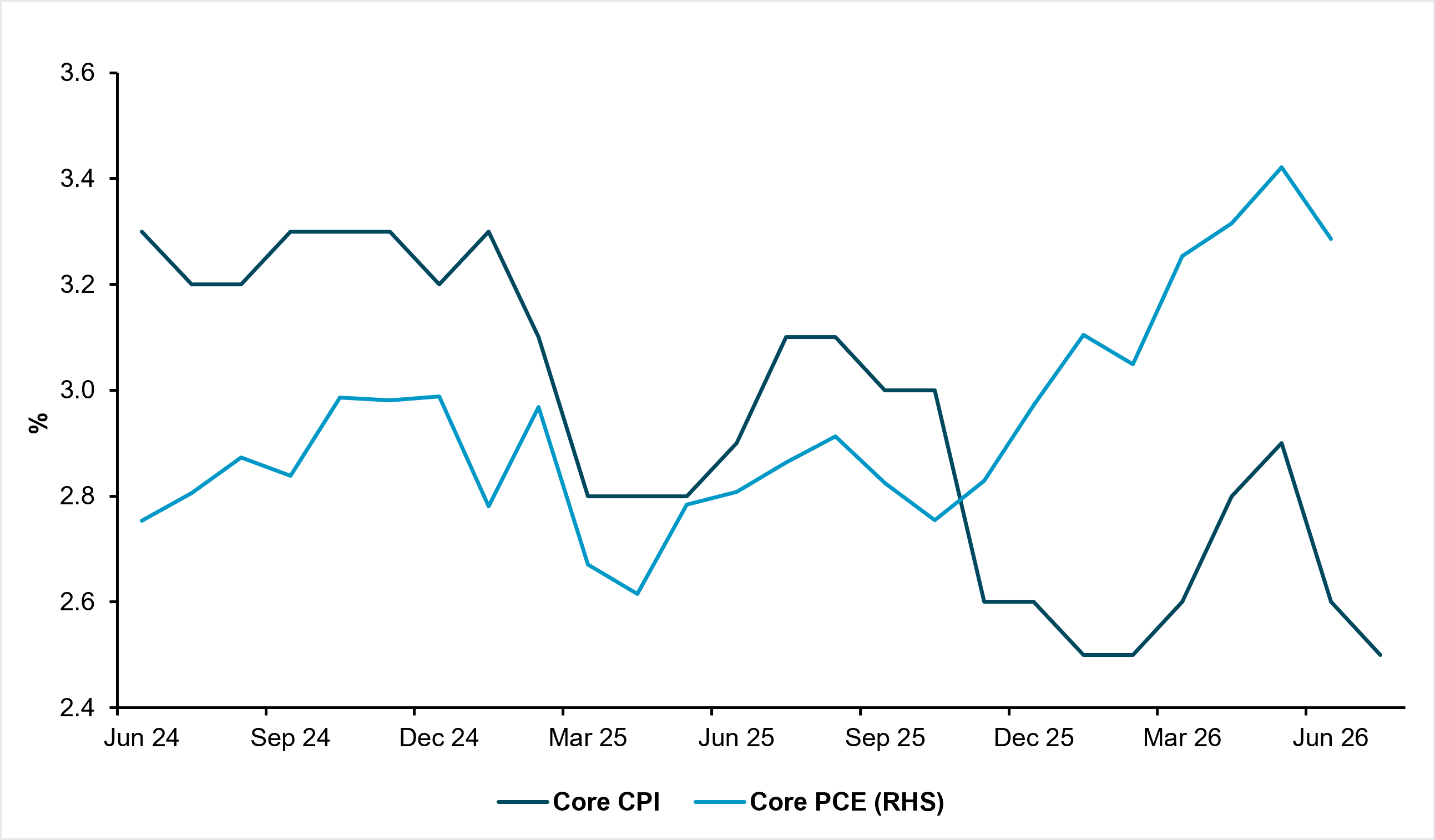
EXHIBIT #1: U.S. Y/Y CORE CPI AND CORE PCE
Source: BNY
Our take: Last week was dominated by the Treasury’s decision to step up long-end buybacks, an effort to lean against rising long-end yields. The FOMC minutes added a modestly hawkish tone, though much of the content was stale given subsequent softer data. Wednesday’s Personal Consumption Expenditures (PCE) Price Index release leads this week’s calendar, with y/y core PCE expected to remain flat at 3.3%. But the real focus is Friday at 10 a.m. ET when Fed Chair Warsh delivers his first Jackson Hole speech. Canada stays quiet, with GDP on Friday the only notable release.
Forward look: PCE matters, but markets will likely treat it as a warm-up act for Jackson Hole. A softer PCE print would reinforce the pause in front-end hawkish repricing. The bigger question is whether it changes the broader policy story. For rates, the key question is simple: Does Warsh support, challenge, or avoid the Treasury’s recent buyback push and its impact on the curve? Any comments on the balance sheet, duration supply, or term premium could move the long end more than the data itself. That said, given Warsh’s typically restrained style, we aren’t holding our breath. Canada’s GDP is unlikely to move the cross-border macro narrative.
EMEA: Consolidating the recovery without stoking inflation
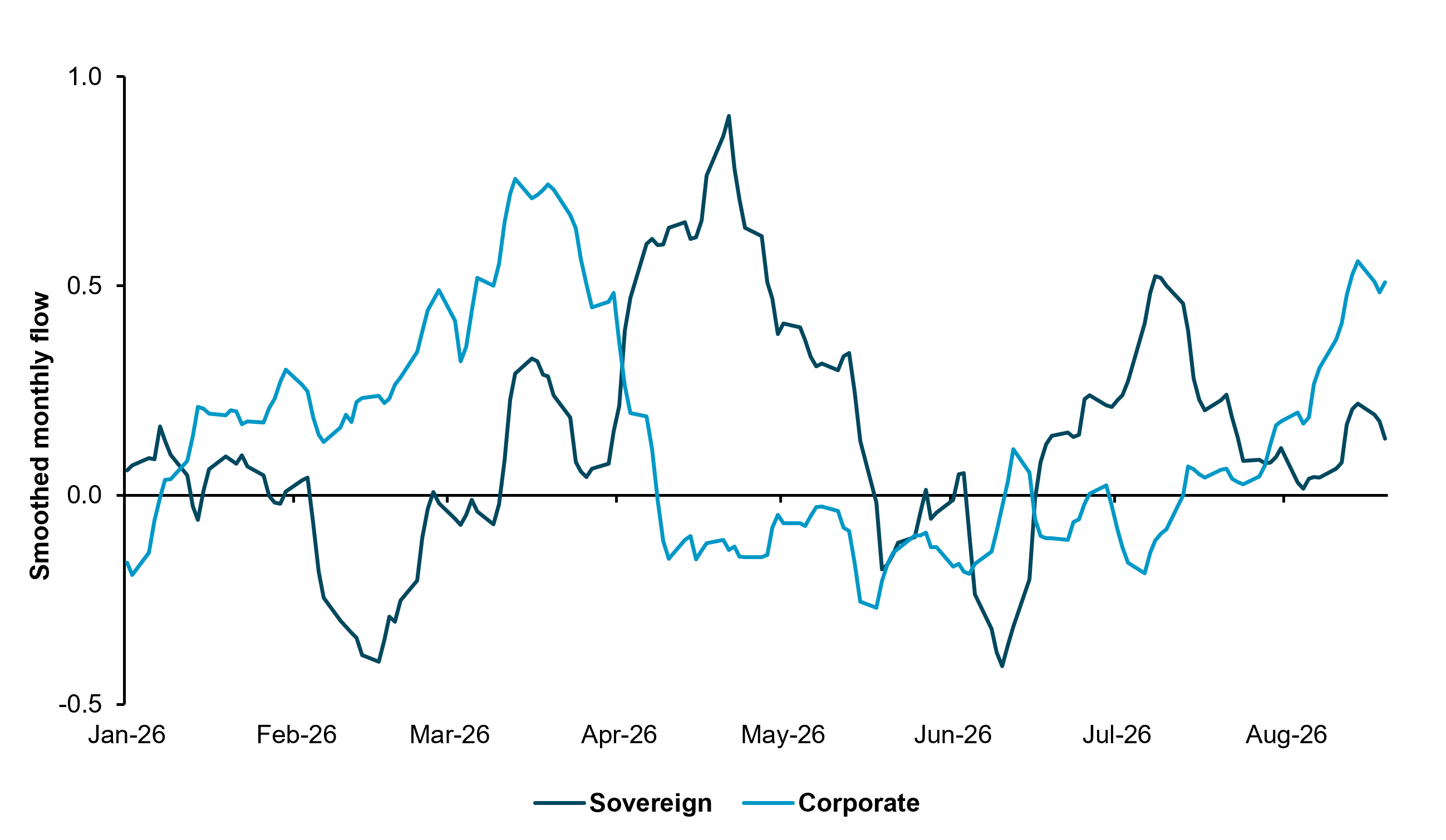
EXHIBIT #2: HUNGARIAN CORPORATE DEBT FLOW REFLECTS MNB EASING EXPECTATIONS
Source: BNY, Bloomberg
Our take: Europe wants growth without reigniting inflation. Preliminary August PMIs point to a tentative “Goldilocks” mix: manufacturing intentions are improving, while services remain in moderate contraction, and the ECB’s latest inflation expectations survey shows easing. The ECB is right to stay vigilant, but it should not move too soon. This mix gives it room to respond rather than preempt, allowing easier financial conditions to support the recovery. Dollar weakness also helps by importing disinflation through FX.
Hungary is the first test. Hungary now tests whether easing can continue despite supply and fiscal constraints. The Magyar Nemzeti Bank (MNB) meets this week after a strong post-election re-rating, including a 200bp drop in the 10y government yield. The full-year deficit remains on track to reach 7.5% of GDP but record monthly surpluses in June and July change the near-term picture. That gives the MNB room to continue easing if the external backdrop holds, while also making the 2027 budget easier to finance.
Hungary is constructive. We remain bullish on Hungary, although client positioning argues for selectivity. Duration is expensive given fiscal slippage risk, and sovereign flows, while positive, are weaker than in Q1 and Q2. Corporate flows tell a stronger story, surging to their strongest level in six months. Public-sector institutional reforms are beginning, and markets appear to expect positive spillovers into the private sector. Spreads still offer enough compensation to sustain demand.
Forward look: Europe’s week centers on inflation relief. French and Spanish flash CPI on Friday are the main releases, with Spain still running much hotter than France. German unemployment data on Friday provides a labor-market read for the Eurozone’s largest economy. The ECB wants downside surprises, especially sequentially, to reinforce its view that second-round effects remain limited.
The complication is growth. Activity is turning higher. Recent PMIs show demand improving as supply pressures ease. That is a better inflation mix, but it’s still inflation. This will sharpen divisions inside the Governing Council. One camp will remain focused on persistence and the risk of renewed pass-through. The other has a stronger growth argument: after years of weak activity, the Eurozone economy may need to run hotter so firms can rebuild margins and grow investment. The ECB may not frame it that way, but the tension is becoming harder to ignore.
Germany matters this week. Germany’s Ifo Business Climate on Tuesday is the other key test. July’s improvement was unequivocal, with companies becoming less pessimistic despite uncertainty in the Persian Gulf. Manufacturing is leading the recovery, and services expectations also improved, although current conditions softened. Trade remains the largest drag. Recent comments from Beijing also make clear that China–EU tensions remain over trade and competition practices.
APAC: Testing tolerance for tighter policy as the dollar softens
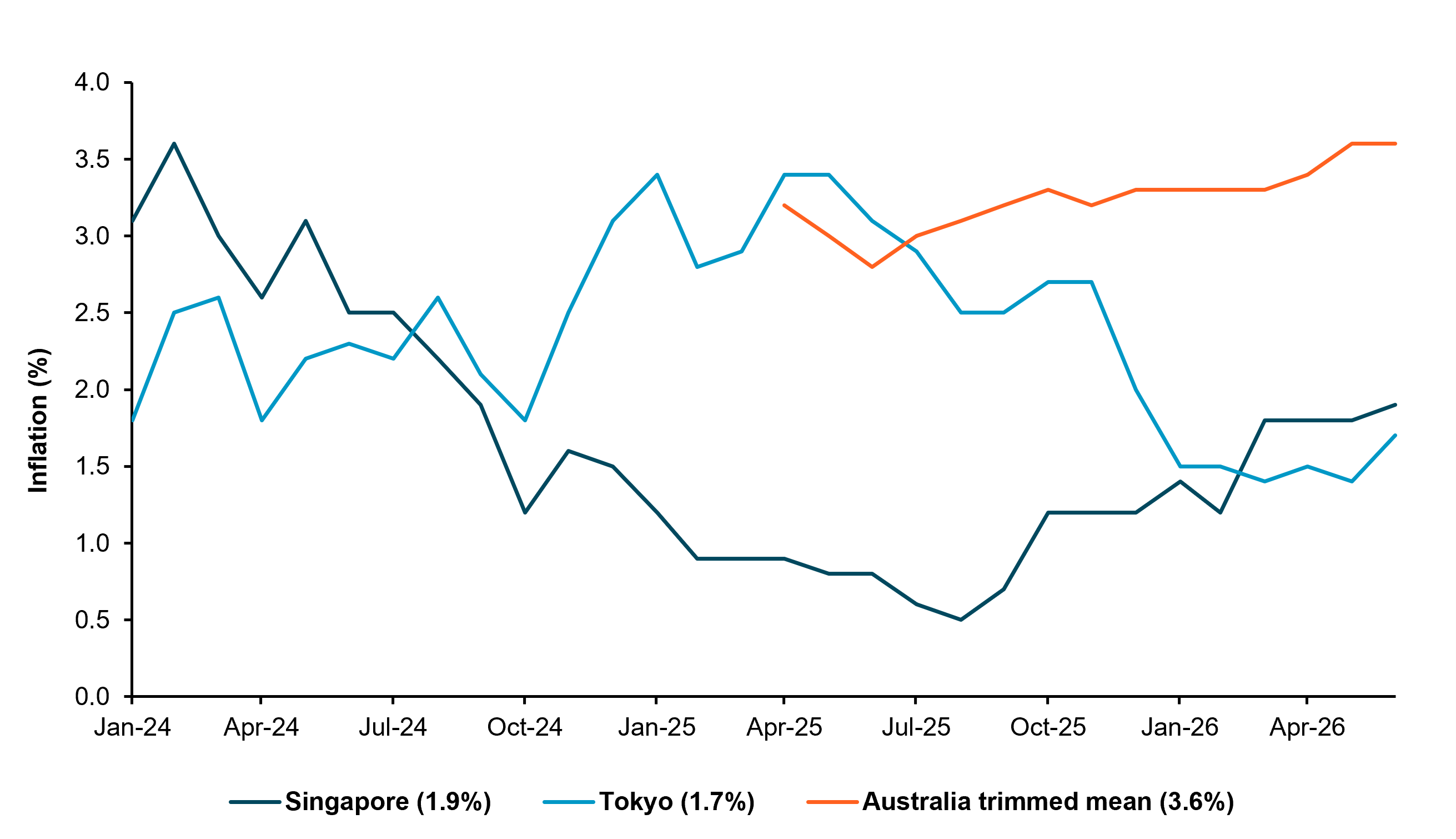
EXHIBIT #3: INFLATION TRAJECTORIES SHAPE NEAR-TERM RATE EXPECTATIONS
Source: BNY, Bloomberg
Our take: Asia’s macro calendar is packed with central banks and inflation. The BOK and Bangko Sentral ng Pilipinas (BSP) are expected to hike by 25bp, while the Bank of Thailand (BOT) is likely to hold. The focus will be on policy guidance and the scope for further tightening.
South Korea’s consumer confidence and Composite Business Survey will add context. Australia’s July CPI is the other major policy-sensitive release, alongside Reserve Bank of Australia (RBA) minutes and household spending. Japan’s August Tokyo CPI is the key inflation read for the Bank of Japan (BOJ).
Elsewhere, activity data will test regional growth momentum, led by China’s industrial profits and industrial production across Taiwan, Thailand, India and Singapore. Trade data from Thailand and the Philippines, Singapore CPI and New Zealand retail sales round out the week.
Forward look: Volatile markets persist, and long-end bond yields are the latest pressure point as fiscal and inflation concerns drive yields higher across major markets, including Japan and South Korea. Regional divergence is widening as local drivers take over.
A softer and more stable U.S. dollar should keep supporting APAC currencies, even with oil prices still high. Four trades stand out.
KRW: USD/KRW has fully normalized from its extended dislocation since Q4 2025. Near-term direction should increasingly reflect the balance between foreign equity flows and persistent domestic outbound investment.
INR: Near-term pressure is likely as markets adjust to the earlier-than-expected end of the FCNR(B) program. Expect tighter INR liquidity and upward pressure on Indian government bond yields during the transition.
JPY: USDJPY remains biased higher as domestic fiscal concerns weigh on the yen. Policy risks are asymmetric. Any BOJ disappointment is likely to push USDJPY to fresh highs.
CNY: The yuan remains resilient and continues to act as a regional anchor, but its strength increasingly conflicts with a deteriorating domestic macro-outlook. We remain constructive on CNY but prefer adding hedges rather than chasing further appreciation.
Latin America: Dollar relief, but flows stall
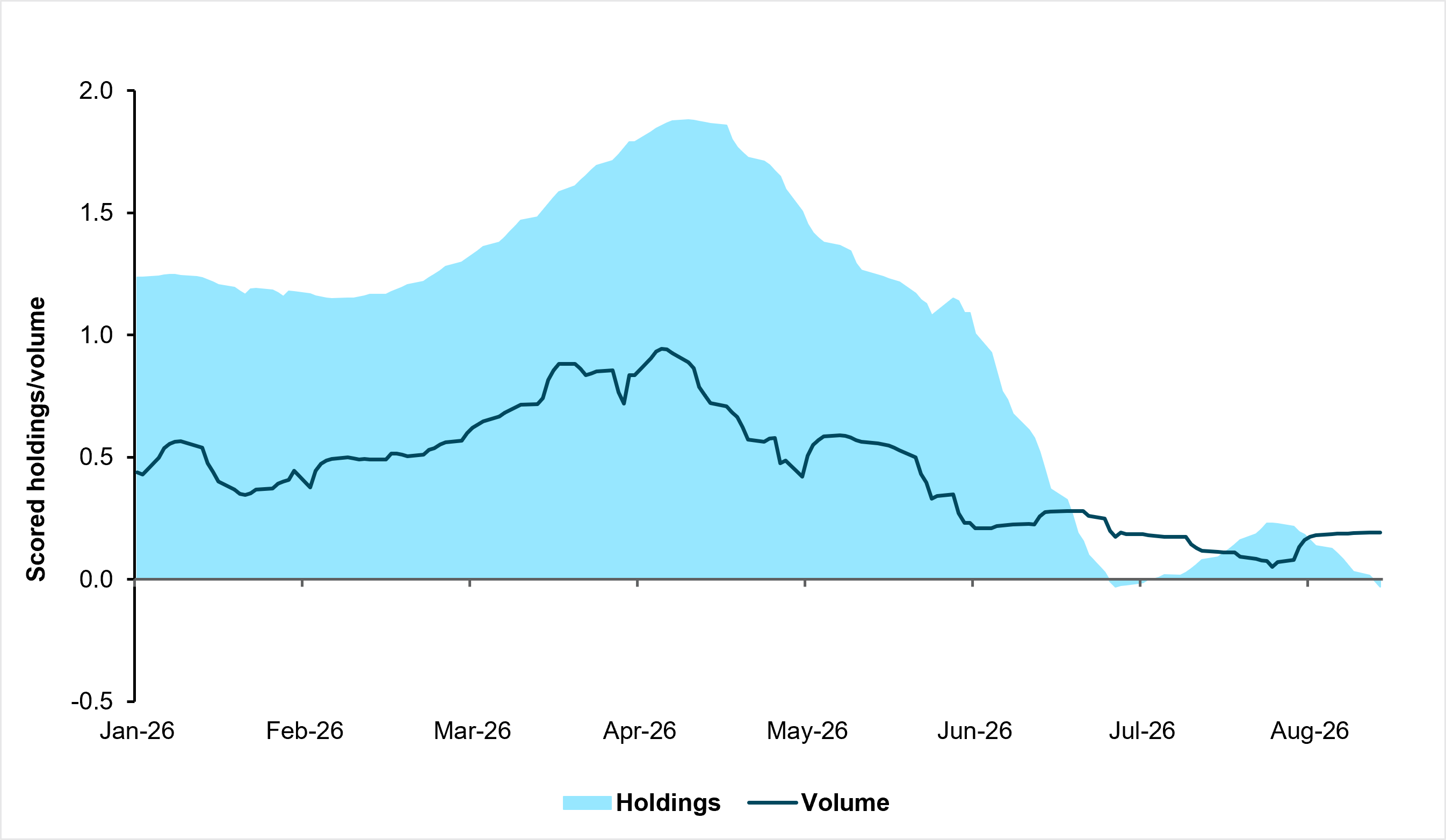
EXHIBIT #4: BRL HOLDINGS AND VOLUME, YEAR TO DATE
Source: BNY, Bloomberg
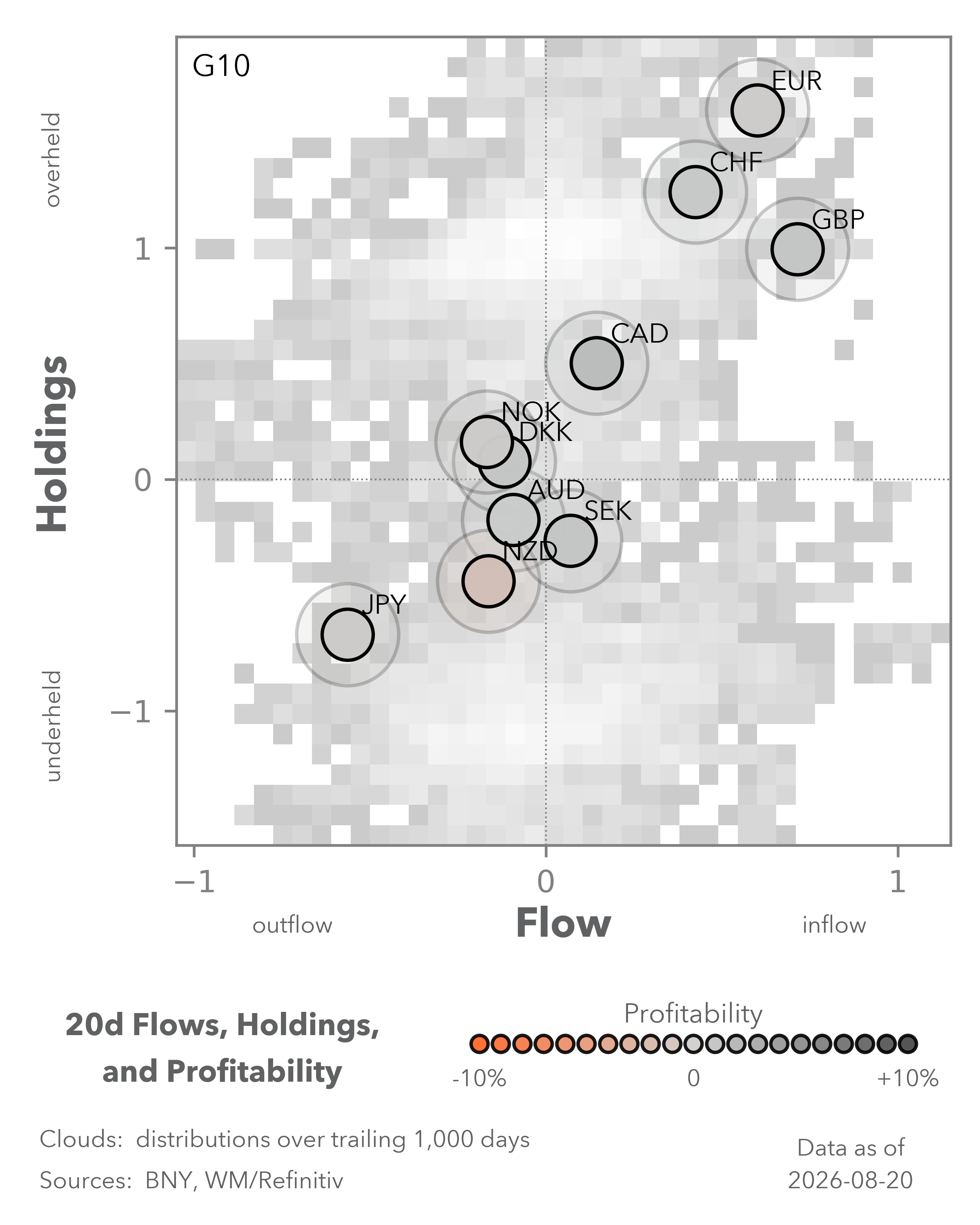
Our take: Better U.S. real-rate support isn’t reviving Latin America. Even after the Treasury refunding announcement, high-yielding currencies, duration and equities have struggled to gain traction. Markets may talk about “debasement,” but this is not a repeat of January and February, when demand for real protection was broad based. External conditions remain uncertain, but our data show domestic factors matter more now. BRL has fallen back into underheld territory through Q3 after sharp Q2 reductions, reflecting growing concerns over China’s economy and commodity demand. Trading volumes have also fallen materially.
The bigger risk is disengagement. The main risk is not aggressive selling, but investor indifference. BRL volumes bottomed out after the July FOMC, when high-yielding currencies should have benefited. Instead, positions are rolling off without replacement, and similar patterns are emerging across other asset classes. Markets may be entering a pre-election holding pattern, but the external backdrop may also be shifting more fundamentally for carry and commodity-linked trades. That raises the risk that investors miss an attractive entry point even with favorable valuations and light positioning. For BRL and the broader region, irrelevance can be just as problematic as net selling.
Forward look: Latin America’s week centers on growth and inflation. Mexico provides the clearest test of whether activity is firming without reigniting price pressures. Final Q2 GDP, June IGAE and biweekly CPI arrive together on Monday. Growth should stay solid, with IGAE accelerating from the prior month, while inflation is expected to edge higher. The Bank of Mexico’s quarterly inflation report on Wednesday will frame how policymakers read that mix and how much room remains for future easing.
Brazil is the regional focus. Brazil’s IPCA-15 on Wednesday is the key regional inflation release. The prior 4.52% y/y reading leaves inflation above target, keeping the path back toward easing highly data dependent. Unemployment and current-account/FDI data on Thursday, followed by formal job creation figures on Friday, will provide a broader read on domestic demand, labor-market resilience and external financing. Chile’s unemployment rate on Friday is the main release elsewhere.
Politics remain decisive. Brazil’s election is still capping asset interest. Coalition negotiations continue ahead of the October vote, with President Lula’s Workers’ Party courting União Brasil, Republicanos and Progressistas. Any formal endorsement would matter for the electoral outlook and domestic assets. Fiscal policy is equally important – Finance Minister Durigan is reportedly discussing a tighter spending cap. Any formal proposal would be a significant signal for Brazilian rates and fiscal credibility.
Central bank decisions
Central Bank Decisions
Hungary, Magyar Nemzeti Bank (Tuesday, August 25): Markets expect a further 25bp to 5.50%. Given the easing in financial conditions across the Eurozone and the U.S. Treasury’s actions, HUF can make a stronger case for carry status as long as inflation figures remain contained. Clear supply constraints in power and energy justify some caution, but activity is slowing sufficiently for MNB to continue easing.
Thailand, Bank of Thailand (Wednesday, August 26): We expect the BOT to hold its policy rate at 1.00%. Q2 GDP growth slowed to 1.9% y/y from 2.8% in Q1, with growth increasingly reliant on private investment as consumption, government spending and exports moderated. The uncertain growth outlook should keep policy accommodative despite firmer underlying inflation, with core CPI rising to 1.34% y/y in July, the highest since May 2023.
South Korea, Bank of Korea (Thursday, August 27): We expect the BOK to raise its policy rate by 25bp to 3.00%, supported by a solid export-led recovery and elevated inflation. Semiconductor demand and business sentiment remain resilient despite sharp summer market volatility, while renewed house-price gains and accelerating household credit add to tightening pressure. Focus will be on the BOK’s updated macroeconomic forecasts, where we see scope for stronger growth and above-target inflation extending into 2027.
The Philippines, Bangko Sentral ng Pilipinas (Thursday, August 27): We expect the BSP to deliver a third consecutive rate hike, taking the policy rate to 5.00%, to contain inflation expectations and support the peso. A hawkish bias should remain, although further tightening is likely to be calibrated to weakening growth and higher funding costs. Q2 GDP growth slowed sharply to 2.3% y/y from 2.8% in Q1, alongside decelerating bank lending growth.
Source: BNY
Source: BNY