Rising rate vol will threaten risk-sensitive, crowded currencies
FX: G10 & EM provides a detailed analysis of global foreign exchange movements in major and emerging economies around the world together with macro insights.
FX: G10 & EM provides a detailed analysis of global foreign exchange movements in major and emerging economies around the world together with macro insights.

David Tam
Time to Read: 3 minutes
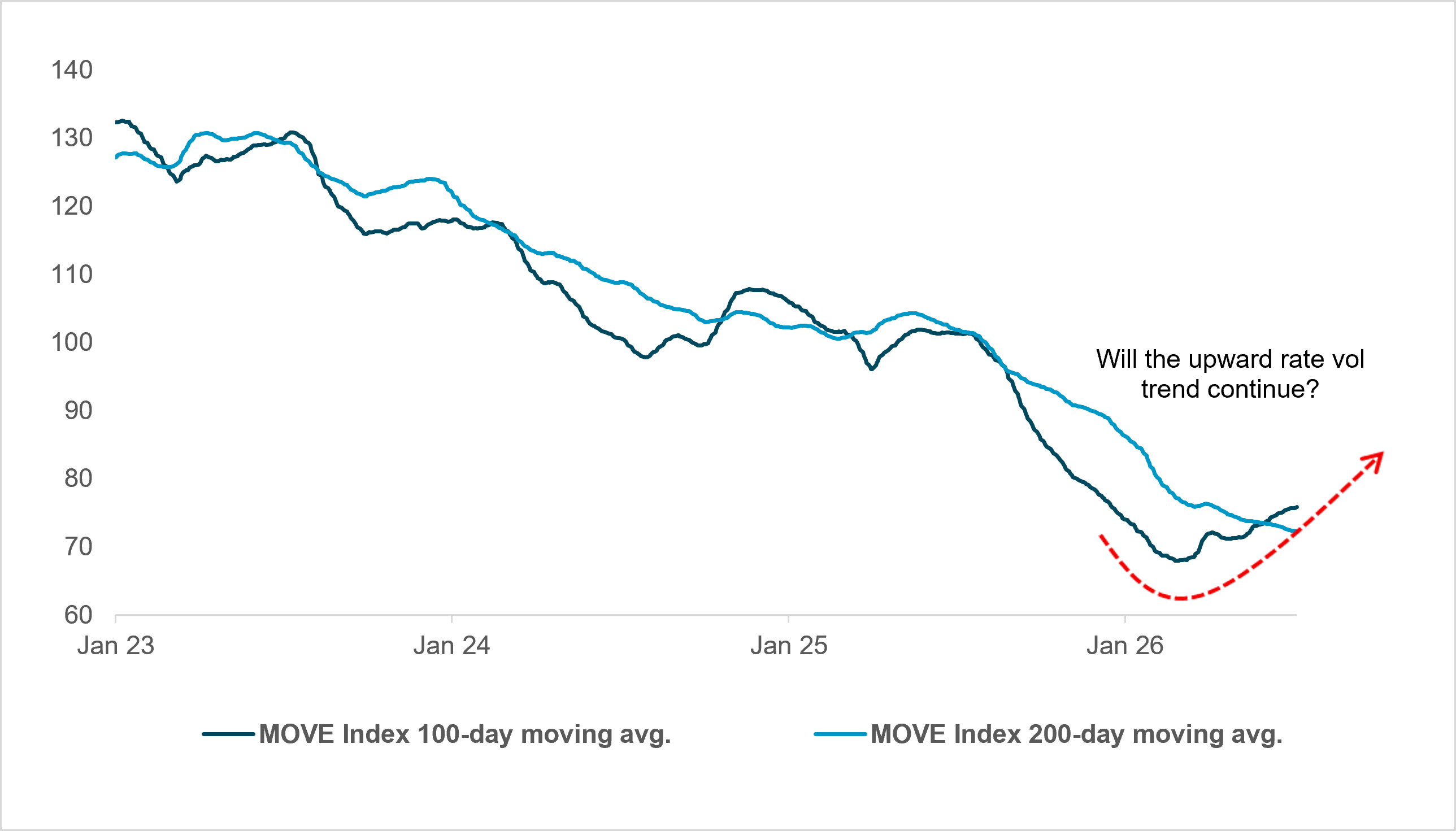
EXHIBIT #1: MOVE INDEX: 100- AND 200-DAY MOVING AVERAGES
Source: BNY Markets, Bloomberg
Rate vol will continue to rise: We wrote recently that we expect rate volatility to continue to rise, driven primarily by the Warsh-led Fed’s rejection of forward guidance.
Rising rate vol increasingly a cross-asset story: Investors should not treat rate vol as a rates-only story. It will have a cross-asset impact. In the same note, we also argued that rate vol will impact equity baskets more exposed to global risk sentiment, and we expect the same in FX. As bond volatility rises, safe havens should win, repatriation flows should kick in, and crowded risk-sensitive currencies should get hit.
Implication is clear: All this argues for a cleaner FX strategy: favor what benefits from uncertainty, cut what depends on clarity.
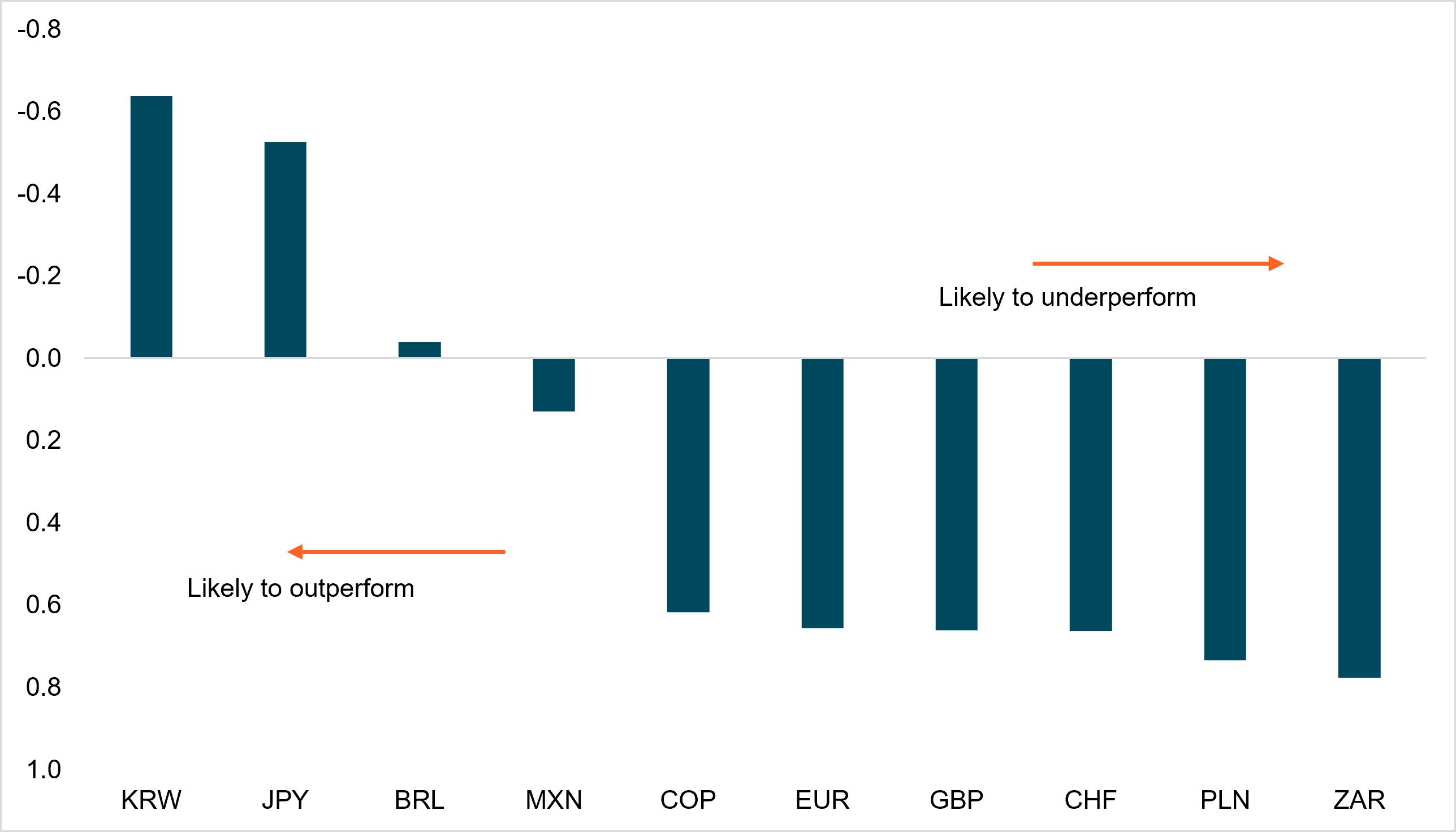
EXHIBIT #2: MOVE INDEX CORRELATION TO CURRENCY LEVEL
Source: BNY Markets, Bloomberg.
Note: Correlations taken over a 3y horizon. Y-axis is flipped. Currencies likely to strengthen in a rising rate volatility environment on the left.
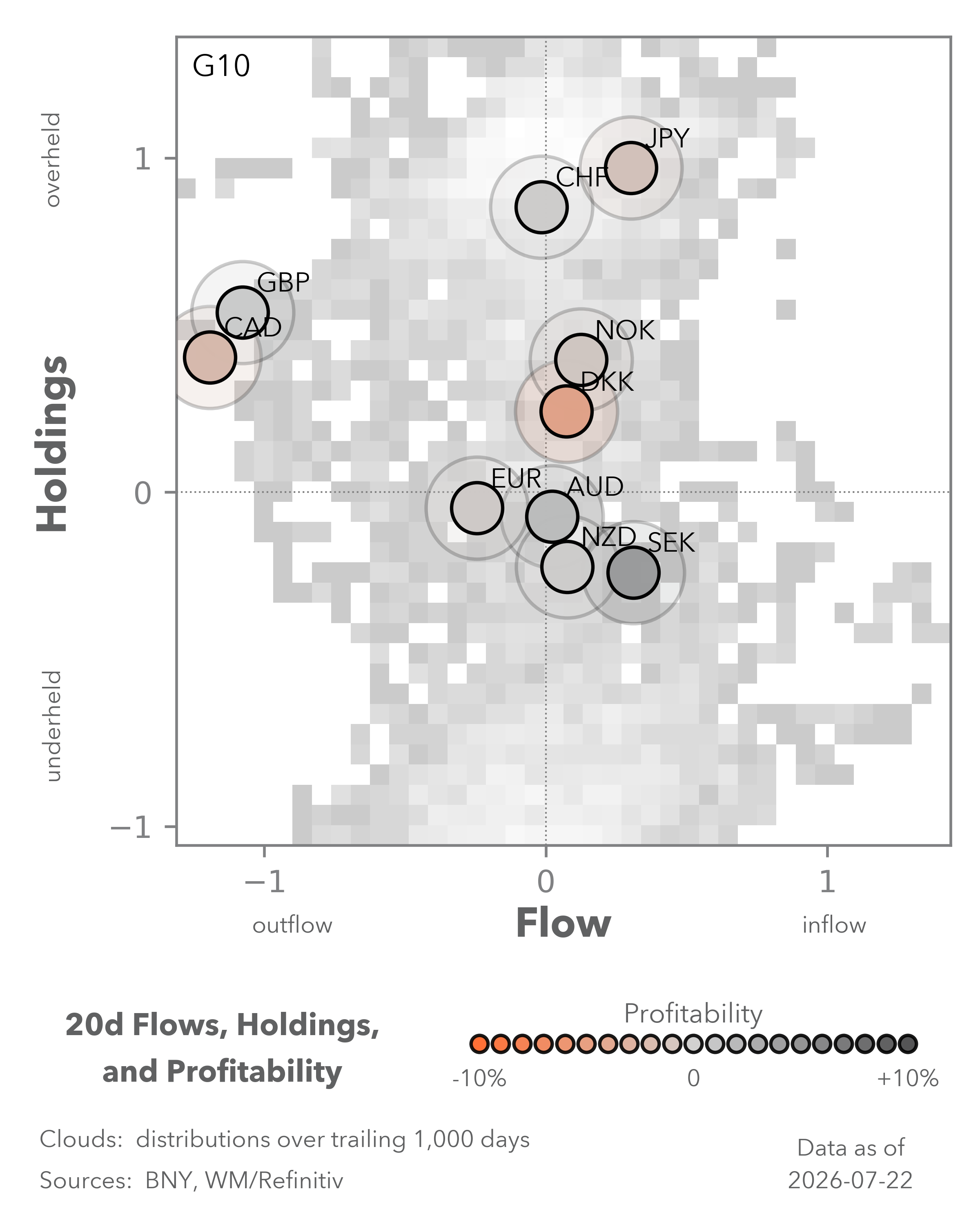
JPY is a big winner: Safe-haven status matters. The JPY should benefit. Rising U.S. bond vol usually supports the yen via safe-haven demand and repatriation flows. That makes JPY one of the clearest winners in a higher-vol regime.
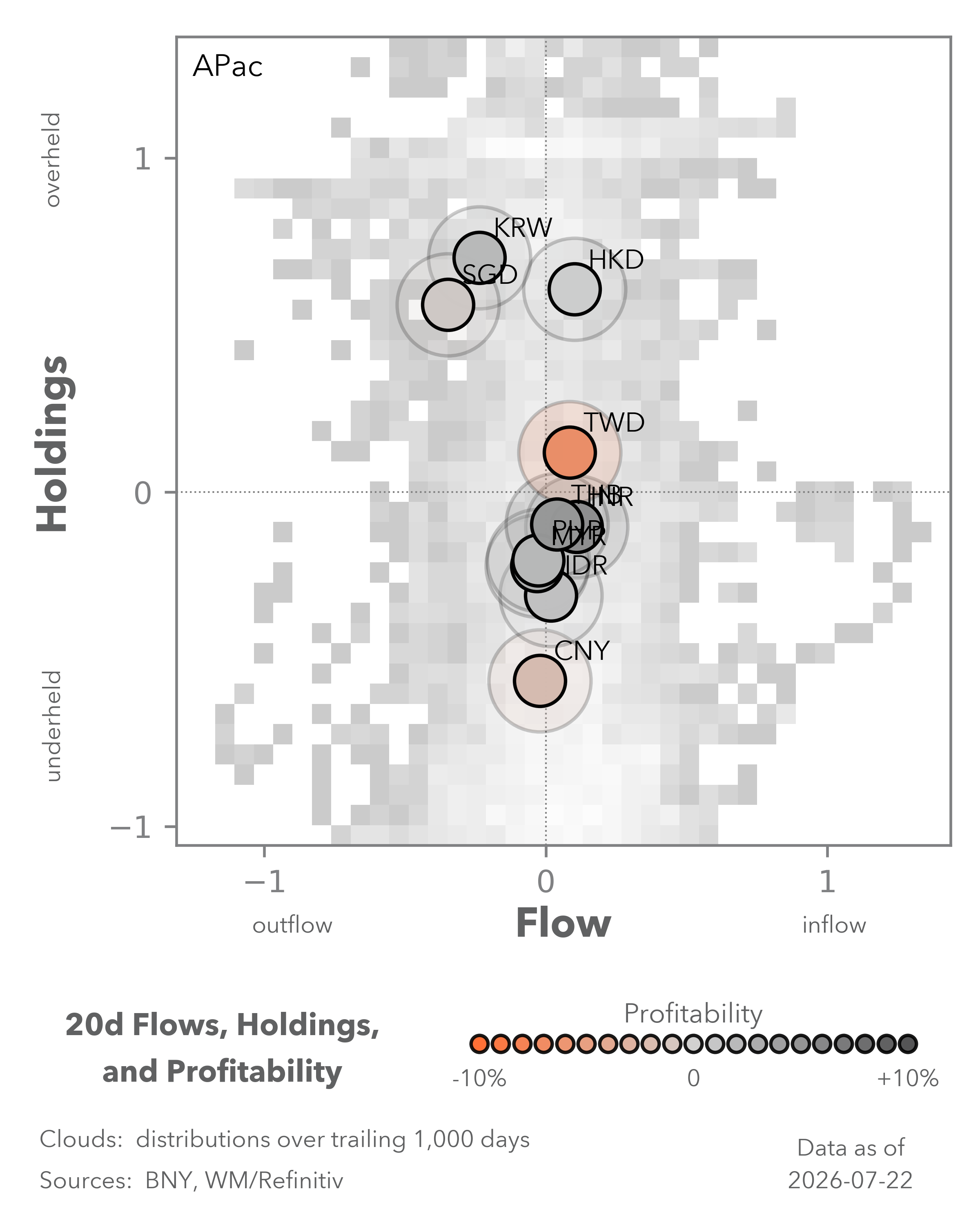
KRW can also work: The KRW has repatriation characteristics through the National Pension Service, and if bond vol picks up, those flows might matter more than the current noise from domestic South Korean developments that have driven outflows. As a currency that is often highly correlated to the JPY due to export substitution effects, the KRW looks well placed to get swept into the same move.
EM currencies like ZAR are likely the big losers: The other side of the trade is straightforward. Currencies that need stable growth, clear policy and risk-on market sentiment should struggle. ZAR is one such currency that fits that profile. These currencies are exposed to global risk sentiment and can weaken fast when bond volatility rises.
CHF is confusing: At first glance, CHF is a safe haven and might be expected to benefit like the JPY. But the positioning story complicates things. If it is overheld, as it often has been over the past three years, the higher vol that might trigger VAR cuts could force selling of overheld positions. That can overpower the usual safe-haven bid.
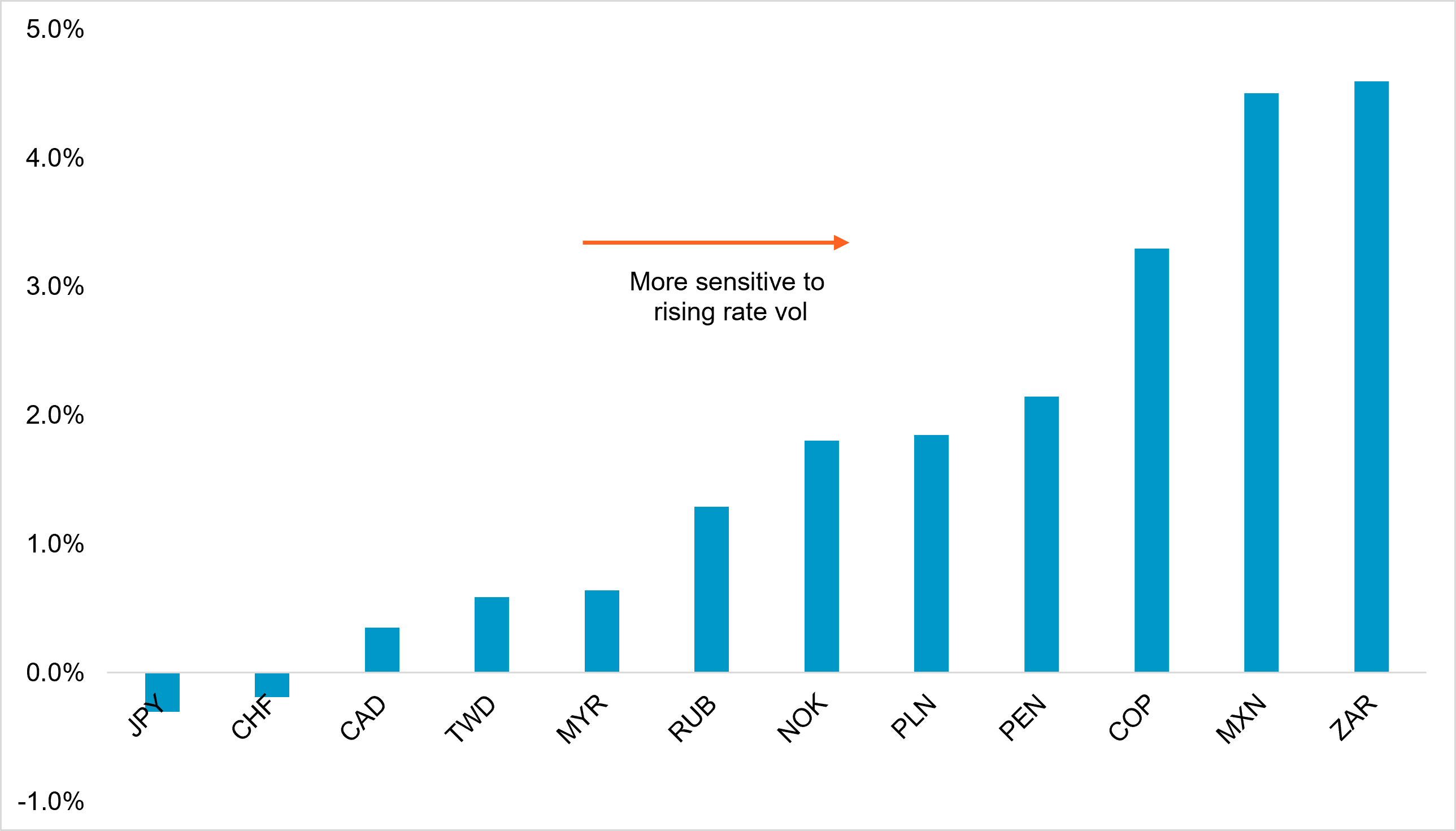
EXHIBIT #3: SENSITIVITY OF SELECT CURRENCIES TO MOVE INDEX
Source: BNY Markets, Bloomberg.
Note: Sensitivity analysis conducted over 3y horizon.
High-risk currencies most sensitive to bond vol: Some of the most likely-to-underperform currencies also display the highest sensitivity to shifts in bond volatility, meaning they could react the most dramatically to small increases in the vol regime. Exhibit 3 shows that MXN and ZAR have displayed some of the greatest sensitivity to shifts in the MOVE Index over the past three years.
Safe havens, low-yielders less sensitive: Funding currencies for carry trades have a lower sensitivity to increases in the MOVE Index. Currencies such as THB and EUR, which are used as regional funders, and JPY and CHF do not display as much sensitivity to heightened bond vol.
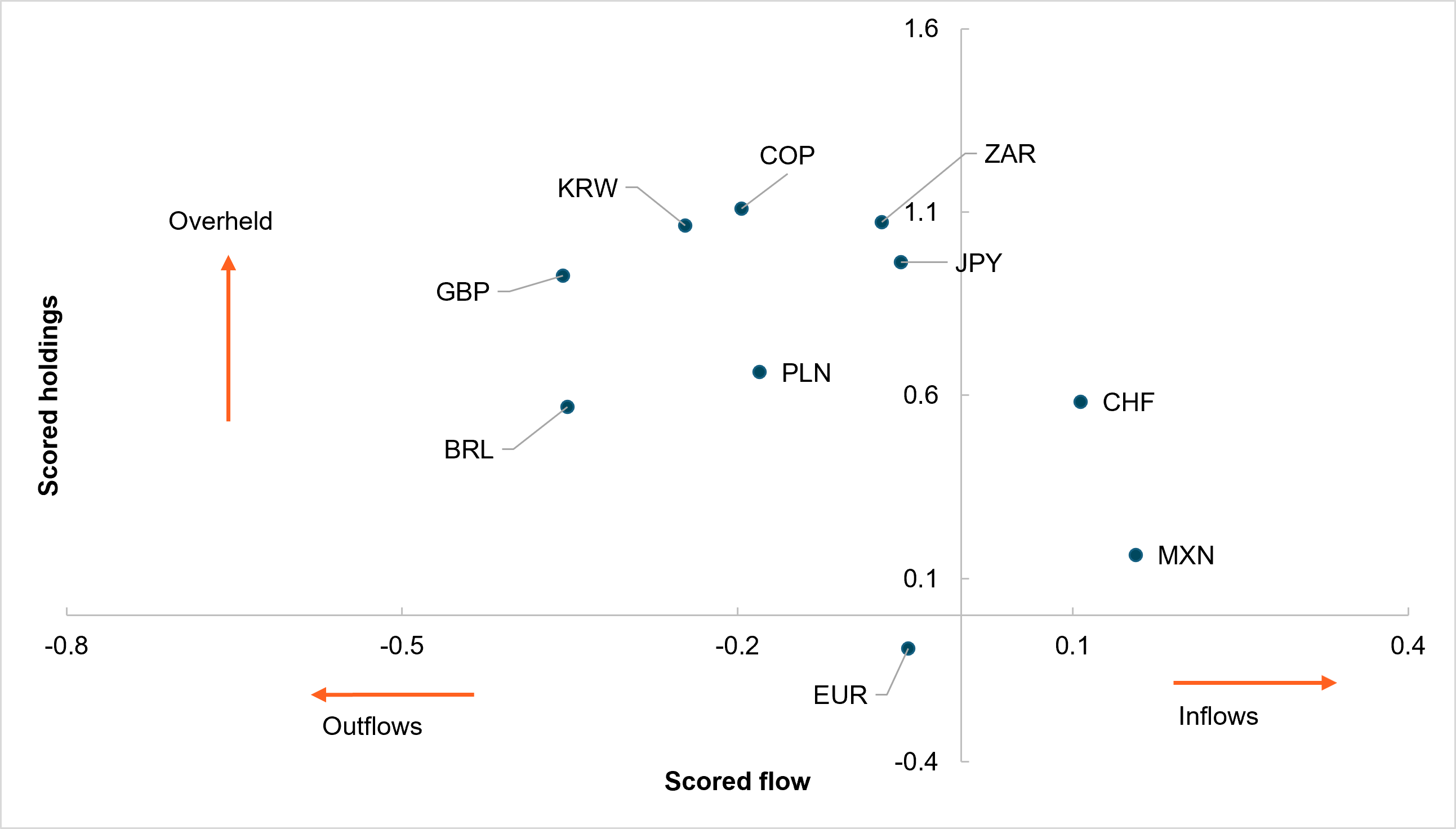
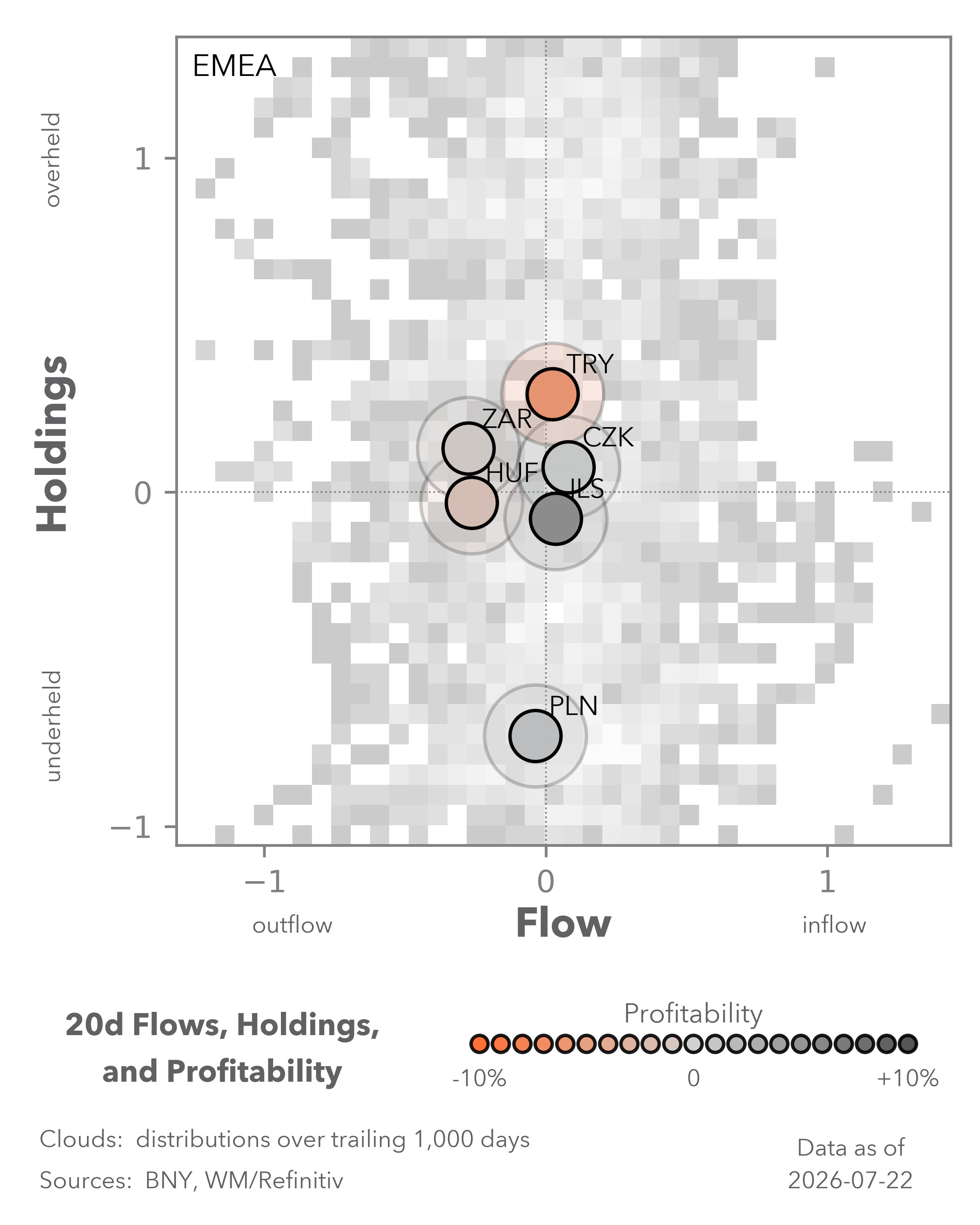
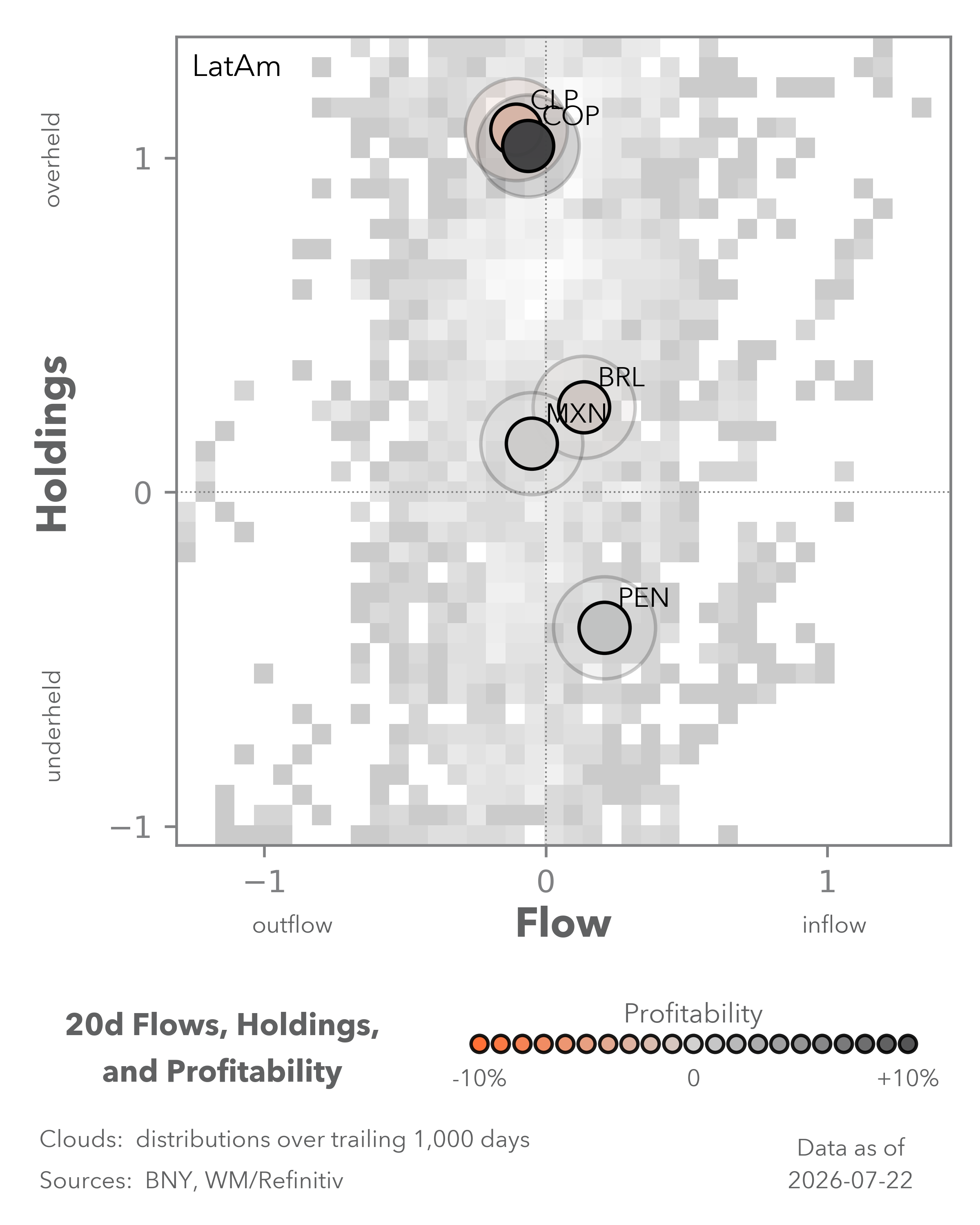
EXHIBIT #4: FX SCORED FLOW AND SCORED HOLDINGS
Source: BNY iFlow, WM/Refinitiv
Note: Scored flow is trailing 1y standard deviation of flow; scored holdings is trailing 1y mean absolute magnitude. Analysis over the past quarter.
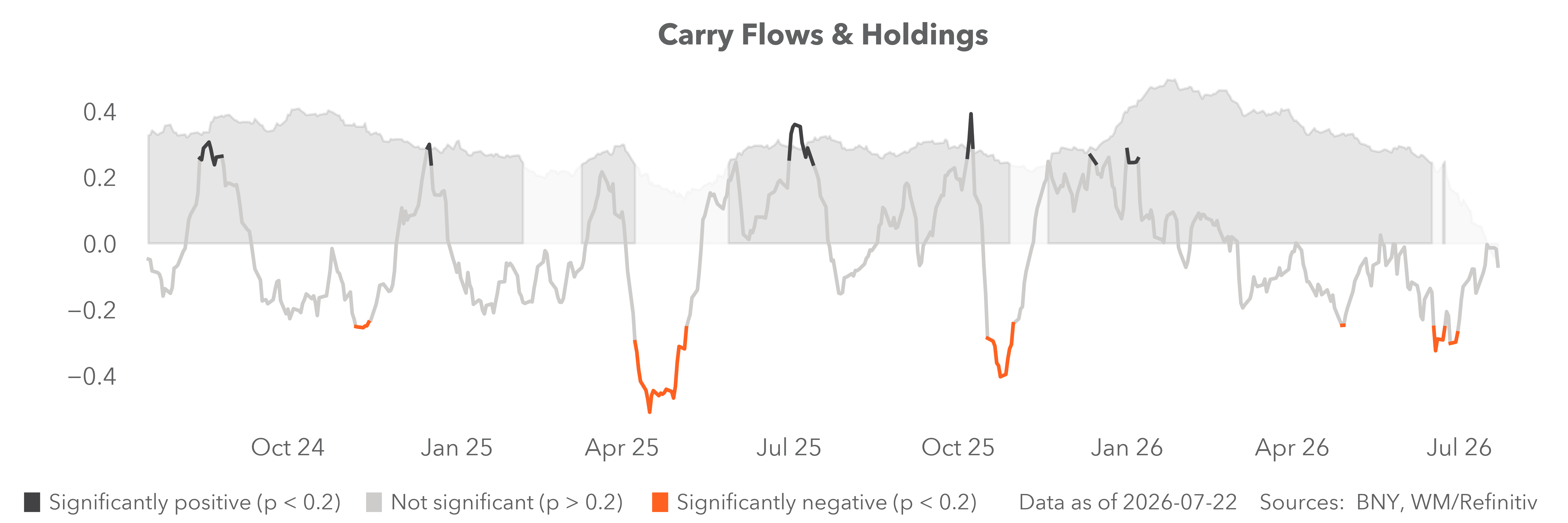
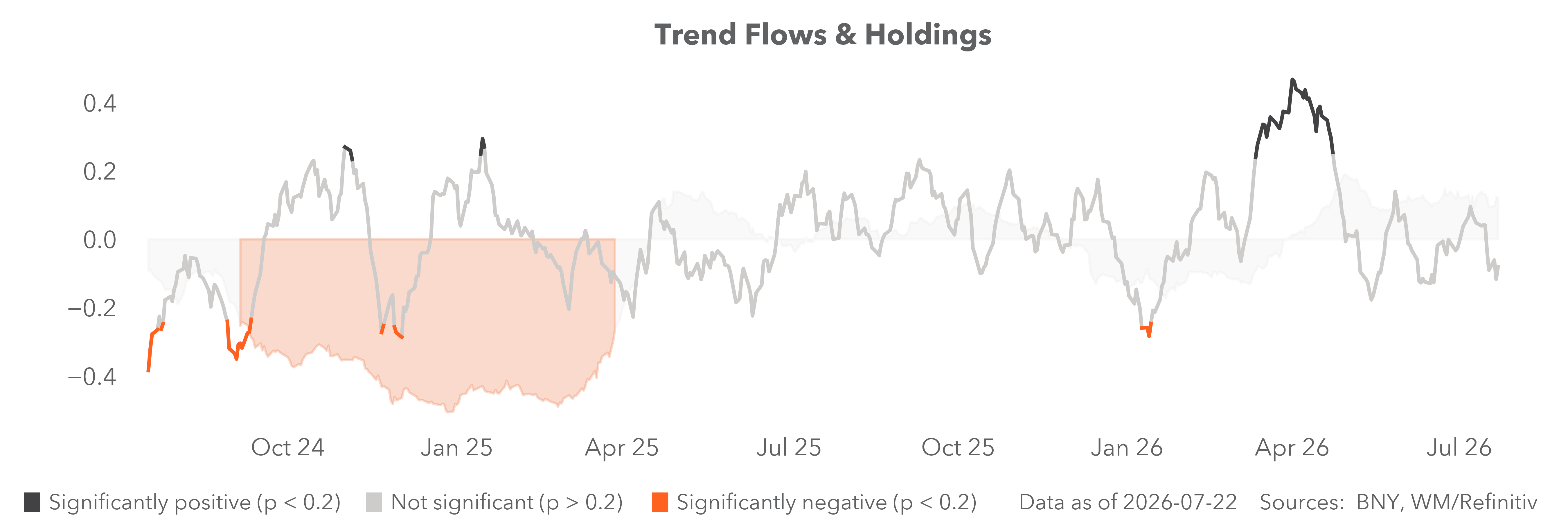
Positioning complicates picture: Even if the macro case looks constructive, crowded positioning could undercut certain currencies. iFlow data suggest that many of the currencies examined have been overheld by investors over the past quarter.
This complicates CHF story: We think this might be part of the explanation for why the CHF may not behave like a classic safe haven. If rising bond vol sparks a VAR shock and forces an unwinding of existing positioning, then the CHF might weaken even as U.S. bond vol increases.
The market could see a sharper split than usual: JPY and KRW should attract flows, but CHF may not behave like a classic safe haven if positioning unwinds.
Rate volatility: Track the MOVE Index and its 100- and 200-day moving averages (Exhibit 1). If they keep rising, U.S. bond vol will become more of a cross-asset theme, including in FX.
Risk sentiment: Track the correlation between U.S. rate vol and global risk proxies. If risk sentiment weakens alongside a higher MOVE Index, expect pressure on carry and high-beta FX.
Positioning: Track large inflows and outflows across safe havens and risk-sensitive currencies. Prime candidates are JPY and KRW on one side, and ZAR and other EM currencies on the other, with CHF somewhere in between. Overheld currencies are vulnerable to VAR cuts. Underheld currencies can reverse quickly if the vol regime turns.