Rate vol redux hits crowded currencies
FX: G10 & EM provides a detailed analysis of global foreign exchange movements in major and emerging economies around the world together with macro insights.
FX: G10 & EM provides a detailed analysis of global foreign exchange movements in major and emerging economies around the world together with macro insights.

David Tam
Time to Read: 4 minutes
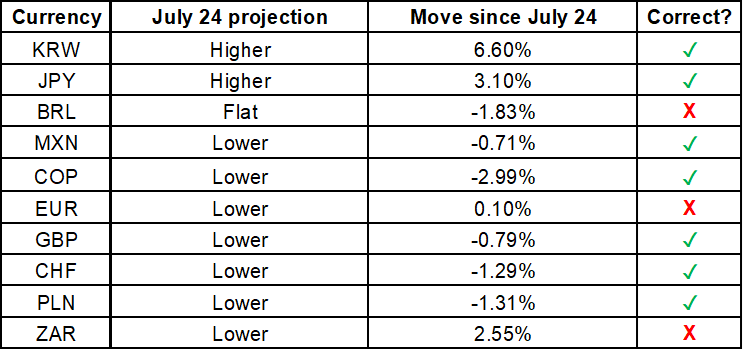
Our July 24 note argued that rising U.S. rate volatility driven by a less communicative Fed would pressure crowded, risk-sensitive currencies while supporting traditional safe-havens and select outperformers. Two months later, that broad thesis has largely played out, with seven of the ten currencies we highlighted (Exhibit 1) moving in line with our projections. We now revisit those calls to see whether the theme has room to run, looking at the outlook for U.S. rate volatility and how positioning and flows have evolved since July.
EXHIBIT #1: SEVEN JULY PROJECTIONS PROVED CORRECT
Source: BNY Capital Markets
KRW and JPY outperformed: KRW has appreciated 7%, the strongest performer among G10 and major emerging markets since July 24, on AI-related semiconductor exports, the dollar repatriation that follows and a rebound in the KOSPI after sharp declines earlier in the summer. We called the yen an outperformer, but with the Bank of Japan’s late summer intervention driving much of the move, we won’t take a victory lap.
Underperformers mostly delivered: Five of the seven currencies we deemed likely to underperform – MXN, COP, GBP, CHF and PLN – depreciated since July. In perhaps our most prophetic call, CHF depreciated modestly despite being a traditional safe-haven currency that might be expected to benefit from a rising rate vol environment. At the time, we noted that CHF would likely struggle due to excessive crowding. We added that rising rate vol might spark VAR shocks and force an unwinding of existing positions. This view was realized as iFlow data show CHF scored holdings have declined with concerted outflows through much of September.
ZAR and EUR missed: As luck would have it, we published our piece the day the SARB surprised markets with a hold, sending ZAR to its weakest level since April. Since then, it has strengthened on net, thanks to carry trade flows and gold, which is up over 5% since late July. Notably, iFlow data show that both ZAR and EUR have experienced outflows through September and both have depreciated somewhat in the latter half of the month, although they both remain stronger on net since the end of July.
The pace at which the moves continue or revert broadly depends on whether the increase in rate vol will persist, and on how these currencies’ positioning has evolved since our July note. Idiosyncratic factors and timing considerations also matter, as we saw from our missed ZAR call.
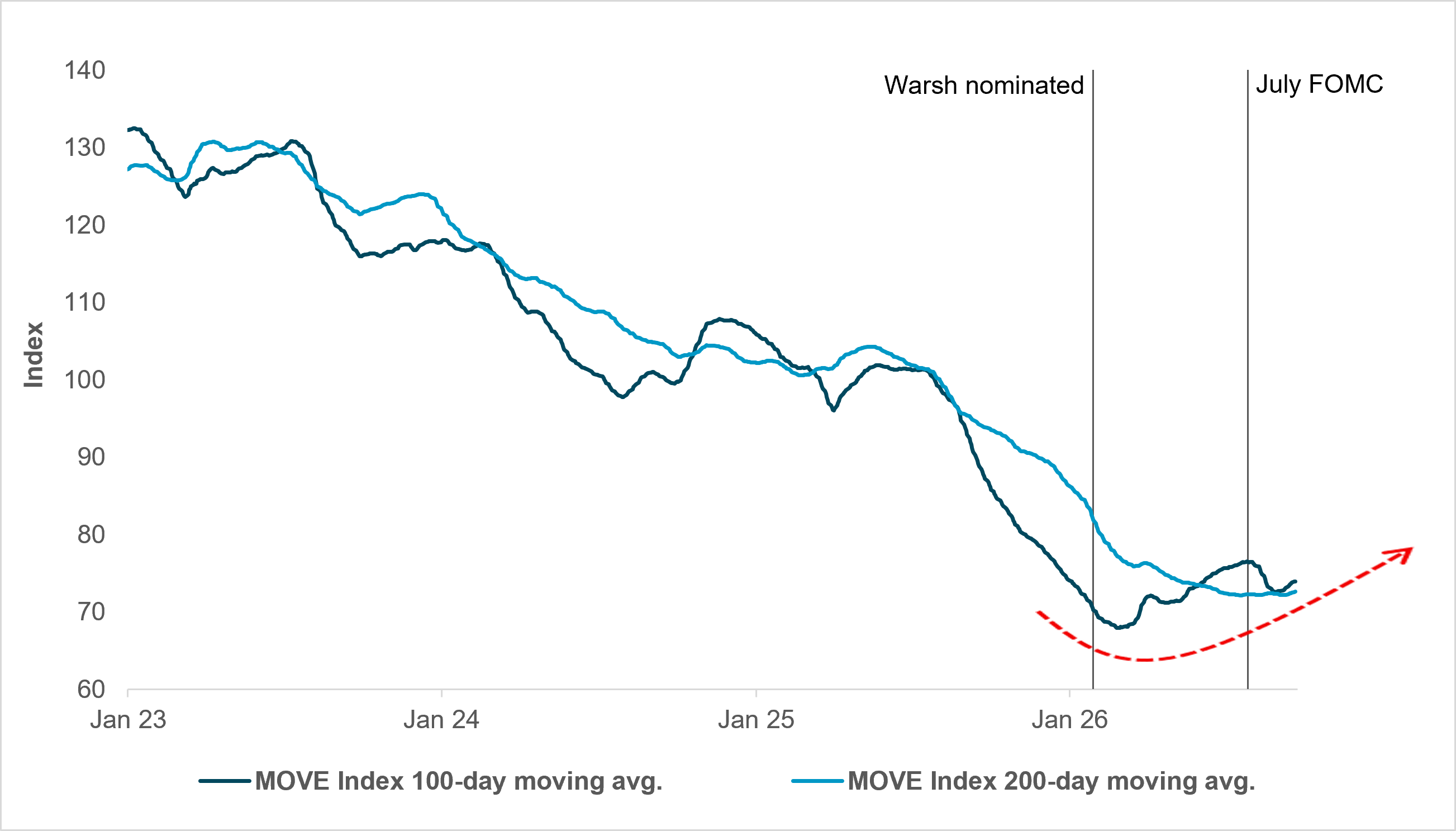
EXHIBIT #2: U.S. RATE VOL HAS TURNED HIGHER OFF ITS LOWS
Source: BNY Markets, Bloomberg
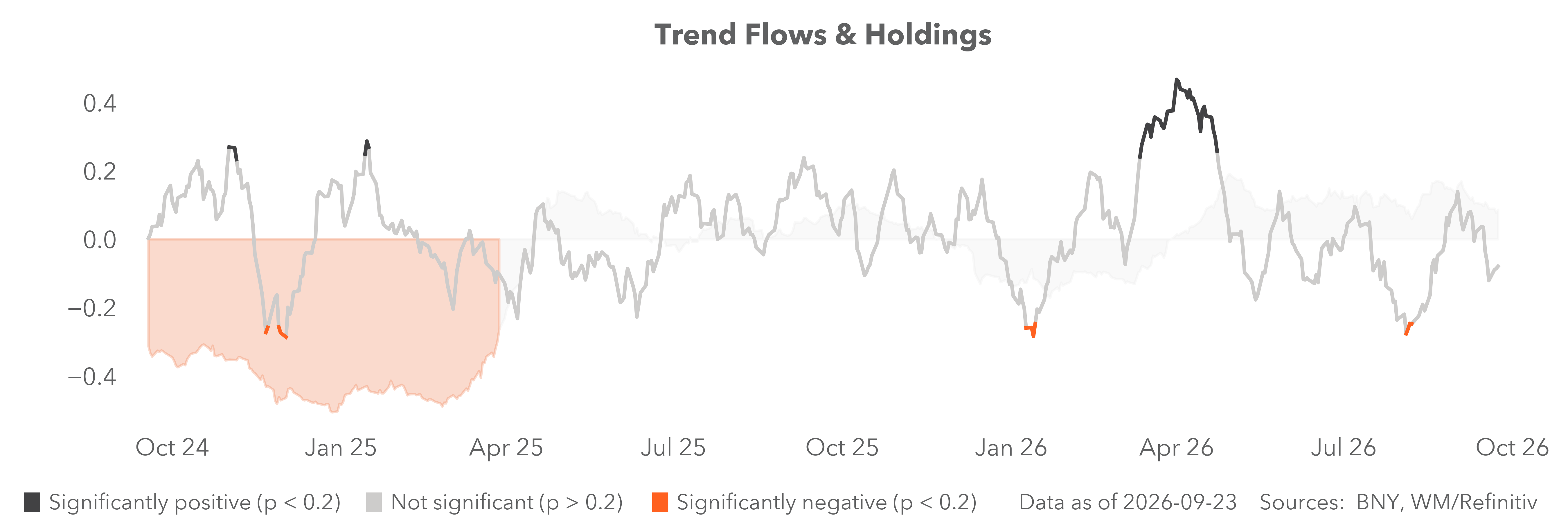
Rate volatility has inflected higher: We maintain that rate vol, which has inflected higher since Fed Chair Kevin Warsh was formally nominated (Exhibit 2), will continue to rise with the Fed no longer offering forward guidance.
Momentum has faltered since: However, rate vol’s upward momentum seems to have faltered since the July FOMC. As we’ve suggested, this could be because the market is getting more accustomed to limited Fed communication, and that Warsh is growing slightly more comfortable with limited signaling. Still, the MOVE Index’s 100-day moving average has started to creep up again as vol in the broader rate complex picked up in the past several weeks.
The thesis rests on higher vol: The original thesis was predicated on rising rate vol pushing safe-haven currencies higher and higher risk currencies lower. We see the slight leveling off after the July FOMC as a temporary bump toward a higher rate vol regime.
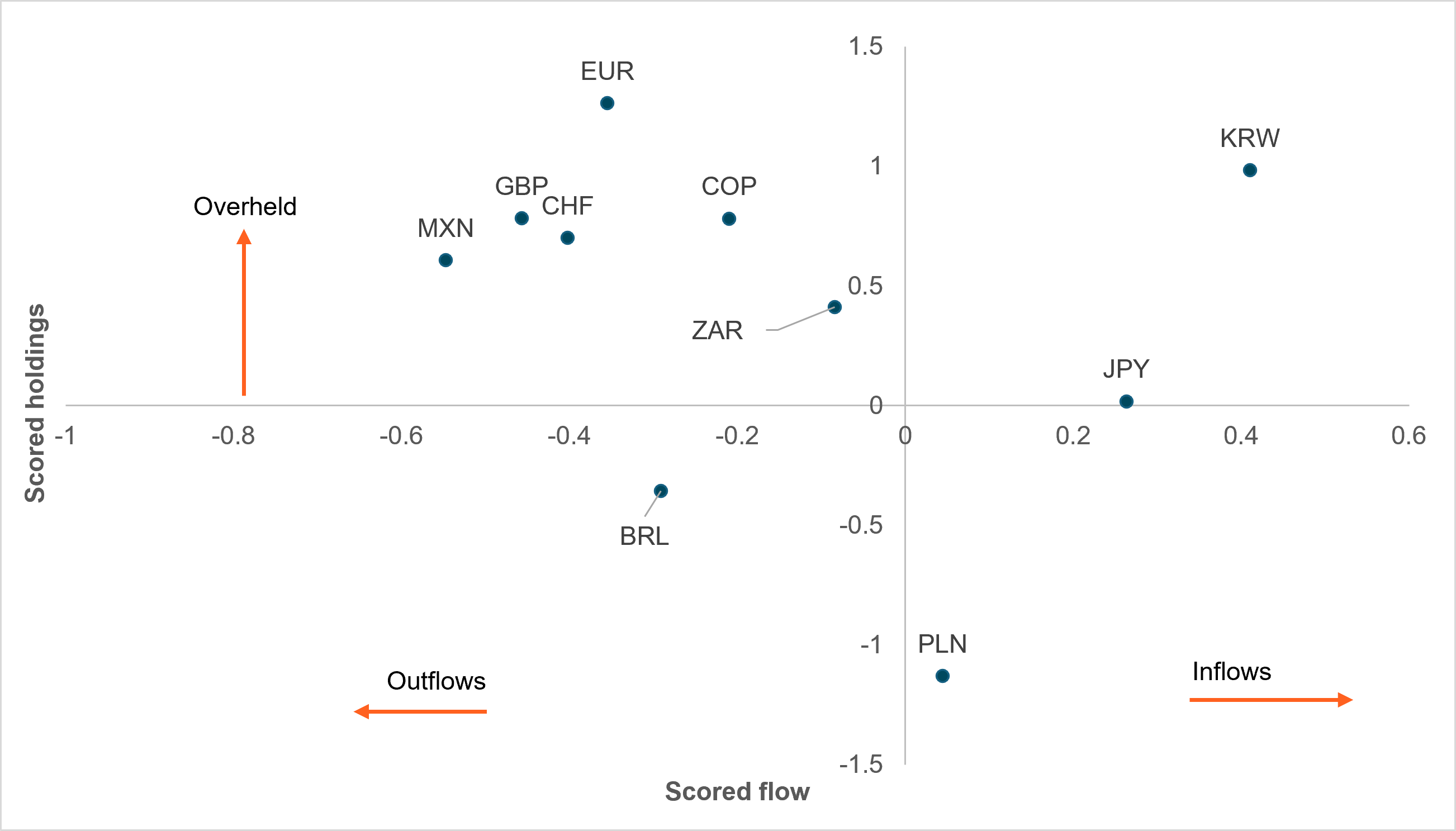
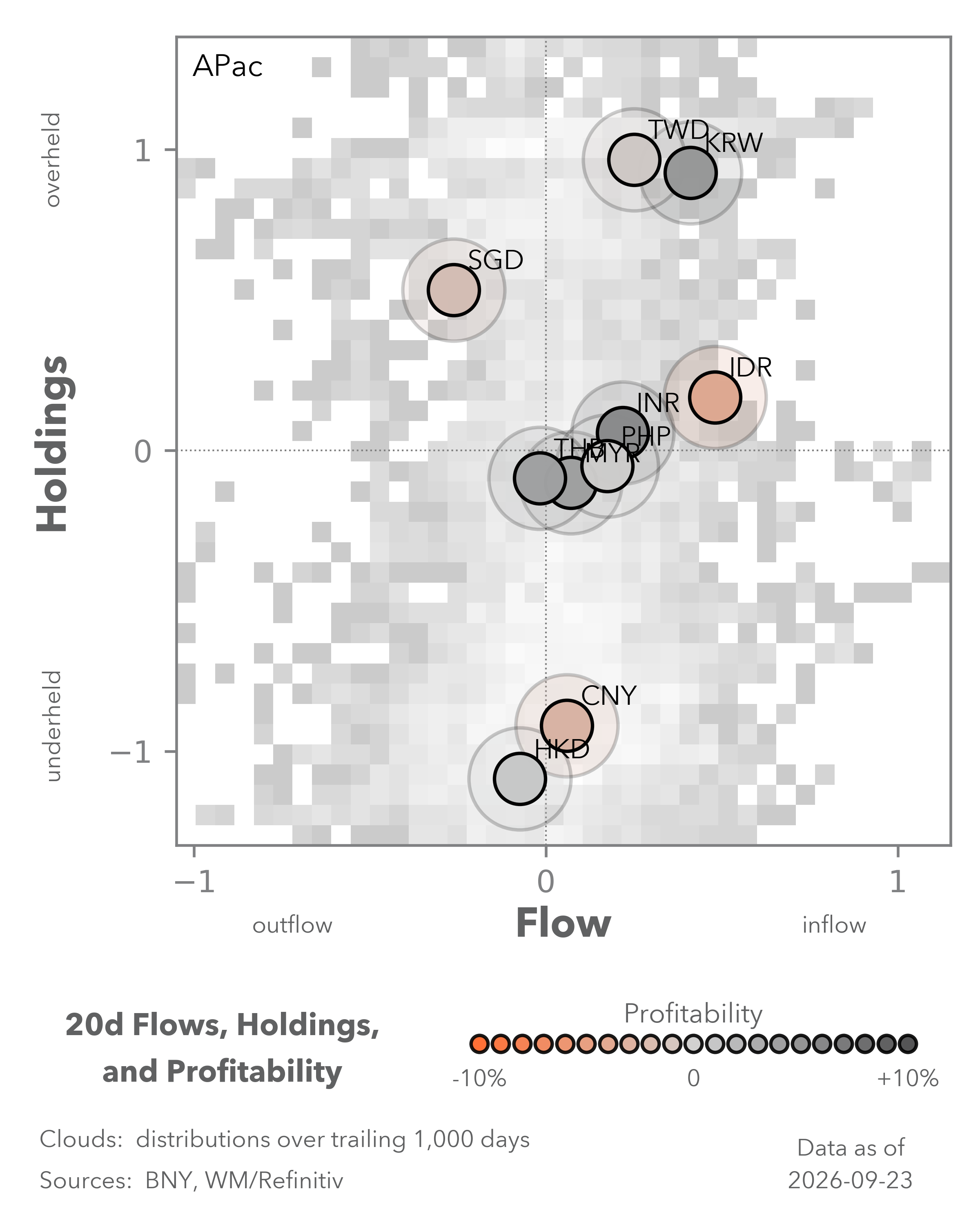
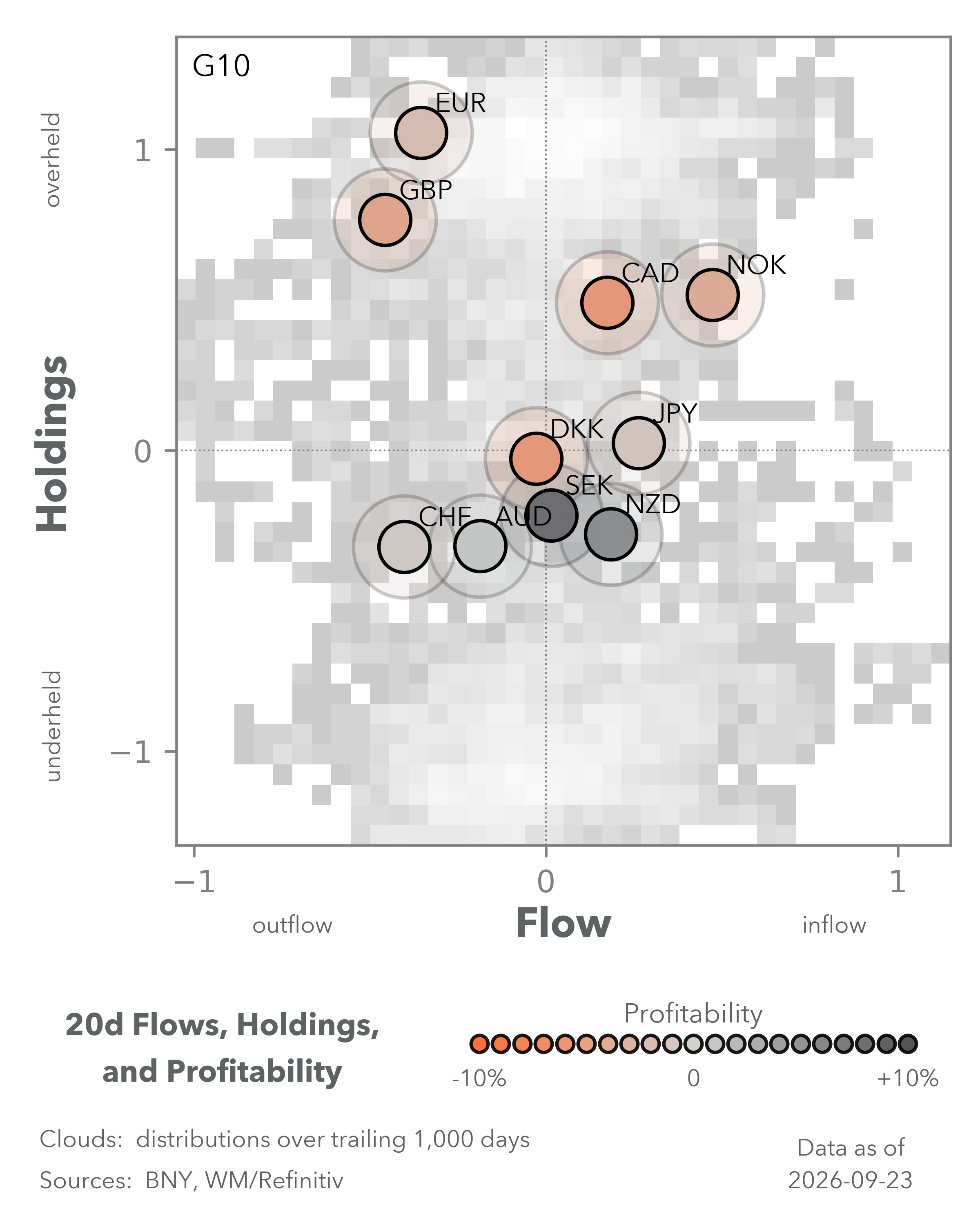
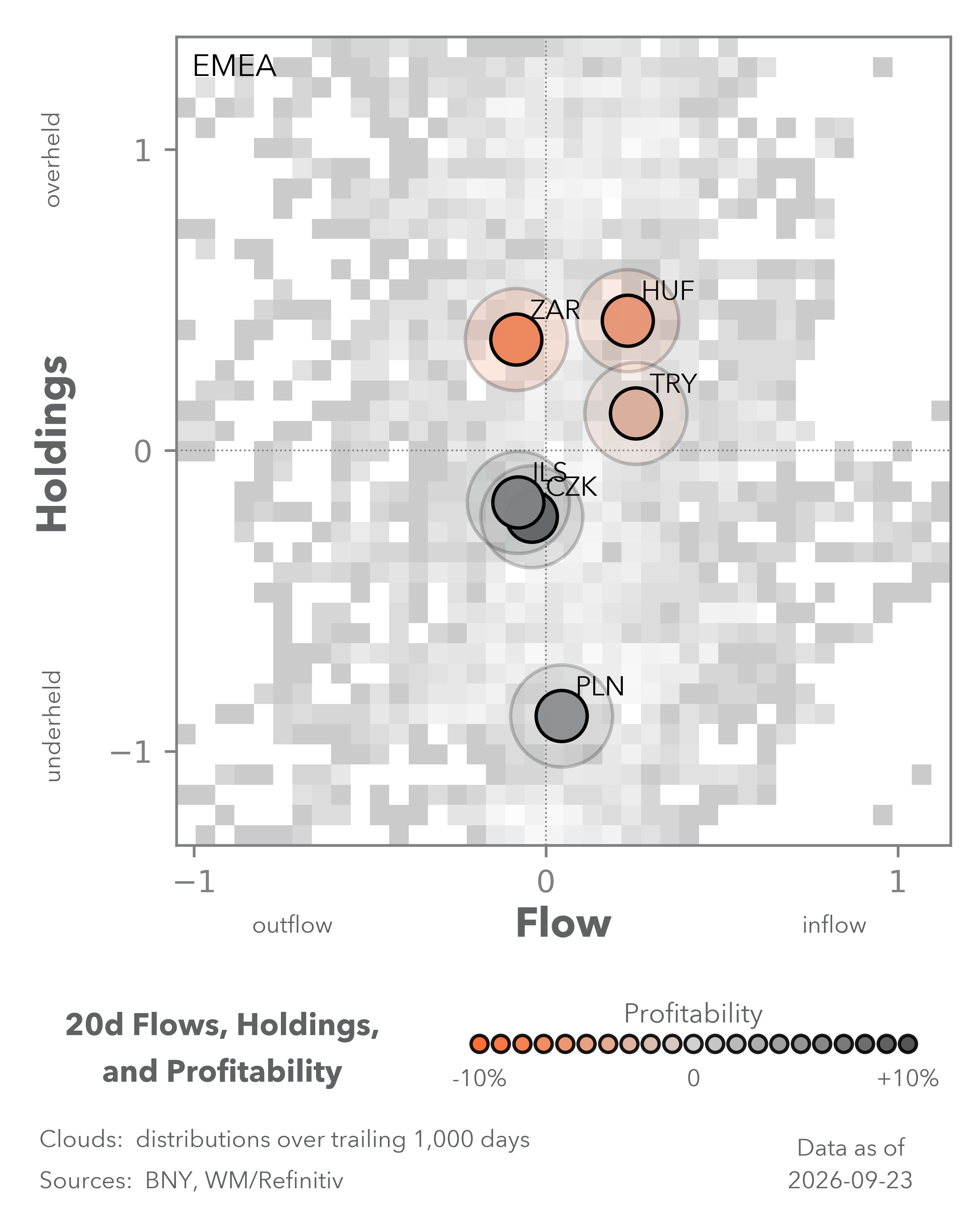
EXHIBIT #3: MOST CURRENCIES REMAIN OVERHELD BUT FACE OUTFLOWS
Source: BNY iFlow, WM/Refinitiv. Scored flow is trailing 1y standard deviation of flow; scored holdings is trailing 1y mean absolute magnitude. Analysis over the past month.
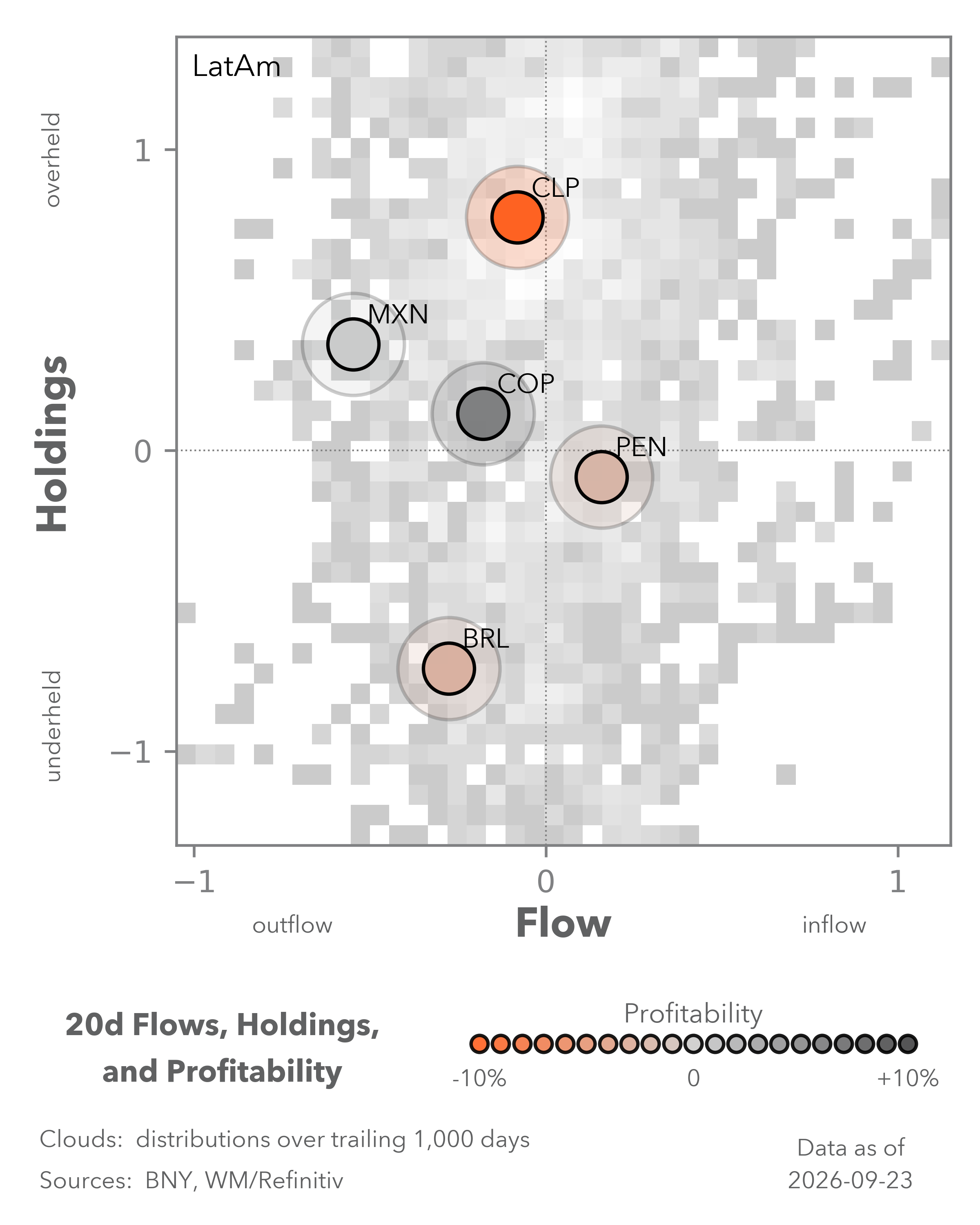
Flows are mostly outflows: Seven of the ten currencies have experienced outflows over the past month. This makes sense given the broad depreciation of the currencies in focus. Most notably, however, KRW is the exception: after outflows in the quarter before our July note, it has registered inflows over the past month.
Scored holdings are easing: Seven of the ten have also experienced a relative decline in their scored holdings based on a quarterly lookback between our July note and today, meaning overheld currencies have moderated while underheld currencies have gotten even more bearish. While most of these currencies remain overheld, this shift implies moderately less institutional sponsorship relative to their own history, which again makes sense given our focus on currencies which have struggled.
Momentum should slow: Given how positioning has evolved, we think many of the initial moves will persist, but momentum should slow, leaving some currencies less room to run even as rate vol keeps rising, albeit haltingly.
KRW appreciation may slow: KRW is perhaps the best example of all of these elements: it has appreciated nearly 7%, registered inflows and remains overheld. We argued earlier that part of the reason KRW would appreciate was that rate vol in the U.S. might marginally encourage South Korea’s National Pension Service (NPS) to repatriate. Journalistic reports suggest the NPS increased its hedging activity over the summer. At the same time, exporter repatriation remains strong given the ongoing semiconductor boom that has been a windfall for Korean exporters. While these will likely continue to apply appreciatory pressure to KRW, the positioning story gives us reason to think the pace of appreciation may slow.
CHF outlook remains murky: As we noted in July, crowding complicates CHF’s safe-haven case. While CHF remains overheld, it has experienced outflows over the past month. If anything, the path forward is even murkier. While flows and safe-haven characteristics might suggest CHF could begin to benefit, caution is warranted.
Attention now turns to whether these trends will continue or revert and at what pace:
Rate vol: Continue to track the MOVE Index and its 100- and 200-day moving averages (Exhibit 2). If they keep rising, and the post-July FOMC pause proves a brief respite on the way to a higher vol regime, currencies may keep reacting as they have since the summer.
Positioning: Track flows and holdings across safe-haven and risk-sensitive currencies (Exhibit 3). KRW and CHF, in particular, represent currencies where positioning might matter more.