European recovery intact as euro declines
FX: G10 & EM provides a detailed analysis of global foreign exchange movements in major and emerging economies around the world together with macro insights.
FX: G10 & EM provides a detailed analysis of global foreign exchange movements in major and emerging economies around the world together with macro insights.

Geoff Yu
Time to Read: 7 minutes
Bottom line: We maintain our thesis that the euro will weaken despite stronger economic performance. A EUR-funded carry basket remains an effective way to express this view. We’re mindful that fiscal stress, shifting cross-asset correlations and rapidly changing positioning could amplify volatility.
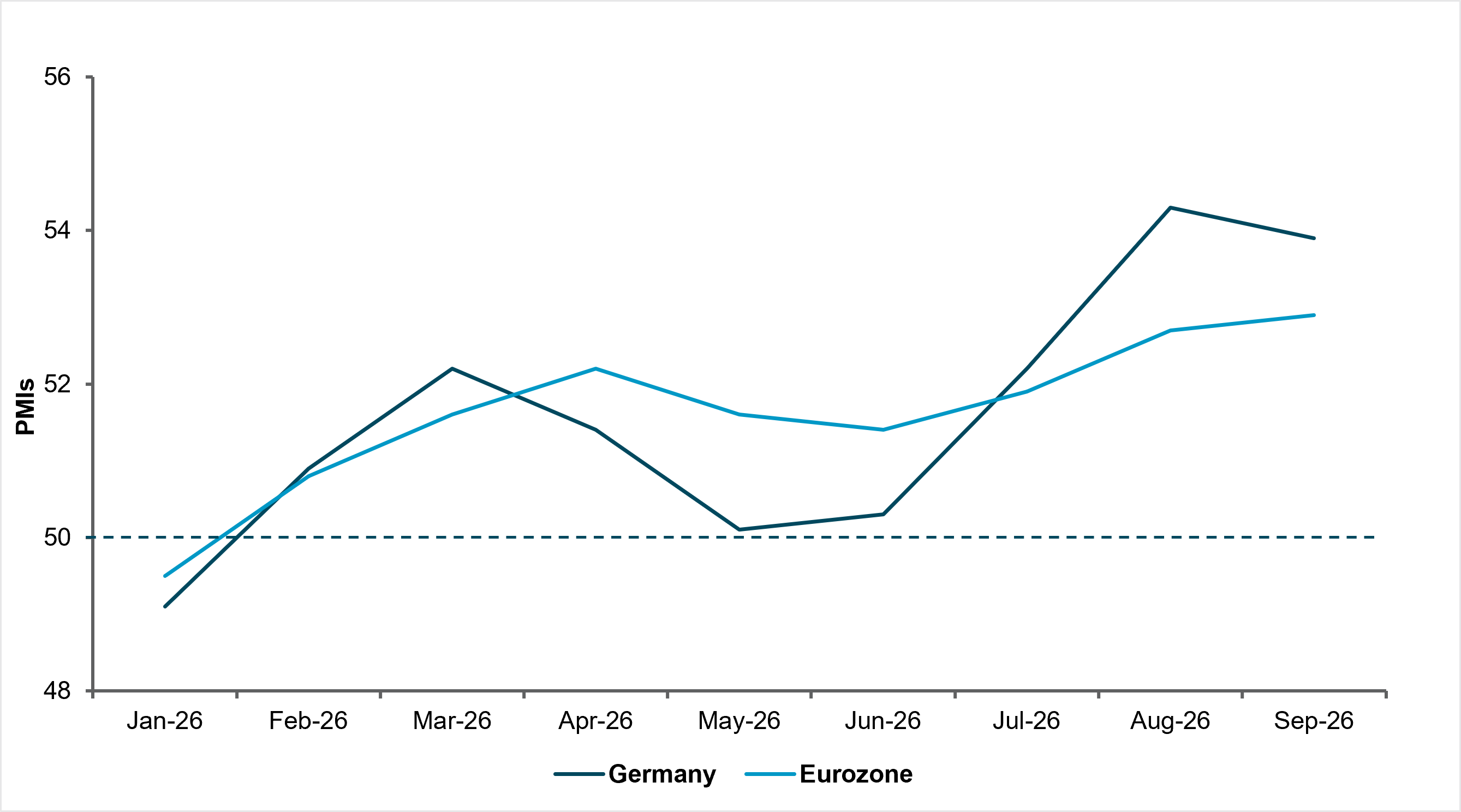
Eurozone recovery remains intact. Last month, we argued that the Eurozone economy was recovering, led by broad-based gains in manufacturing. The Eurozone manufacturing PMI held at a four-year high in September (Exhibit 1), while factory output is expanding at its fastest pace in nearly five years. New orders and backlogs continue to rise, pointing to a clear strengthening in demand.
Germany continues to lead the momentum. Political difficulties for the governing coalition in recent state elections haven’t dampened growth momentum. Germany’s manufacturing PMI dipped slightly in September to 53.8 but remains near its highest level in more than four years. The Ifo Business Climate Index also rose to a three-year high of 89.9 in September.
Output signals outweigh political noise. Last week, the Bundesbank indicated that the German economy could grow by 1% in 2026, twice the 0.5% rate projected in June. Similar upward revisions are emerging across Europe and globally. Even so, political uncertainty continues to cloud the Eurozone and wider European outlook. Tensions are building in Germany, France and, more recently, Spain, with fiscal policy among the most acute political constraints. There’s also a risk that this stress could spill into sovereign spreads. For now, however, we continue to view these developments as noise rather than forces capable of derailing the recovery.
EXHIBIT #1: GERMAN AND EUROZONE MANUFACTURING REMAIN ROBUST
Source: S&P Global Flash Eurozone and Germany PMI, August 2026; BNY
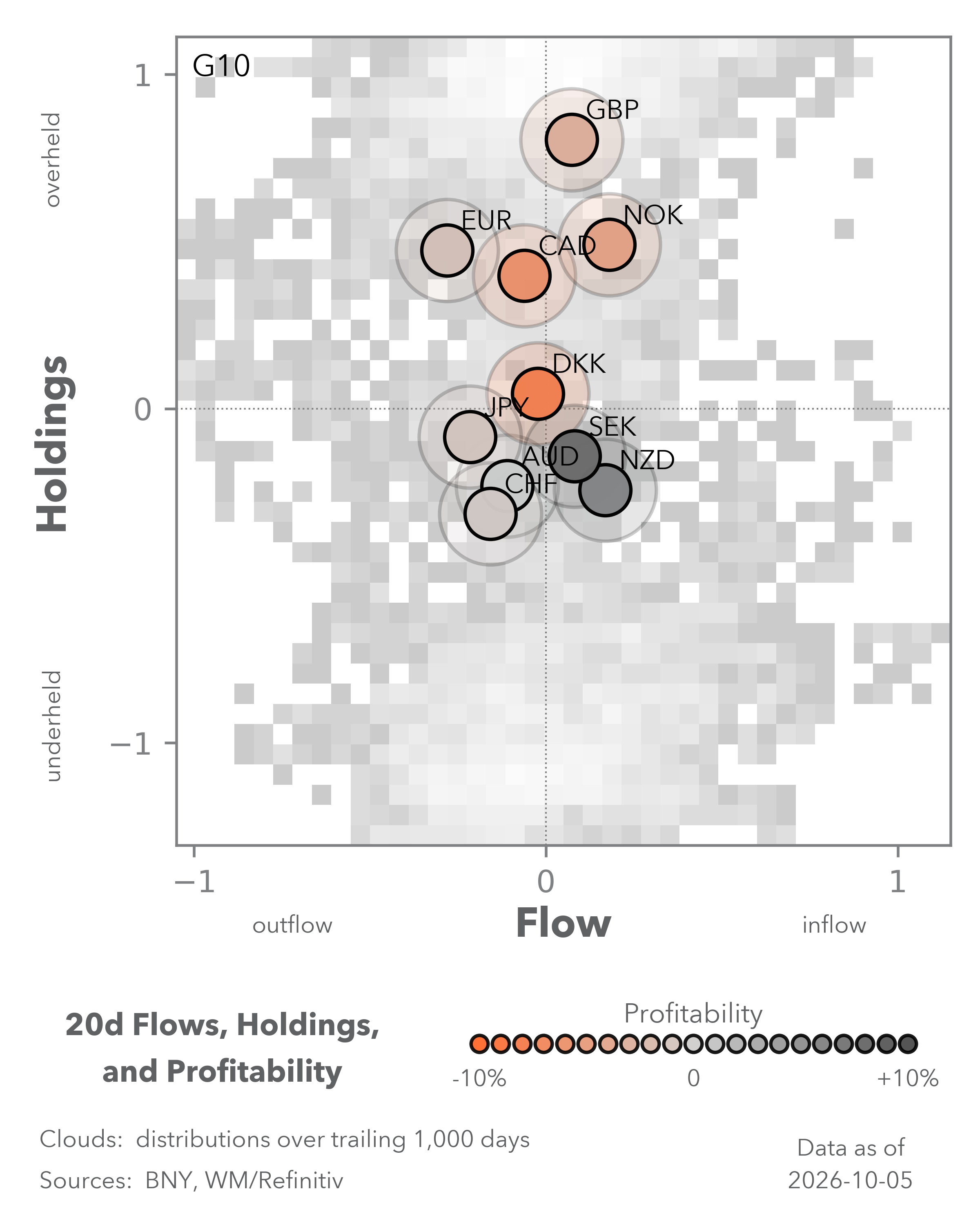
Euro weakens even as growth strengthens. Stronger data and another ECB rate hike haven’t prevented a 1.4% decline in the EUR’s nominal effective exchange rate since the beginning of September. The decline began well before concerns about France’s fiscal position became a central source of weakness and volatility. At the time, the euro was overvalued and interest-rate expectations appeared stretched, while limited short positioning and hedging left room for adjustment. Those positions and hedges have since increased, allowing the valuation correction to unfold.
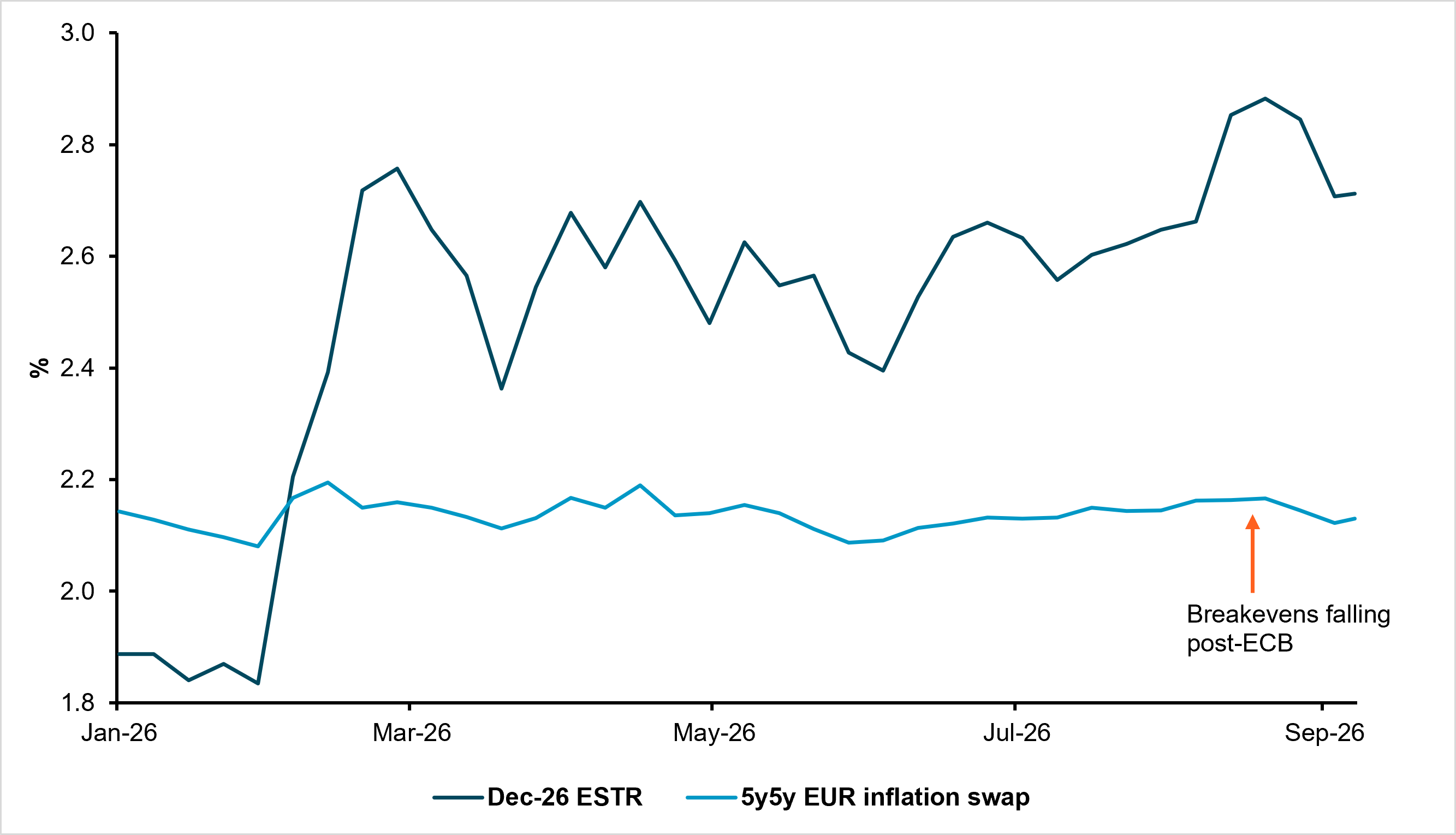
A softer ECB also weighs on EUR longs. The ECB raised rates by 25bp in September, but we view the decision as dovish. The Governing Council is no longer committed to a preset cycle and will instead make decisions meeting by meeting. Most importantly, the Council is united in looking through elevated September headline inflation and emphasizing the absence of second-round effects. ECB President Christine Lagarde called for future policy responses to be “measured” and said second-round effects were “not visible.” This assessment is supported by 5y5y breakeven inflation rates, which have slipped slightly below their levels before the September ECB decision. We therefore don’t expect rate expectations alone to provide further support for the EUR.
Fiscal stress reinforces monetary restraint. Lagarde has already acknowledged that current front-end interest-rate levels would “slow growth.” Recent moves in global bond markets are tightening financial conditions further through the fiscal channel, a point echoed by ECB Chief Economist Philip Lane. The French government has announced fiscal consolidation measures, with legislation expected to pass in Q4. These measures may curb the less productive, stagflation-prone elements of the expansion, but their effect on growth will also be significant given the high level of government spending. Other Eurozone economies, and even the U.K., are likely to be highly sensitive to current market moves and may adjust their fiscal positions. Consequently, expectations for year-end ECB rates have fallen below pre-decision levels (Exhibit 2), adding to EUR weakness.
EXHIBIT #2: ECB RATE EXPECTATIONS HAVE PEAKED AS SOVEREIGN-MARKET TIGHTENING TAKES HOLD
Source: BNY, Bloomberg LP
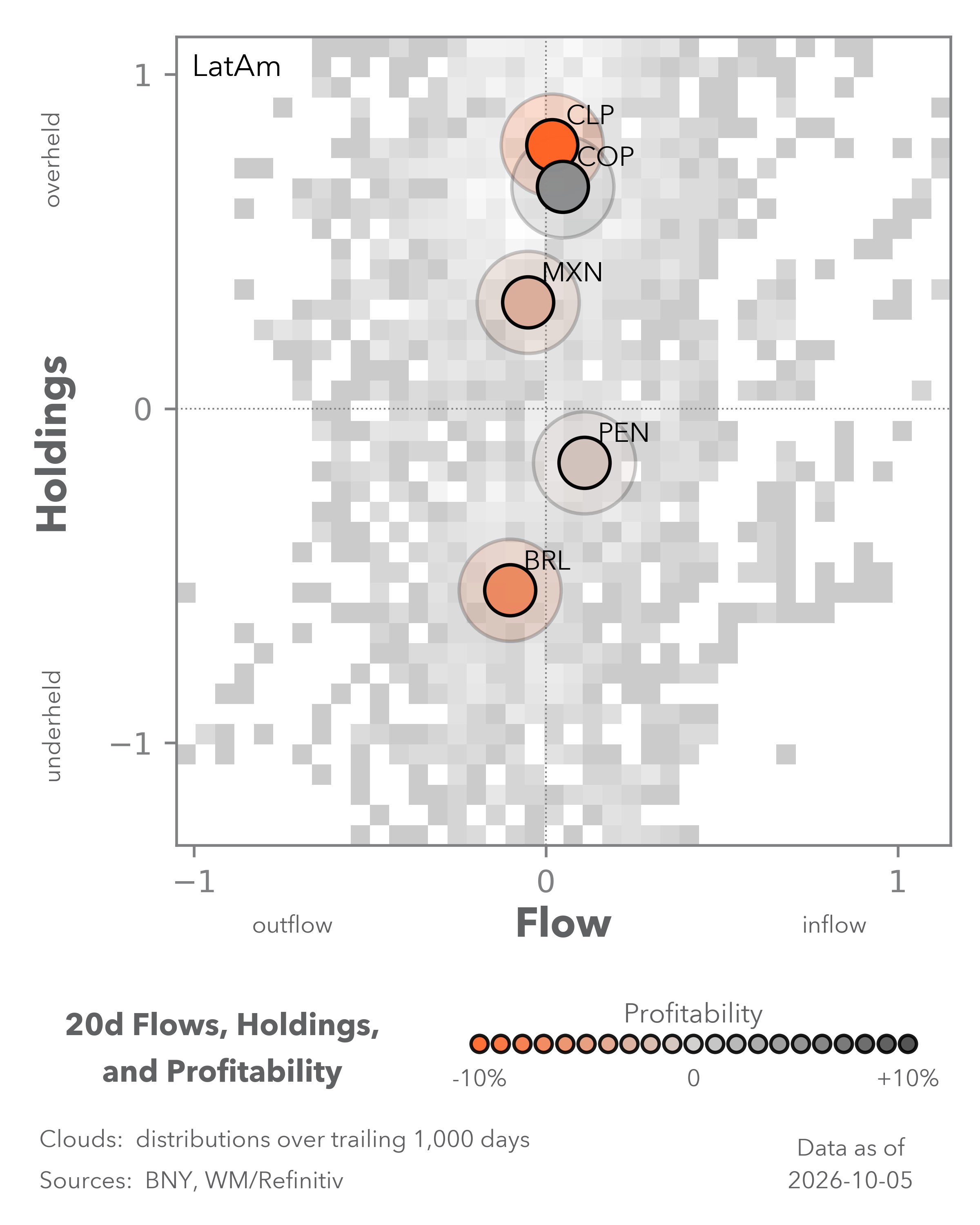
EUR-funded carry remains our preferred expression. We continue to favor EUR-funded carry trades as the clearest way to express euro weakness alongside economic expansion. Our preferred long basket comprises MXN, COP, BRL and ZAR. In September, Brazil’s Banco Central do Brasil delivered a 25bp rate cut to 13.75%, while the South African Reserve Bank (SARB) and Colombia’s Banco de la Republica (BdlR) each raised rates by 25bp, providing an offset. Banco de Mexico (Banxico) held at 6.50%. An equally weighted basket of these four currencies against the euro continues to generate carry of more than 2% over three months.
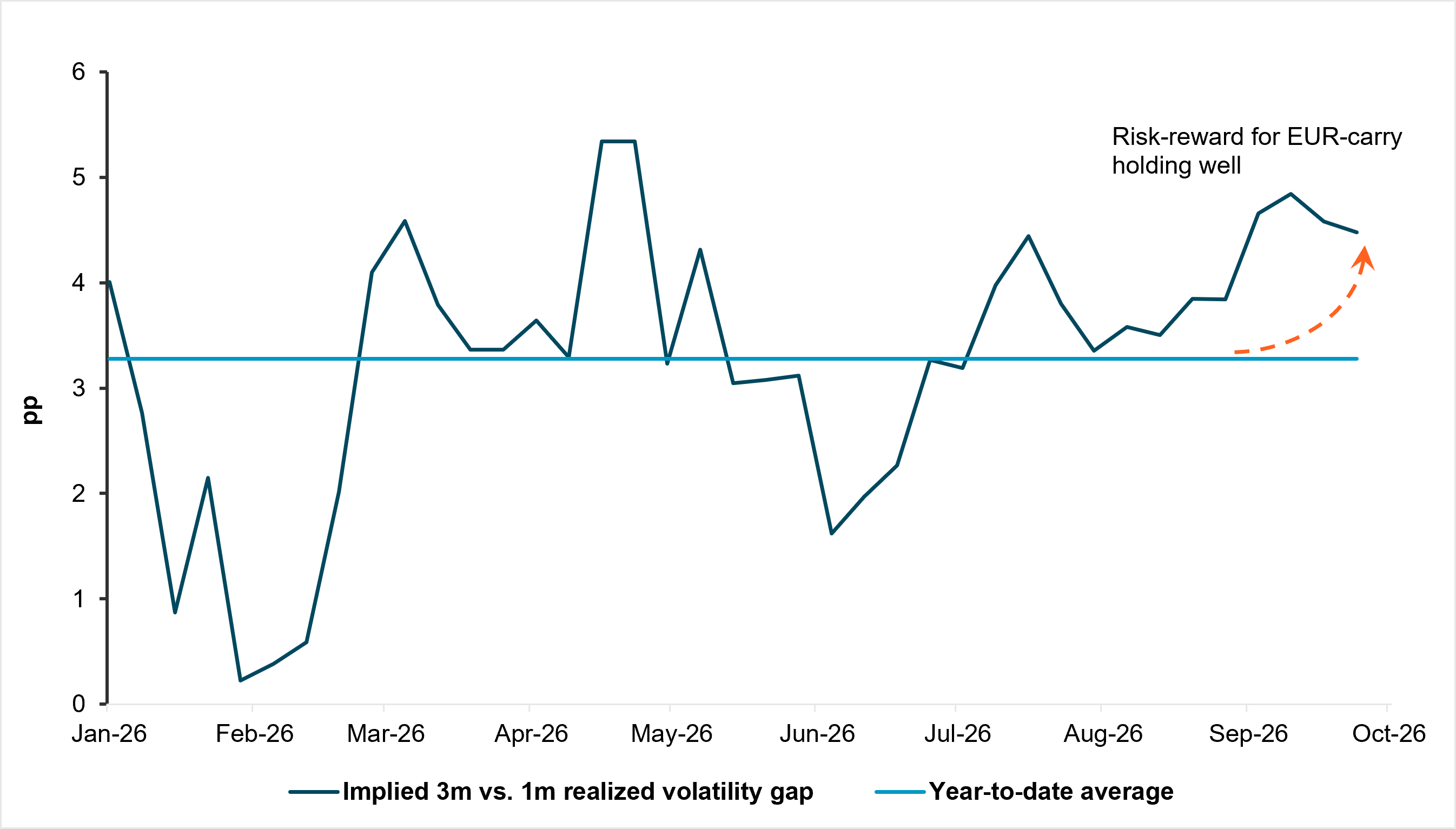
The basket’s carry profile remains favorable. The September ECB hike hasn’t materially altered the carry-to-volatility ratios of these currencies. We track the gap between implied and realized volatility to assess the basket’s risk-reward. The implied-realized gap reached a six-month high of 4.8pp before the ECB decision. Even after the recent volatility in global bond markets and the sharp decline in BRL implied volatility following the election, the gap is broadly unchanged at 4.5pp and remains well above the year-to-date average of 3.3pp (Exhibit 3). This suggests that EUR-funded carry isn’t crowded.
EXHIBIT #3: IMPLIED VOLATILITY COMFORTABLY ABOVE REALIZED VOLATILITY DESPITE FISCAL STRESS
Source: BNY, Bloomberg. A wider gap indicates a more favorable risk-reward profile for the trade. We acknowledge that implied volatility may be overstated because of non-linearity.
This is not 2012. The key development since we established our thesis has been the widening of sovereign spreads between France and Germany. OAT-Bund spreads breached 140bp in early October. The 2011 highs above 200bp are seen as a threshold for some form of intervention. France’s fiscal profile and difficult political calendar are well established, and these moves don’t represent a material change in French or Eurozone fundamentals. Rather, higher global interest-rate volatility and increased issuance by non-sovereign borrowers are forcing sovereign issuers to pay a greater risk premium. The ECB, European Commission and French government all maintain that additional measures are unnecessary.
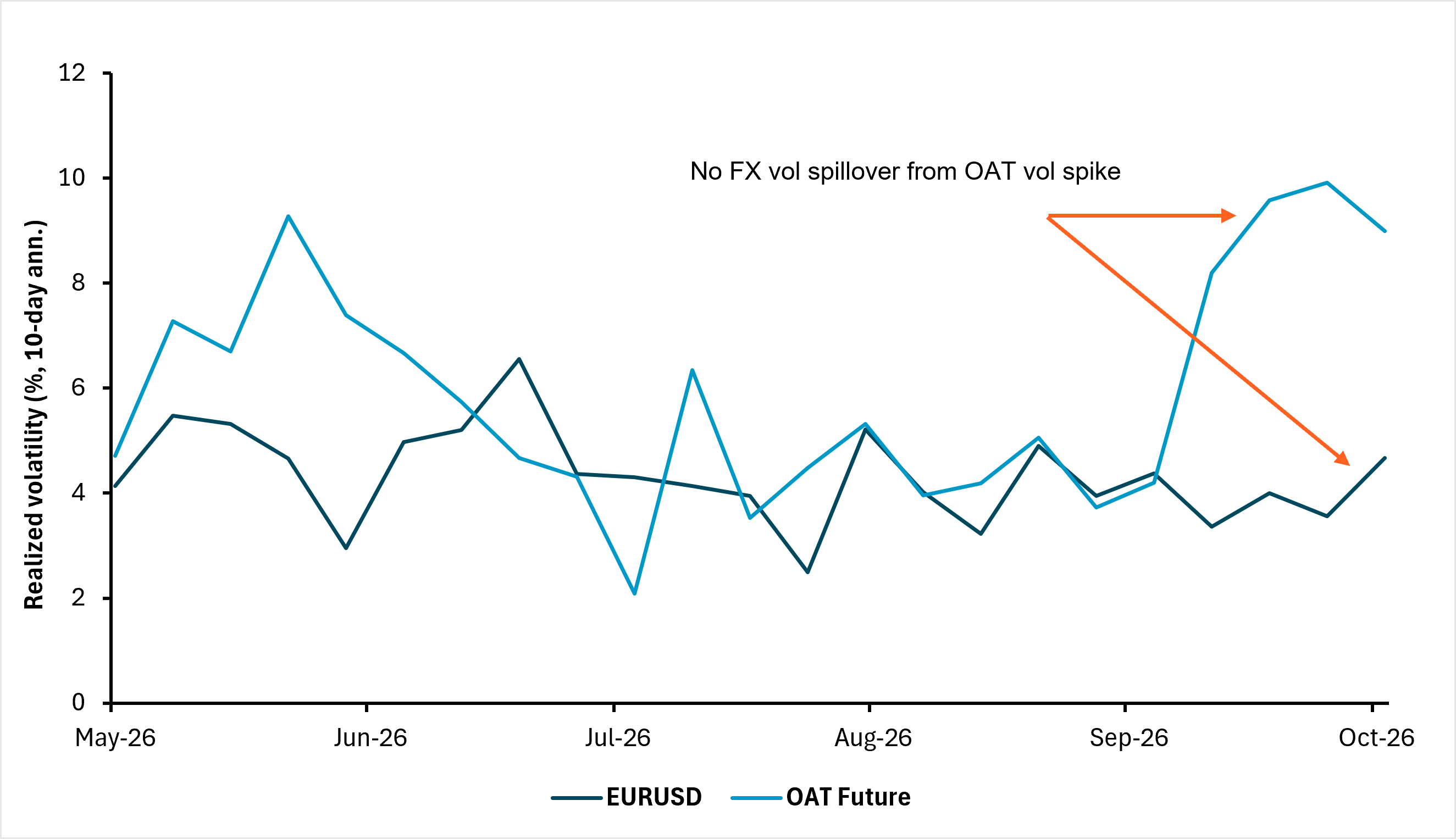
There’s no volatility spillover. Unlike in 2011–2012, we see no spillover from OAT volatility into FX markets. Ten-day realized EURUSD volatility remains within its range since May (Exhibit 4), even as realized volatility in OAT futures has spiked. The ECB’s retreat from firm rate guidance has already helped dampen volatility. Europe’s economic expansion provides an additional buffer, while strong nominal growth globally eases debt-servicing pressures. Nevertheless, governments recognize that markets now demand high real returns on new financing, making fiscal consolidation a necessity rather than a choice.
The ECB and EU are prepared. In 2011 and 2012, the ECB was forced to improvise support facilities for sovereign debt and the broader Eurozone banking system. Those facilities later became permanent, while the European Union’s taboo on joint issuance has long since been broken. The ECB also has market-intervention tools, including Outright Monetary Transactions (OMT) and the Transmission Protection Instrument. The latter has been cited as a possible means of intervening in the OAT market. Its activation would likely require clear evidence of downside inflation risk, by which point the EUR would probably have fallen further in response to a sharp shift in the ECB’s policy stance.
EXHIBIT #4: OAT VOLATILITY HASN’T SPILLED OVER INTO EURUSD VOLATILITY
Source: BNY, Bloomberg LP
BRL has repriced. The carry legs nevertheless warrant closer scrutiny. The market’s reaction to the first round of Brazil’s presidential election suggests that the result came as a surprise. Hedging in BRL was already minimal, and EURBRL has fallen a further 7% since the beginning of September, limiting the scope for additional gains. We expect markets to shift their focus toward policy delivery over the medium term. Successful implementation would place further downward pressure on nominal yields, with implications for the relative performance of FX and fixed income.
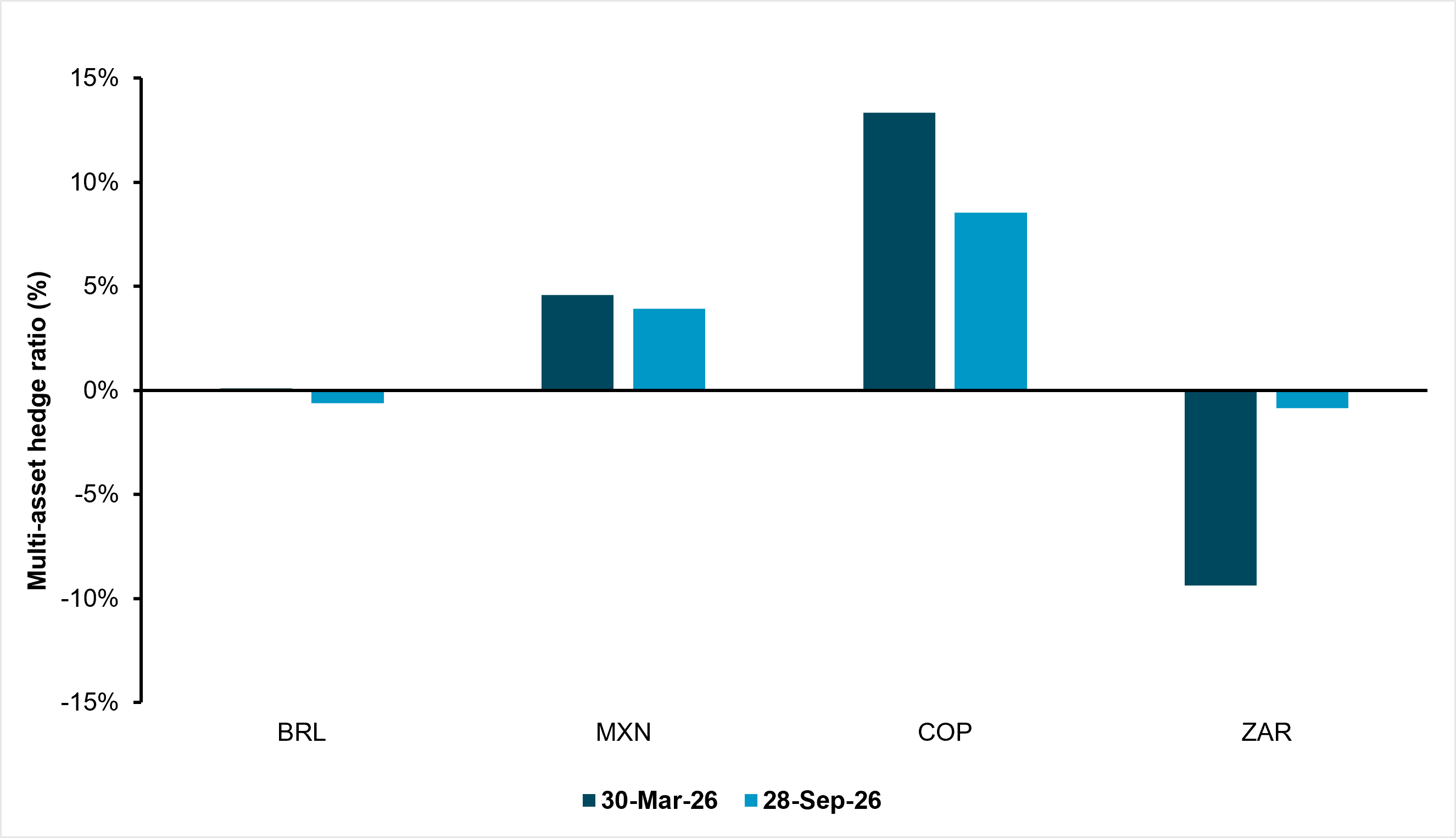
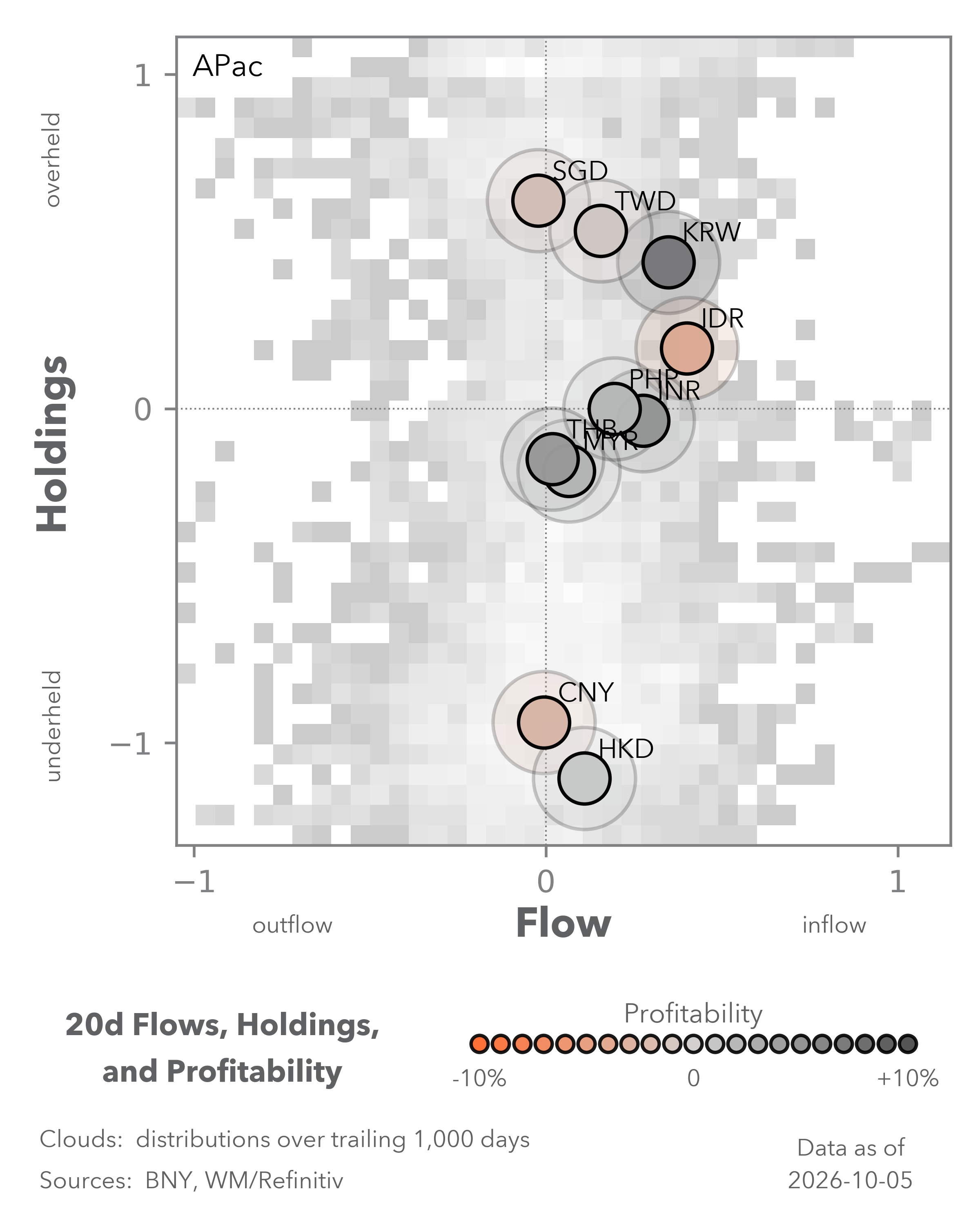
Look for further MXN and COP hedge unwinding. Our new iFlow Hedge Ratio indicator shows that protection remains surprisingly high in selected high-yielding markets. Ratios for MXN and COP have fallen over the past six months (Exhibit 5), but carry currencies with clear nominal-growth and policy-rate advantages over the USD would normally have minimal protection, or asset owners would hold outright long positions. Current levels still reflect decisions taken when Banxico and BdlR were clearly moving toward easing. Banxico is now on hold, while rates in Colombia are rebounding. This should encourage further unwinding and support currency performance.
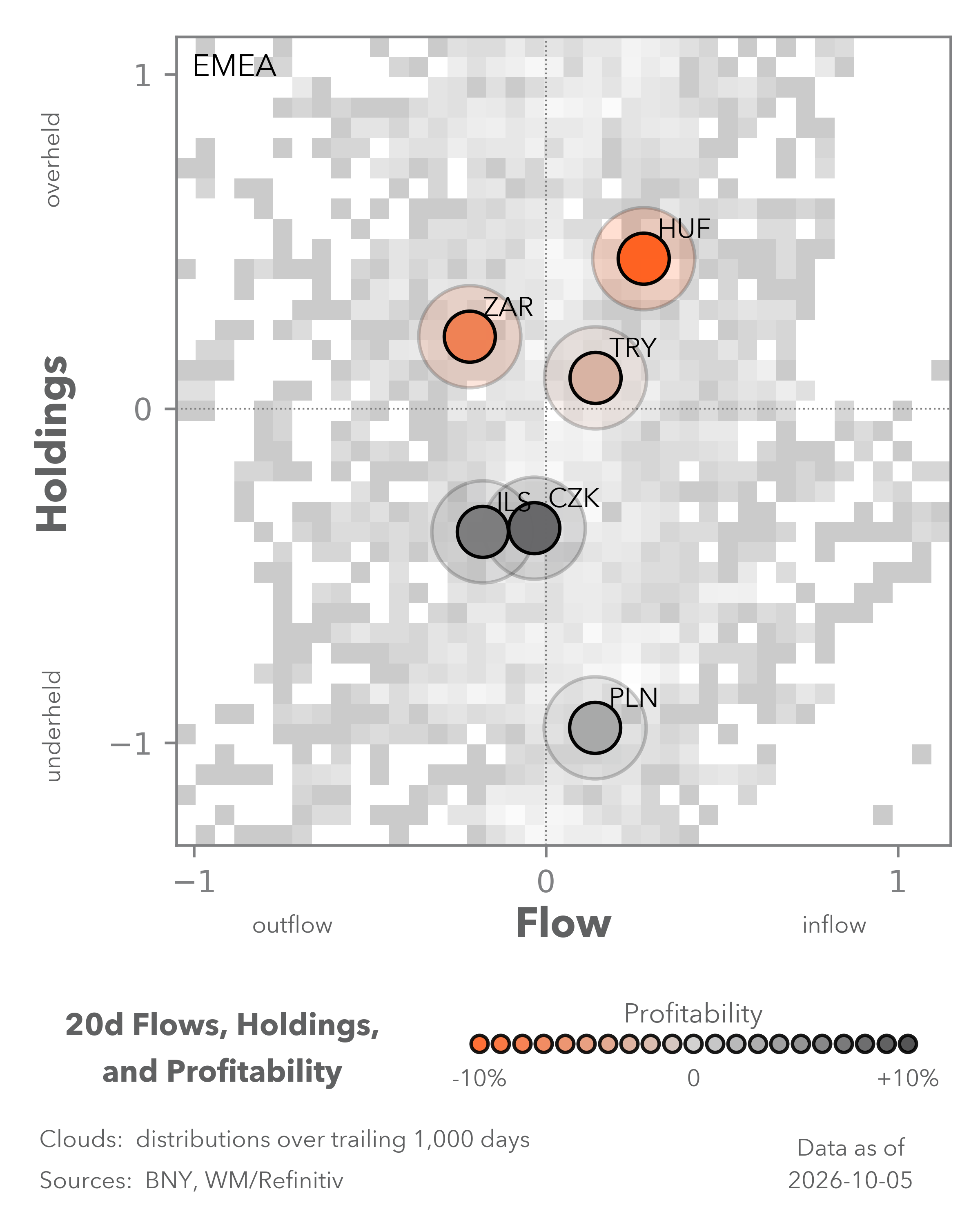
ZAR is becoming more defensive. Despite a September rate hike by the SARB, iFlow shows that clients have been reducing outright long positions in ZAR. Hedges are currently flat relative to underlying asset exposure. SARB set the benchmark for central-bank independence in 2025, culminating in a lower inflation target, and we don’t doubt its resolve. Forward rates imply a further 50bp of tightening over the next year, suggesting that the current carry buffer against the EUR should endure.
EXHIBIT #5: BRL AND ZAR HEDGES NEAR ZERO, MXN AND COP HEDGES CAN FALL FURTHER
Source: BNY
Correlations will shift. When we established our thesis, we noted that low realized volatility relative to implied volatility supports carry trades but doesn’t prove that the market is mispricing risk. Rising correlations among currencies or related asset classes remain the greatest risk to the position. OAT volatility in the futures market is currently isolated, but a sudden loss of confidence can’t be ruled out. The CAC 40 is down 3.5% year to date, compared with a strong 8% return for the Euro Stoxx 50; however, a loss of control in French sovereign bonds would quickly reverberate across Europe and global markets.
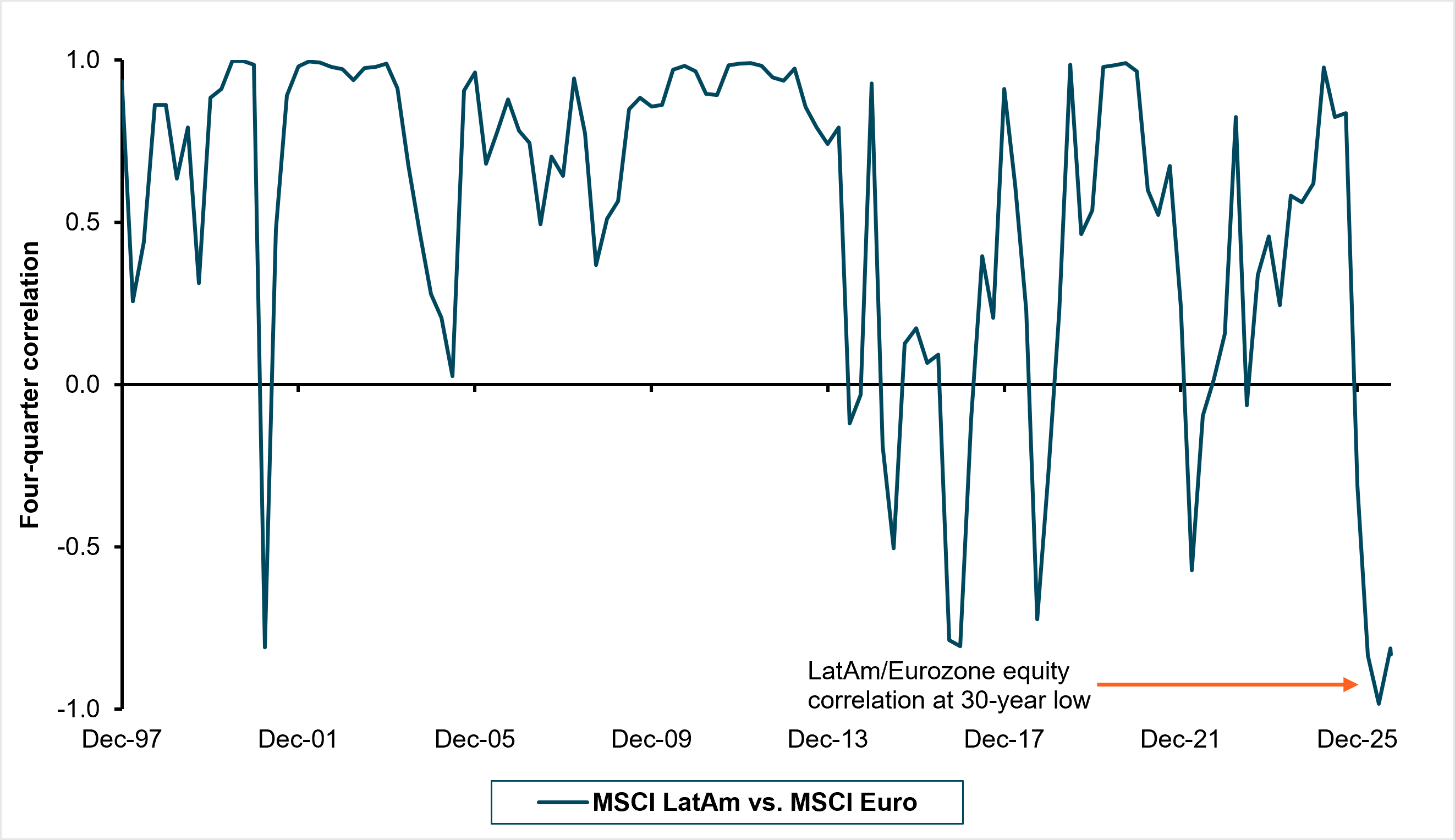
Global asset decoupling is a mirage. The rolling four-quarter return correlation between European and Latin American equities has fallen to its lowest level in nearly three decades (Exhibit 6), having approached -1 late last year. Given the positive long-run average correlation between these indices, a rebound is likely and could be sharp. The economic links between the regions make prolonged divergence especially difficult to sustain. A severe European growth contraction, whether caused by fiscal austerity or tighter credit, would have global consequences: the Eurozone and wider European market are important to Latin America outside Mexico, the EU is the region’s leading foreign investor by FDI stock, and European banks have a well-established presence across the region. Similarly, 19% of South Africa’s trade is with the EU, only 2pp below its share with China.
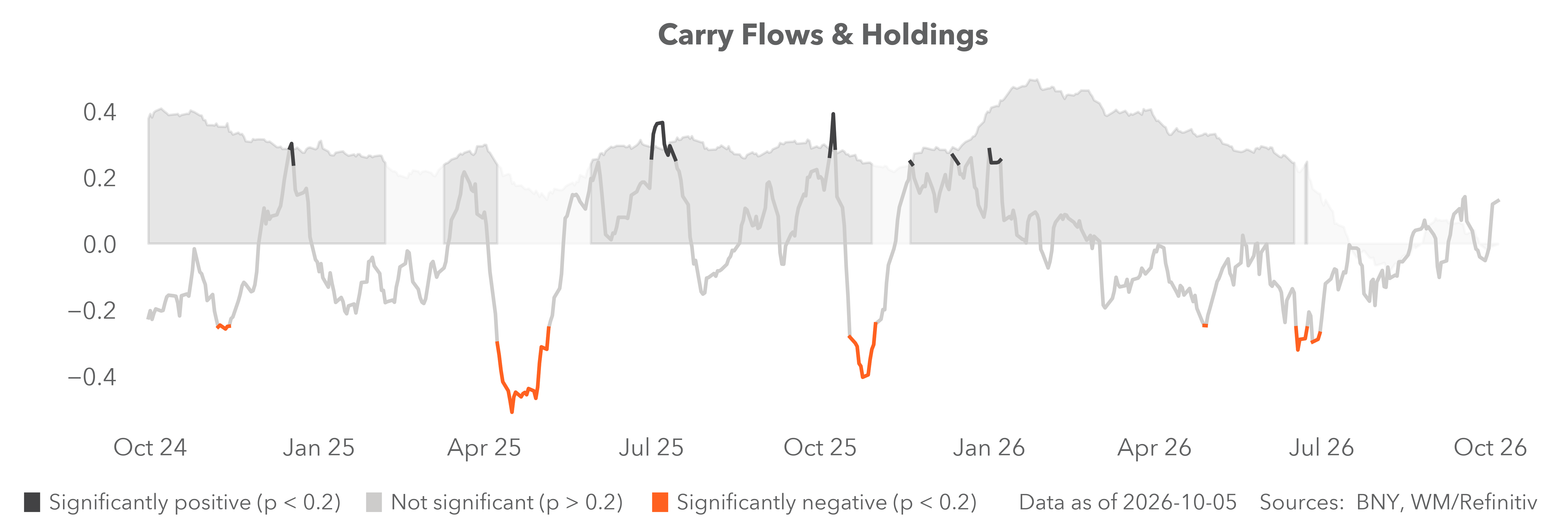
Crowding can build quickly. Moves in BRL suggest how rapidly a significantly underheld market can become crowded. iFlow shows that BRL and CLP were the strongest-performing currencies in the first trading session after Brazil’s election. We will continue to monitor overall holdings in high-yielding currencies and their hedge ratios. The policy and macroeconomic backdrop remains well aligned with our view, but the durability of these positions warrants closer scrutiny.
EXHIBIT #6: LATAM AND EUROZONE EQUITY CORRELATION IS LIKELY TO REBOUND
Source: BNY, Bloomberg