U.S. bond vol won’t stay home
iFlow > Special Report

David Tam
Time to Read: 3 minutes
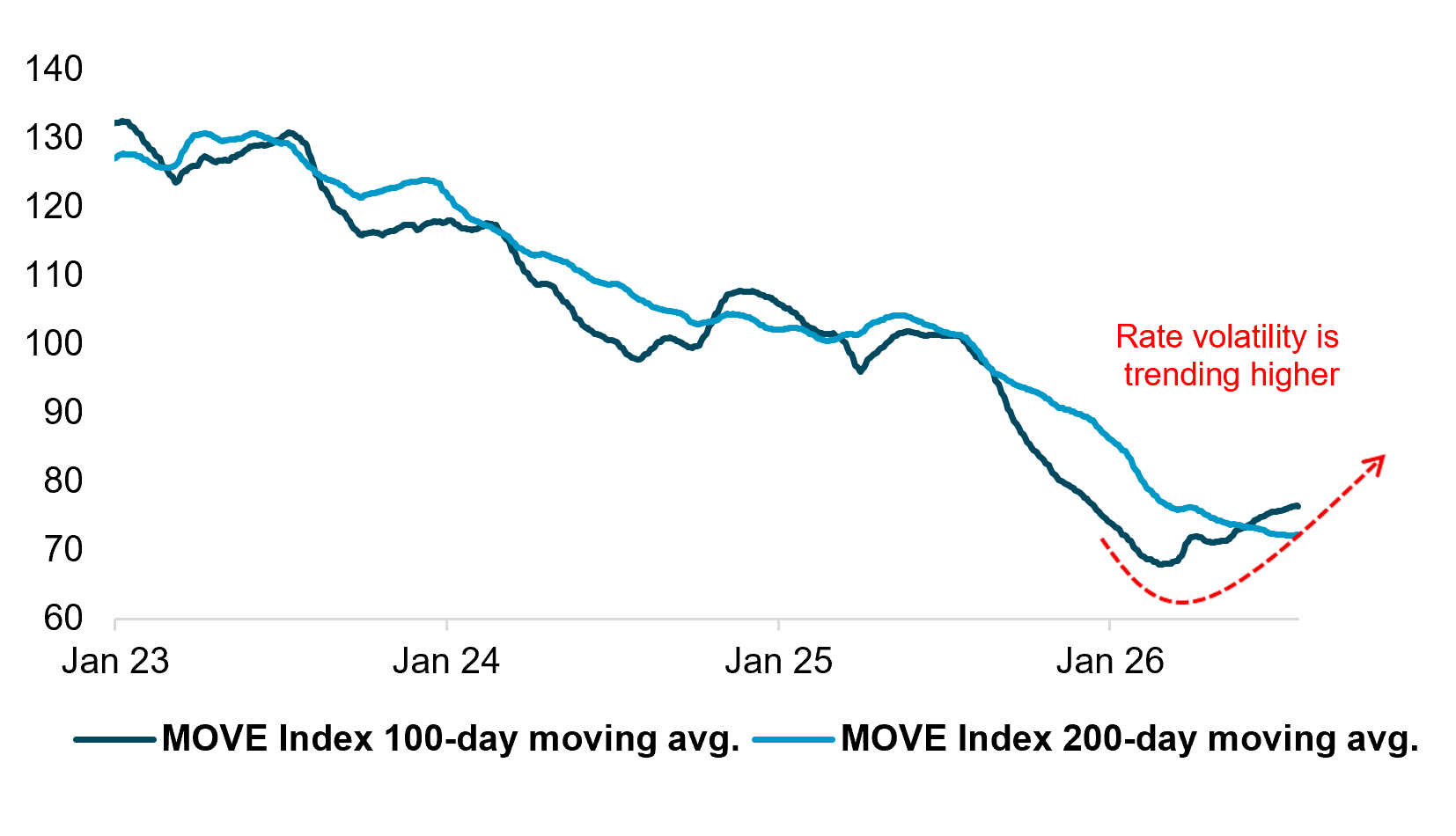
EXHIBIT #1: MOVE INDEX 100- AND 200-DAY MOVING AVERAGES
Source: BNY Markets, Bloomberg
Higher U.S. rate vol regime: We’ve been arguing (see here and here) that we are entering a period of greater rate vol in the absence of forward guidance from the Fed. Pricing in advance of this week’s FOMC meeting showed markets are struggling to adjust.
Vol won’t stay in the U.S.: High correlations between the U.S. rate vol (as measured by the MOVE Index) and foreign bond levels suggest a clear cross-border transmission mechanism. In particular, developed market (DM) sovereign bonds, which are more closely integrated with the U.S., could see a selloff and yield spike in a rising U.S. rate vol environment.
Implication clear: Investors shouldn’t be complacent to the threat of U.S. rate vol to their foreign sovereign bond portfolio, particularly DM holdings.
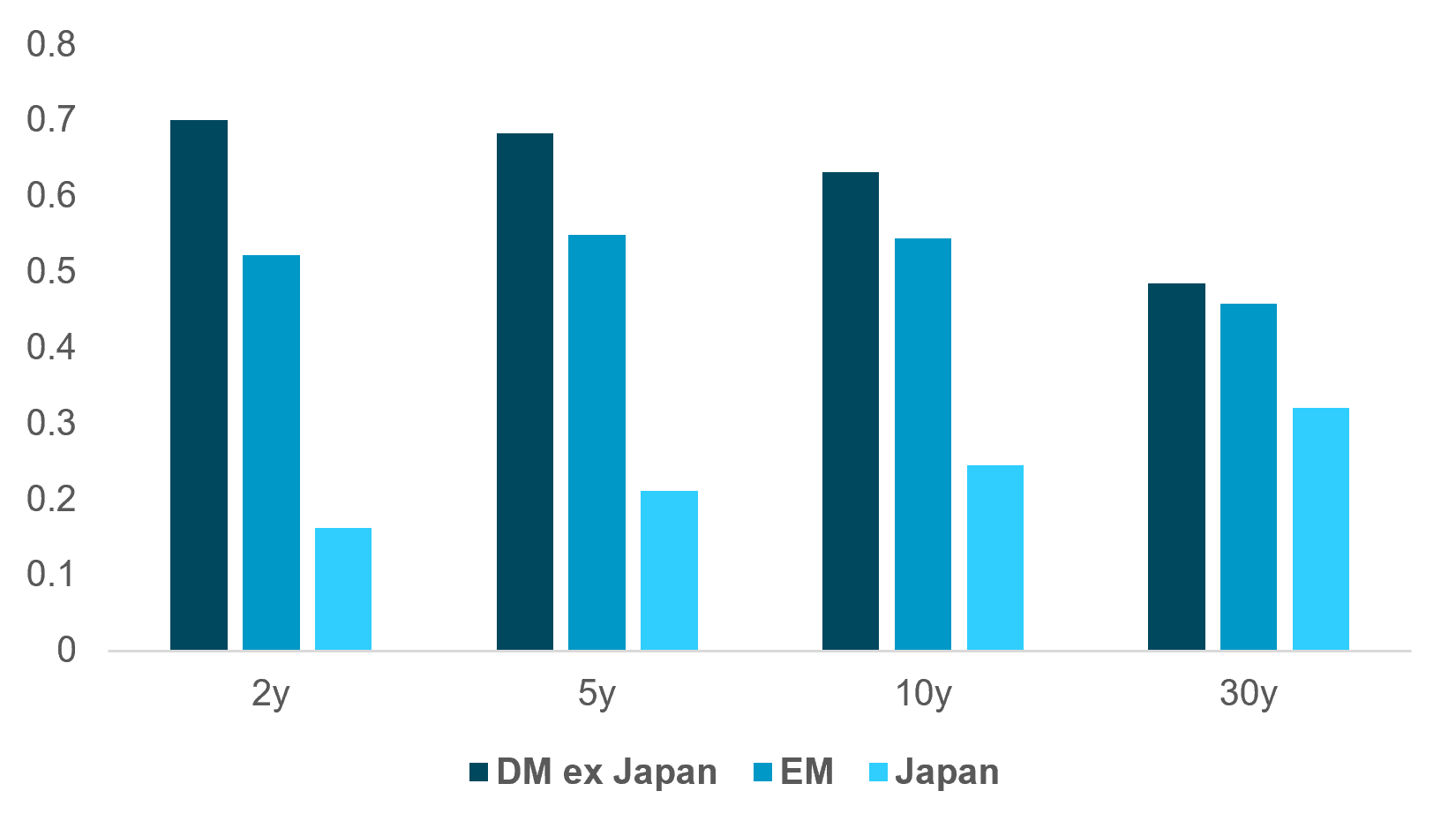
EXHIBIT #2: MOVE INDEX CORRELATION TO SOVEREIGN BOND YIELDS BY JURISDICTION AND TENOR
Source: BNY Markets, Bloomberg
Note: Correlations to MOVE Index over 10-year horizon, averaged by jurisdiction
Front end more correlated: As we believe that the coming bout of higher U.S. rate vol will manifest the most in the front end of the U.S. yield curve, this historical correlation suggests that front-end yields in foreign jurisdictions are the ones to watch.
DMs more connected: DMs are generally more correlated with the MOVE Index than emerging markets (EMs), consistent with tighter integration of these countries into the global rates complex.
Japan an outlier: Japan is a notable exception to the high correlation that DMs have to the MOVE Index. The BOJ’s policy framework, volatility suppression efforts, and persistently low rates make it an outlier but also show that DM status alone doesn’t guarantee the transmission of U.S. rate vol into local sovereign bond markets.
EMs more idiosyncratic: EM bonds generally show a lower correlation to the MOVE Index, suggesting that local idiosyncratic factors play a larger role in those bond markets. A notable exception is CEE (Poland, Czechia, Hungary) bonds, which show some of the highest correlations to U.S. rate vol of any jurisdiction.
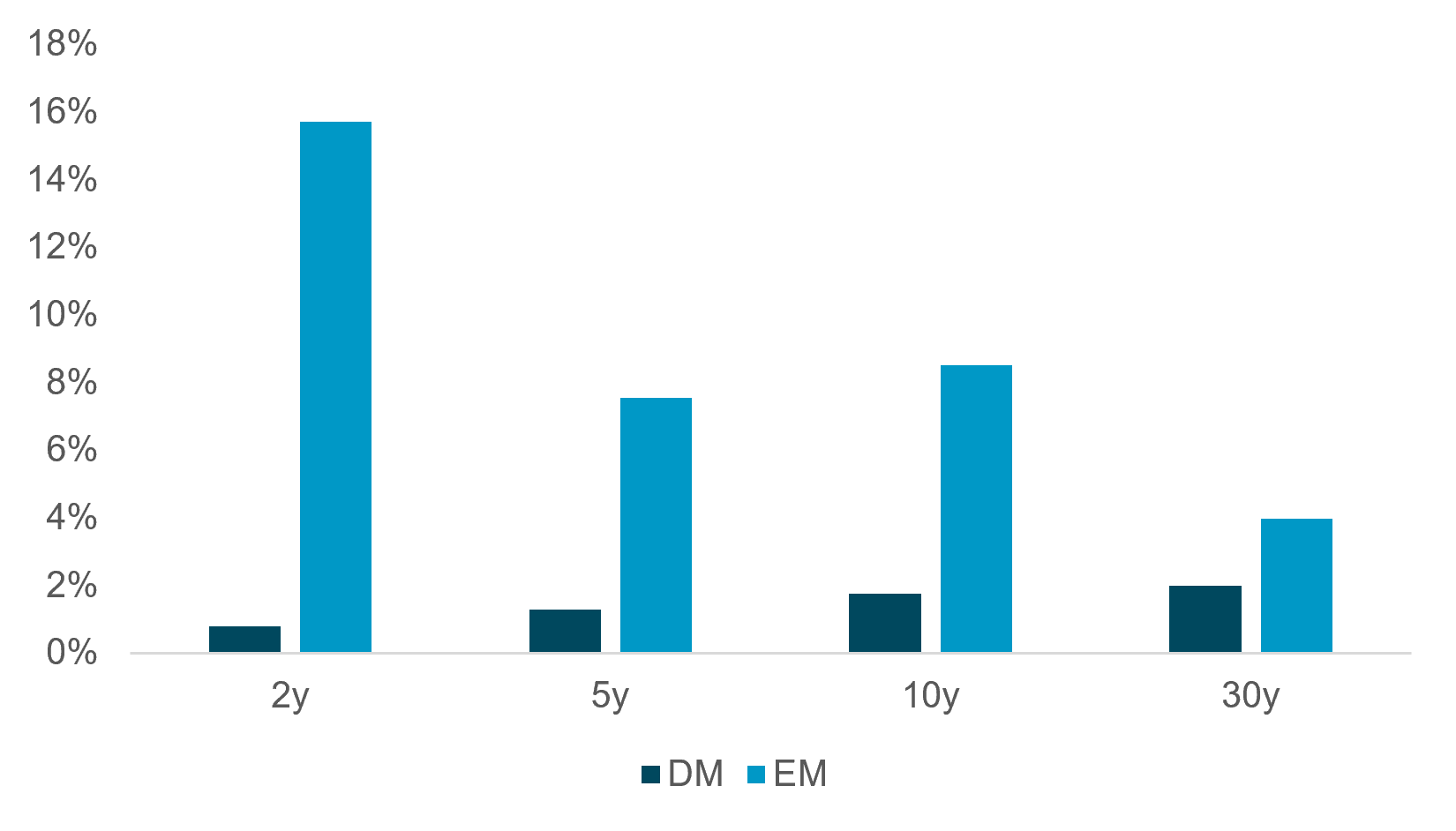
EXHIBIT #3: SOVEREIGN BOND YIELD BETAS TO MOVE INDEX BY JURISDICTION AND TENOR
Source: BNY Markets, Bloomberg
Note: Betas to MOVE Index calculated over 10-year horizon, averaged by jurisdiction
EM bonds trade more unpredictably in a rising vol environment: EM bonds are less correlated to U.S. rate vol than their DM peers, but their thinner liquidity and higher risk premia mean repricing is more disorderly when vol spills over.
DM bonds are more closely linked but less volatile: The opposite is true for DM bonds, which trade more systematically with U.S. rate volatility. DM bonds’ lower beta is a function of better liquidity, deeper investor bases, and stronger policy credibility, which should help dampen any shocks in the global vol space.
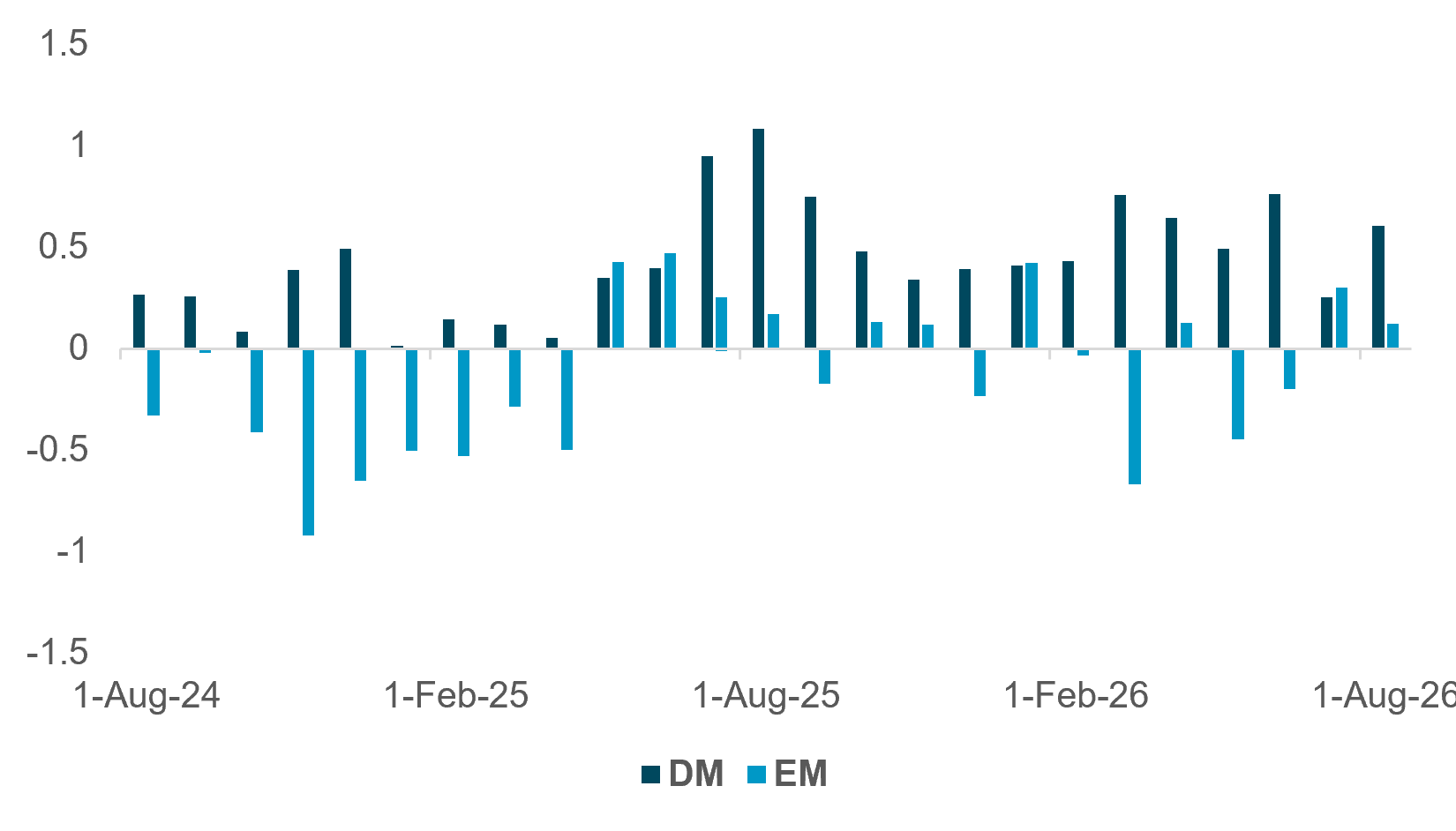
EXHIBIT #4: SOVEREIGN BOND SCORED FLOWS
Source: BNY iFlow, WM/Refinitiv
Note: Scored flow is trailing one-year standard deviation of flow
Global bonds have seen inflows: DM bonds have seen consistent inflows over the past two years, suggesting that positioning could be growing crowded. EMs are less crowded given outflows in the wake of the U.S. conflict with Iran; however, EM bonds, too, have seen inflows over the past two months.
Ineffective diversification: With global investors collectively positioned net long global bonds, a spike in U.S. rate vol might trigger selloffs across the global rates complex in unpredictable ways across jurisdictions. The diversifying effects of holding bonds across jurisdictions may be less helpful than investors expect.
Rate volatility: Continue to track the MOVE Index and its 100- and 200-day moving averages (Exhibit 1). If they keep rising, U.S. bond vol may impact foreign sovereign bond markets.
Keep an eye on Japan: Japan’s correlation to U.S. rates markets and rate volatility (Exhibit 2) may be the clearest signal that the bond vol story is going global.
Risk sentiment: Track the correlation between U.S. rate vol and global risk proxies. If risk sentiment weakens alongside higher MOVE Index, this should hit EM bonds particularly hard given their higher betas to volatility.