Seeking momentum
Start of the Week previews activities across global financial markets, providing useful charts, links, data and a calendar of key events to help with more informed asset allocation and trading decisions.
Start of the Week previews activities across global financial markets, providing useful charts, links, data and a calendar of key events to help with more informed asset allocation and trading decisions.

Geoff Yu
Time to Read: 8 minutes
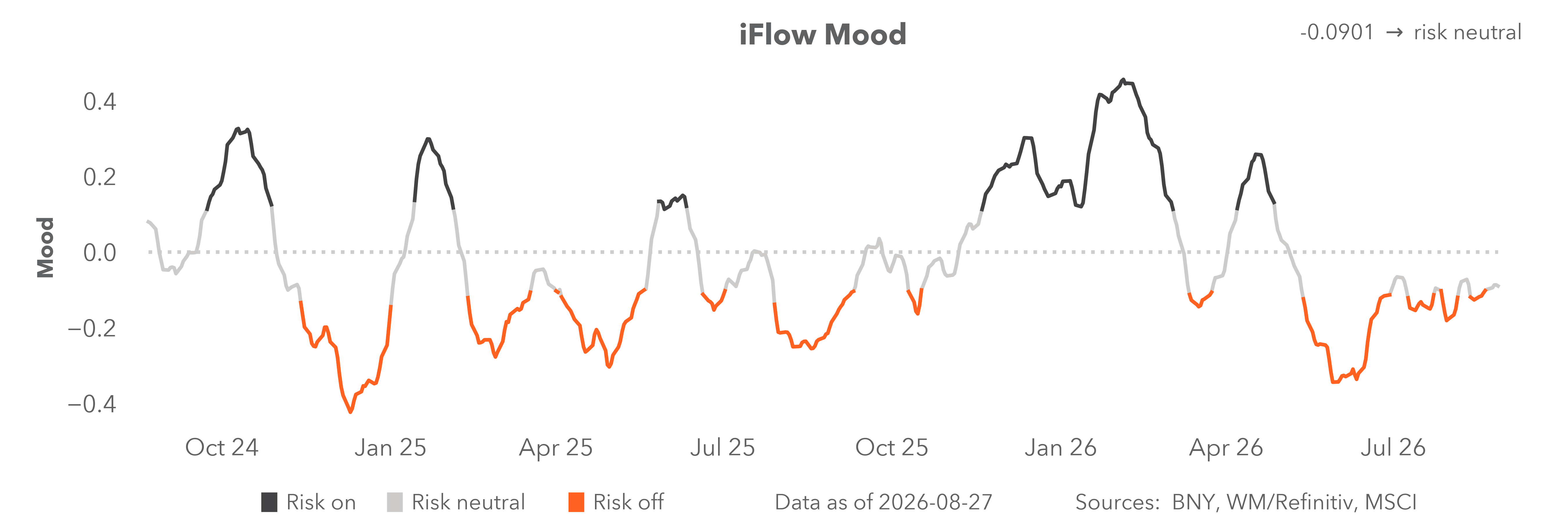
Momentum faces confirmation. Markets enter the fall having absorbed FX and Treasury intervention, bond volatility, tariff stress, and geopolitics remarkably well. Policymakers continue to receive the benefit of the doubt, but September shifts attention back toward the data. U.S. payrolls on Friday are the clearest test. Labor market resilience would reinforce the benign U.S. growth story and give the Fed time; renewed weakness would raise questions over how durable the current risk backdrop really is.
Europe has more to prove. Final manufacturing and services PMIs will test whether the recent improvement in activity is broadening, particularly after stronger signals from Germany and manufacturing. But this recovery increasingly runs into an inflation constraint. German CPI and Eurozone flash CPI are therefore arguably more important. Another firm round would strengthen the hawkish case ahead of September’s European Central Bank (ECB) meeting, even if tighter policy restrains a still-fragile recovery. The final ECB speakers before the quiet period, alongside Governor Andrew Bailey and the Bank of England’s (BOE) inflation-expectations survey, will help define how much tolerance European central banks have for stronger demand.
Policy divergence widens. The RBNZ decision on Wednesday provides the most immediate example, with another hike expected as New Zealand confronts inflation above target despite uneven domestic growth. That contrasts sharply with economies where policymakers are still trying to preserve momentum or lean more on signs of labor market softening.
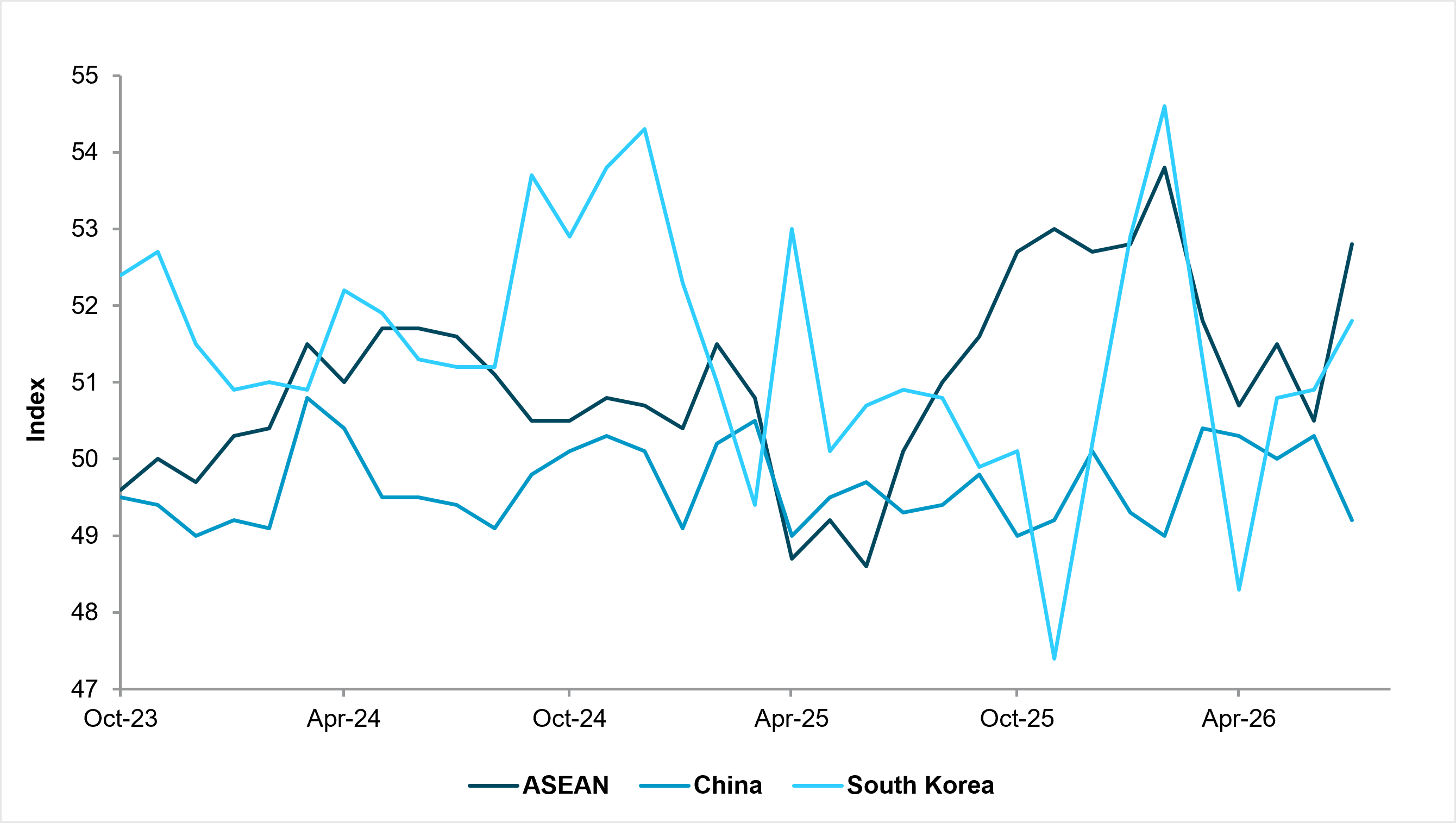
China remains the missing link. Chinese and regional PMIs will show whether manufacturing can stabilize after another weak month. Beijing continues to emphasize growth, but the policy impulse remains muted. Weak Chinese demand remains an important reason why commodity currencies and assets have struggled to fully exploit lower U.S. real rates.
Bottom line: September begins with a search for confirmation. Momentum exists, but payrolls, PMIs, inflation and policy decisions now need to show that it’s broad enough to endure.
North America: Warsh turns hawkish; BOC holds
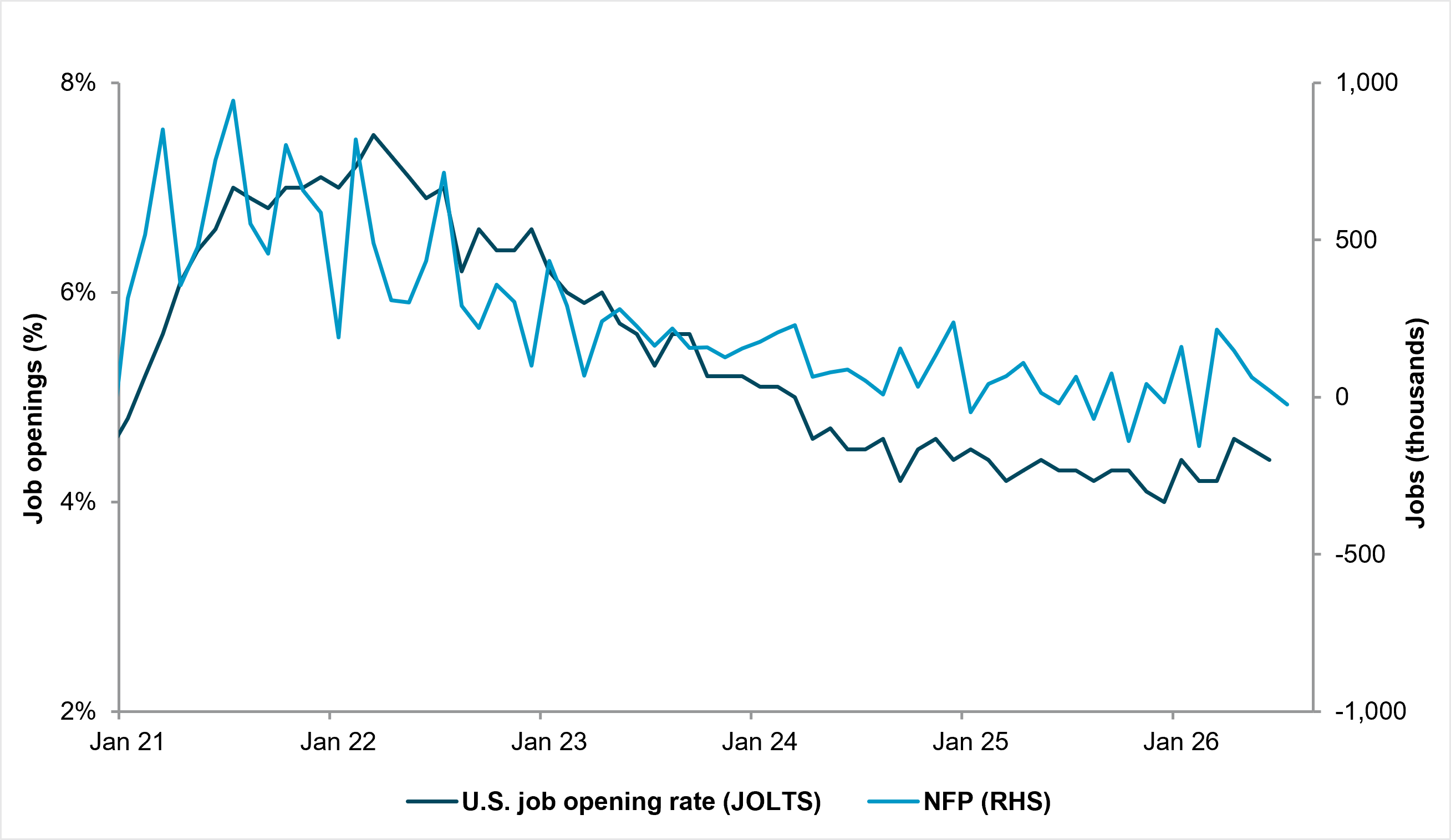
EXHIBIT #1: JOLTS AND NFP LEVEL OFF
Source: BNY
Our take: Last week’s U.S. inflation data did little to upset the macro narrative, with core PCE landing broadly in line, but Fed Chair Kevin Warsh’s Jackson Hole speech was the clear market mover. His more hawkish tone drove the market to reprice the probability of a September hike from roughly one-in-three to greater than 50/50, and nearly one and a half cumulative hikes by year end. The curve flattened, and the dollar rose.
This week looks materially busier on the data front. In the U.S., JOLTS lands Tuesday, followed by ISM Manufacturing and Services on Tuesday and Thursday respectively, with both expected to remain in expansionary territory. But the main event is Friday’s nonfarm payrolls (NFP) report, where consensus looks for a rebound to 58,000 after last month’s surprisingly weak -23,000 print. In Canada, the Bank of Canada (BOC) meets and is expected to hold at 2.25%, while the unemployment rate is seen holding at 6.4%.
Forward look: NFP is the key release for rates, FX, and risk assets. After last month’s soft employment print, another weak number could temper the hawkish repricing that followed Jackson Hole. Conversely, a firmer print would validate Warsh’s message that the Fed’s focus should be on the inflation side of the mandate.
In Canada, a hold from the BOC looks straightforward. The more important read-through might come from labor data, where a stable or higher unemployment rate could argue for a cautious policy stance and further limit market expectations for near-term hiking.
EMEA: Final arguments against a rate hike
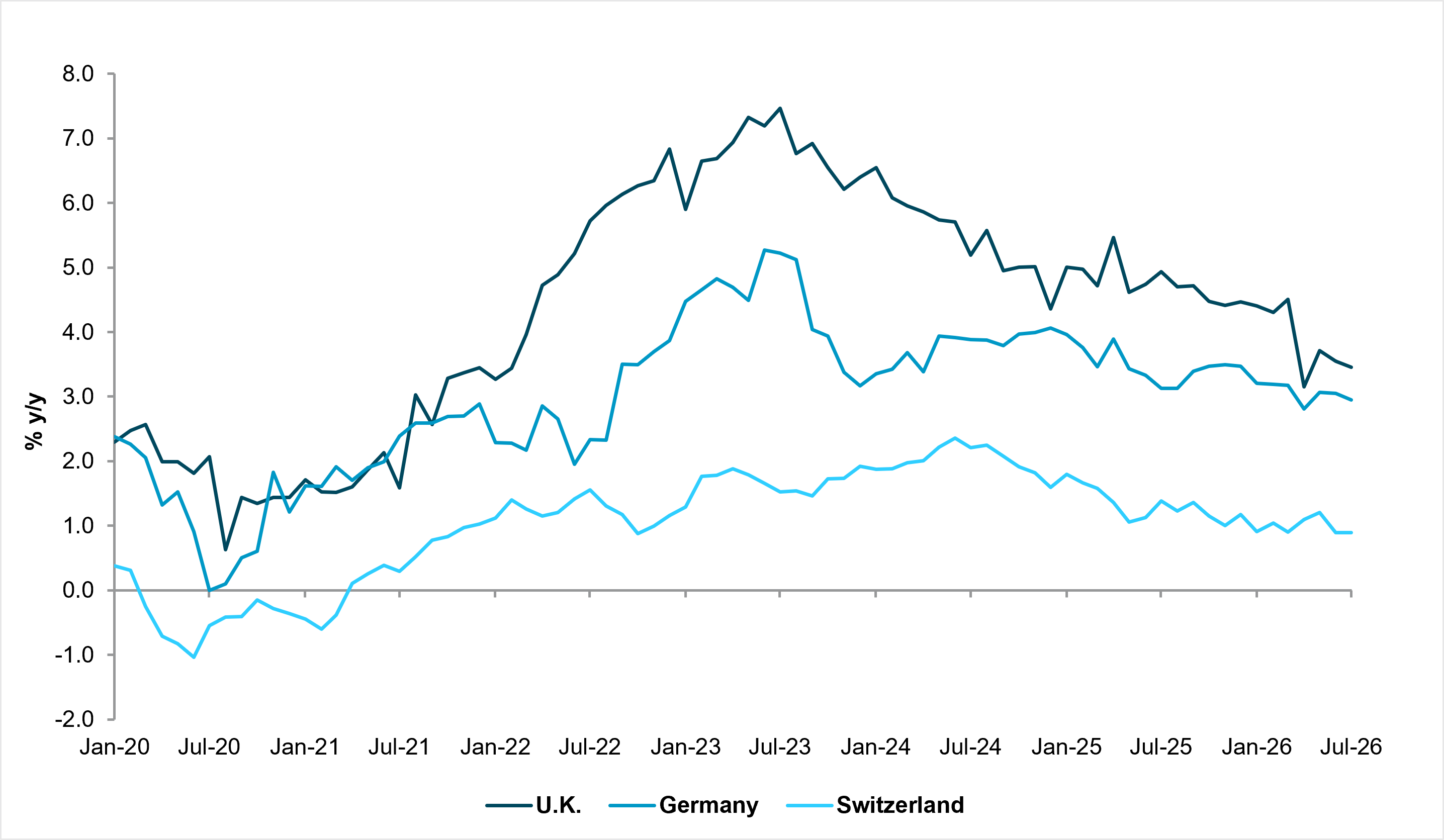
EXHIBIT #2: SERVICES INFLATION CONTINUES TO SOFTEN ACROSS EUROPE
Source: BNY
Our take: We fully acknowledge that the odds are stacked against the doves as the week ahead sees key inflation releases in Germany and the broader Eurozone. Upside surprises in France and Spain have provided validation for the hawks, and OIS markets now suggest a 97% chance of a hike in the September meeting. We still see risk reward in fading the “certainty,” especially at current levels, but the ECB is likely intent on pushing for additional preemptive action. This marks an operational break with most of its peers, which choose to be reactive even as inflation and inflation expectations run above the Eurozone equivalent – despite sharing the same price stability target.
Headline inflation globally has its own supply challenges, but we believe the ECB is also making a judgment on the reaction function to wages, which still seems excessive. Even some of the more hawkish members have highlighted that there’s no clear evidence of second-round effects, as President Christine Lagarde acknowledged at the July meeting. We also stress that services inflation, which is a better gauge of wage pressures and domestic demand (Exhibit 2), continues to decline across Europe.
Diminishing returns to targeting headline inflation with monetary policy alone will eventually invite pushback from the less hawkish Governing Council members. We fear that excessive tightening will jeopardize the nascent cyclical recovery in Europe, which suggests that resilience efforts over the last few years are bearing fruit.
Forward look: The ECB’s pre-decision quiet period begins in the coming days, leaving the inflation and PMI figures the core releases for central bank signaling. German CPI aside, Eurozone flash CPI is out on Tuesday, where a rise in headline inflation would reinforce pressure on ECB rate expectations – validating Executive Board Member Isabel Schnabel’s extremely hawkish messaging. Final PMIs across the Eurozone and U.K. will show whether recent improvements in activity are holding, but the embedded price indices will provide further examples of pass-through risk.
ECB communication also matters ahead of the quiet period, with Martin Kocher, Joachim Nagel, Boris Vujcic and Philip Lane among the final scheduled speakers before the next policy decision. In the U.K., BOE Governor Bailey’s speech on Friday, alongside the BOE’s DMP inflation-expectations survey, will be the key test for the domestic rate outlook.
Overall, the week will determine whether improving activity can coexist with renewed inflation pressure without forcing a more hawkish response from European central banks.
APAC: Seeking growth signals as policy diverges
EXHIBIT #3: DIVERGING APAC PMI: SLOWING CHINA VS. BOOMING ASEAN
Source: BNY, Bloomberg
Our take: Asia’s macro calendar is dominated by growth, inflation and policy, led by China and regional PMIs, Australia and India’s Q2 GDP, and the Reserve Bank of New Zealand (RBNZ) and Bank Negara Malaysia (BNM) meetings. Australia’s GDP will be a key test of domestic momentum and the Reserve Bank of Australia (RBA) outlook, while India’s GDP will provide a broader gauge of underlying demand. The RBNZ and BNM decisions will anchor the policy calendar, while CPI releases in South Korea, Indonesia and the Philippines will shape the regional inflation picture. Trade and manufacturing data will also be in focus, led by South Korea’s exports and industrial production, alongside trade data from Australia, Indonesia and Thailand, and Japan’s industrial production and household spending.
Forward look: APAC currencies will remain driven by idiosyncratic factors, navigating shifts in the U.S. dollar, oil-price volatility, foreign flows and domestic macro data. Markets must also assess the broader implications of “Operation Economic Outcast,” which threatens to restrict access to the U.S. financial system for jurisdictions facilitating money laundering or converting Iranian oil revenues into funding.
The Bank of Korea and Philippines central bank both raised rates last week, but their guidance was slightly less hawkish. Both described the moves as preemptive and avoided signaling a continuous hiking cycle. The Bank of Thailand held rates and turned modestly dovish, focusing on weak domestic demand and below-potential growth.
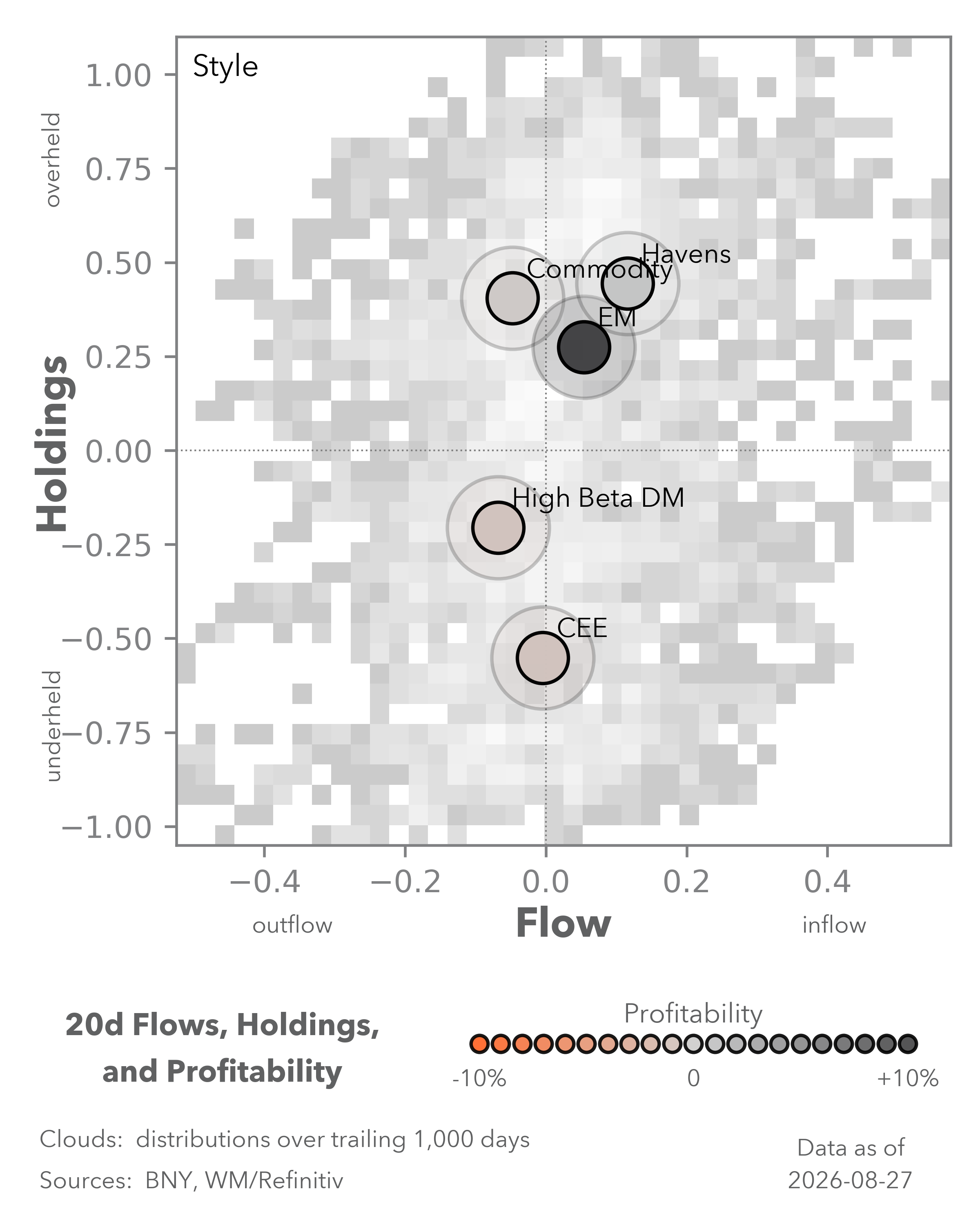
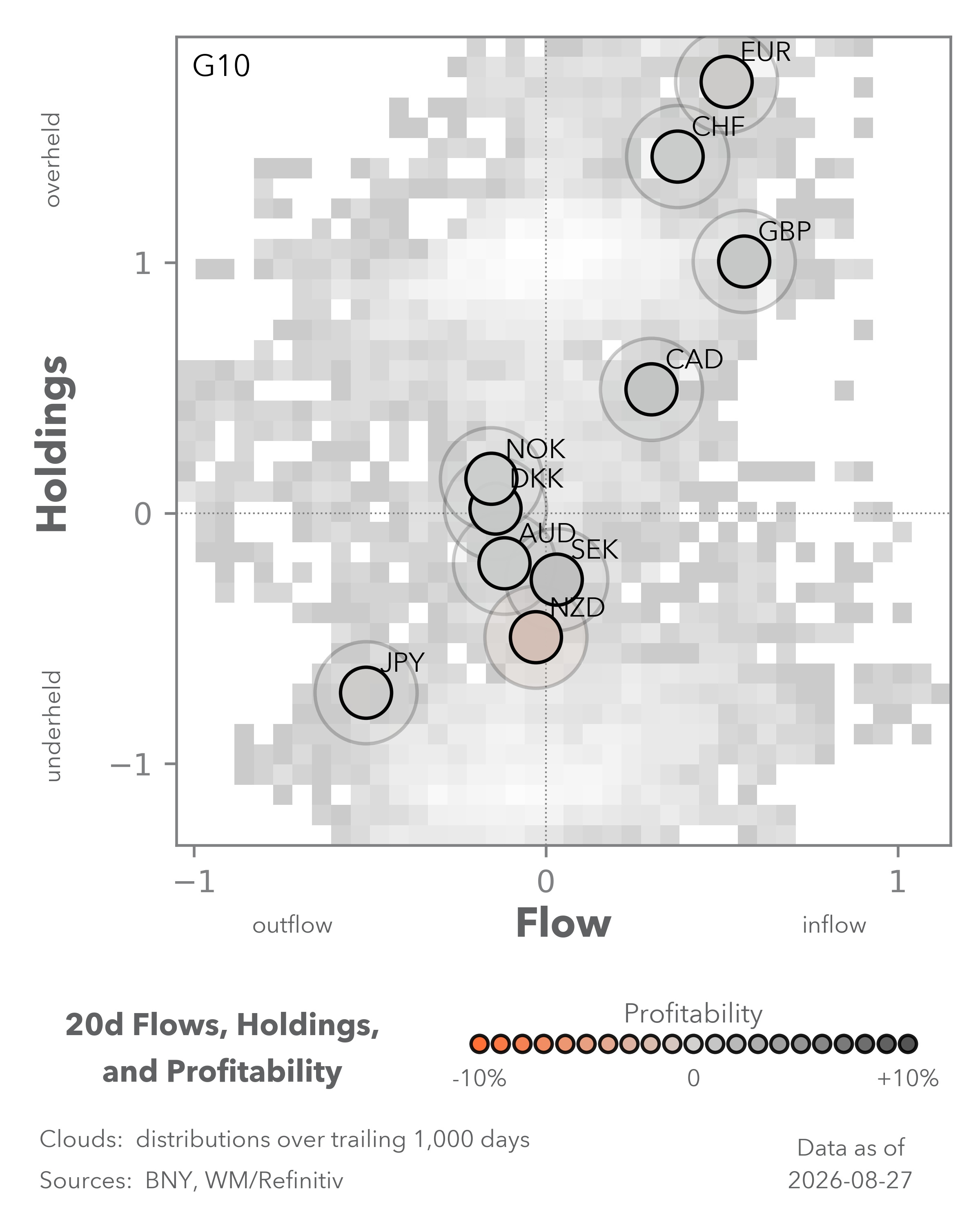
PHP remains APAC’s weakest link amid a deteriorating macro-outlook, particularly the trade balance, and less aggressive FX smoothing as reserves decline. CNY was relatively muted as the People’s Bank of China strengthened guidance through a larger counter-cyclical factor in its daily fixings. Our call for higher CNY hedge ratios has been validated by persistent outflows and a further decline in CNY-scored holdings into underheld territory.
INR volatility has eased under more aggressive Reserve Bank of India smoothing. Unless this marks a return to the managed-float regime under former Governor Shaktikanta Das – we don’t believe so – intervention is merely buying time. Sustained stability requires improvement in oil prices and the U.S. dollar, while a weaker fiscal outlook leaves USDINR risks tilted higher. We’re also monitoring the Cockroach Janta Party (CJP) youth movement and opposition momentum ahead of the next round of state elections in early 2027.
Indonesian assets have retraced some recent gains, but underlying flows and sentiment remain constructive. Destry Damayanti’s confirmation as the next Bank of Indonesia governor should support policy continuity and ease concerns over central bank independence.
Latin America: Still in search of a carry opening
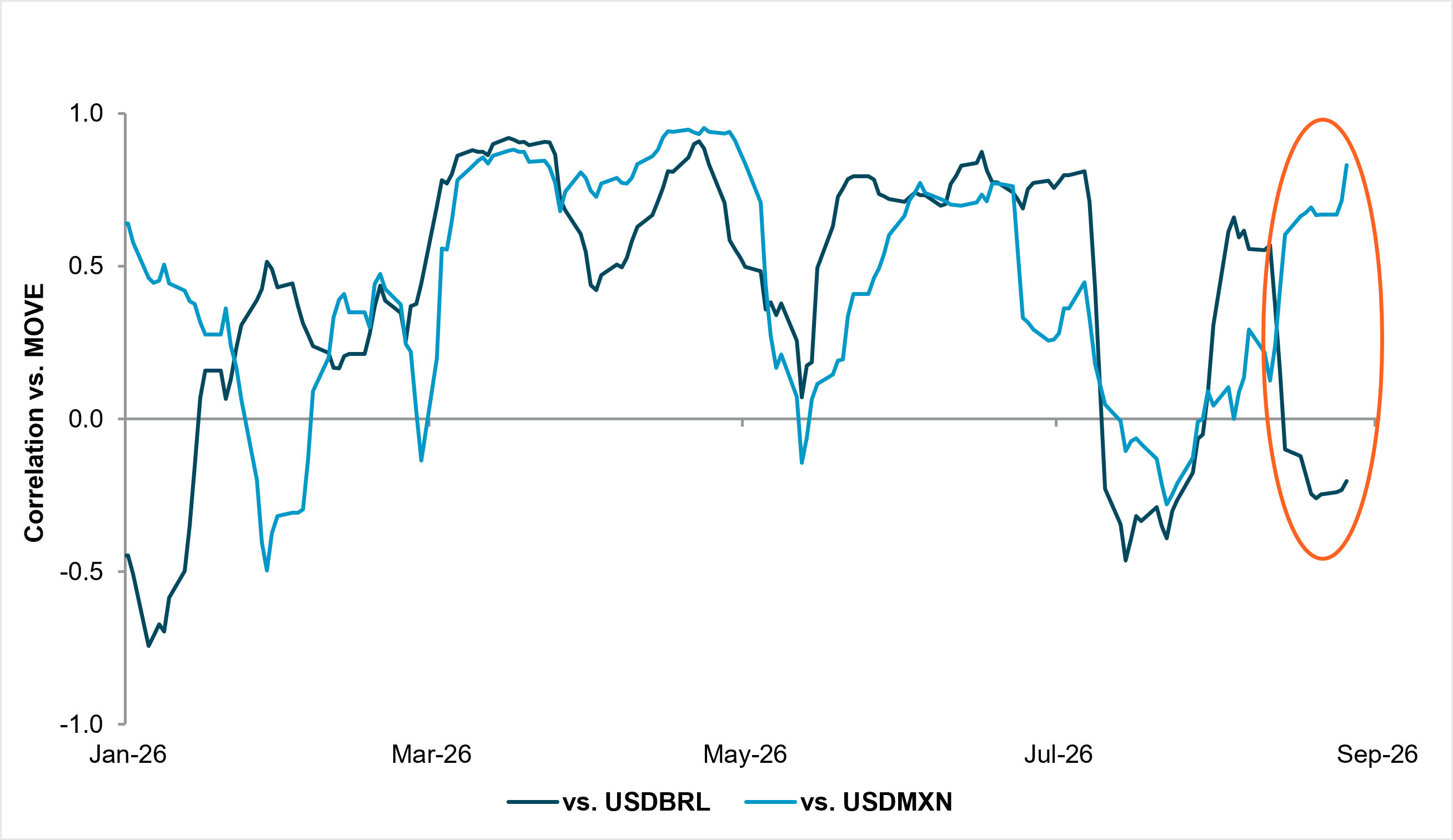
EXHIBIT #4: FIXED INCOME VOL DECLINE CAN HELP LATAM CARRY; BRL AN EXCEPTION
Source: BNY, Bloomberg
Our take: Over the past week, iFlow has finally pointed to some combined interest in Latin American currencies. They are outperforming EMEA and APAC peers on a collective basis, but flow scores are light and not commensurate with the narrative that there’s a sudden rush to hedge against falling U.S. real rates. Fed Chair Warsh pointed to an ongoing commitment to price stability in his Jackson Hole comments, which means a full-on recovery in the debasement trade is unlikely. The carry trade itself faces challenges as fixed income volatility, for reasons related and unrelated to the U.S. monetary and fiscal paths, continues to affect FX markets. Idiosyncratic risk also matters: After the interventions in the first half of August, fixed income is better behaved but price action isn’t uniform across Latin America.
The MOVE index is normally strongly positively correlated to FX equivalents in Latin America, such as USDBRL and USDMXN (Exhibit 4), but BRL is now an exception. The most striking feature is the persistent divergence between USDBRL and USDMXN through early 2026 and again in mid-2026. The MOVE–USDMXN correlation has remained strongly positive while MOVE–USDBRL correlation collapsed and turned negative on both occasions. This points to Brazil-specific drivers (fiscal dynamics, central bank policy, local political risk) decoupling BRL-implied volatility from the global rates volatility signal during those windows.
MXN in theory should also be affected by idiosyncratic factors, but the market is placing a strong emphasis on trade relations with the U.S. as the main idiosyncratic factor for Mexico. An adverse development – such as tariffs on Mexican exports – has a direct inflationary effect on the U.S., which in turn raises U.S. Treasury term premia and volatility. This can keep the MOVE–USDMXN correlation positive; Brazil factors are much more “local” in nature, whereas “local” Mexican factors deemed market-relevant have a U.S. trigger.
Forward look: The week ahead is centered on growth, industrial momentum and inflation. Brazil’s Q2 GDP on Tuesday is the key release, with consensus pointing to a sharp slowdown from Q1. Budget data, industrial production and the trade balance will round out the picture on growth, fiscal performance and external resilience. Manufacturing PMIs from Brazil, Mexico and Colombia will provide a useful cross-country read on industrial momentum, with Brazil still in contraction, while Mexico and Colombia remain in expansion.
Peru’s Lima CPI will be watched for signs that inflation is moving back toward target and for implications for BCRP rate expectations. In Mexico, investment, private consumption, leading indicators and formal job creation later in the week will offer the broadest read on domestic demand, particularly after the prior decline in payrolls.
Central bank decisions
Central bank decisions
Bank of Israel (Tuesday, September 1): There’s scope for the BOI to cut rates, but it will be a close call. Inflation is softening but momentum points to a rebound. The labor market remains relatively tight, even though the unemployment rate has been ticking up of late. General firmness in activity means that the meeting is “live,” in line with Governor Amir Yaron’s outlook. If carry trade picks up in earnest, BOI rates are approaching levels that could encourage ILS-funded carry trades.
Reserve Bank of New Zealand (Wednesday, September 2): We expect the RBNZ to deliver a second consecutive 25bp rate hike to 2.75%, supported by elevated inflation and a sharp rebound in business and consumer confidence. Focus will be on the updated macroeconomic forecasts and Official Cash Rate (OCR) track for guidance on the pace of further tightening. In May, the RBNZ projected the OCR to reach 3.0% by Q1 2027 and gradually rise to 3.3% over the medium term, while markets now price around 3.25% by March 2027.
Bank of Canada (Wednesday, September 2): The BOC is expected to keep rates on hold at 2.25%, with the current state of trade relations between the U.S. and Canada a clear downside risk for growth. Room for de-escalation appears elusive, and this may offset some of the upward price tension seen in the July inflation prints. The labor market appears robust as well, but this could shift depending on trade relations progress over time.
Bank Negara Malaysia (Thursday, September 3): We expect BNM to keep the policy rate unchanged at 2.75% and maintain a neutral stance. Malaysia’s macro backdrop remains favorable, supported by solid H1 2026 growth and resilient momentum into H2, alongside contained inflation, with both headline and core CPI at 1.8% y/y. We expect BNM to reiterate that the current policy stance remains appropriate while continuing to assess evolving risks to the growth and inflation outlook. Our view is for BNM to be unchanged for the remainder of the year.
Source: BNY
Source: BNY