Month-end rebalancing: USD likely to struggle, CAD to find relief

FX: G10 & EM, published every Thursday, provides a detailed analysis of global foreign exchange movements in major and emerging economies around the world together with macro insights.

Subscribe to Our Publications

In order to start receiving iFlow, please fill out the form below.

Subscribe
arrow_forward
BNY iFlow FX: G10 & EM ,BNY iFlow FX: G10 & EM

Key Highlights

  • “U.S. exceptionalism” always presents month-end challenges for USD.
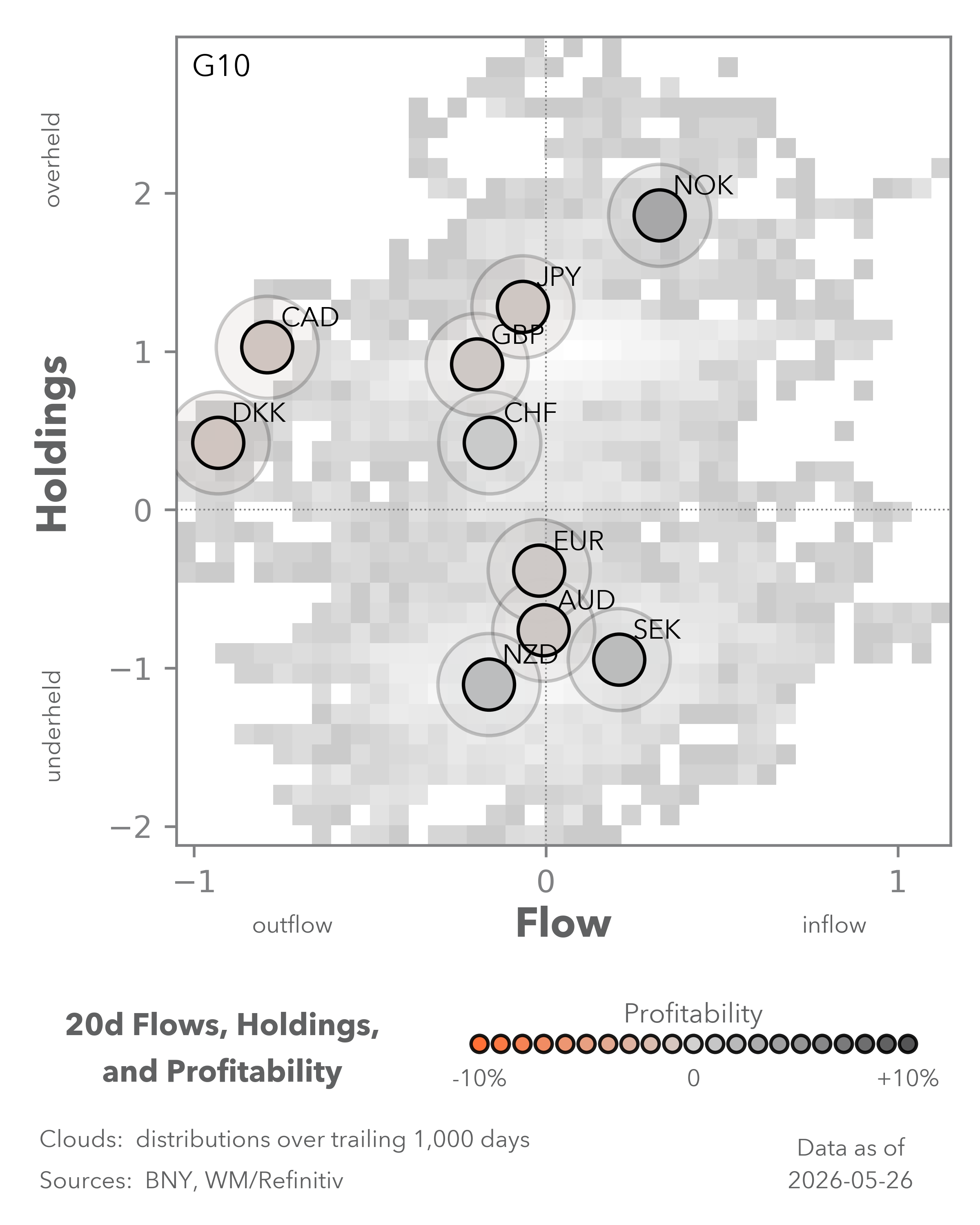
  • GBP and JPY to benefit from reversal of steepening.
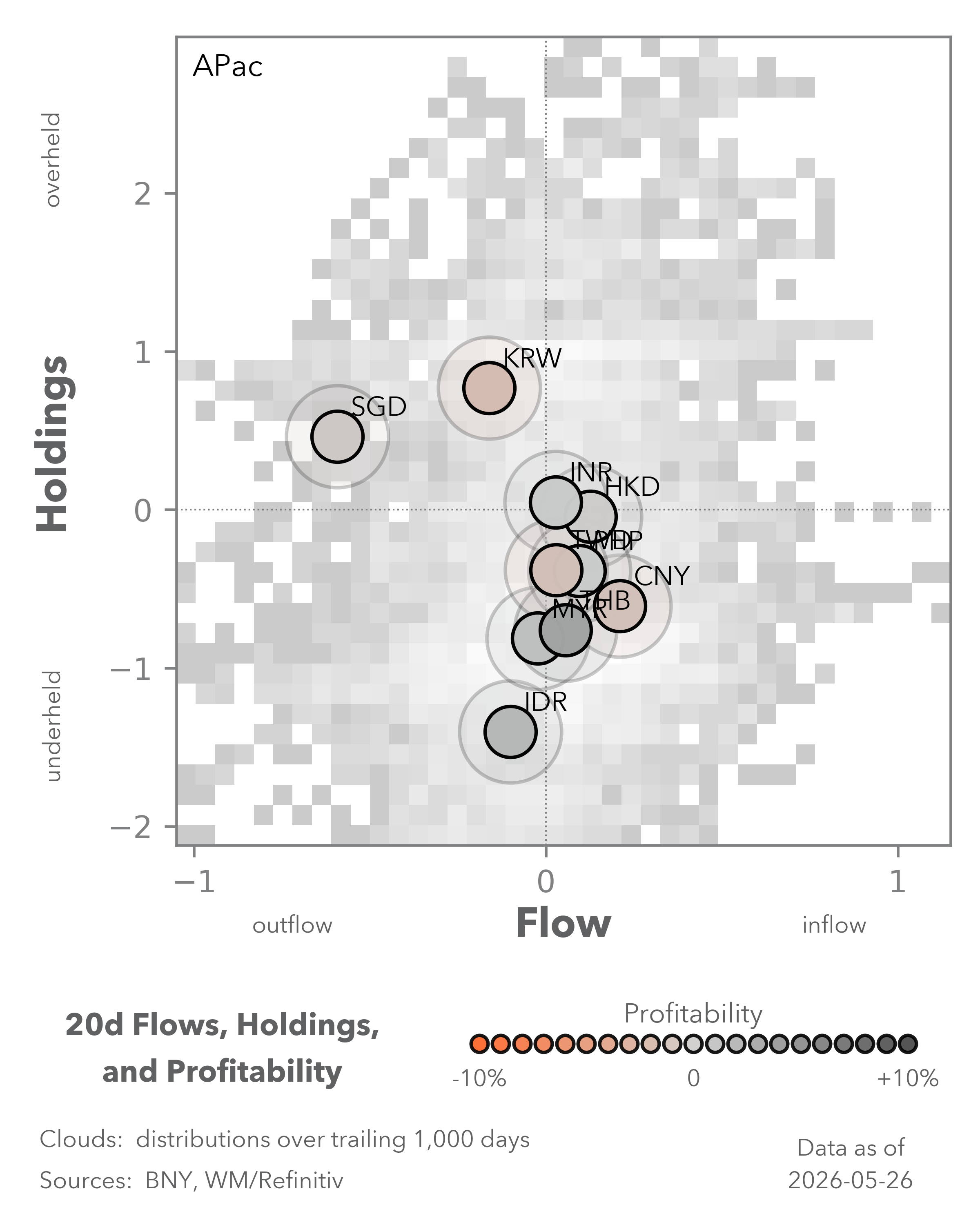
  • Equity performance is lifting KRW and TWD flow.

Dollar buying and equity performance amplify dollar rebalancing

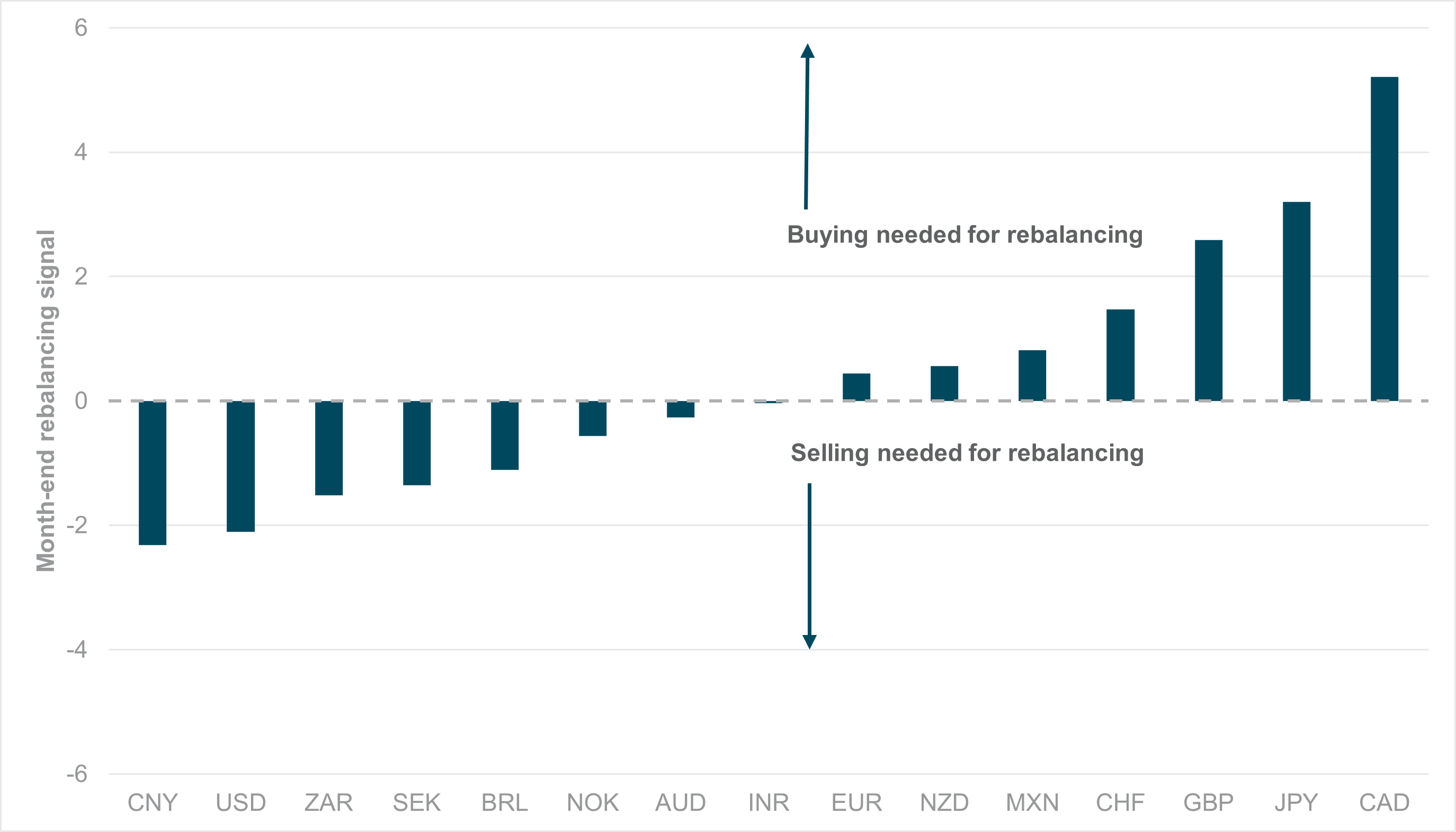
EXHIBIT #1: MONTH-END REBALANCING SCORES, BASED ON REALIZED FX FLOWS AND EQUITY PERFORMANCE

Source: BNY, Bloomberg LP

Our take

Risk sentiment is set to end May on a strong note, but gains are mostly concentrated around AI and semiconductor themes. The U.S. has been a standout performer, and the dollar ended the month as the best-bought currency by far among the tracked majors. Consequently, it’s no surprise that the notion of “U.S. exceptionalism” has resurfaced. Bonds, however, are under more pressure as inflation risk grows. Nonetheless, based on equities alone, asset allocators are ending the month heavily exposed to the greenback, and some reduction or hedging is needed. The only other equity-based rebalancing signal is in the CAD, where growth and asset allocation trends are pointing in the opposite direction. 

Forward Look

Mathematically, our figures suggest that the unwinding of USDCAD hedges – the discontinuation of forward USD selling against CAD on U.S. positions – played a big role in the dollar’s performance and some reversion is needed. The fundamentals that drove the flow and broader asset market price action, however, are likely to continue. Specific U.S. equity sectors will likely continue to run independently of broader macro developments, and dollar exposures in the meantime may continue to rise if Fed expectations move further away from a dovish or neutral position. The tipping point will be when Fed tightening or broader tightening in U.S. financial conditions is no longer conducive to equity performance, but the market appears to view that as a tail risk at best.

Stagflation-prone economies may need to unwind duration losses

EXHIBIT #2: MONTH-END REBALANCING SCORES, BASED ON REALIZED FX FLOWS AND FIXED INCOME PERFORMANCE

Source: BNY, Bloomberg LP

Our take

In contrast to equities, fixed income-based rebalancing has generated more signals due to significant steepening across key G10 markets as inflation expectations surged throughout the month. USD and CAD have again generated the same net selling and buying signals, though the dollar’s signal is far weaker, as poor bond performance offset dollar purchases. In contrast, CAD buying is being amplified by similar steepening in bond markets on top of poor currency performance. GBP and JPY should also find some bids: gilts have performed poorly due to the combination of stagflation fears and political uncertainty, with the latter generally pointing to greater fiscal impulse upon resolution. JGBs have also continued to underperform as the JPY has given up its post-intervention gains and pass-through remains a severe issue.

Surprisingly, CNY is expected to face selling as one of the few bond markets that did not react negatively to the surge in global inflation expectations. The most recent Chinese inflation prints have also pointed to accelerated price growth, with global supply pressures complementing a cyclical upturn. However, economic headwinds remain strong, otherwise the government would not be launching yet another “anti-involution” drive against over-competition announced yesterday. Front-end rates also fell to a record low on Monday, all of which point to sustained disinflationary pressures supportive of bonds. Coupled with moderately strong CNY purchases this month, CNY is expected to face rebalancing-based sales through the fixed income channel.

Forward Look

We expect fixed income volatility to remain high. As hopes for a peace agreement picked up toward month end, the long end of bond curves was already flattening, reducing some rebalancing pressures. Although some of the supply issues will have a price impact over the medium term, most central banks remain cautious on tightening, with the ECB the only exception in G10. If more policymakers “flip” to a tightening stance in the face of emerging second-round effects, broad-based bond market weakness will add significantly to rebalancing needs at end-Q2.

APAC semiconductor trade helps stabilize FX exposures

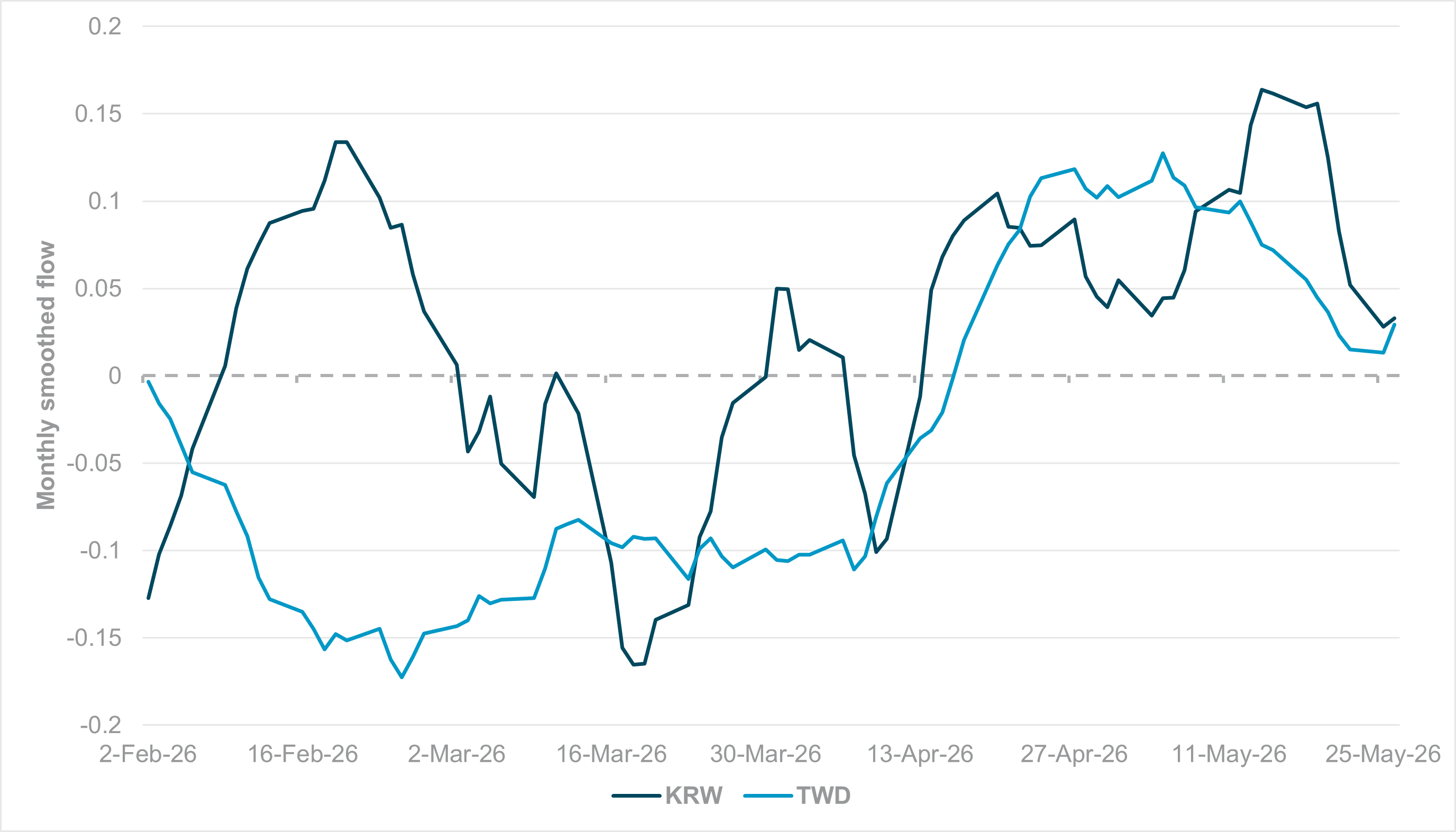
EXHIBIT #3: CROSS-BORDER KRW AND TWD FLOW, MONTHLY SMOOTHED BASIS

Source: BNY, Bloomberg LP

Our take

KRW and TWD are not part of general rebalancing calculations, mainly due to very weak international participation in fixed income markets, but the alignment between FX and equity performance is now material. As of Wednesday, KOSPI’s year-to-date gains are tracking 100%, while the TAIEX is also above a healthy 50%. Even though extreme equity gains should generate some hedging/rebalancing interest, we have seen how cross-border investors are almost “forced-in” into re-rating markets (South Africa last year being a recent example). Our flows indicate that as sentiment recovered with the ceasefire in April, there were some signs of outflows materializing through mid-May, as total exposures had begun to look excessive. However, on a monthly smoothed basis, neither KRW nor TWD have fallen back to net selling, and performance is well aligned.

Forward look

Extreme growth and surpluses generated through the semiconductor sector will require a policy offset – either through outright tightening or allowing gains in the real effective exchange rate. Both factors will strongly support the need to reduce hedge ratios, while leaving currency exposures more exposed to equity market factors rather than domestic fundamentals – such as inflation driven by higher import costs and energy supply. The two are linked, of course, as problems with the latter will cause production difficulties in the companies involved.

However, for the same reason that “U.S. exceptionalism” is returning, the market is viewing trends as secular, and any short-term pullbacks might find dip-buyers. The client breakdown of flows into South Korea, as we expected, indicates heavy institutional recovery flows heading into month end. The strong retail presence in KOSPI during the more volatile months around mid-May appears to have succeeded in attracting underperforming institutional flows back into the market.

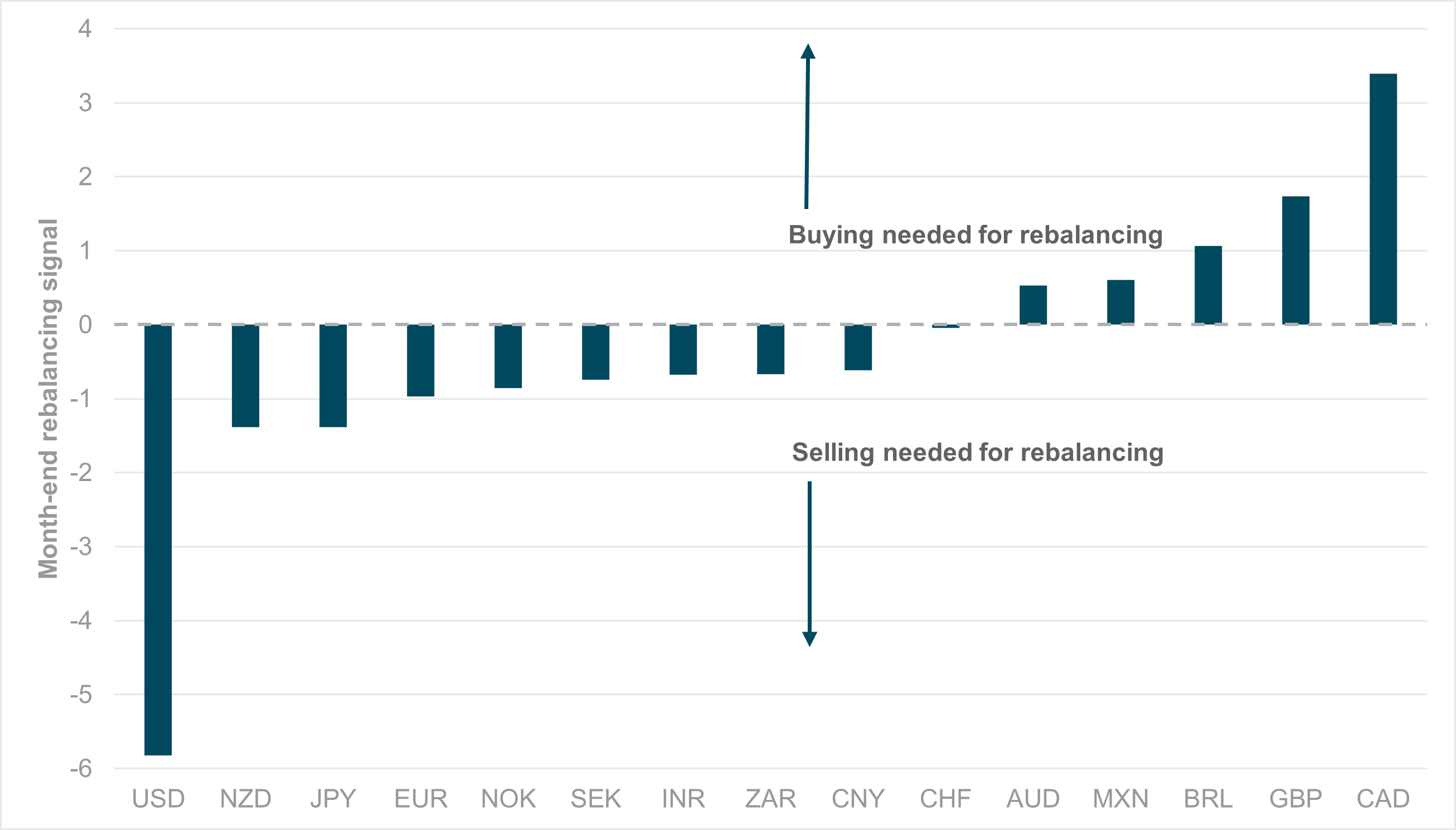
Chart pack

Media Contact Image
Geoff Yu
EMEA Macro Strategist
geoffrey.yu@bny.com

Ready to grow your business? Speak to our team.