Dollar rehedging: July Fed dents U.S. exceptionalism
FX: G10 & EM provides a detailed analysis of global foreign exchange movements in major and emerging economies around the world together with macro insights.
FX: G10 & EM provides a detailed analysis of global foreign exchange movements in major and emerging economies around the world together with macro insights.

Geoff Yu
Time to Read: 4 minutes
Bottom line: The July Fed appears to have marked a dollar dehedging peak rather than an end to U.S. exceptionalism. Cross-border investors are adding USD hedges again, with net U.S. asset exposure falling sharply after the July 29 decision. Dollar selling is concentrated in GBP, EUR and CAD, while JPY and CNY remain notable exceptions. Crucially, investors are not abandoning U.S. assets: equity positioning remains near year-to-date highs, while Treasury exposure has softened as curve steepening raises duration risk.
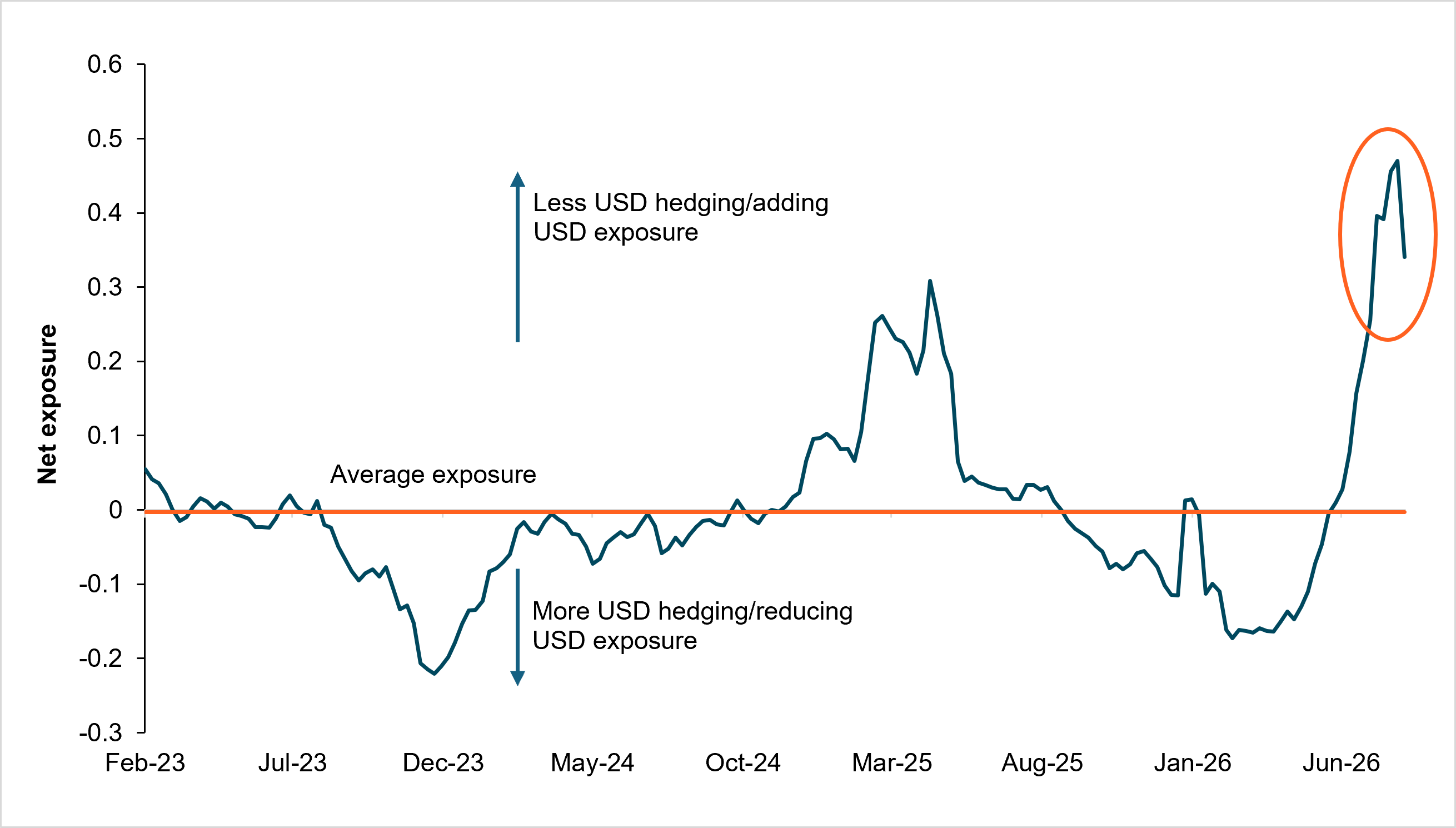
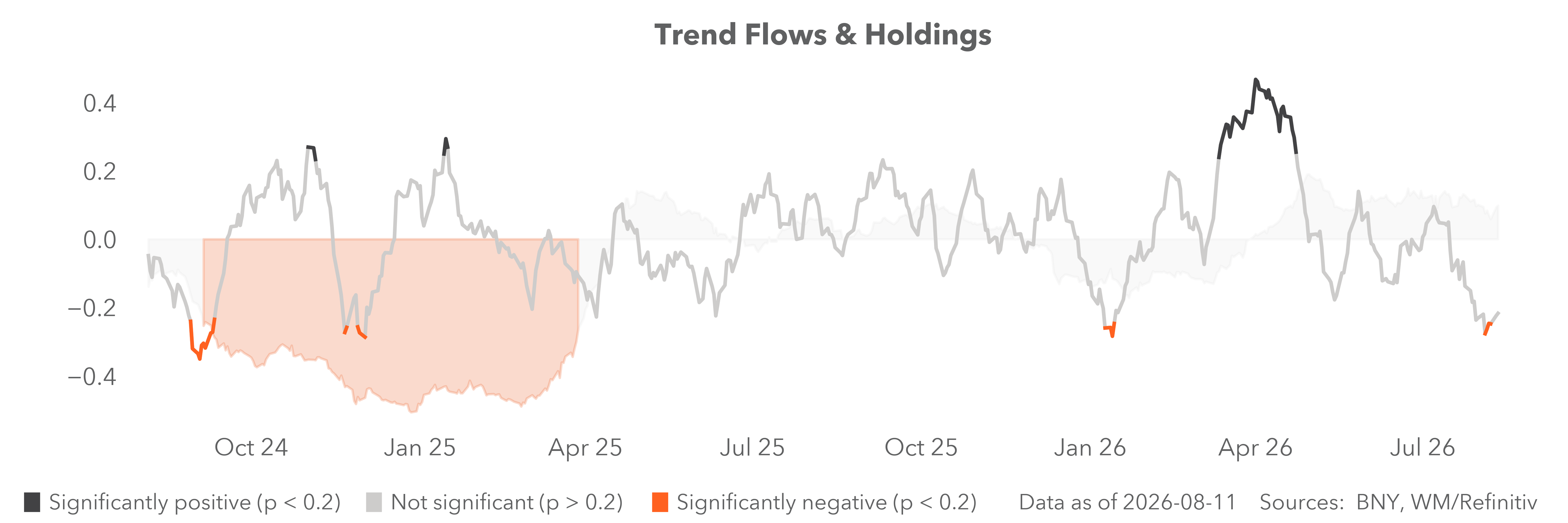
EXHIBIT #1: NET U.S. ASSET EXPOSURE FOR INTERNATIONAL INVESTORS
Source: BNY
Our take
Since the first Iran conflict ceasefire, risk appetite has strengthened alongside U.S. asset performance, reviving “U.S. exceptionalism” as a broad trade theme. Using iFlow holdings data, we compare a 60:40 Treasury-equity portfolio (cross-border holdings only) against dollar hedge levels and find a sharp rise in net U.S. exposure. Asset holdings moved in line with markets, but dollar hedges were being reduced aggressively at the same time. Cross-border investors weren’t simply allowing portfolio gains to remain unhedged; they were actively cutting hedges to increase dollar exposure. Our USD “net hedge” indicator moved from an excess hedge position of close to 15% to around half its trailing 12-month level by the July 29 Fed meeting. The speed of that shift highlights how strongly investors had re-engaged with the dollar.
Forward Look
Our data indicate that between July 29 and August 5, net U.S. asset exposure fell from 0.47 to 0.34, a significant drop in the “U.S. exceptionalism” view. However, the long-term average for net U.S. exposure is close to flat – changes in USD hedges tend to track asset values. So overall U.S. exceptionalism remains solid. The signal still matters: a move of this size is significant by U.S. standards. Stripping out month-end effects, the data show that the Fed outlook remains material for hedging levels. The Fed will therefore need to remain sensitive to such FX effects, especially if the dollar is increasingly viewed as an inflation pass-through channel. We’ll refresh net holdings a week after Friday’s nonfarm payrolls print to assess which matters more for cross-border dollar exposure: Fed credibility or U.S. data.
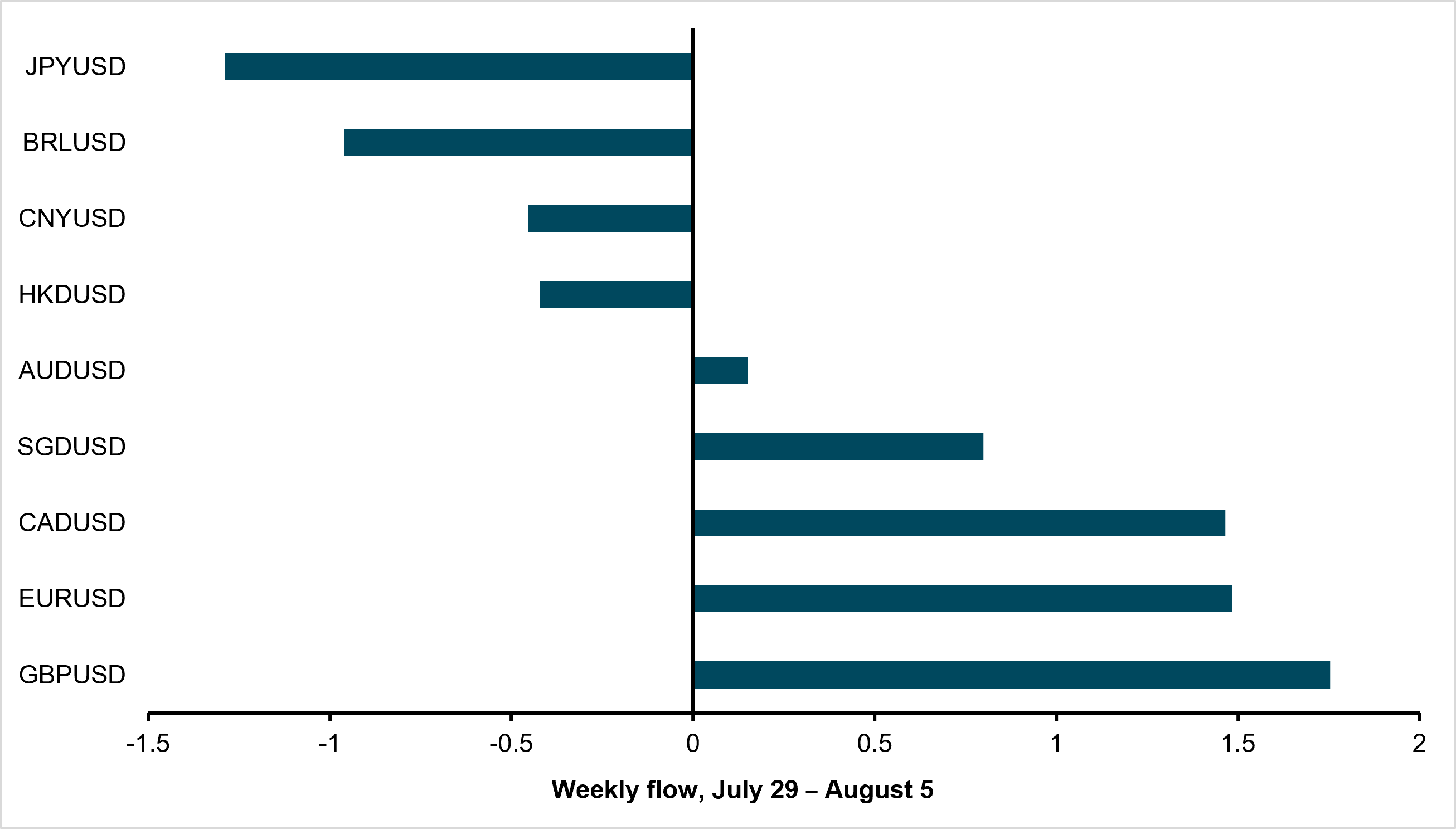
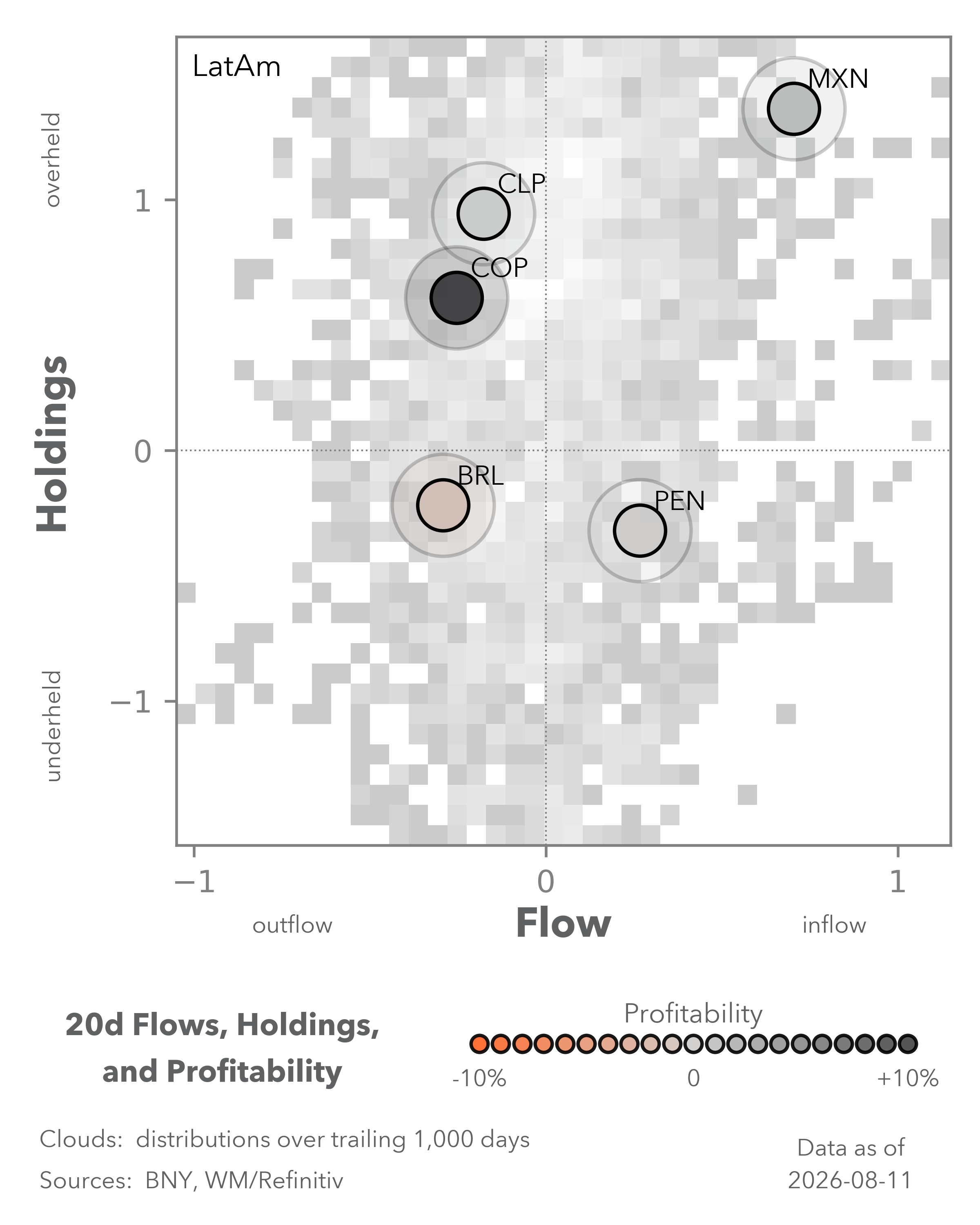
EXHIBIT #2: DOLLAR-PAIR FLOWS IN THE WEEK AFTER THE FED DECISION
Source: BNY
Our take
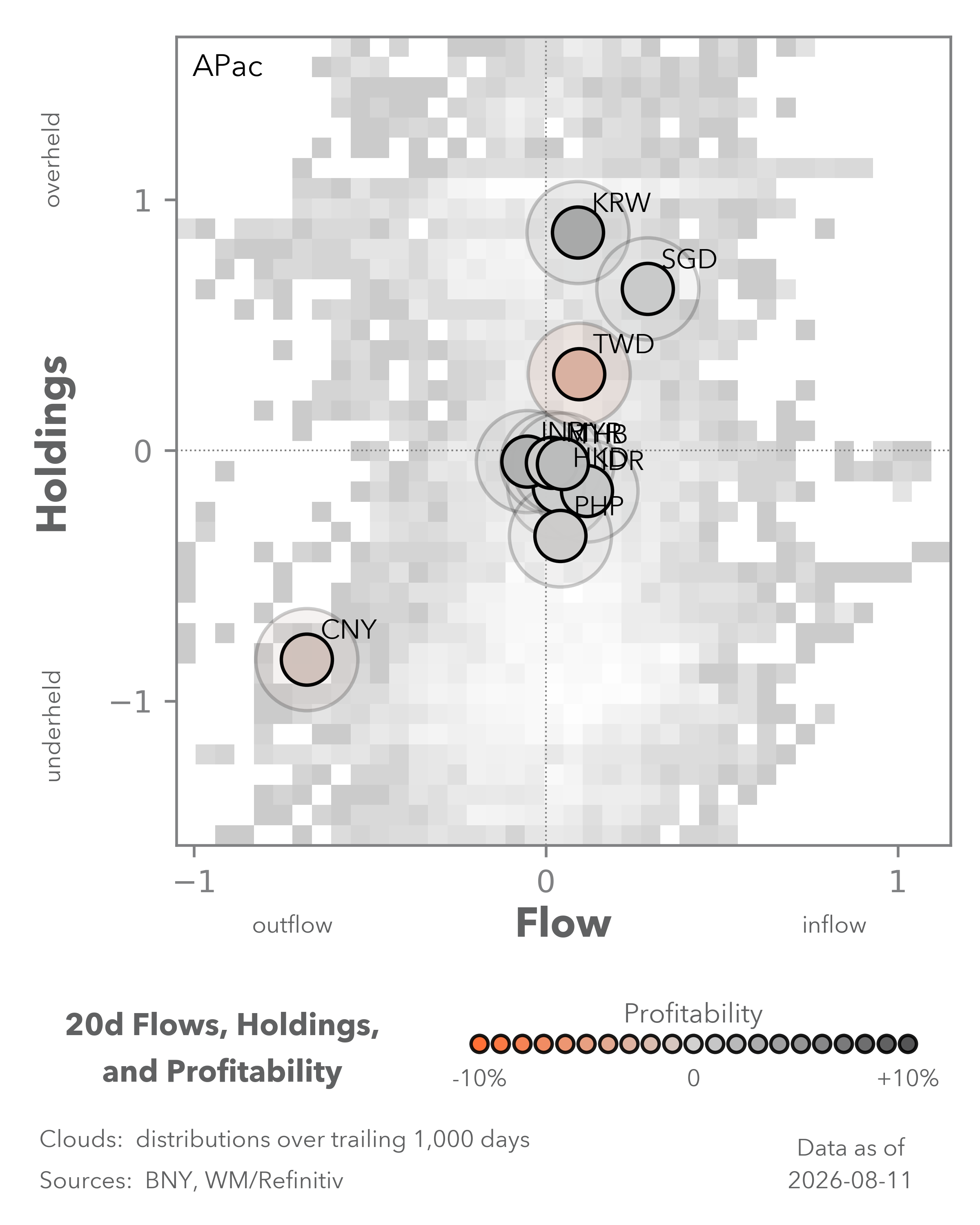
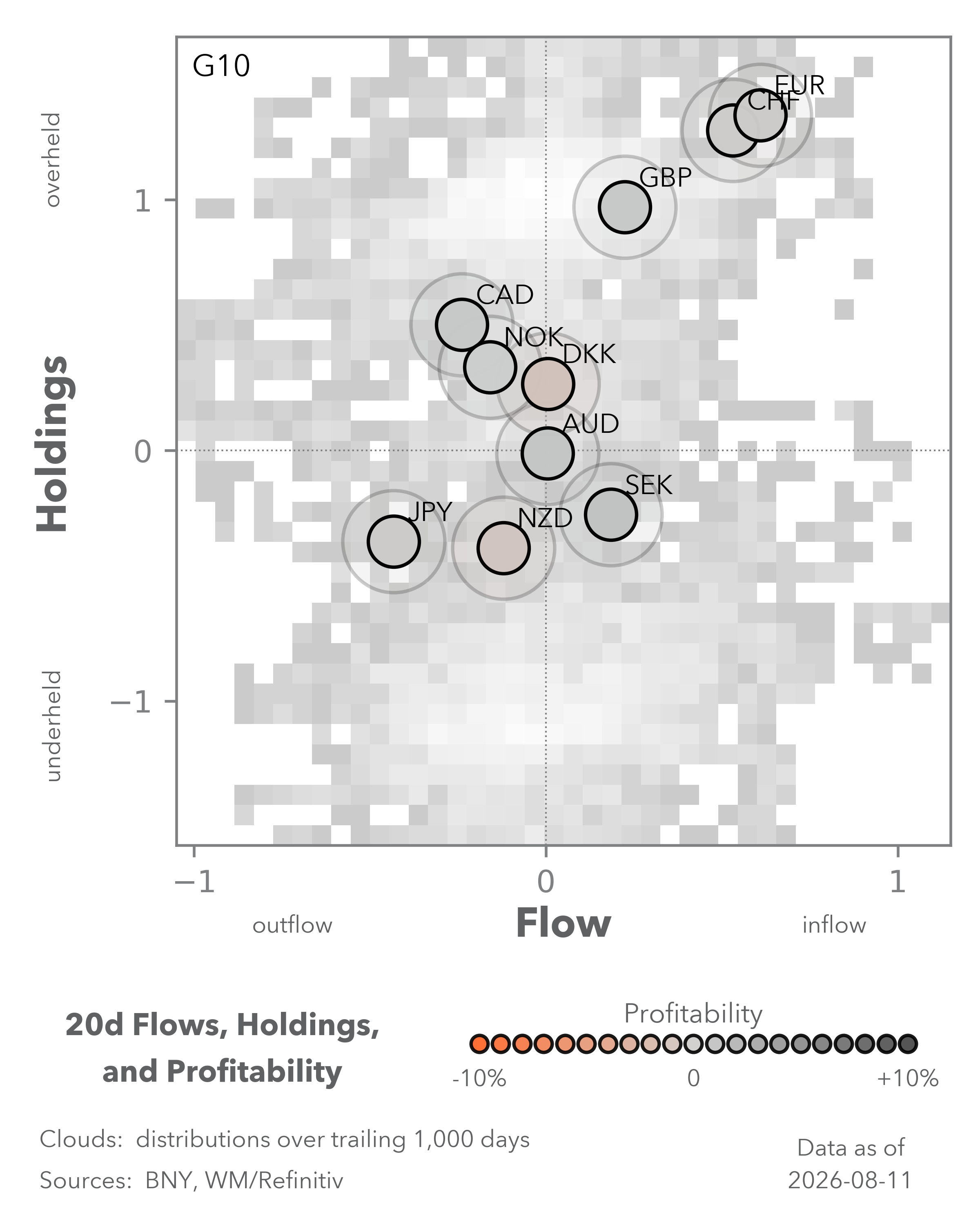
Currency-pair data show where the post-Fed adjustment in dollar holdings has been concentrated and which markets are driving it. Unsurprisingly, the majors, which comprise the world’s largest custody universes, drove dollar sales: GBPUSD recorded a weekly flow score above 1.7, while CAD and EUR were above 1.5. Even allowing for month-end effects, these are exceptional numbers by G10 standards. Given their weight in global portfolios, these moves matter for aggregate USD positioning. On a trade-weighted basis, CAD and EUR purchases would have materially affected the dollar’s overall position. JPY and CNY, however, were both net sold against the dollar post-Fed, providing an offset. JPY selling during a week of significant intervention in the opposite direction also suggests investors remain skeptical about the efficacy of such moves, even with U.S. and Japanese authorities coordinating. CNY selling remains a straightforward carry story as the PBOC stays committed to expanding monetary stimulus.
Forward Look
As things stand, pricing a “Fed discount” remains a majors-only story. The ECB and BOE are unlikely to hike again this year, but their policy credibility has remained well anchored over the past six months, while deep liquidity supports diversification. Cross-border ownership of their assets, especially bonds, remains low, leaving capacity for further allocations. Rotation away from the U.S. and into European sovereigns therefore offers another channel for reducing “U.S. exceptionalism.” In Canada, much of the downside may already be reflected in the price, encouraging some mean reversion after a period of poor performance as the BOC remained cautious. In contrast to Japan and China, markets are more comfortable that Europe and Canada won’t lose further ground to the U.S. through policy differentials. They should therefore remain the favored “anti-dollar” trades until local data change the rates outlook or North Asia has an epiphany on higher rates and stronger domestic demand.
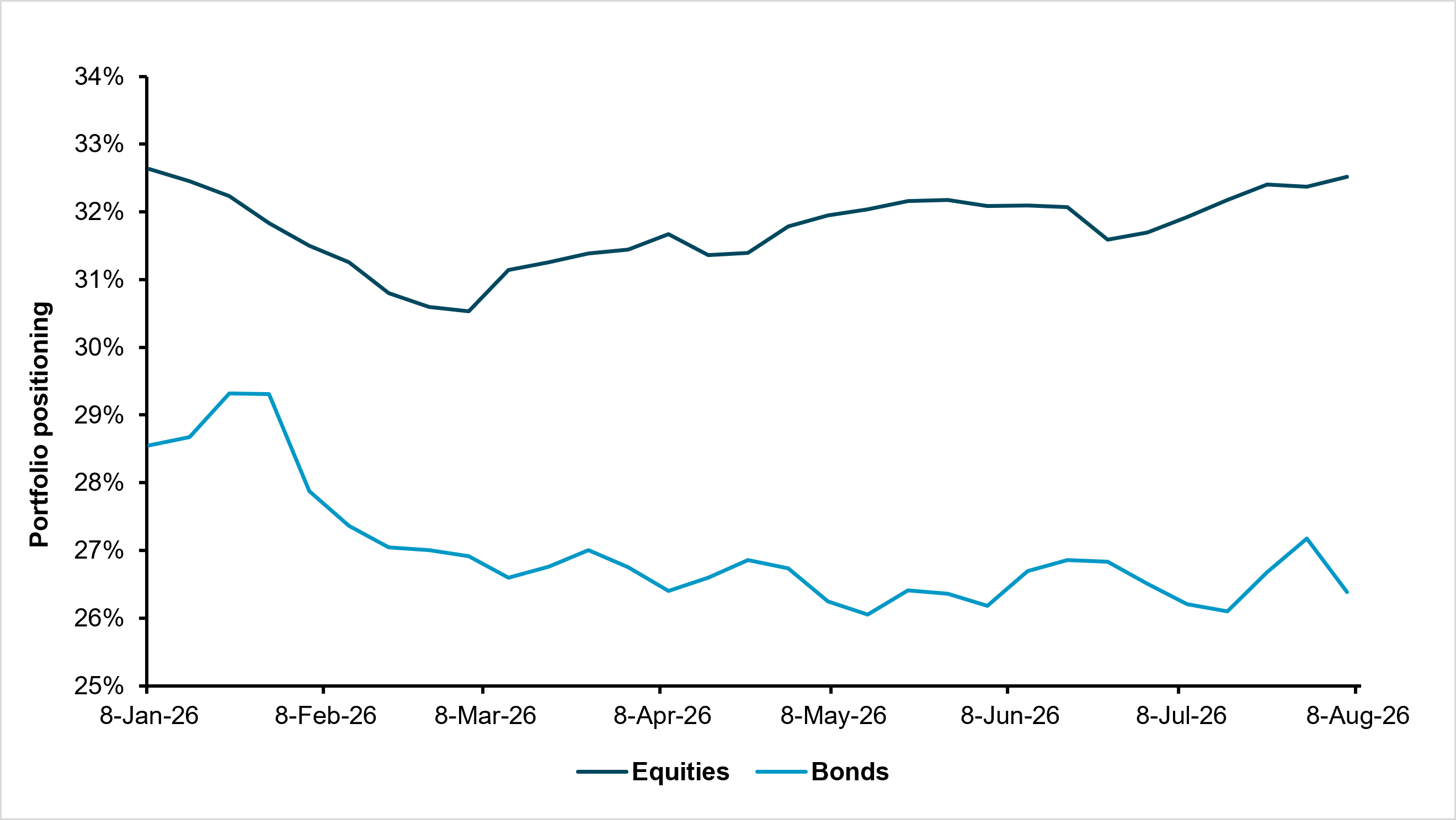
EXHIBIT #3: SHARE OF ASSETS IN PORTFOLIOS OF NON-U.S.-DOMICILED INVESTORS
Source: BNY
Our take
An immediate follow-up to the loss of “U.S. exceptionalism” is whether U.S. asset dominance will also collapse. The answer remains a resolute “no”: “sell America” is still discussed far more often than it is implemented in portfolios. The technology and AI story underpinning U.S. equity performance remains intact and continues to dominate cross-border positioning. Our data show that U.S. equities’ share in non-U.S. portfolios has risen sharply, approaching year-to-date highs. Within sovereign-bond portfolios, Treasury holdings dipped, showing that curve steepening has had an impact. Even so, a week after the Fed decision, total Treasury positioning for this investor cohort remained above the early-July lows. The distinction is important: investors are changing how they manage U.S. exposure, not abandoning it.
Forward look
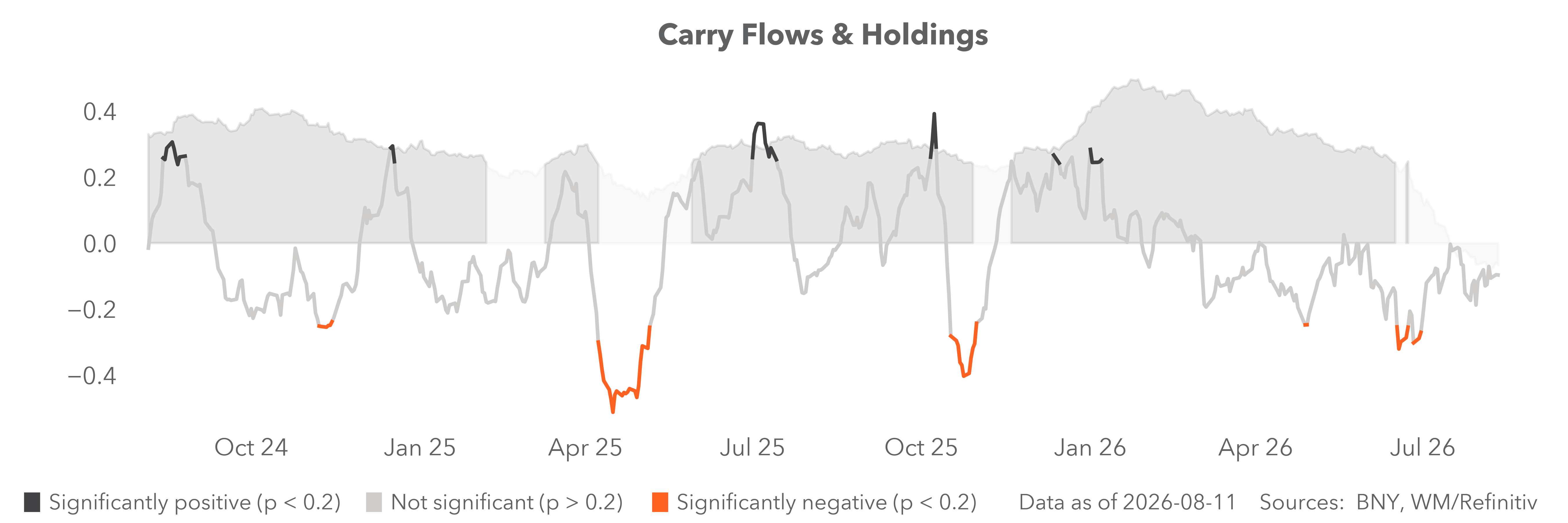
We remain confident that U.S. asset positioning will stay firm for structural reasons. The positioning skew within U.S. assets also appears increasingly favorable to equities. Investors may be taking the view that concerns over Fed credibility could result in lower front-end rates and looser financial conditions. Such an outcome wouldn’t necessarily be risk negative. A Fed that holds rather than hikes delivers (perhaps excessively) easy financial conditions, and easier conditions support equities. This doesn’t mean investors will avoid alternative forms of protection in the process. We expect greater use of FX hedges and sharper focus on fixed-income volatility, particularly in carry trades aligned with U.S. asset performance. That combination allows investors to retain U.S. risk exposure while managing currency and duration risk more actively.
Express concerns around the Fed through higher USD hedge ratios, rather than outright reductions in U.S. asset exposure. Favor GBP, EUR and CAD as the clearest diversification channels while flows remain supportive; stay cautious on JPY and CNY until domestic policy provides stronger support. Within U.S. assets, retain equity exposure but manage Treasury duration more actively, as curve steepening and fixed-income volatility remain the main pressure points.