Liquidity & Financing
Integrated platform orchestrating liquidity, margin and financing.

Introduction
The Federal Reserve’s (Fed) balance sheet plays a central role in the implementation of monetary policy and the functioning of short-term funding markets. By influencing the level of reserves in the banking system, the balance sheet affects interest rates, inflation expectations, and the economy’s ability to absorb stress. Reserves, in this context, are deposits that banks hold at the Fed. In practice, they serve as a key source of liquidity for the financial system, supporting payments and settlements, and helping institutions meet short-term funding needs. Beyond institutions, these factors impact individuals across the country through their effects on borrowing and living costs. As the size and composition of the Fed’s balance sheet evolve, policymakers face trade-offs between balance sheet efficiency, public sector intervention, and money market stability. Recent experience has renewed attention on these trade-offs and on the interaction between Fed operations, the U.S. Department of the Treasury’s (Treasury) cash management, and reserve dynamics.
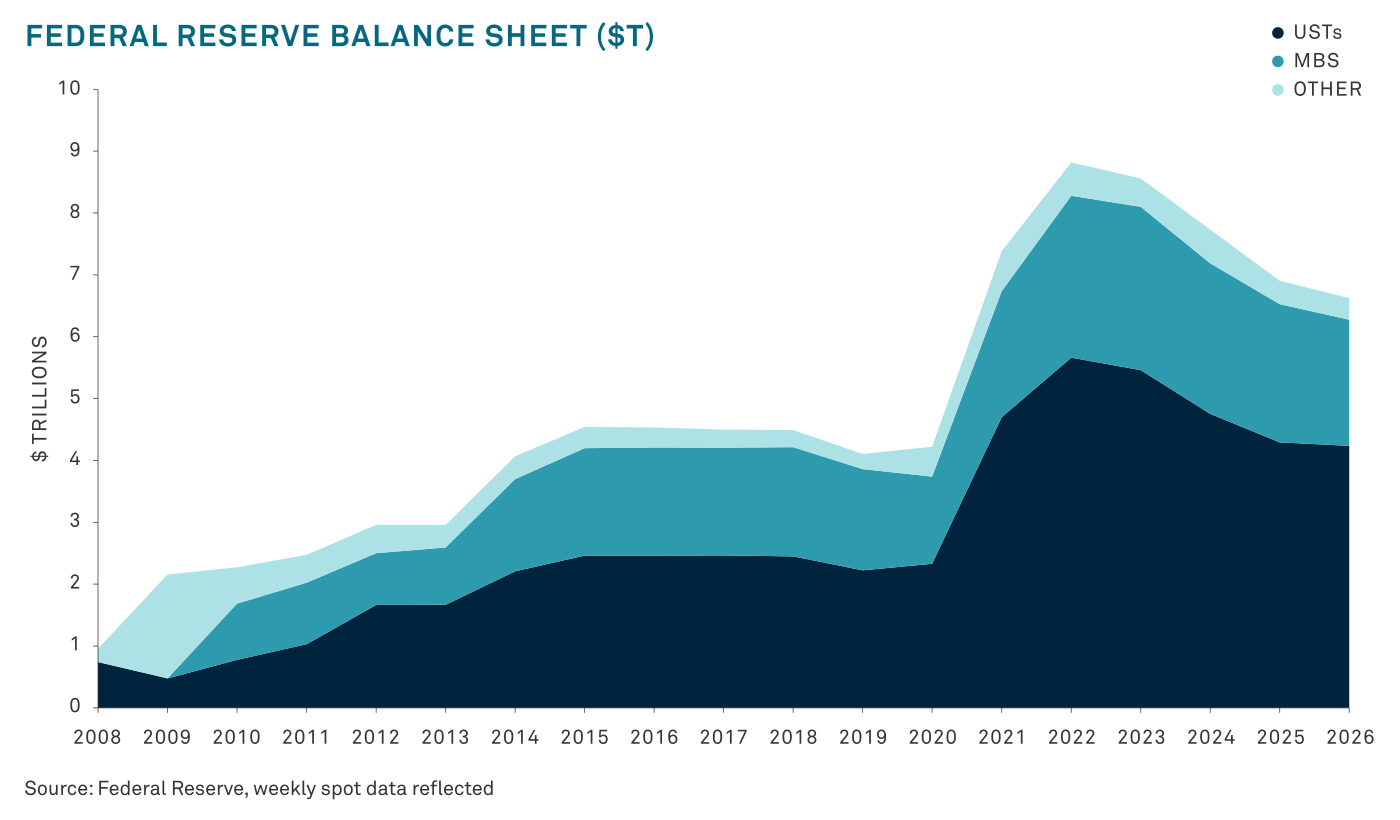
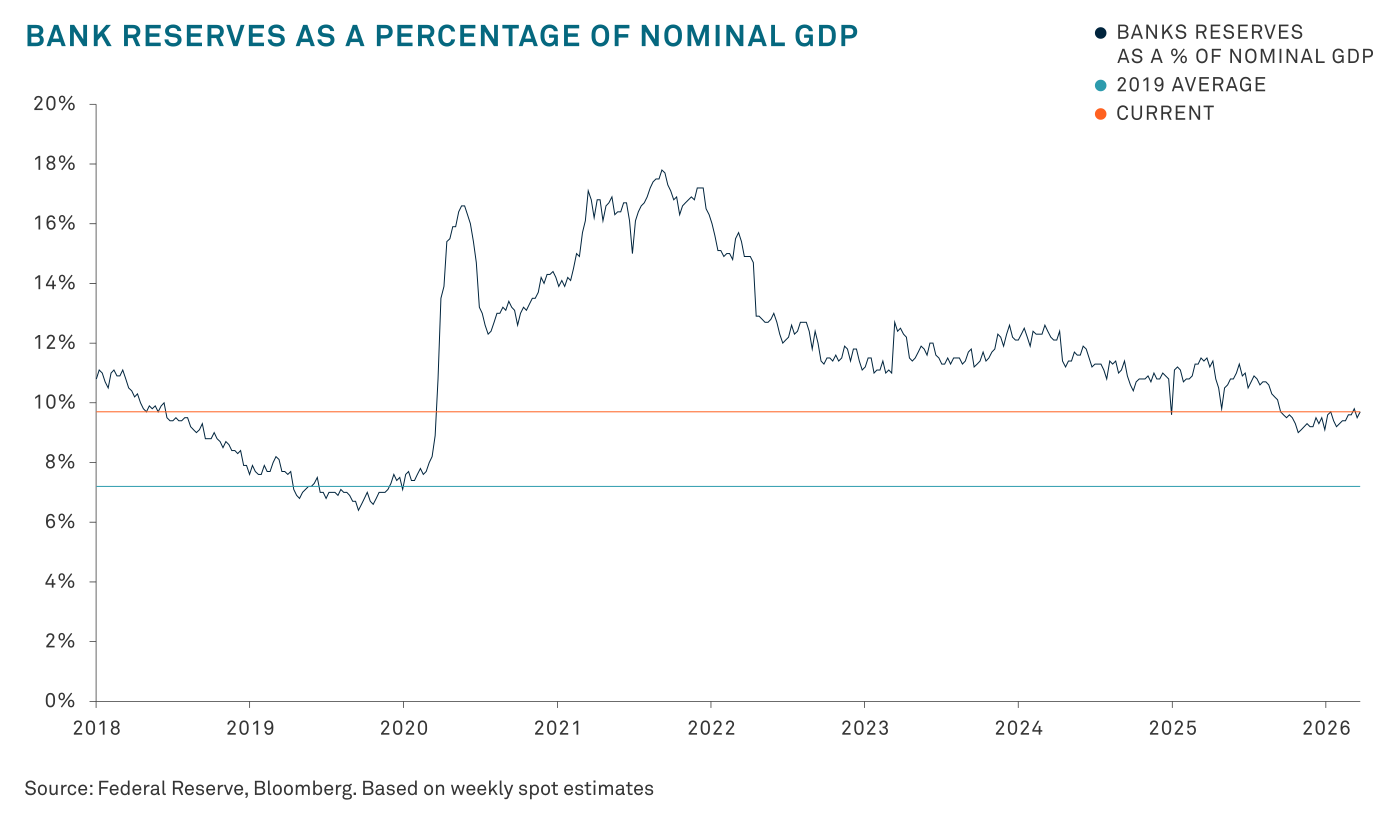
The Fed’s balance sheet currently sits at $6.72 trillion of assets to support liabilities including approximately $3 trillion of reserves in the banking system.1 Some Fed officials and observers have highlighted the possibility of shrinking the balance sheet further, despite the fact that it is now slowly growing. Debate over its size has intensified in recent months, reflecting a range of public views on the appropriate size and scope of the Fed’s operating framework.2 These discussions are occurring at the same time as leadership transition at the Fed, raising the likelihood of changes in how it conducts policy.
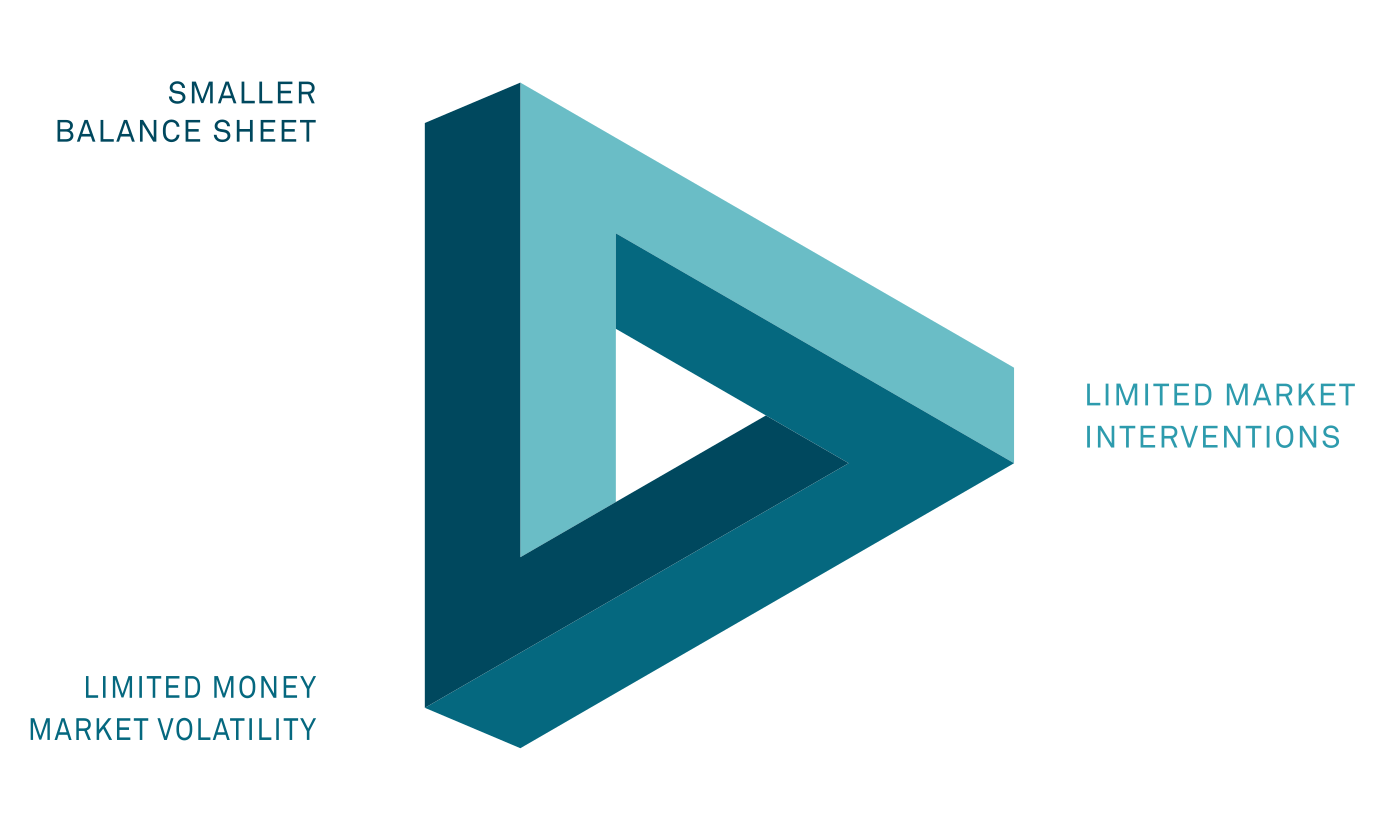
In a recent post, Fed economists described a balance sheet “trilemma” that highlights the inherent trade-offs in determining the optimal size and behavior of a central bank's balance sheet.3 Imagine a triangle, with each point representing a desired objective: maintaining a smaller balance sheet, minimizing the need for frequent open market operations (OMOs), and keeping money market rate volatility low. The challenge, the authors argue, is that policymakers can reliably achieve only two of these goals at the same time. If the Fed chooses to shrink its balance sheet, bank reserves may decline, increasing the risk of funding market volatility unless the Fed intervenes with OMOs.4 Opting not to intervene as the balance sheet contracts would likely mean living with greater rate volatility, and conversely, accepting that volatility allows fewer interventions, but at the cost of less stable funding conditions. As an example of this trade-off, at the end of 2025, reserves were judged to be no longer “abundant” but merely “ample” as repurchase agreement (repo) rates rose. After several years of reducing its balance sheet from a high of $8.96 trillion in 2022, the Fed opted to initiate reserve management purchases (RMPs) and committed to buying approximately $40 billion in T-bills per month through April 2026.5 This action may add roughly $400 billion to the Fed’s portfolio this year, highlighting that ample reserves and open market interventions can be used to maintain stable funding conditions but increase the size of the balance sheet.
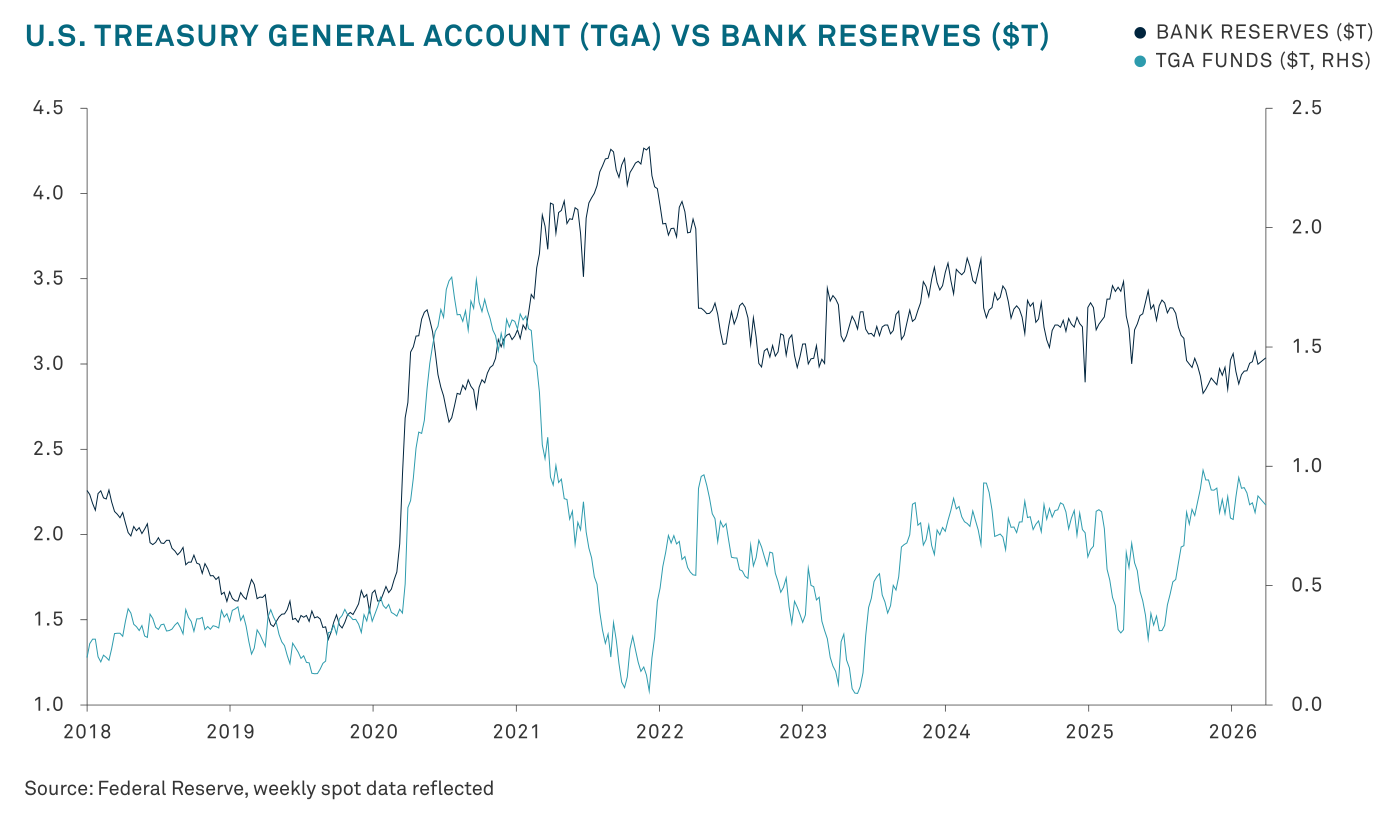
Another driver of reserves is the Treasury General Account (TGA), the main checking account for the U.S. Government, a significant liability on the Fed’s balance sheet managed by the Treasury Department. Since last summer, following the passage of the administration’s budget plan, the TGA has climbed from around $260 billion in early July to over $800 billion today, at times exceeding $1 trillion.6 Even with the Fed buying nearly half a trillion dollars in T-bills, swings in the TGA can dominate reserve dynamics, indicating Treasury cash management flows can be as important to funding market behavior as the Fed’s own OMOs. Taken together, these developments illustrate the trilemma in action: shrinking the balance sheet risks more volatility unless offset by operations like RMPs, while changes in the TGA can amplify or counteract those efforts. To understand how we got here and what might lie ahead, it helps to look at how the ample reserves regime has performed in the past.
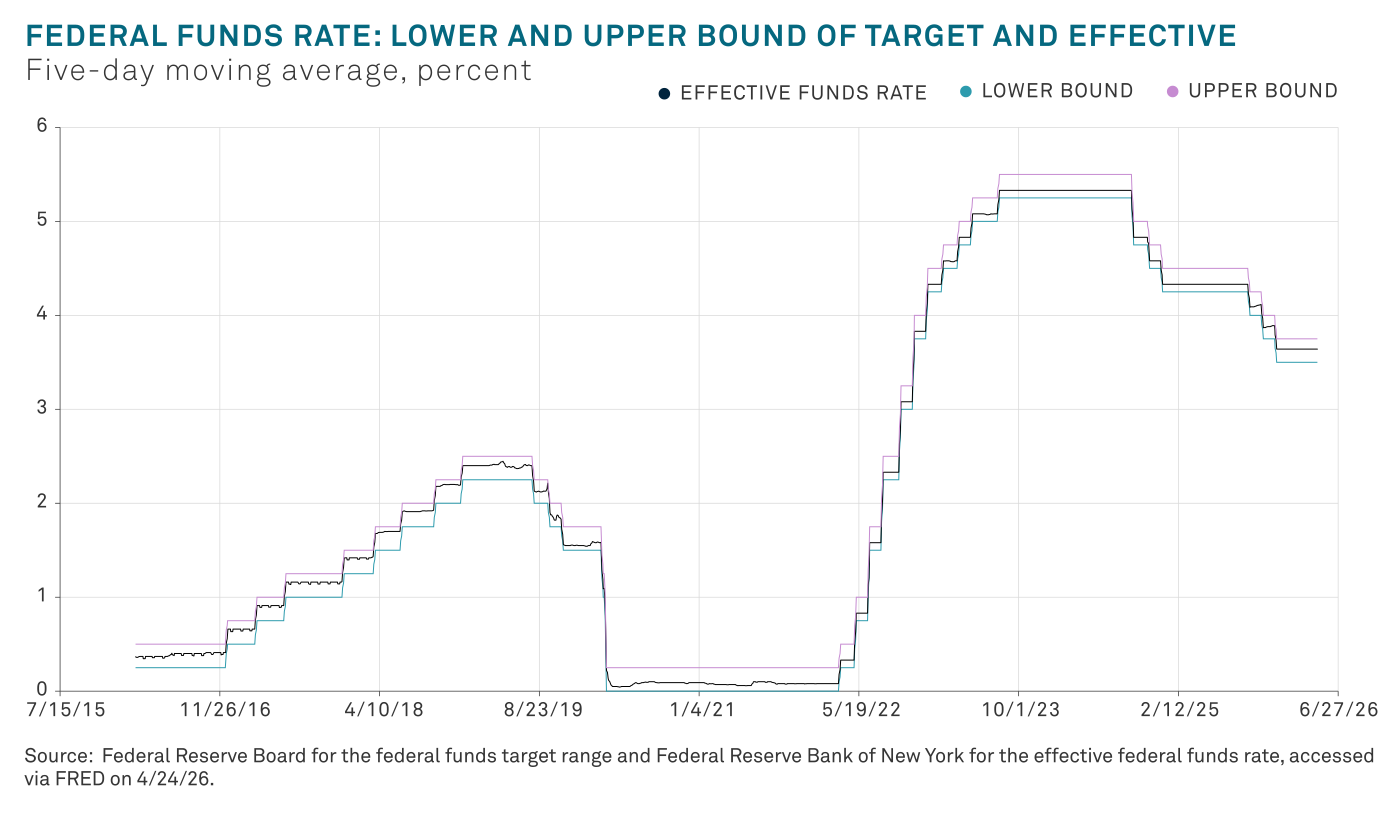
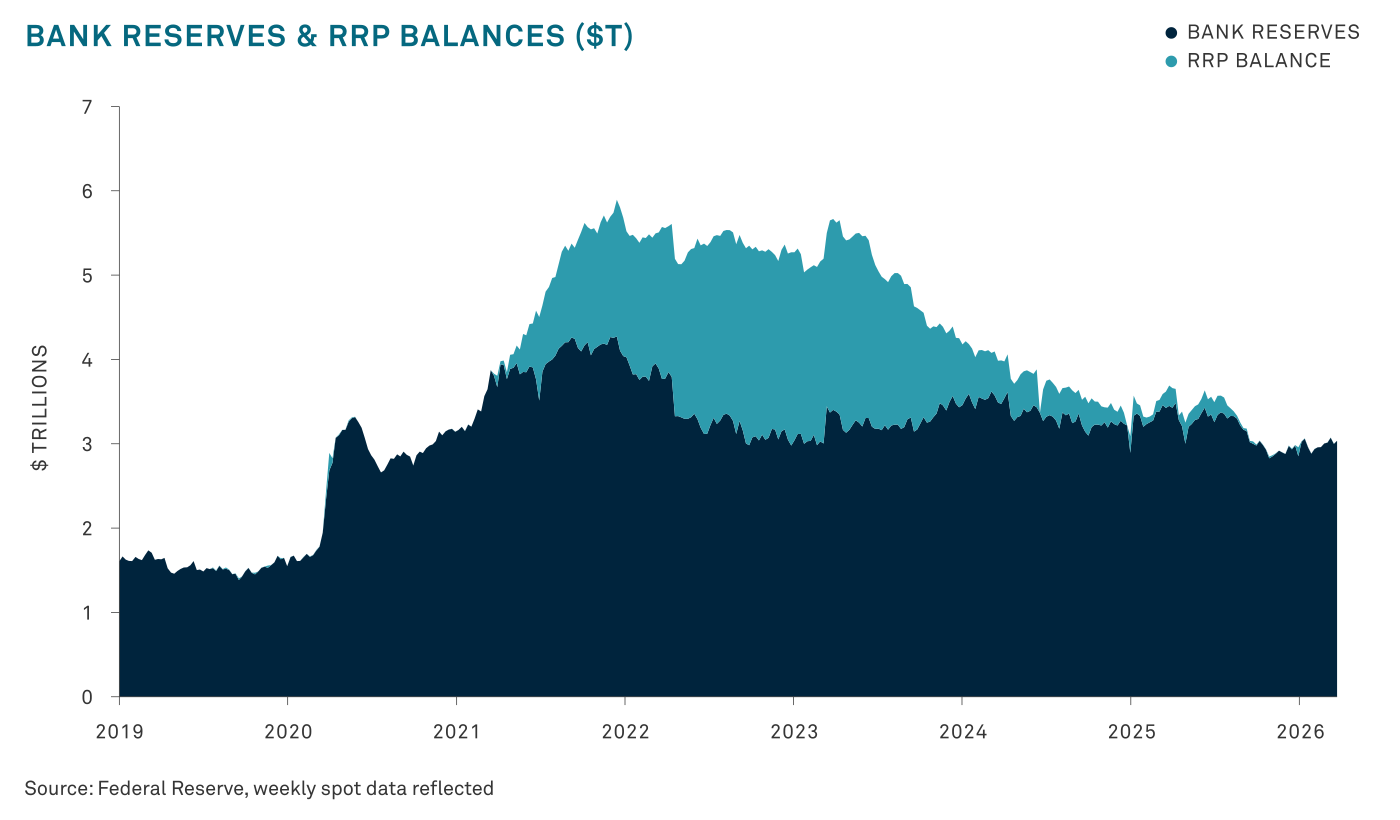
The ample reserves operating regime the Fed settled into after the Great Financial Crisis has largely met its purpose. With banks flush with reserves, trading in the fed funds market contracted, but the overnight rate generally stayed within the Federal Open Market Committee’s (FOMC) target range. However, three key episodes illustrate how conditions shift when reserves fall below, rise far above, or begin to return toward the ample range.
After years of quantitative easing, the Fed sought to normalize its balance sheet by reducing asset holdings and shrinking excess reserves. Beginning in late 2017, the FOMC let some maturing assets in the System Open Market Account roll off, and as expected, assets and reserve balance initially declined.7 However, with liquidity less plentiful, the Fed Funds rate became more volatile, and the triparty general collateral rate on repos secured with Treasuries rose relative to interest on reserve balances. The former posed no problem for policy setting in that the Fed Funds rate still traded within the FOMC’s target range, and the latter signaled banks were using sharper pencils in reserve management. By late 2019, strains began to emerge: the Treasury rebuilt its deposit balance at the Fed (the TGA), absorbing some of the space reserves occupied. In mid-September, reserves dropped sharply to around $1.5 trillion, below the level needed for the smooth operation of the banking system.8 Overnight borrowing rates spiked as banks scrambled to secure liquidity. The Fed Funds rate breached the top of the Fed’s target range, and the average triparty repo rate rose to 6%, with some trades occurring at much higher rates, indicating significant strains in market functioning.9 In response, the Fed launched large-scale repo operations and halted the runoff of securities earlier than planned, and rebuilt reserves rapidly by purchasing Treasury securities.
During the COVID-19 pandemic, the balance sheet increased from $4 trillion to $8.5 trillion as the Fed purchased assets to support market functioning and the economy.10 Reserves inflected from their gradual ascent almost vertically in March 2020, when the Fed returned the policy rate to zero and launched substantial securities purchases in response to the pandemic.11 Reserves moved from ample to abundant, reflected in money market rates trading well below interest on reserves. This configuration persisted past pandemic relief as continued asset purchases drove reserves even higher in 2021. In addition, the Treasury had built up its TGA balance during the pandemic, anticipating large outlays, which it then drew down by $1.5 trillion as it sought to operate under the public debt ceiling.12 This sent reserves on the Fed’s balance sheet above $4 trillion.13
With liquidity plentiful, the Fed returned to asset redemptions in mid-2022 in order to shrink its balance sheet and reduce reserves. Wary of repeating the strains of 2019, officials slowed the descent in reserves this time when money market rates rose relative to administered ones and transaction frictions became evident.
Lesson One
When banks have sufficient cash reserves (ample), short‑term interest rates are generally steady and close to the Fed’s target. If reserves are far more than needed (abundant), banks don’t have to bid for funds, so market rates can drift below the minimum the Fed pays on reserves toward the lower end of the Fed’s target range. If reserves become scarce, banks compete harder for liquidity, which can push market rates up and make them more volatile, and even prompt market dysfunction.
Lesson Two
The level of ample reserves is difficult to know. Individual bank reserve needs don’t perfectly reveal whether the system overall has enough so that Fed surveys of banks can prove misleading. Pockets of scarcity can create pressure even when the aggregate amount looks comfortable.
Lesson Three
The Fed alone does not control all of the changes on its balance sheet. Factors like currency in circulation or the size of the TGA account are autonomous, and difficult to predict. Swings in the Treasury’s account at the Fed automatically add or subtract reserves from the banking system that can influence funding market rates and conditions.
Some policymakers and market observers have suggested that the Fed consider further reductions to its balance sheet. They argue that a smaller balance sheet could help limit the Fed’s footprint in financial markets, creating more capacity to expand when needed in stress, and reduce the risk of credit allocation. Others argue that maintaining a larger balance sheet offers certain operational advantages, including an ample level of reserves and greater flexibility to respond to episodes of financial stress. Any option that might allow the Fed to reduce its balance sheet while maintaining control over interest rates and safeguarding financial stability involves policy trade-offs that need to be carefully evaluated.
Greater use of Temporary Operations: The Fed could shrink its permanent asset holdings to lower levels and increase its reliance on temporary operations, such as Standing Repo Operations (SRP) or fixed-quantity repos. The temporary operations could allow the Fed to inject reserves as needed, for example, when they are forecasted to drop due to tax payments, Treasury issuance, or as a result of bank balance sheet adjustments. This could smooth out fluctuations in money market rates by supplying reserves only when they are necessary, while continuing to structurally shrink the balance sheet over time. However, potential trade-offs include increased operational demands, risk of market disruptions if operations are not properly calibrated, potential reluctance from banks to participate due to stigma or balance sheet capacity, and concerns over the perception of the Fed’s involvement in market activity. More fundamentally, it is unclear how much temporary operations would reduce the balance sheet in practice. If large-scale repo operations are needed frequently, those “temporary” additions to assets could keep the balance sheet persistently elevated, making the distinction between temporary and permanent holdings less meaningful.
Reducing Reserve Demand: The Fed could look to reduce bank demand for reserves by adjusting policies, practices, or market structure. From a policy perspective, the Fed could look to adjust liquidity regulations and supervisory guidance to recognize central bank liquidity facilities and high-quality collateral that banks have available. This could allow banks to operate with smaller precautionary reserve buffers without compromising resilience. In turn, banks could demand less cash reserves, allowing the Fed to lower its balance sheet without risking rising funding pressures. From a practice perspective, market participants could look to improve payment scheduling, collateral optimization, daylight overdraft management, and intraday credit frameworks. These too could lower their cash reserve needs. Finally, efforts to improve private sector sources of liquidity and enhance the mobility of collateral across public and private sources could have an important impact. If banks can more easily move collateral across public and private liquidity venues, for example from Federal Home Loan Banks, triparty repo, or SRP operations to the Discount Window, they could lower their precautionary cash reserve buffers. Taken together, these efforts could have a marked effect, allowing for a structural, durable reduction in system-wide reserve demand and thereby enabling a smaller Fed balance sheet without causing scarcity. That said, many of these changes could take time to implement, and require changes in bank behavior. Some of these changes could also involve the agreement of multiple regulators.
Reserve Tiering: In this approach, the Fed could determine a required amount of reserves that each bank is required to hold. Once that requirement is determined for each institution, the Fed may then pay Interest on Reserve Balances (IORB) on reserves up to that minimum and a lower rate, or no interest, on balances above that level. The higher rate at the margins could still help set a floor on money market rates and allow the Fed to maintain the FOMC’s target. A clearer incentive to hold only what is needed could enhance banks’ reserve management policies and give regulators greater insight into liquidity demand, though at a cost to banks’ interest margins and with potential effects on lending decisions. However, some have argued against this framework, as it could effectively give each bank a reserve quota and amount to a form of central planning, in which the government allocates a valuable resource rather than allowing market forces to do so.14 Such an approach could undermine innovation, competition, and growth, and may be less effective than reforms that reduce banks’ underlying demand for reserves through more efficient liquidity regulation and stronger access to Fed liquidity tools. In addition, excess reserves could migrate into the Overnight Reverse Repurchase Agreement Operations (ON RRP), minimizing the potential impact on the Fed’s balance sheet, and the approach could pose some risk to the Fed’s ability to control short-term interest rates, since IORB is one of the key tools used to keep overnight rates within the target range.
Changing TGA Policy Implementation: Because the TGA sits on the Fed’s balance sheet, its level affects the size of the Fed’s balance sheet, and changes in it can affect reserve levels. Some commentators have suggested that adjustments could be made to Treasury policies that could reduce the size and volatility of the TGA and help reduce the size of the Fed’s balance sheet. The level of the TGA today is guided by Treasury’s cash management approach, which aims to protect the Treasury against a “potential interruption in market access.”15 The Treasury generally holds enough cash in the TGA to cover one week of outflows, and bill issuance, rising maturities, and variations in cash flows have contributed to the growth in the TGA over time. The Treasury could consider adjustments to the cash management policy that could lower the size of the TGA or its volatility, or otherwise change the way it is managed. In turn, the Fed could be able to reduce the size of its balance sheet. However, such a change could entail trade-offs for Treasury. A smaller cash buffer could leave Treasury without sufficient funds to make critical payments in the event of unexpected events, such as failed auctions or market shutdowns.
As the Fed continues to calibrate the size and composition of its balance sheet, the intersection of monetary policy, fiscal dynamics, and market structure will remain central to the outlook for market liquidity. Should the Fed choose to shrink its balance sheet, it could affect money market conditions at a time when Treasury issuance is projected to grow materially in the years ahead. The resilience of the U.S. Treasury market will depend not only on the nature of Fed policy implementation, but on the system’s capacity to absorb and intermediate rising volumes of collateral in a safe and efficient manner.
A comprehensive approach is needed to promote the resiliency of broader funding and capital markets over time, and both the public and private sector should continue to explore ways to strengthen market liquidity so that intervention is less likely. Prudent leverage ratio reform, which has recently been applied to the largest U.S. banks, can help promote low-risk intermediation activities, particularly during times of stress. Public sector tools such as Treasury buybacks and the Fed’s SRP operations can help anchor funding markets in periods of stress. At the same time, private sector enhancements, including improved collateral mobilization, expanded contingent funding sources, and more efficient clearing and margining practices, can improve the day-to-day elasticity of liquidity. Taken together, these measures promote a comprehensive approach: one that recognizes safety and liquidity as complementary objectives.
Looking ahead, a range of monetary policy and balance sheet scenarios are possible. Whatever the decision by policymakers, the need for deep, liquid, and well-functioning Treasury and government securities markets will remain constant.
1 Federal Reserve Balance Sheet: Factors Affecting Reserve Balances – H.4.1, April 2, 2026, https://www.federalreserve.gov/releases/h41/20260402/
2 See recent comments from Treasury Secretary Bessent (link), Fed Governor Miran (link), and Fed Governor Waller (link).
3 Burcu Duygan-Bump and R. Jay Kahn, “The Central Bank Balance-Sheet Trilemma,” FEDS Notes, Board of Governors of the Federal Reserve System, January 14, 2026, https://www.federalreserve.gov/econres/notes/feds-notes/the-central-bank-balance-sheet-trilemma-20260114.html
4 Stephen I. Miran, “Prospects for Shrinking the Fed’s Balance Sheet,” speech at the Economic Club of Miami, Miami, FL, March 26, 2026, Board of Governors of the Federal Reserve System, https://www.federalreserve.gov/newsevents/speech/miran20260326a.htm
5 Federal Reserve Bank of New York, “Statement Regarding Reserve Management Purchases Operations,” December 10, 2025, https://www.newyorkfed.org/markets/opolicy/operating_policy_251210a
6 U.S. Department of the Treasury, “Quarterly Refunding: Financing Estimates by Calendar Year,” Last updated March, 2026, https://home.treasury.gov/policy-issues/financing-the-government/quarterly-refunding/quarterly-refunding-archives/quarterly-refunding-financing-estimates-by-calendar-year
7 Board of Governors of the Federal Reserve System, “Quarterly Report on Federal Reserve Balance Sheet Developments,” November 2017, https://www.federalreserve.gov/monetarypolicy/files/quarterly_balance_sheet_developments_report_201711.pdf.
8 Sriya Anbil, Alyssa G. Anderson, and Zeynep Senyuz, “What Happened in Money Markets in September 2019?” FEDS Notes, February 27, 2020, https://www.federalreserve.gov/econres/notes/feds-notes/what-happened-in-money-markets-in-september-2019-20200227.htm
9 Office of Financial Research, “OFR Identifies Factors That May Have Contributed to the 2019 Spike in Repo Rates,” The OFR Blog, April 25, 2023, https://www.financialresearch.gov/the-ofr-blog/2023/04/25/ofr-identifies-factors-that-may-have-contributed-to-the-2019-spike-in-repo-rates/.
10 Michelle W. Bowman, “The Federal Reserve’s Balance Sheet as a Monetary Policy Tool: Past Lessons and Future Considerations,” speech at the 2024 BOJ‑IMES Conference, Bank of Japan, Tokyo, May 28, 2024, https://www.federalreserve.gov/newsevents/speech/bowman20240528a.htm
11 Board of Governors of the Federal Reserve System, “Federal Reserve Issues FOMC Statement,” March 15, 2020, https://www.federalreserve.gov/newsevents/pressreleases/monetary20200315a.htm
12 Annette Vissing Jorgensen, “Fluctuations in the Treasury General Account and their Effect on the Fed’s Balance Sheet,” FEDS Notes, Board of Governors of the Federal Reserve System, August 6, 2025, https://www.federalreserve.gov/econres/notes/feds-notes/fluctuations-in-the-treasury-general-account-and-their-effect-on-the-feds-balance-sheet-20250806.html
13 Board of Governors of the Federal Reserve System. “Recent Balance Sheet Trends.” Last updated March 19, 2026. https://www.federalreserve.gov/monetarypolicy/bst_recenttrends.htm
14 Lorie K. Logan, “The Banking System and the Demand for Reserves,” speech, Eleventh District Banking Conference, Federal Reserve Bank of Dallas, April 2, 2026. https://www.dallasfed.org/news/speeches/logan/2026/lkl260402
15 U.S. Department of the Treasury, “Treasury Supplemental Financing Program Quarterly Refunding Presentation,” Q1 2022, PDF, https://home.treasury.gov/system/files/221/Treasury-supplemental-QR-Q12022.pdf.