Limited relief
Start of the Week previews activities across global financial markets, providing useful charts, links, data and a calendar of key events to help with more informed asset allocation and trading decisions.
Start of the Week previews activities across global financial markets, providing useful charts, links, data and a calendar of key events to help with more informed asset allocation and trading decisions.

Geoff Yu, David Tam
Time to Read: 11 minutes
Easier backdrop: The macro impulse has turned easier, but conviction remains fragile. The weaker U.S. labor-market signal has pulled down real-rate expectations, extended the dollar decline and reopened a window for duration and risk assets. That’s an important change in the global backdrop, but not yet a clean easing story. Inflation remains the constraint, and markets need confirmation that softer labor demand is translating into sustainable disinflation rather than simply weaker growth. The opportunity is easier financial conditions; the risk is that inflation data close that window quickly.
Policy constraints: Hawkish central banks are increasingly constrained by the economies beneath them. Across G10, inflation still argues for vigilance, but labor markets, housing, investment and sentiment are making additional tightening harder to justify. The challenge is calibration: policymakers need to preserve real-rate restraint without tightening into weakening demand. Europe illustrates the tension well: activity is showing tentative signs of improvement, yet structural competitiveness remains poor and another policy shock could interrupt the recovery.
Credibility and carry: Easier global conditions won’t lift all markets equally. Japan shows how quickly policy signals lose force without fiscal and monetary follow-through, while China faces its own execution test in turning support into stronger domestic demand. The same discipline applies across emerging markets. A weaker dollar and lower U.S. front-end yields improve the backdrop for carry, but traditional relationships with commodities have weakened. In Latin America, FX can respond first, while sustained duration performance still requires domestic reform, fiscal credibility and stronger productivity. Increasingly, markets are distinguishing between supportive external conditions and policies capable of changing underlying behavior.
Bottom line: The environment has become more supportive, but not more forgiving. Easier financial conditions transmitted through a weaker dollar and lower U.S. rates create opportunities. Yet inflation, weak policy credibility and structural growth constraints mean the next leg of performance will depend increasingly on execution rather than beta.
North America: Inflation in focus after weak NFP
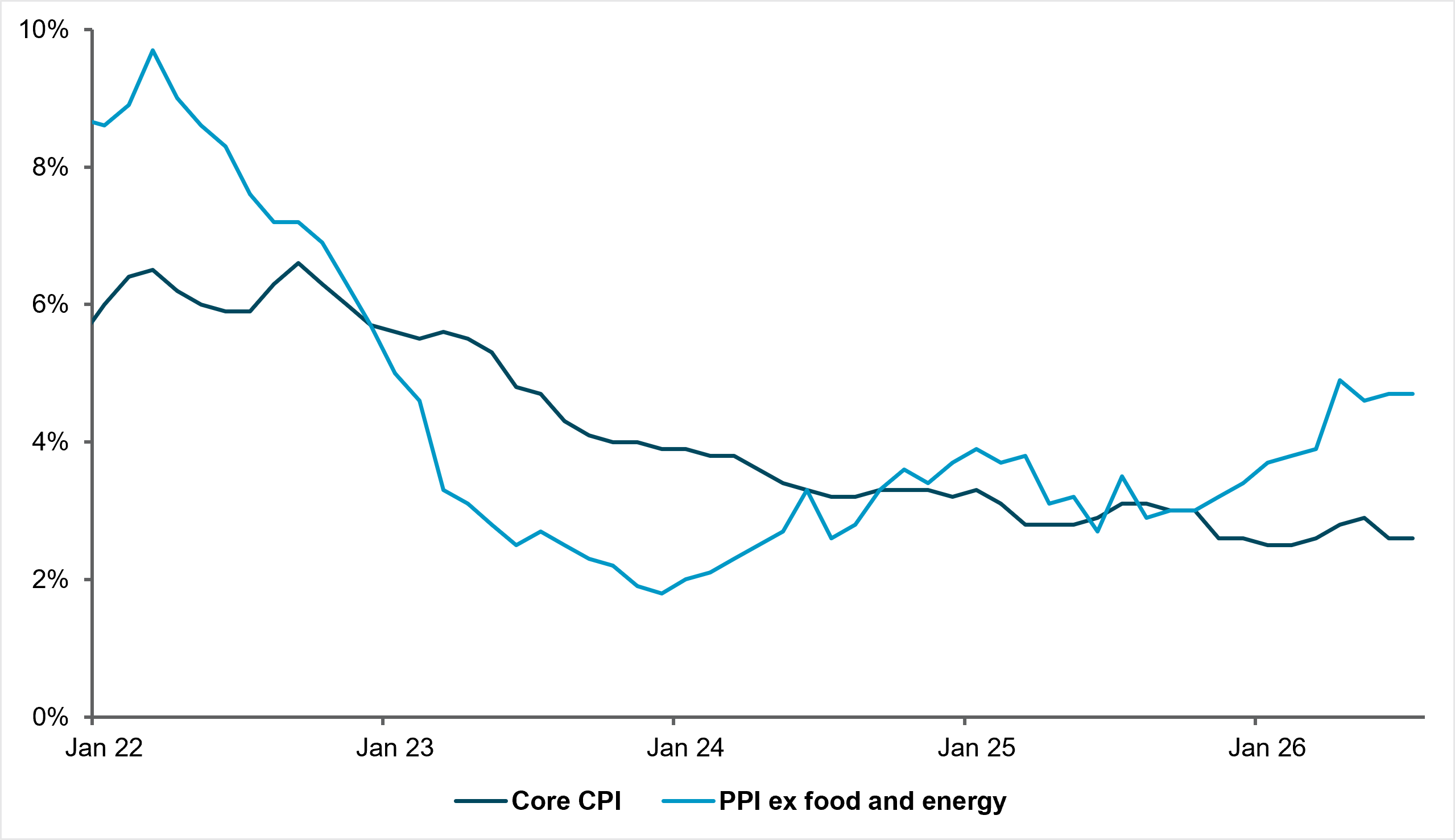
EXHIBIT #1: CORE CPI AND PPI EX FOOD AND ENERGY, ANNUALIZED
Source: BNY, Bloomberg
Our take: Last Friday’s weak U.S. nonfarm payrolls report – at -23k vs. the expected 80k – and the accompanying downward revisions meaningfully cooled expectations for a Fed hike in September, leaving the market with a less than 50% chance of a hike. The inflation backdrop remains the key swing factor this week. We’ll get a relatively clean read on that debate with CPI on Wednesday, PPI on Thursday, and the University of Michigan sentiment survey on Friday. The Canadian calendar is effectively empty, so North American macro attention will be overwhelmingly focused on the U.S. prints and their implications for the Fed’s reaction function.
Forward look: Of the week’s releases, Wednesday’s CPI is the most important for rates markets, as it will tell us whether the disinflationary impulse stemming from June’s easing in Iran-related tensions is durable or whether price pressures will pick up. Headline CPI is expected to tick up to 0.1% m/m from -0.4%, while core CPI is seen to rebound to 0.2% m/m from flat. That combination would likely be interpreted as consistent with a still-firm but not re-accelerating inflation trend. Thursday’s PPI will be watched as a cross-check on pipeline pressures, with headline PPI expected at 0.2% m/m and core PPI ex food and energy at 0.3% m/m. A soft inflation bundle would reinforce the post-NFP easing in Fed pricing and support duration; an upside surprise could quickly reintroduce pressure on front-end yields. The UMichigan sentiment is secondary, but any sharp shift in inflation expectations could matter at the margin.
EMEA: Norges wavers; Eurozone watches for output momentum
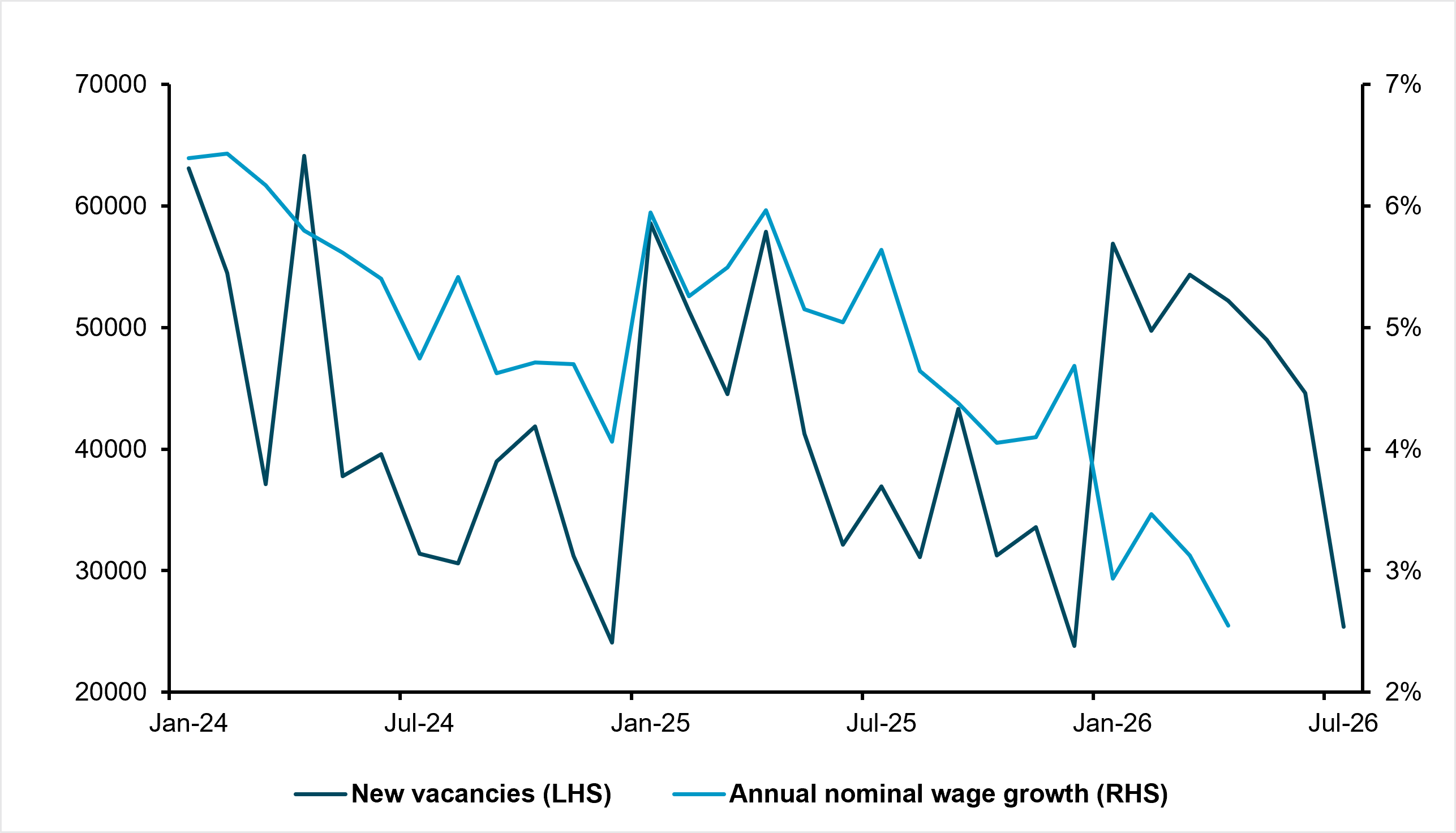
EXHIBIT #2: NORWEGIAN LABOR MARKET SOFTENING
Source: BNY, Macrobond
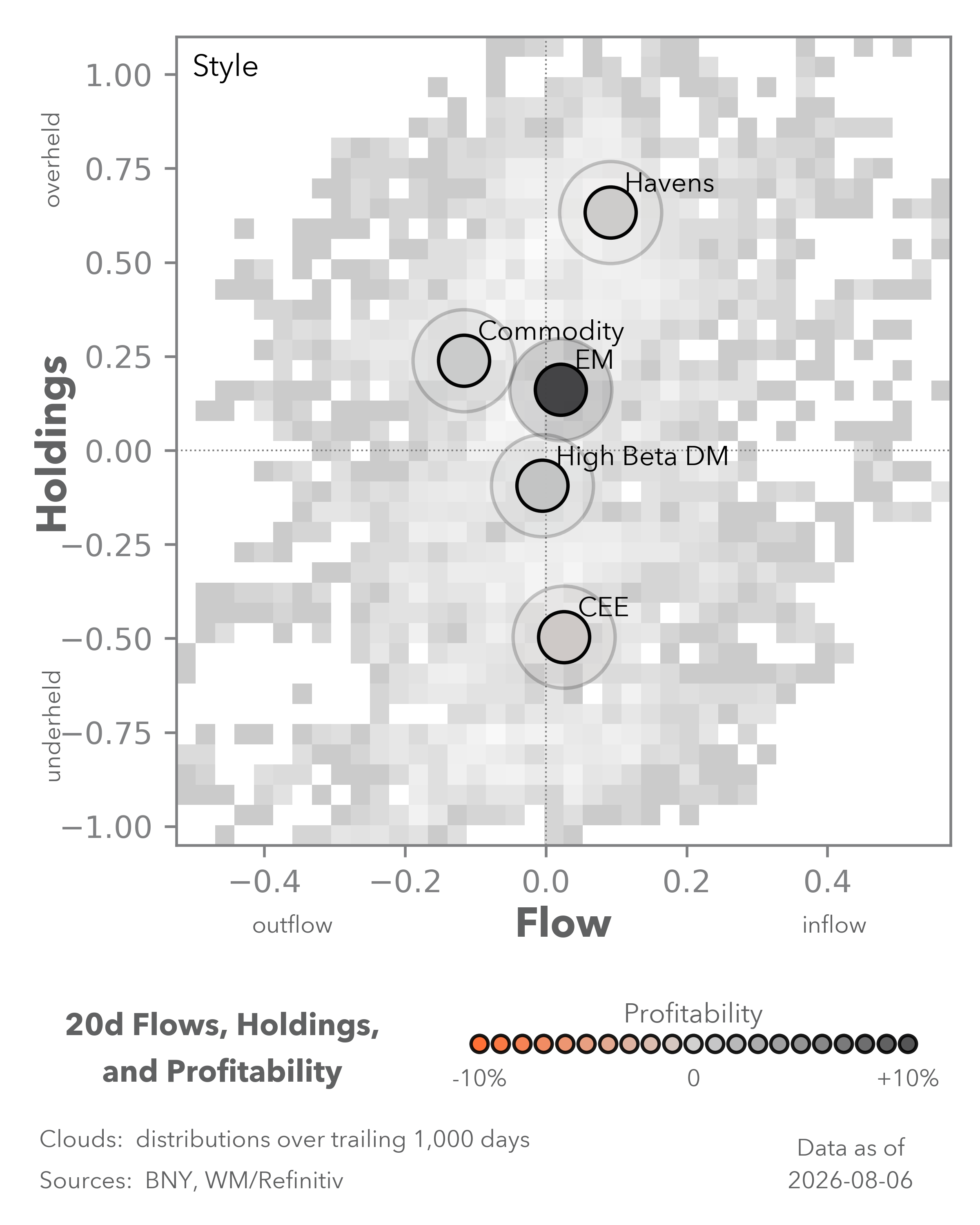
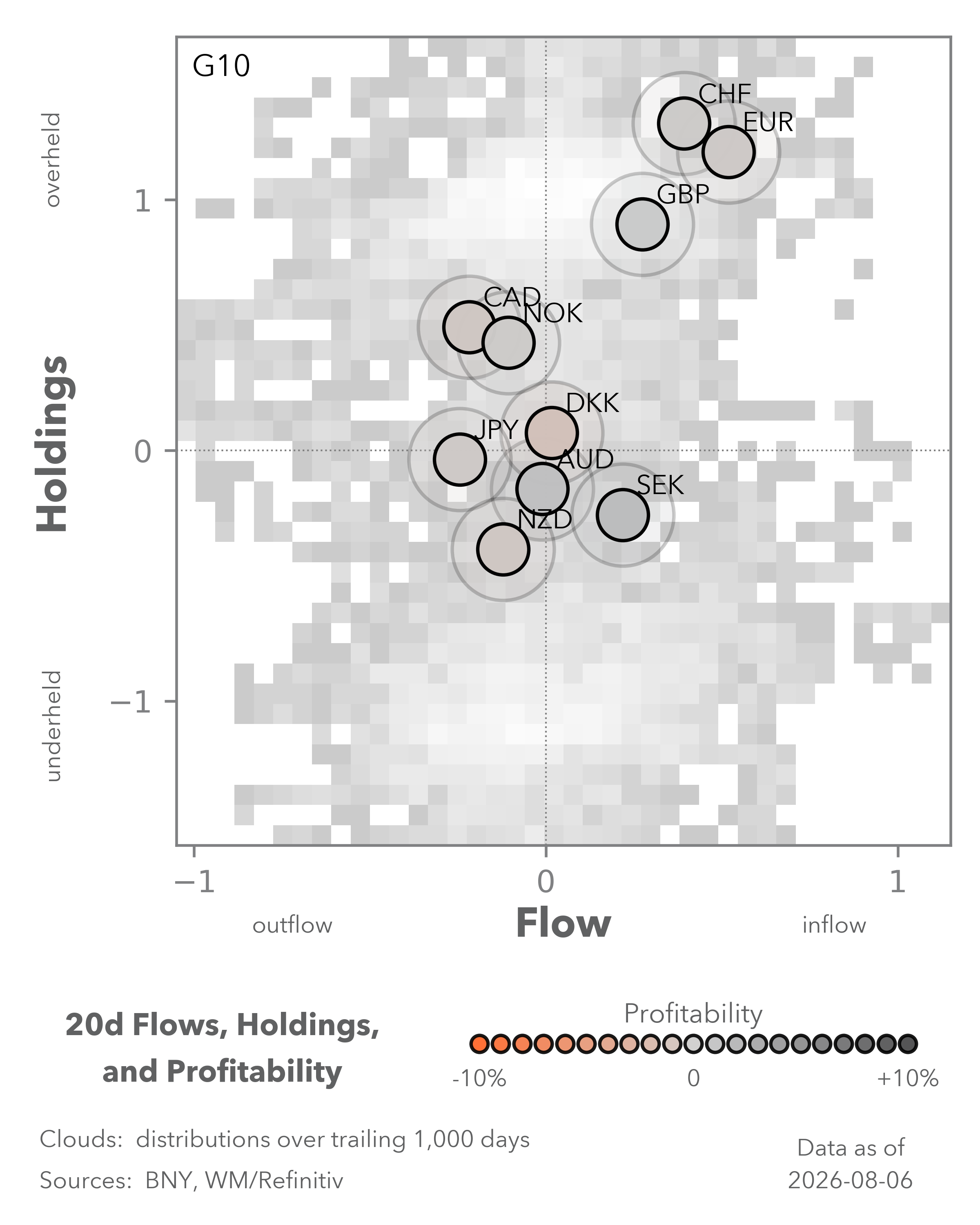
Our take: Norges Bank is the only major European central bank to decide this week, with markets pricing in only a 20% chance of a 25bp hike. Given past experiences, we expect the market to maintain such pricing into the decision, as the tail risk of a hike is always present due to persistently high inflation in Norway. As current ECB pricing for the rest of the year is ahead of Norges, additional vigilance is perhaps warranted. Nonetheless, Norway remains in the unique position of focusing on internal wage dynamics rather than direct pass-through inflation to gauge tightening requirements. We presently believe the risk is to the downside. The labor market is clearly loosening, as wage growth slows below the headline inflation rate, which itself is softening beyond expectations. This points to a clear demand softening story as the overall unemployment rate has ceased falling. Activity remains robust, but the erratic nature of oil and natural gas prices has rendered it difficult for long-term investment in the industry to pick up and feed through into labor market gains through the rest of the economy. We expect Norges Bank to fully retain rate hikes through their forecast horizon to anchor real rates and restraint, but there’s no urgency to move beyond. Our flow data show limited interest in adding to current NOK holdings, but it remains moderately overheld as a carry trade within G10, backed by a healthy continuation of Norges FX sales.
Forward look: The U.K. labor market report on Tuesday is the key data release, providing an updated read on employment, wages and underlying inflation pressures following the Bank of England’s latest decision. The U.K.’s Q2 GDP estimate and June industrial production on Friday will then determine whether activity is stabilizing after recent policy tightening.
The euro area’s main macro releases this week are Germany’s final July CPI on Tuesday and euro area industrial production on Thursday, offering fresh evidence on whether manufacturing is beginning to recover – which the latest PMIs appear to support – alongside stronger fiscal impulse. The latest German export figures provide a glimmer of hope, but the entire European automotive industry remains on a “burning platform” footing in the face of Chinese competition. Corporate earnings will remain an important driver of European equities, with another busy reporting week across financials, industrials and consumer companies. Investors will be looking for confirmation that earnings momentum is broadening beyond technology and that margins remain resilient despite higher labor costs and trade uncertainty.
On the political side, Reform Party leader Nigel Farage is facing only novelty candidates in the Clacton by-election due to a boycott by other parties. The serious signal is therefore not simply who wins, but voter turnout and Farage’s margin. The Reform Party has lost its national polling lead since Andy Burnham’s ascent to the U.K. premiership. A weaker-than-expected result for Farage, particularly on low turnout, would help Burnham accumulate further political capital ahead of a very difficult budget cycle later in the year. iFlow continues to point to gilt outflows by international investors despite favorable real yields, a trend running close to three quarters that the new government needs to reverse to support elevated borrowing needs.
APAC: Japan and Australia test policy credibility
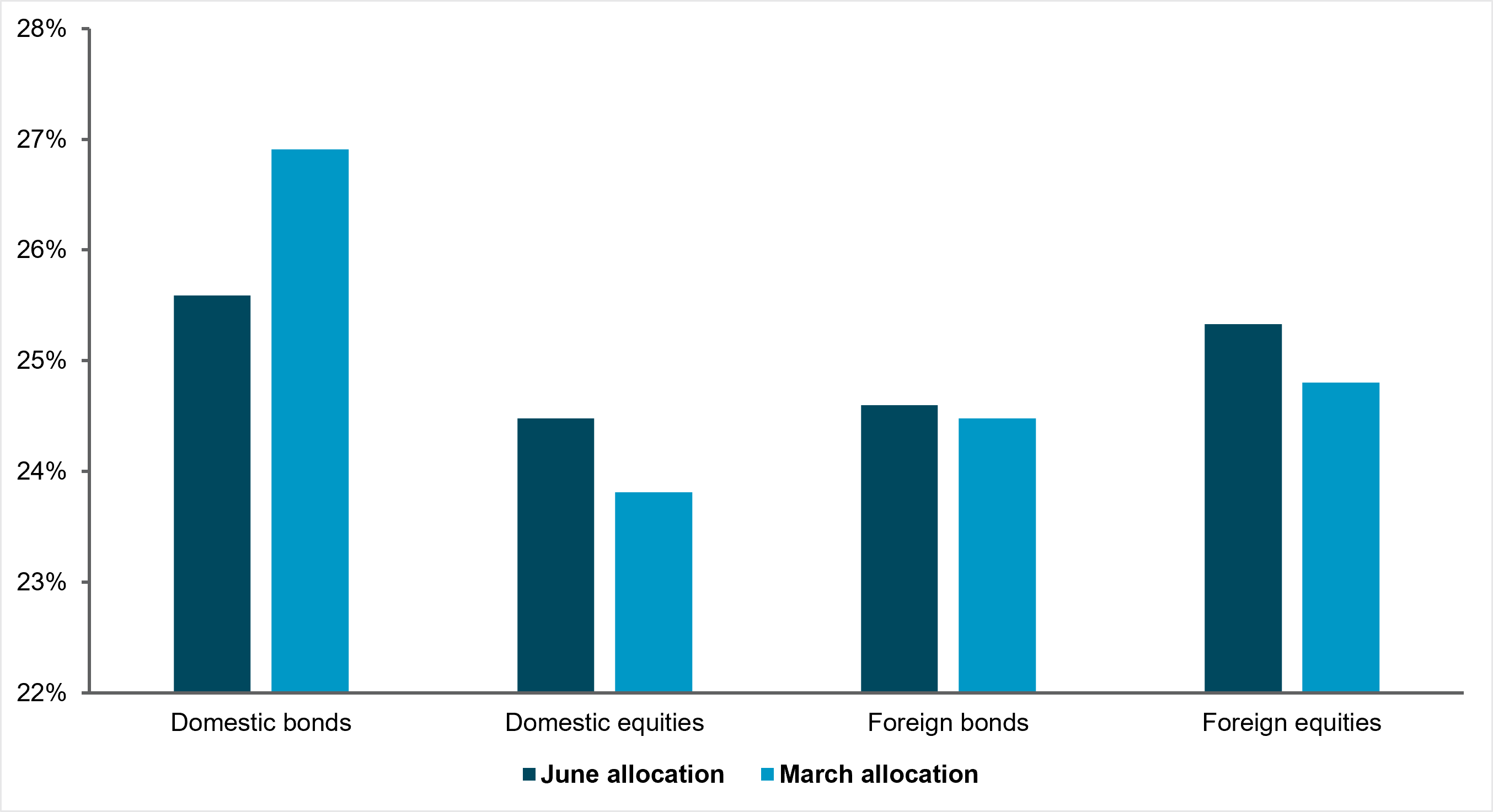
EXHIBIT #3: GPIF ASSET ALLOCATION, END-Q1 VS. END-Q2 2026
Source: BNY, Bloomberg
Our Take: The latest round of intervention by Japan’s Ministry of Finance may have passed, but we expect more rhetoric from the government as USDJPY resumes grinding higher. As of Friday, before the nonfarm payrolls (NFP) print, JPY had already given up half its gains attributable to coordinated intervention. Further JPY losses – especially a breach of the psychologically important 160 barrier – would likely add to pressure on Japanese authorities to change its comprehensive policy approach, if a stronger JPY is the policy objective, irrespective of U.S. data developments. U.S. Treasury Secretary Scott Bessent acknowledged that the joint action was only a “signal,” and Tokyo needed to follow through. Not doing so would question the very nature of intervention as a policy tool. It’s struggling to generate the intended market impact or economic benefit. News of the intervention has pointed to some strains in transatlantic coordination, with reports that the ECB was notified only after the U.S. executed a trade to sell EUR to buy JPY.
Meanwhile, there is little sign that Japanese asset allocators are changing their behavior despite clear investment imbalances. Japanese insurers announced combined losses of $100bn over the past quarter, and similar losses on domestic bonds meant the Government Pension Investment Fund’s (GPIF) share of overseas assets increased in Q2 – directly contradicting the government’s push for GPIF holdings in the opposite direction (Exhibit 3). Policy credibility erosion will continue unfolding with every tick higher in USDJPY.
The Reserve Bank of Australia (RBA) decision is the main G10 policy event, with expectations for rates to remain unchanged at 4.35%. However, the market is clearly losing confidence on the RBA’s ability to hike as stagflation continues to pressure the economy. Inflation is high – the latest annual and quarterly trimmed mean figures are well north of 3.5% y/y – though the labor market and household spending remain robust.
Sentiment indicators, however, point in a different direction: the housing market, characterized by a domestic bank as “broad-based weakening,” is a drag on demand due to wealth concentration. It will take time for any relief from external prices to come through. The lack of a terms-of-trade boost from global liquified natural gas supply pressures has been a disappointment to the broader inflation outlook. Weak productivity remains a challenge, with even the S&P warning that falling per capita GDP growth is one of the main downside risks to Australia’s credit rating. The structural issues at hand are beyond the RBA’s control, but a hold supports the “do no harm” mantra for central banks.
Forward look: The APAC calendar is relatively light but still offers several important regional catalysts. China’s July CPI and PPI ahead of Monday trading will set the tone for sentiment in Chinese markets, with investors watching whether weak domestic demand continues to offset rising producer prices before the broader activity data arrive the following week. Crucially, there is still no sign of a major fiscal push, but weaker numbers could change Beijing’s calculus. India’s July CPI on Wednesday is the key inflation release for emerging Asia and will influence expectations for the Reserve Bank of India after its latest policy decision. iFlow indicates Indian bonds are performing as appetite for local currency debt grows, but real rates remain the swing factor. Singapore’s Q2 GDP on Tuesday and Malaysia’s Q2 GDP on Friday will provide timely readings on the health of the region’s export cycle and the extent to which AI-related demand continues to support trade-dependent economies – even though neither is at the frontier of value-added production.
Several major corporate earnings releases in Asia will provide a fresh read on AI monetization, cloud investment, advertising demand and the strength of the broader technology cycle, especially in China. The key question is whether earnings continue to validate elevated valuations and the region’s export-led growth story. Geopolitics remains an important swing factor, but the bigger market risk sits in the Middle East rather than the South China Sea. Any further easing in tensions – and especially a sustained move in oil back below $80/bbl – would be a meaningful positive for Asian risk sentiment. The benefit would be most pronounced in Southeast Asia, where lower energy import costs would ease inflation and balance-of-payments pressures, support local currencies, and improve the backdrop for domestic demand.
Latin America: Dovish Fed eases conditions; momentum still elusive
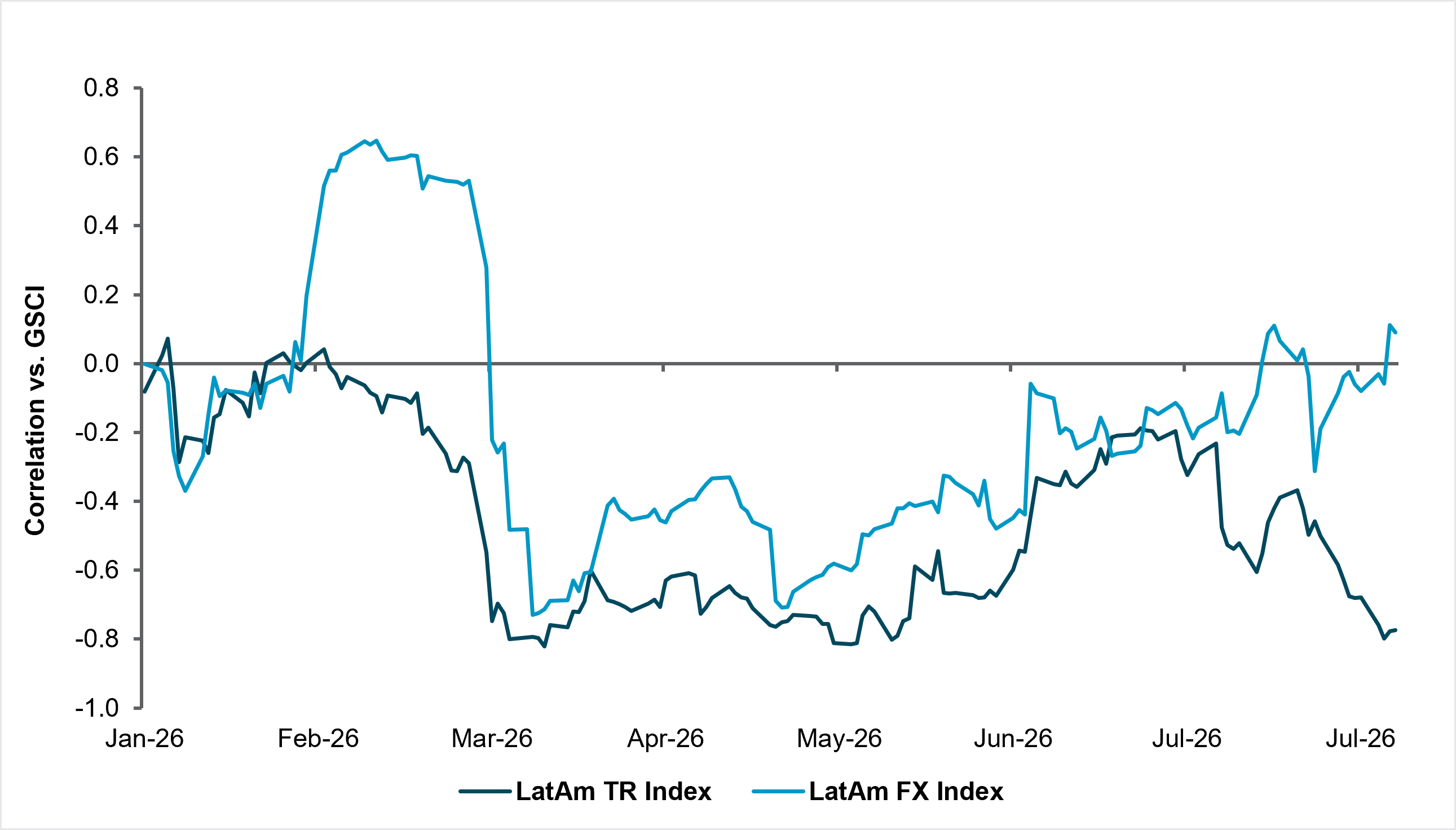
EXHIBIT #4: GSCI COMMODITY INDEX VS. LATIN AMERICAN BOND AND CURRENCY INDICES
Source: BNY, correlation of 20-day returns
Our take: The dovish Fed and weaker U.S. labor market on Friday have created the necessary conditions for carry to perform, but idiosyncratic risk matters. Broader market correlations have broken down: unlike in early Q1, there’s no guarantee that higher commodity prices from a weaker dollar will support Latin American currencies, especially given that the region lacks a gold component. iFlow isn’t currently tracking strong aggregate flows into Latin America for yield purposes alone, which reflects that. The correlation between the GSCI commodity index and the Latin America Fixed Income Total Return and FX indices, respectively, has struggled to break into positive of late (Exhibit 4). Fixed income correlation is strongly negative at present, reminiscent of risk aversion during Q2. That’s because the lack of Fed credibility is causing steepness in the U.S. curve, which raises the bar for high-yielding bonds to perform, especially with inflation globally still an issue. With most Latin American central banks looking to hold or cut rates, traditional yield-driven flows will struggle. The July payrolls report has provided some curve-related relief, but the correlation will take time to turn from its current levels, and there’s no guarantee a positive relationship can ensue.
Front-end and currency equivalent flows are more insulated from U.S. steepening, with markets focusing on near-term nominal and real rates alone. Central banks see sufficient inflation anchoring and inflation expectations to cut rates, while maintaining a sufficient buffer against the Fed. If spot commodity prices continue to rally strongly on the back of dollar weakness, near-term trade receives and associated royalties will also be supportive for regional FX. However, the bar is also high for performance: we note the GSCI correlation with Latin American currencies surged to above 0.6 at the beginning of the year during the commodity and precious metals boom. Given the repricing in global input costs, including for extractive industries, we doubt the net margins for flows will be as high as in January and February. However, the correlation shift suggests the market is seeing improved commodity prices as a positive driver, and a window exists for Latin American carry FX to perform. Much will depend on using this window of looser financial conditions to accelerate domestic reform, improve productivity to boost real returns. FX is the first mover, but validation will come in duration.
Forward look: Brazil’s July IPCA (cons. 0.0% m/m, 4.4% y/y) is the key release after Banco Central do Brasil’s 25bp cut, followed by services, retail sales and labor-market data. Another benign inflation print would protect the easing story, while renewed price pressure would challenge it quickly, ultimately determining the essential real-rate trajectory. Mexico’s industrial data and Chile’s expectations surveys provide secondary checks on regional activity and rates pricing.
Banco Central de Reserva del Perú should remain on hold, with guidance on whether recent supply-driven inflation can be looked through more important than the decision itself. PEN performance warrants very close attention as precious metals prices are starting to move in reaction to changes in Fed expectations. Its performance was exceptional during the silver rally from H2 2025 to January 2026. A repeat is unlikely but a slower form of appreciation for precious metals as a hedge against “debasement” is clearly favorable for Peruvian terms of trade, complementing the pro-business direction of the new Fujimori government.
On the political side, Brazil also moves formally into election mode on August 15, with candidate registrations closing and official campaigning beginning. Markets will increasingly focus on fiscal promises, coalition signals and relations with Washington. Tensions with Argentina add another layer: the recall of Brazil’s ambassador following attacks on President Lula by Argentine President Javier Milei risks making the EU-Mercosur trade agreement and bilateral relations part of the campaign narrative, even if the immediate economic relationship remains functional.
Elsewhere, Colombia enters the first full week of the de la Espriella administration, with markets looking for detail on fiscal consolidation, debt refinancing, spending restraint and any meaningful concessions on economic ties with the U.S. Venezuela’s U.S.-backed transition talks remain another regional political risk, with any progress on electoral institutions, sanctions or an eventual vote carrying implications for both sovereign risk and oil.
Central bank decisions
Australia, Reserve Bank of Australia (Tuesday, August 11): The RBA is expected to keep rates on hold at 4.35%, but there remains some degree of uncertainty over the inflation path. Officials contend that price pressures are still sufficiently strong to maintain vigilance (the market is barely at a 50% chance for one more) but the external environment could prove more problematic, and AUD is on course for further gains as a result.
Norway, Norges Bank (Thursday, August 13): Norges Bank is still expected to keep rate hikes in their current forecast horizon, but much will depend on the domestic labor market outlook, which could face some downside risk in the near term as the market’s broader oil price outlook has softened. Inflation numbers are manageable for now, but there’s perennial upside risk to domestic demand.
Peru, Banco Central de Reserva del Perú (Thursday, August 14): No rate change is expected but a hawkish lean is required as inflation remains above 4%. Sequential inflation numbers point to similar pressures, with both June and July monthly inflation surprising to the upside, though core inflation is starting to ease. A weaker dollar may come into play as transmission into prices and the exchange rate is swifter for Latin America.
Source: BNY
Source: BNY