Central banks price the pain
Start of the Week previews activities across global financial markets, providing useful charts, links, data and a calendar of key events to help with more informed asset allocation and trading decisions.
Start of the Week previews activities across global financial markets, providing useful charts, links, data and a calendar of key events to help with more informed asset allocation and trading decisions.

Geoff Yu
Time to Read: 8 minutes
The September FOMC kicks off a critical policy week, as global central banks struggle to preserve price-stability narratives. Supply shocks on one side and fiscal dominance on the other are sharply reducing the margin for error. The risk is that monetary and fiscal policy increasingly pull against each other across the yield curve, elevating fixed-income volatility and tightening financial conditions. Fed Chair Kevin Warsh has advocated allowing market pricing to maximize the tightening impulse, but that requires considerable faith in underlying economic resilience.
European tightening is at a crossroads after the European Central Bank (ECB) set the benchmark. The Bank of England (BOE) is unlikely to follow, with the Monetary Policy Committee (MPC) likely relying on higher gilt yields to impose discipline ahead of the government budget. Yet headline inflation risk is rising across the region, with little relief from repeated energy supply shocks. Even the ECB may be approaching the limits of what monetary policy can achieve as its marginal effectiveness against supply-driven inflation falls. Expect the debate to shift increasingly toward structural reform and fiscal restraint.
The Bank of Japan (BOJ) faces the music at its first policy decision since the recent strengthening in JPY. Intervention itself had limited impact, but USDJPY 160 as a “line in the sand” has established some deterrence. Treating the subsequent FX move as sufficient tightening and stepping back from a sustained normalization cycle would risk a policy error. Conversely, a firm tightening commitment could accelerate JPY gains and open the way for broader FX adjustment across APAC, with consequences for the international pricing of Japanese finished goods.
Bottom line: Core policy decisions this week are expected to land hawkish out of necessity. The next one to two policy cycles may establish the limits of monetary policy, forcing more of the adjustment onto governments. Whether through diplomacy, fiscal restraint or structural reform, inflation premia can’t fall sustainably without progress in the corridors of power. Central banks can price the pain, but governments increasingly have to solve the problem.
North America: FOMC expected to hold; murky thereafter
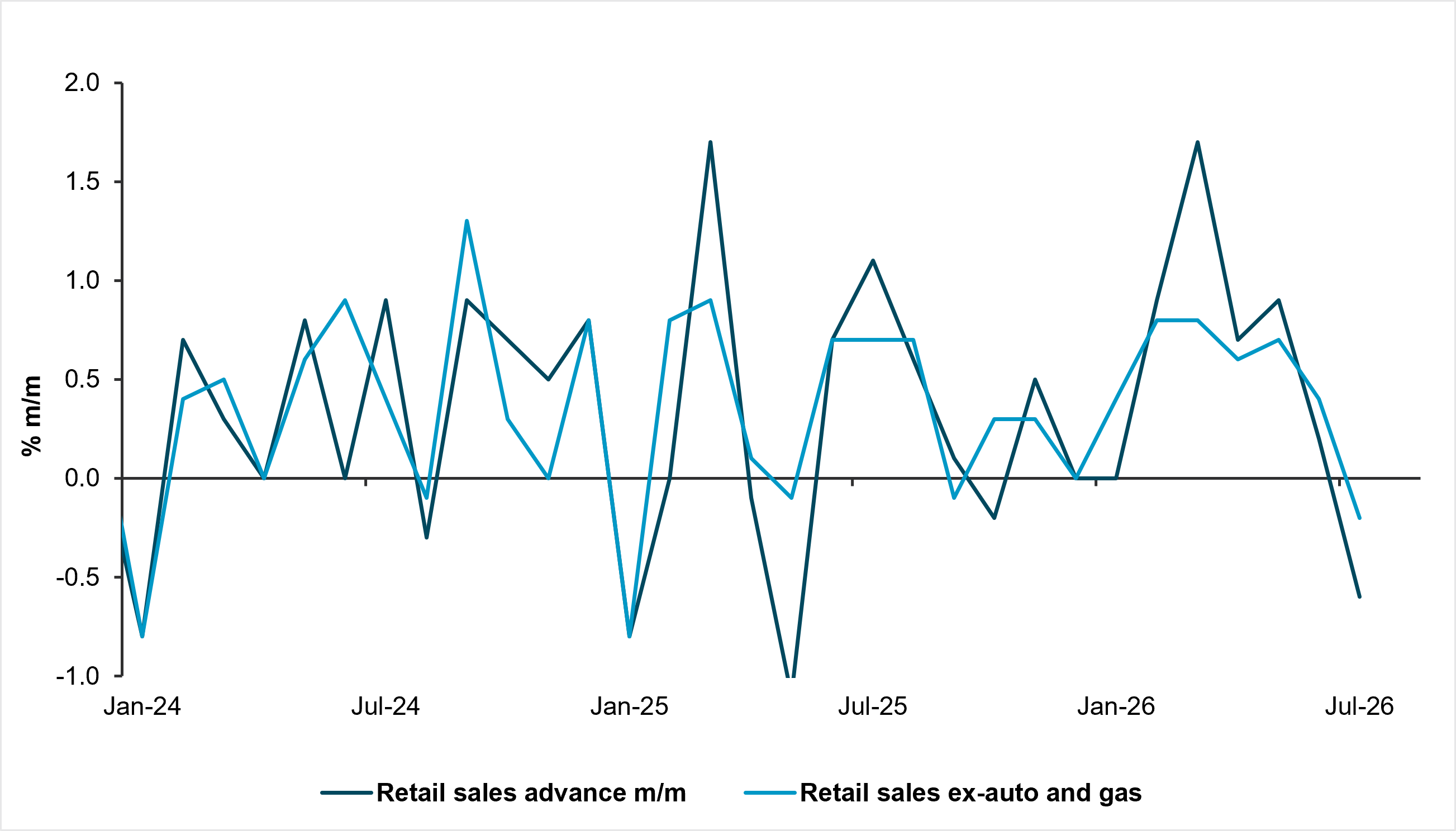
EXHIBIT #1: RETAIL SALES EXPECTED TO REBOUND
Source: BNY
Our take: Last week’s moves higher across the curve, including a rise of as many as 28bp in the 2y Treasury yield, were driven by firmer oil prices and a notable repricing of Fed hike expectations, leaving markets entering FOMC week with a distinctly more hawkish bias. In that context, Wednesday’s policy decision will be the clear focal point in North America, with the sparse U.S. calendar offering little else to distract from the Fed. The one meaningful data point is Wednesday’s retail sales release, expected to rebound to 0.9% m/m headline and 0.4% ex-autos and gas after declines the past several months. In Canada, the main event is CPI, expected to hold at 3.0% y/y, which would suggest little immediate relief on inflation.
Forward look: A Fed hike appears a near certainty, with markets pricing over 80% odds of a September hike and nearly two full hikes by year end. Warsh’s press conference will determine if front-end yields remain under pressure, or if a hike is framed in a more dovish light. Retail sales will be the only timely read on U.S. consumer demand, and a firm print would reinforce the view that growth remains resilient enough to absorb tighter policy.
In Canada, CPI at 3.0% would likely keep the Bank of Canada in cautious mode, but unless it meaningfully deviates from expectations, it should be secondary to the Fed for broader rate direction. Overall, the week looks like one where policy communication – not data – should dominate rates, FX and curve dynamics.
EMEA: BOE to hold the line – fiscal the bigger problem
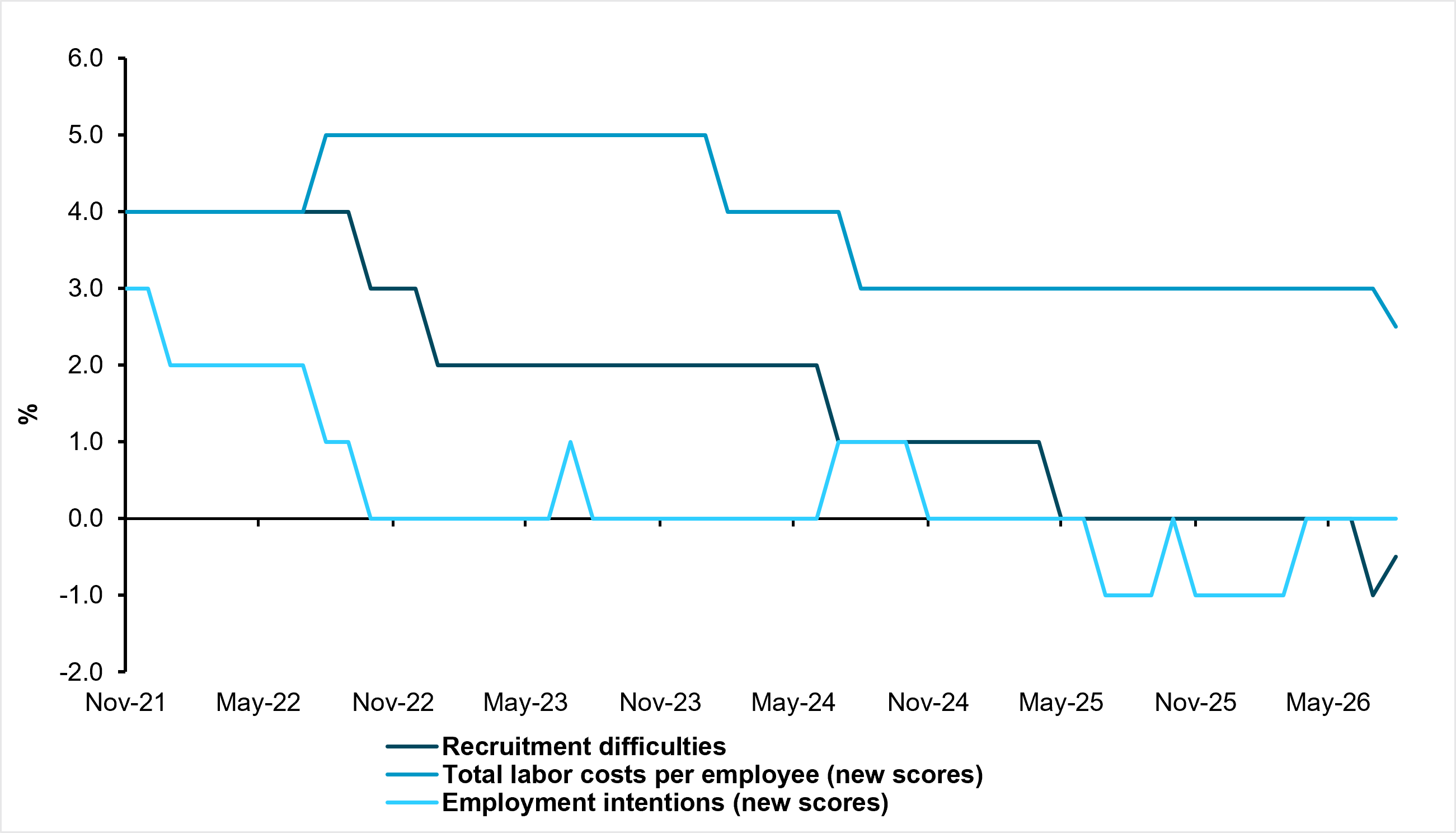
EXHIBIT #2: BOE AGENTS’ SURVEY: ALL COMPONENTS POINT TO FURTHER LABOR MARKET COOLING
Source: BNY; real rate is an equally weighted basket of German, Italian and French 5y real rates
Our take: The BOE won’t be following the ECB with a hike in September, but we expect the language on inflation to show more vigilance. The energy price outlook is currently acute for the U.K. given falling natural gas supplies. Barring an immediate collapse in costs, the next reset for energy covering the winter months will likely be far higher than the 4% in the autumn round and trigger a rise in inflation expectations. The biggest question is the household reaction function to such a shift. Recent evidence suggests that the U.K. household will respond with restraint – a drag on growth, but one that also gives the MPC room to hold.
Data support this view: the latest agents’ survey (Exhibit 2), which already encompasses recent periods with rebounding energy prices, shows no rise in wage pressures. Recruitment difficulties have ticked up slightly but in the context of a cooling labor market, while the crucial total labor costs component has fallen again for the first time in over two years.
There is also a second point of restraint that is arguably more urgent, and which the Bank of England would not wish to preempt. Gilt yields are surging and the Chancellor’s recent commitments to fiscal discipline mean that broader spending restraint will be required if the government wishes to provide short-term relief on the cost-of-living front. In short, the bond market has already done the BOE’s job to focus minds at the Treasury, and there is little need to add to obvious financing pressures: the gilt market’s borrowing profile is unique due to its large exposure to inflation-linked instruments, which adds to the government’s near-term cash flow pressures. We expect a firm message on inflation, but no more than that.
Forward look: The week’s dominant theme is the post-ECB recalibration of European rate expectations against a backdrop of rising energy prices and sticky inflation. The commentary in the aftermath of the September hike suggest every meeting is live. As such, Tuesday’s ECB Wage Tracker and Wednesday’s final Eurozone August CPI will be scrutinized for evidence of second-round effects, which may support another move later this year. Headline inflation is expected at 3.3% y/y, with core at 2.4%, leaving the inflation backdrop uncomfortable despite still-fragile growth. The ECB’s Philip Lane and Olli Rehn speak on Wednesday, making their post-decision framing important for whether markets retain or fade expectations for further tightening.
Activity data will provide the counterweight. Eurozone industrial production is expected to fall 0.5% m/m, while the ZEW survey will test whether higher energy costs and tighter financial conditions are beginning to weigh more visibly on confidence and investment. The key tension remains unchanged: the ECB has shifted toward greater restraint just as recovery is gaining traction, while natural-gas risks are again deteriorating heading into winter, albeit the ECB’s new forecasts for the severe scenario are still some distance away. The week will therefore test whether incoming inflation and wage data validate the hawkish shift, or whether weakening activity starts to challenge the case for further tightening. Swiss PPI data will also be of interest, as the Swiss National Bank appears to shift its tone on policy due to inflation risk. However, the bar remains high for any hike this year.
APAC: BOJ and CBC in focus; China data tests domestic momentum
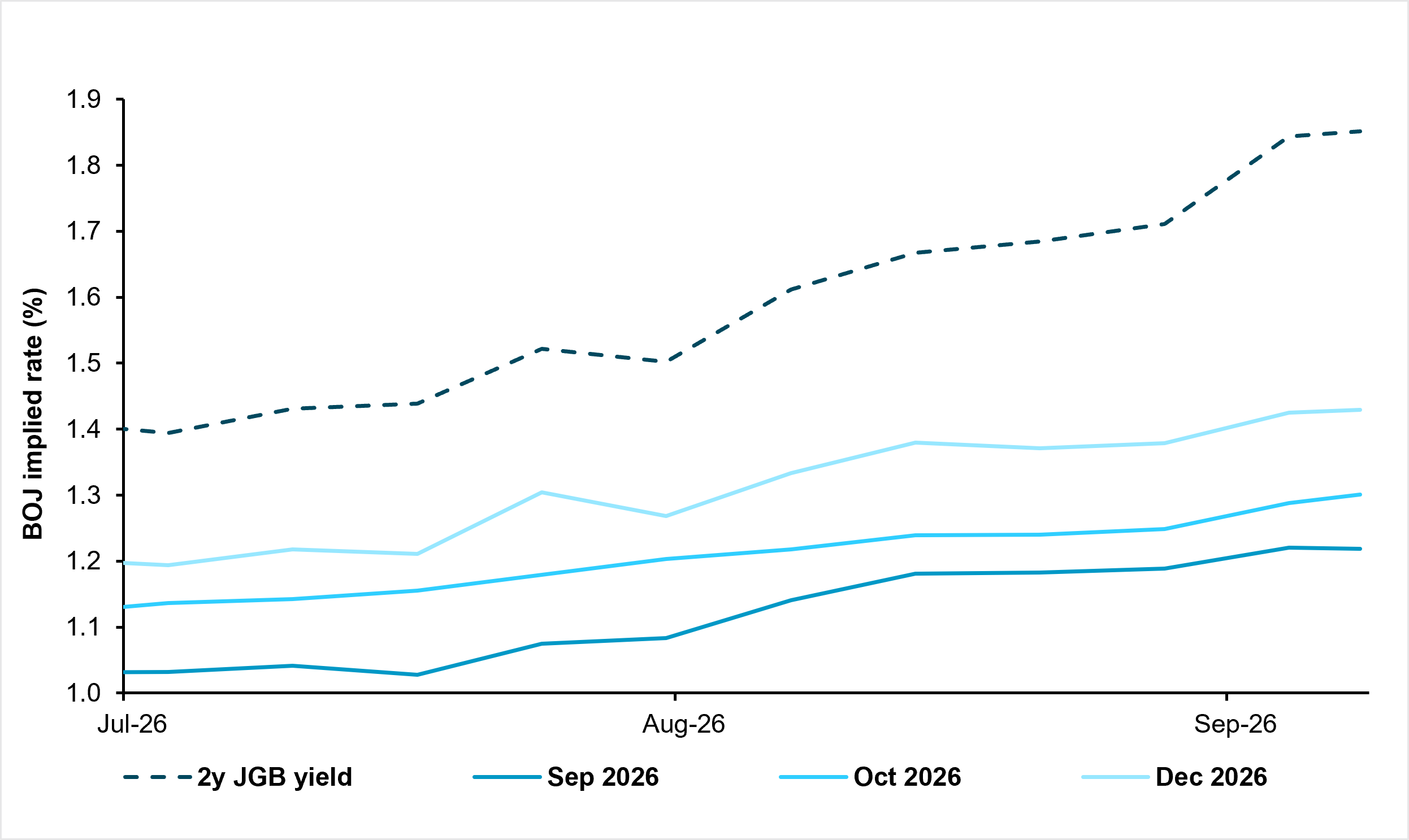
EXHIBIT #3: BOJ RATE EXPECTATIONS ON THE RISE
Source: BNY, Bloomberg
Our take: Asia’s macro calendar is dominated by the BOJ and Taiwan’s Central Bank of the Republic of China (CBC), alongside key growth and inflation data. The BOJ takes center stage, with Japan CPI, exports and machinery orders shaping the policy backdrop. The CBC decision comes amid strong technology-led external demand, while New Zealand Q2 GDP and July exports will test the recovery and Reserve Bank of New Zealand outlook. Elsewhere, China’s activity and property data – industrial production, investment and home prices – will test whether domestic momentum is stabilizing. Export data from Japan, Malaysia, India, Singapore and New Zealand will provide a broader read on regional demand, while inflation releases in India and Malaysia round out the week.
Forward look: A firmer U.S. dollar, surging crude, rising global yields and foreign outflows are creating a tougher backdrop for APAC assets. AI demand remains the key offset for South Korea and Taiwan, with Taiwan’s information and communication output up 42% y/y and South Korean chip exports surging 270%. China is the contrast: exports remain strong at 25% y/y with a large trade surplus, but broader economic weakness and intensifying semiconductor price competition continue to weigh on sentiment.
Oil is becoming the key FX risk. As U.S. dollar weakness fades, the recent dislocation between crude and APAC FX should narrow and negative terms-of-trade effects become more visible. USDPHP has already tracked higher oil, while KRW, INR and THB have largely followed the softer dollar. INR and THB look most vulnerable to catch-up depreciation. KRW valuations remain stretched, leaving TWD as the cleaner tech-positive play.
Elsewhere, CNH should remain range-bound, with increasing downside risks from an equity correction and falling Chinese government bond yields. For JPY, BOJ’s policy guidance is key. A hawkish outlook might see reversal of recent JPY strength. Overall, the cushion from USD weakness is fading, leaving APAC increasingly exposed to higher oil, higher yields and tighter global financial conditions.
Latin America: COPOM needs to watch SELIC buffer, but elections take precedence
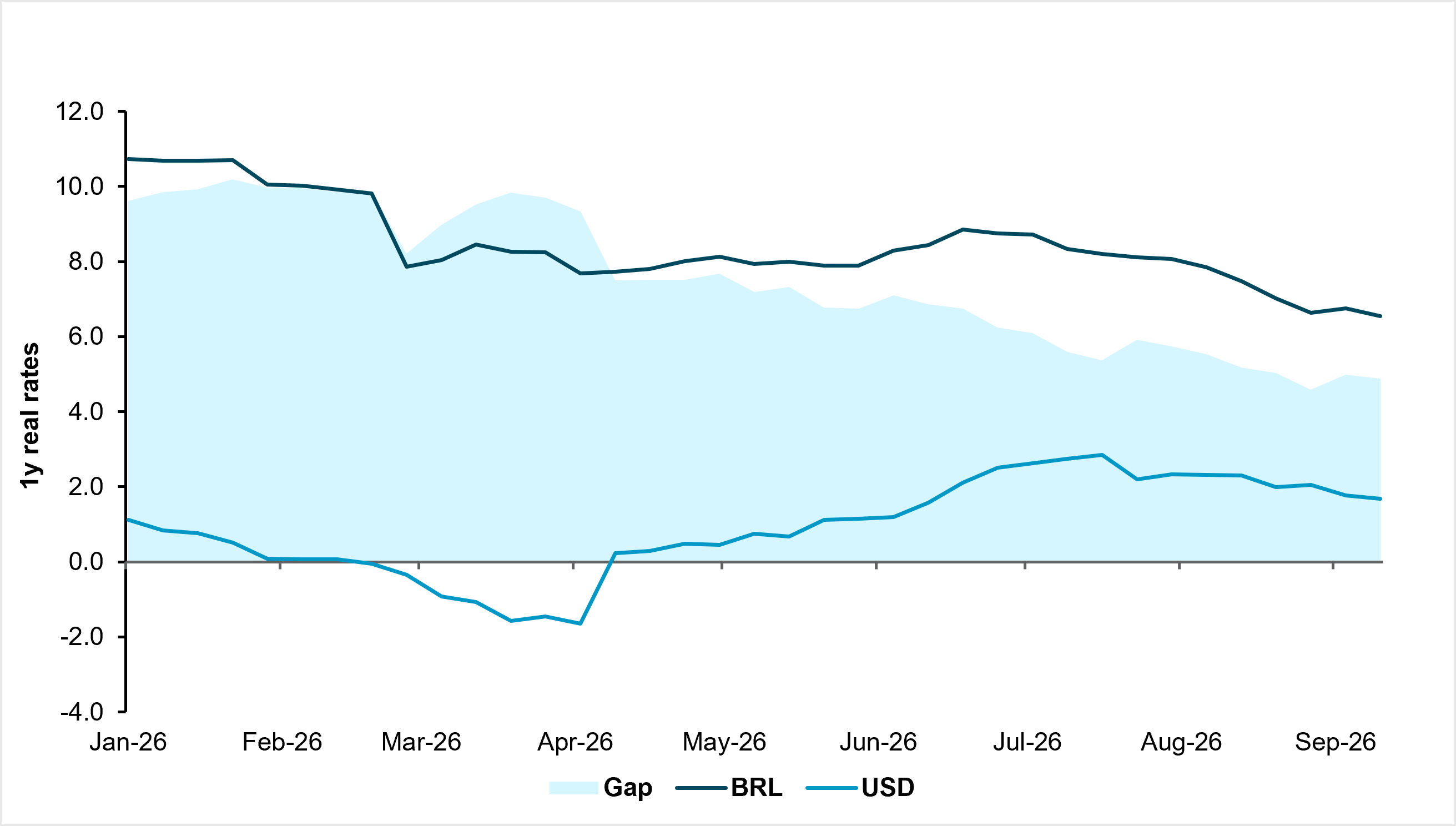
EXHIBIT #4: BRAZIL–U.S. 1Y REAL RATE GAP AT YEAR-TO-DATE LOWS
Source: BNY, Bloomberg
Our take: In the current environment, Latin America is the only region where central banks can continue to justify rate cuts. First, supply issues are weaker due to geography, and there are plenty of economies in the region that can benefit from a positive terms-of-trade shock, even if this failed to materialize in Q2 at the conflict’s outset. Second, starting points matter. The post-pandemic environment pushed real rates aggressively throughout the region, which allowed a comfortable cushion for inflation targeting, even if fiscal reforms left much to be desired. A cut is still the base case at the Banco Central do Brasil’s monetary policy committee (COPOM) decision this week, but the market’s reaction function is far from linear.
The short-term real-rate gap between the BRL and USD – essential to carry trades – has fallen to the lowest levels this year (Exhibit 4). A 5pp cushion would be seen as more than favorable in most cases, but transmission is faster in Latin America, and there is always a premium on Brazil due to fiscal factors – though the latter will be reassessed after elections. Meanwhile, inflation remains above target and an extremely hawkish pivot by the Fed, which will announce before the Selic decision, requires some calibration. We are of the view that maintaining a stronger real-rate buffer in the short term to let carry perform can pave the way for more aggressive cuts when current supply shocks pass.
Forward look: Polls showing Flavio Bolsonaro narrowing the gap with President Lula ahead of October’s vote are adding to fiscal uncertainty, particularly as Lula advisers continue to resist spending cuts that investors see as necessary for debt sustainability.
Key releases in the region include Brazil’s July retail sales and economic activity data on Monday, which will provide a timely read on domestic demand, with sales expected to be flat after a 0.5% increase previously. Elsewhere, Chile’s central bank meeting minutes on Tuesday will provide further detail on the balance of risks and the policy outlook. Argentina’s Q2 GDP on Wednesday will test whether the Milei administration’s fiscal adjustment is sustaining the recovery without generating a sharper contraction in demand, with Thursday’s trade balance offering a further read on external resilience. In Mexico, Q2 aggregate supply and demand data on Thursday will help clarify the composition of domestic growth following a period of relatively resilient activity. August inflation has already shown headline CPI at 3.26% and core at 3.88%, leaving the focus increasingly on whether demand remains strong enough to keep underlying price pressures persistent.
Overall, the week will provide a useful cross-country test of whether domestic activity is holding up as fiscal, political and inflation risks become more prominent.
Central bank decisions
Central bank decisions
Federal Reserve (Wednesday, September 16): The market is generally leaning toward a hike but much will depend on the U.S. data run ahead of time. Our scenario now is that the FOMC will raise rates two or three times in the next several months, although three consecutive hikes for the remainder of the year may wind up extending into 2027. By the second half of next year, we see rates coming down, as inflation starts to do the same – base effects alone will help here – and the economy looks to slow with tighter conditions.
Banco Central do Brasil (Wednesday, September 16): The BCB is expected to cut rates further to 13.75%, though the Fed decision beforehand may have some bearing on the result. As inflation is running at a more moderate pace, there is sufficient scope to keep real rates elevated without stoking strong inflation risk. Domestic activity levels are also moderate with GDP growth running at around 2% annualized. This is also the final central bank decision before elections, which will likely drive currency movements in the near term.
Central Bank of the Republic of China (Thursday, September 17): We expect the CBC to keep its policy rate unchanged at 2.00%. Taiwan’s growth remains robust with upside risks. Inflation is relatively contained, with August headline and core CPI easing to 2.04% and 2.30% y/y. Financial market stability remains a key focus, particularly equity-driven credit expansion and the ongoing cooling in the property sector. We expect the CBC to retain a flexible policy stance and reiterate its readiness to adjust policy as conditions warrant.
Bank of England (Thursday, September 17): The BOE’s Monetary Policy Committee (MPC) is expected to keep rates on hold in another 5–4 vote. The current bloc of votes favoring the status quo appears solid, as reinforced by Governor Andrew Bailey’s comments during his recent parliamentary testimony. However, the MPC will need to be cognizant of severe price risks in the coming months, especially as the U.K.’s current natural gas resilience is not ideal. The ECB remains well ahead in tightening. The BOE will also need to be wary of allowing pass-through risks if EUR maintains strength on core crosses.
Czech National Bank (Thursday, September 17): The CNB will likely conclude that 3.75% is still sufficient enough a rate buffer against the ECB, but if the market’s expectation of a further 75bp is realized, the pass-through risks will be far too strong to ignore, especially with supply issues also impacting the region. “Longer-lasting inflation” is now embedded across European interest rate trajectories and sequential inflation in Czechia is no longer benign, having increased by close to 1pp in the last two months alone.
Bank of Japan (Friday, September 18): We expect the BOJ to raise rates by 25bp to 1.25% and maintain a hawkish stance that will “continue to raise the policy interest rate and adjust the degree of monetary accommodation.” While Q2 GDP growth slowed modestly to 0.3% q/q and 1.1% y/y, inflation momentum has strengthened, with headline CPI rising to 1.9% in August and core CPI ex-fresh food and energy also at 1.9%. Focus will be on the BOJ’s guidance, with risks tilted toward a faster tightening pace than the one hike per quarter currently priced by markets.
Source: BNY
Source: BNY