Unwinding the FOMC unwind
FX: G10 & EM provides a detailed analysis of global foreign exchange movements in major and emerging economies around the world together with macro insights.
FX: G10 & EM provides a detailed analysis of global foreign exchange movements in major and emerging economies around the world together with macro insights.

Geoff Yu
Time to Read: 4 minutes
Bottom line: The July FOMC-driven hedging impulse has largely run its course, with the first signs of USD buying returning against EUR, MXN and CAD. This means trade-weighted dollar holdings remain historically light, creating scope for stabilization. A sustained recovery still requires stronger U.S. asset demand and renewed real-rate leadership. CNY is the main outlier as underheld positions begin to unwind.
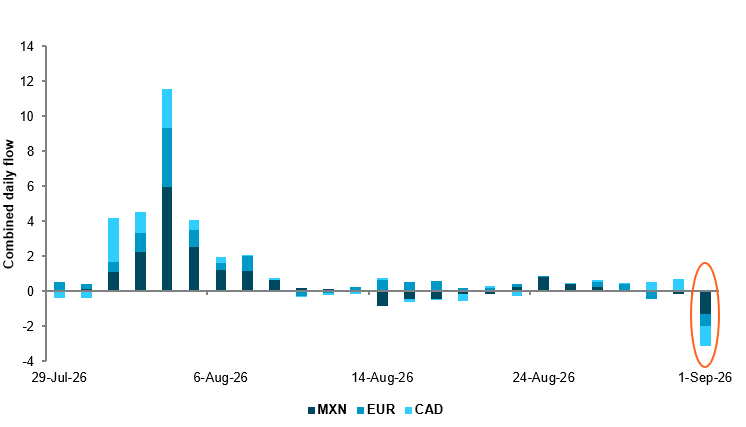
EXHIBIT #1: RARE COMBINED CROSS-BORDER HEDGING ON SEPTEMBER 1
Source: BNY
Our take
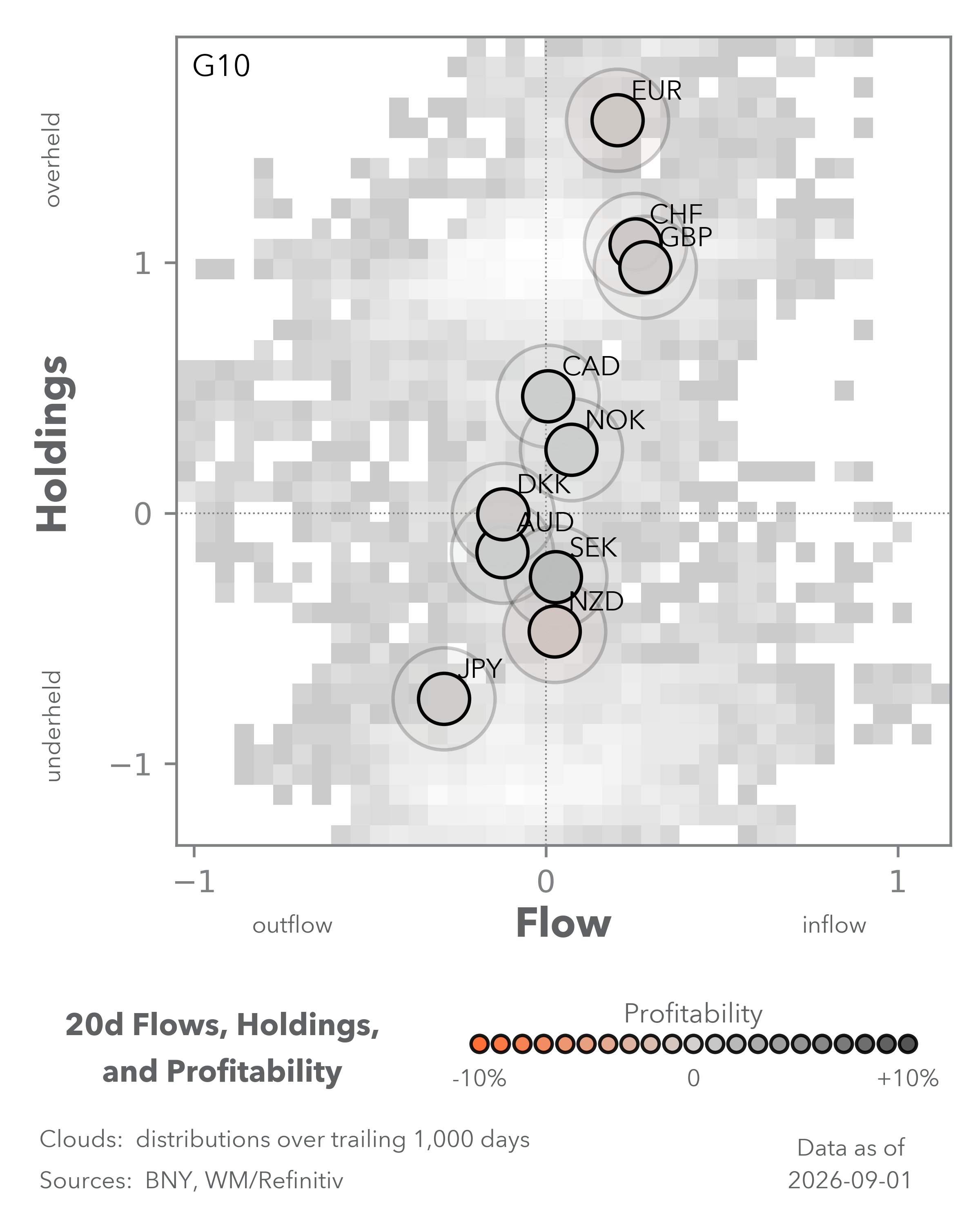
Our flows are showing the first signs of dollar stabilization after a difficult August. After spending much of Q2 and Q3 significantly overheld as part of the “U.S. exceptionalism” trade, the dovish interpretation of the July FOMC meeting prompted a flurry of dollar hedging. We’ve highlighted the impact of EURUSD and GBPUSD on dollar holdings as these are the most actively traded currencies. A similar argument has been made for the dollar index, which fell almost 3% in the four weeks after the decision.
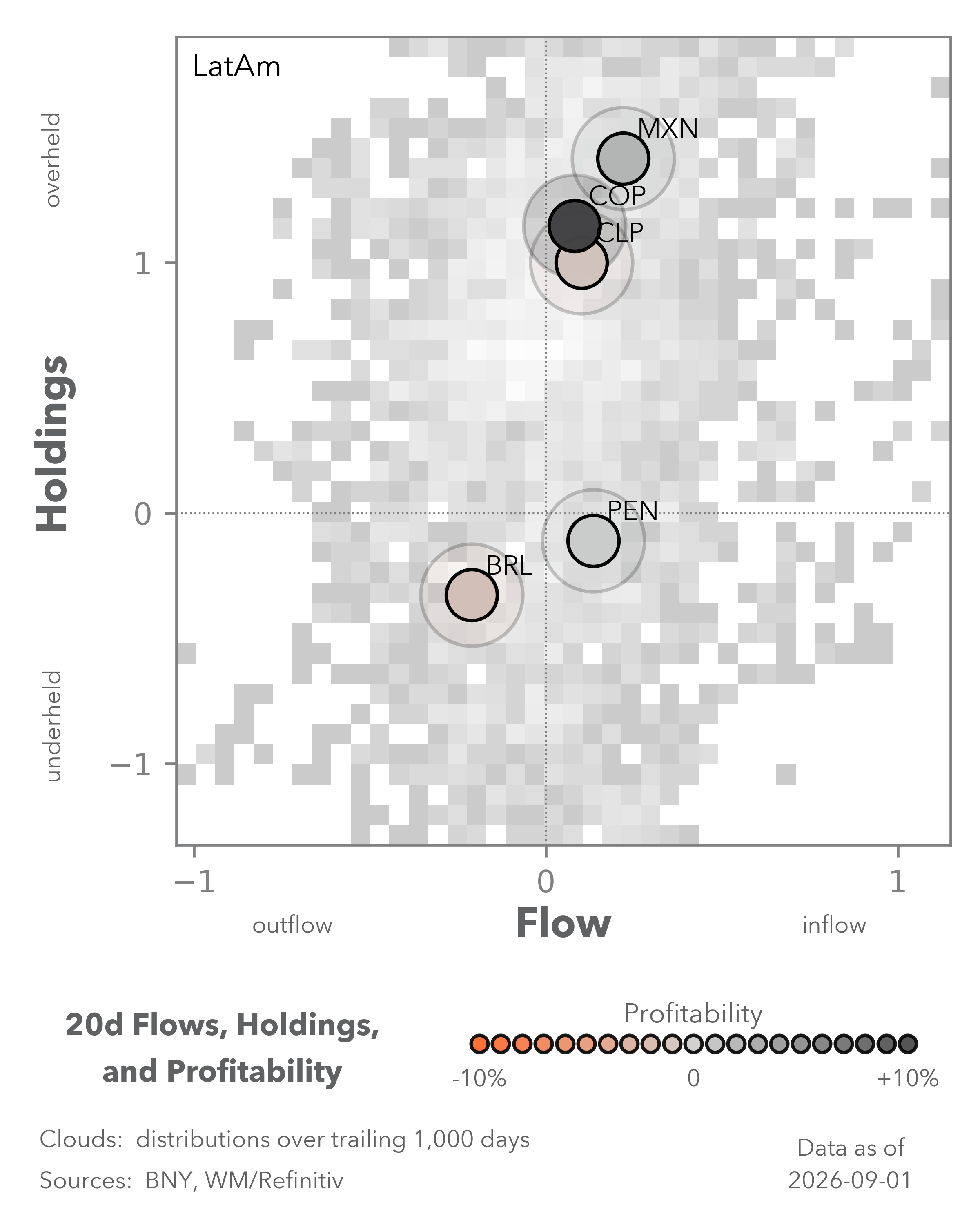
From a valuations and even policy angle, the DXY and major pairs are far less relevant. On a currency standalone basis, EUR, MXN, CAD and CNY are the top currencies in the U.S. trade basket, comprising over 50% of total U.S. trade. By this measure, we find that EUR, MXN and CAD hedging were also significant in the week after the July Fed, though flows fully flattened out for the rest of the month. The Treasury Department decision on buybacks didn’t generate a strong reaction. On September 1, our data show that the dollar was bought back against these three currencies for the first time throughout the monitoring period.
Forward Look
One day doesn’t signal a trend, but the past three weeks indicate there was no appetite to add aggressively to dollar hedges. The Fed’s signal that it’s willing to continue rate hikes removes the main driver for dollar sales in early August. Overall USD holdings remain elevated, but without any re-opening of a policy gap between the U.S. and peers, we don’t see any additional constraints on dollar performance. Tariffs notwithstanding, stronger performance against the currencies of key U.S. trading partners also represents incremental tightening through pass-through. The result is further upside risk to U.S. real rates, supporting further performance improvements.
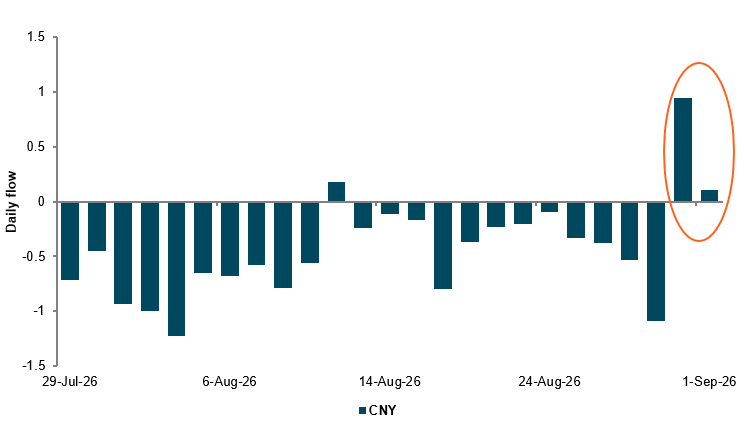
EXHIBIT #2: STRONGEST INFLOW SESSIONS INTO CNY SINCE EARLY JULY
Source: BNY
Our take
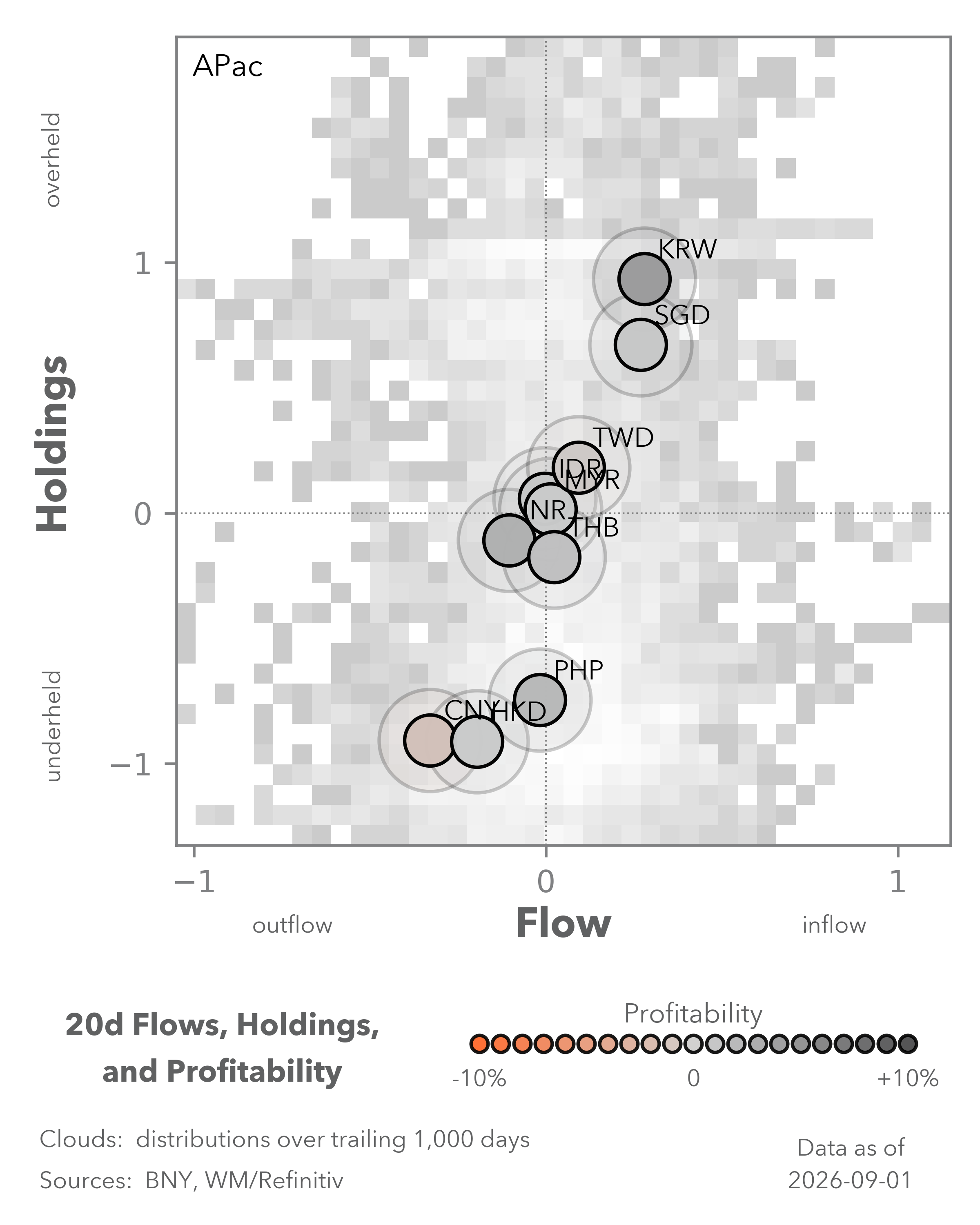
The main outlier is CNY, whose behavior is the complete opposite of the other key currencies in the U.S. trade-weighted basket. CNY didn’t react positively at all to the Fed and Treasury decisions in July and August. The currency only registered one marginal inflow session before some month-end rebalancing came through. Weak domestic growth and price impulse have consolidated easing expectations.
With the entire Chinese yield curve (including cash rates) falling below Japanese equivalents at various points this year, it’s difficult to make a positive case for currency ownership, even if spot has been performing well relative to peers. The return in CNY interest – if extended – does pose a counterweight to the U.S. holdings recovery.
Forward Look
Although CNY is often the main currency of interest in global trade, its impact on U.S. trade is diminishing. Vietnam now has a larger trade surplus with the U.S. compared to China, even if many of the goods comprise transshipments. CNY valuations now feature far more in Sino–EU trade matters comparatively, but its impact on U.S. financial conditions through the exchange-rate channel is important. If yields start to move higher in China as reflation is priced, a further unwinding of underheld CNY positions is possible. The process should be less consequential to the USD by historical standards.
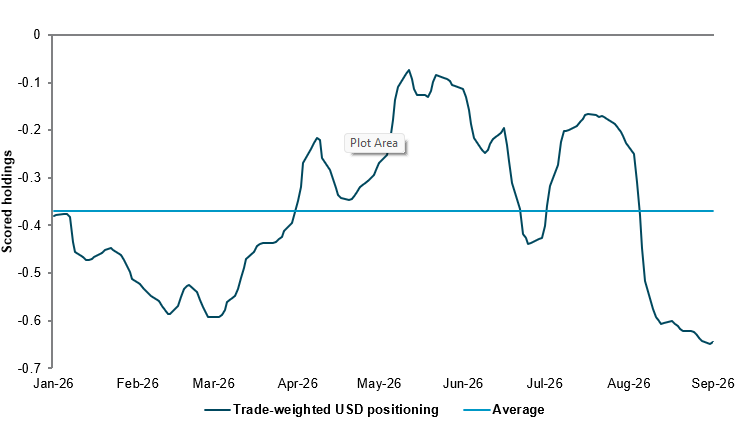
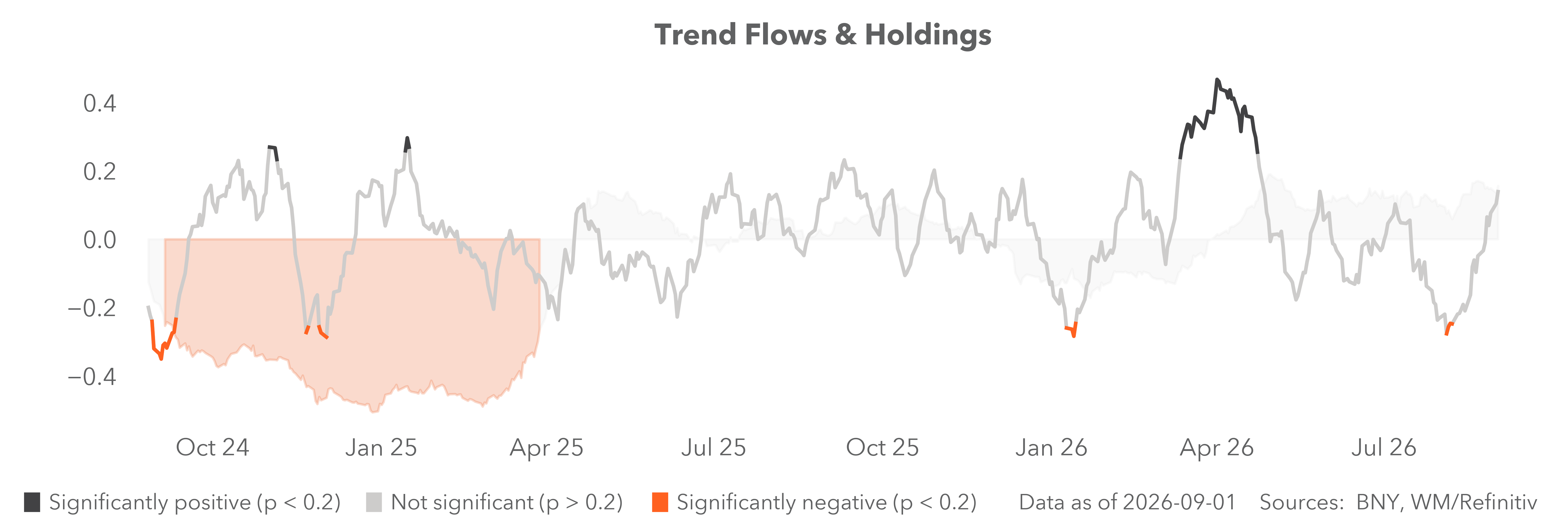
EXHIBIT #3: TRADE-WEIGHTED DOLLAR HOLDINGS BACK TO 2026 LOWS
Source: BNY, BIS weights
Our take
Our aggregate USD holdings figures are skewed by holdings in the most actively traded currencies, where the dollar has held its ground better this year. Comparatively, using a trade-weighted basket of USD holdings provides a better indication of current positioning in a monetary policy context. The average holdings level is -0.4, indicating global clients continue to forward hedge a smaller proportion of their U.S. exposures relative to the 12-month average. The Iran conflict led to a sharp unwinding of hedges: by end-Q2 there was a very real prospect of holdings on a trade-weighted basis moving to flat. The ceasefire generated an initial round of rebalancing before asset inflows led to a rebound in dollar exposures in June and July.
We reiterate that it was the July FOMC and questions about USD real rates and overall policy credibility that led to the severe dollar outflows. By the end of the month, the pace of selling had eased, but this has left holdings at even weaker levels compared to mid-Q1, when the “debasement” theme was popular.
Forward look
We expect dollar holdings to stabilize around current levels now that Fed expectations have adjusted. There are idiosyncratic reasons for markets to avoid adding to MXN, CAD and EUR aggressively, while CNY’s impact is diminishing. Shifting the dollar toward a case of holdings recovery requires strong asset interest and leadership in real rates. Qualitatively, this requires the Fed to shift toward restrictive policy – a stance that all but precludes asset performance, especially in equities. There is now value in the dollar on a holdings basis, but the triggers for a strong short unwind – of the July/August long unwind – remain elusive.
Fade further dollar downside but don’t chase a broad rebound yet. Reduce conviction in additional USD hedging against currencies of main U.S. trade partners as positioning normalizes and the policy gap stabilizes. A stronger USD signal requires renewed U.S. asset inflows or a more restrictive Fed stance. Meanwhile, monitor China reflation-driven CNY inflows as the clearest offset to a broader dollar holdings recovery.