Rising JPY lifts local boats
FX: G10 & EM provides a detailed analysis of global foreign exchange movements in major and emerging economies around the world together with macro insights.
FX: G10 & EM provides a detailed analysis of global foreign exchange movements in major and emerging economies around the world together with macro insights.

Geoff Yu
Time to Read: 4 minutes
Bottom line: APAC FX is finally attracting broad-based buying as JPY strength creates room for regional appreciation. JPY, KRW, TWD and CNY all saw unusually strong inflows, while DXY weakness still understates the adjustment needed against the currencies that matter most for U.S. trade. The main constraint is balance-of-payments risk if higher oil prices force renewed reserve drawdowns.
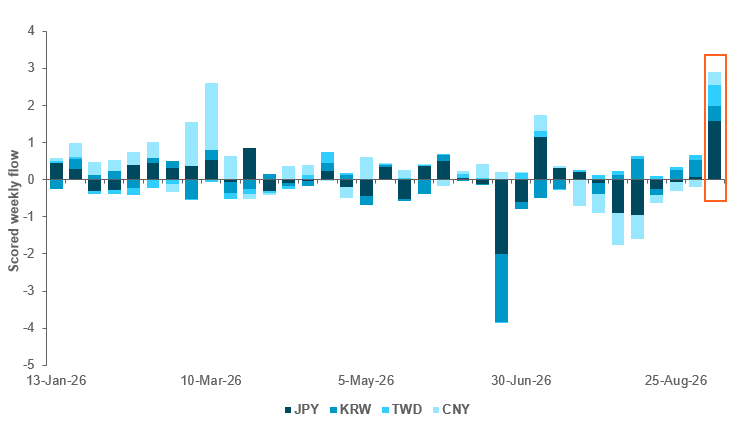
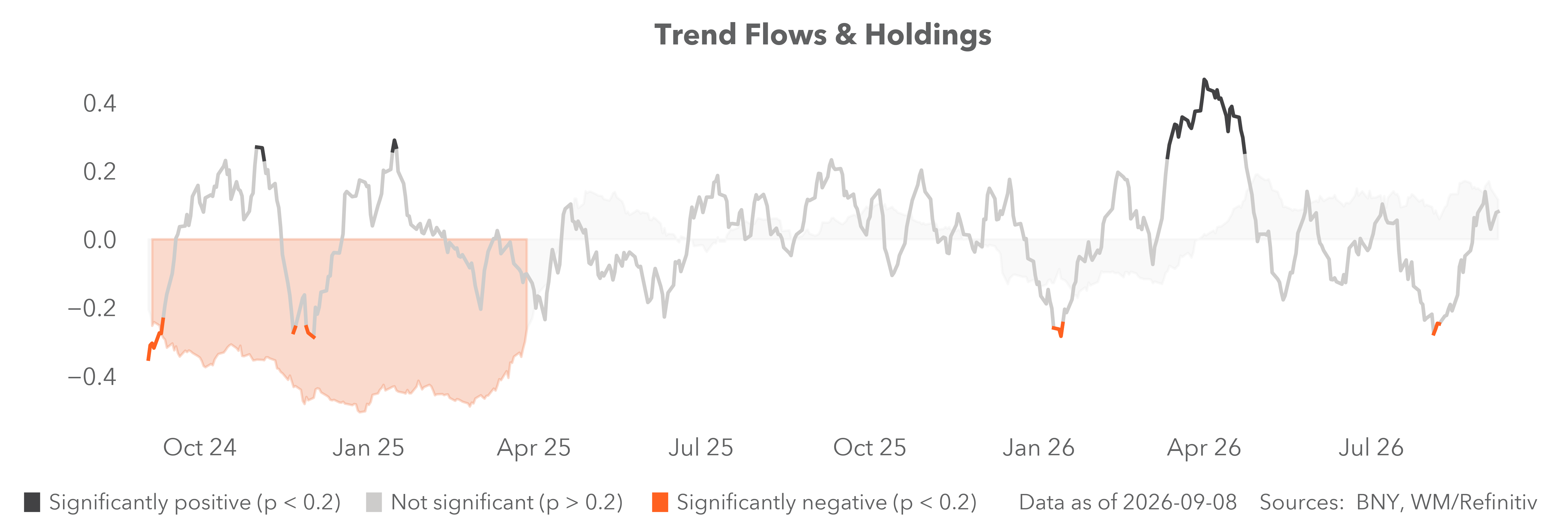
EXHIBIT #1: JPY, KRW, TWD AND CNY: THIRD SIMULTANEOUS BUYING WEEK OF 2026
Source: BNY
Our take
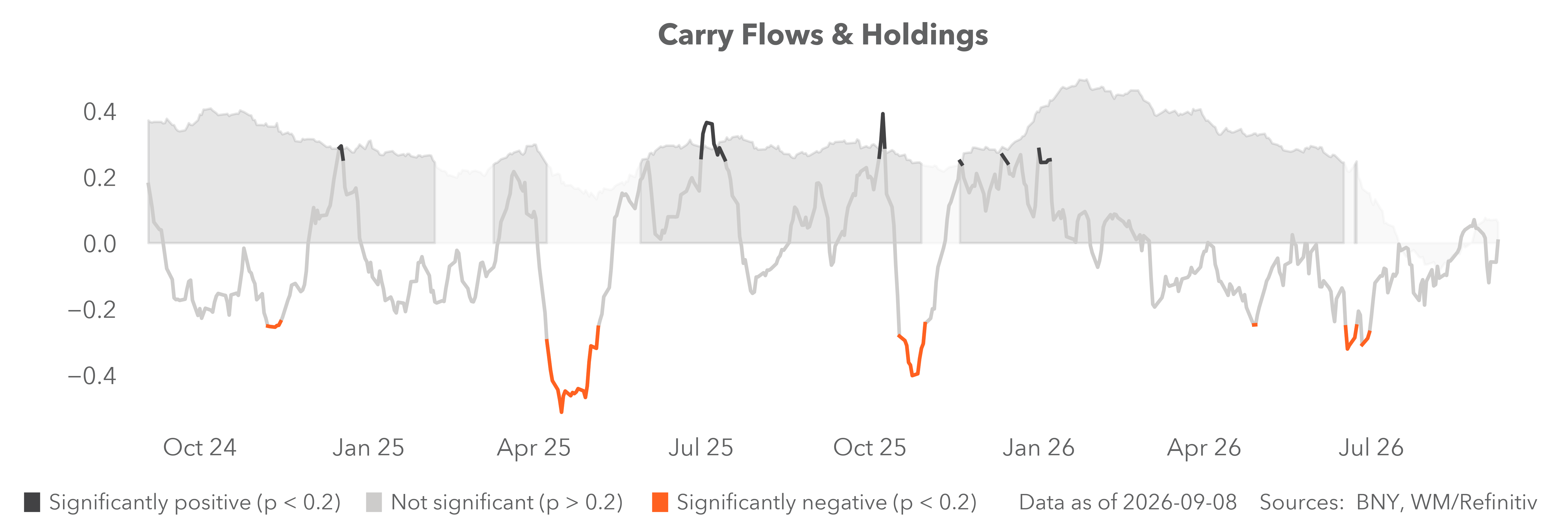
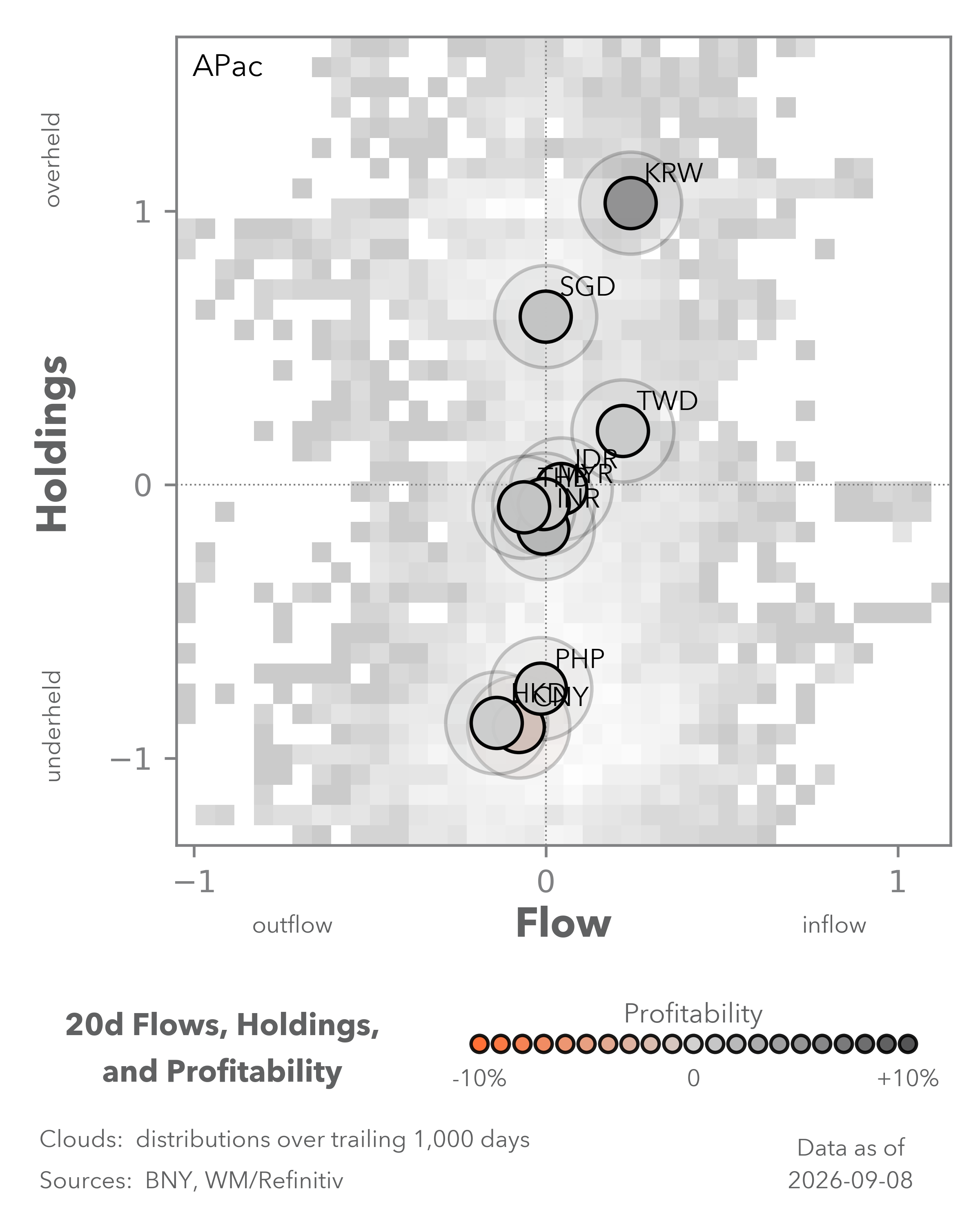
JPY’s ongoing strength is starting to impact sentiment across the region’s funders. We believe the JPY, KRW, TWD and CNY remain undervalued due to their strong surpluses and persistent recycling of domestic savings overseas. However, last week marked a departure from funding demand. Despite the market pricing in a more hawkish Fed, our data show that it was only the third time this year where JPY, KRW, TWD and CNY were all bought during the same week. The strength of the purchases was also far stronger than prior episodes. Combined with price action in JPY and KRW, there is a clear pick-up in market preferences for funder names, despite the attraction of higher U.S. yields.
Forward Look
JPY’s importance in regional FX trade-weighted baskets is often overlooked outside of USDJPY. While the U.S. is clearly fixated on USDJPY, JPY is a major trading partner and competitor with economies in the region. A weak JPY was already pushing up the real- and nominal effective exchange rates of these currencies, which allowed little scope for appreciation elsewhere. The balance-of-payments stress introduced by the U.S.-Iran conflict created further headwinds. JPY’s move and U.S. tolerance for clear dollar weakness has created space for the rest of the region to appreciate their own currencies in nominal terms: a stronger JPY offsets any gains on the dollar leg, and strong current U.S. inflation also prevents excessive dollar weakness in real terms.
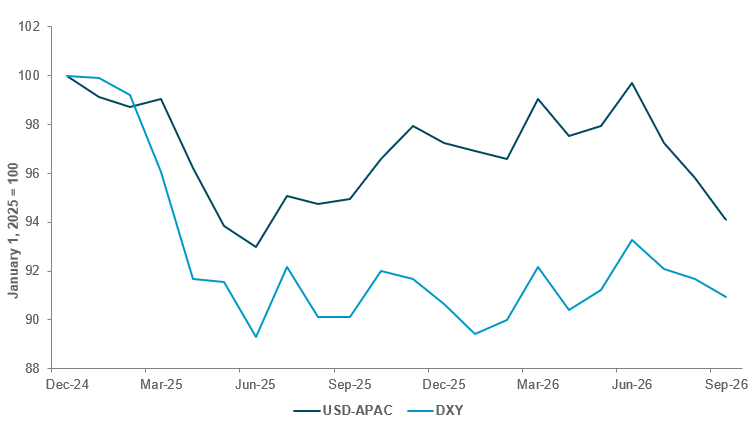
EXHIBIT #2: USD VS. APAC FX MATERIALLY UNDERPERFORMING DXY
Source: BNY, Bloomberg
Our take
The dollar needs to fall more against these currencies to realize fair value. Until recently, only the CNY has appreciated against the USD in nominal terms, but very weak Chinese inflation has limited CNY strength in real terms. In contrast, the AI-driven investment wave into economies such as South Korea and Taiwan has created clear reflation impulse, and tightening through both the rate and currency channel is better tolerated. Unlike previous trade cycles, the current anchor for trade surpluses in the region – semiconductors – is seemingly price inelastic. The impact of further currency strength on export receipts is very limited.
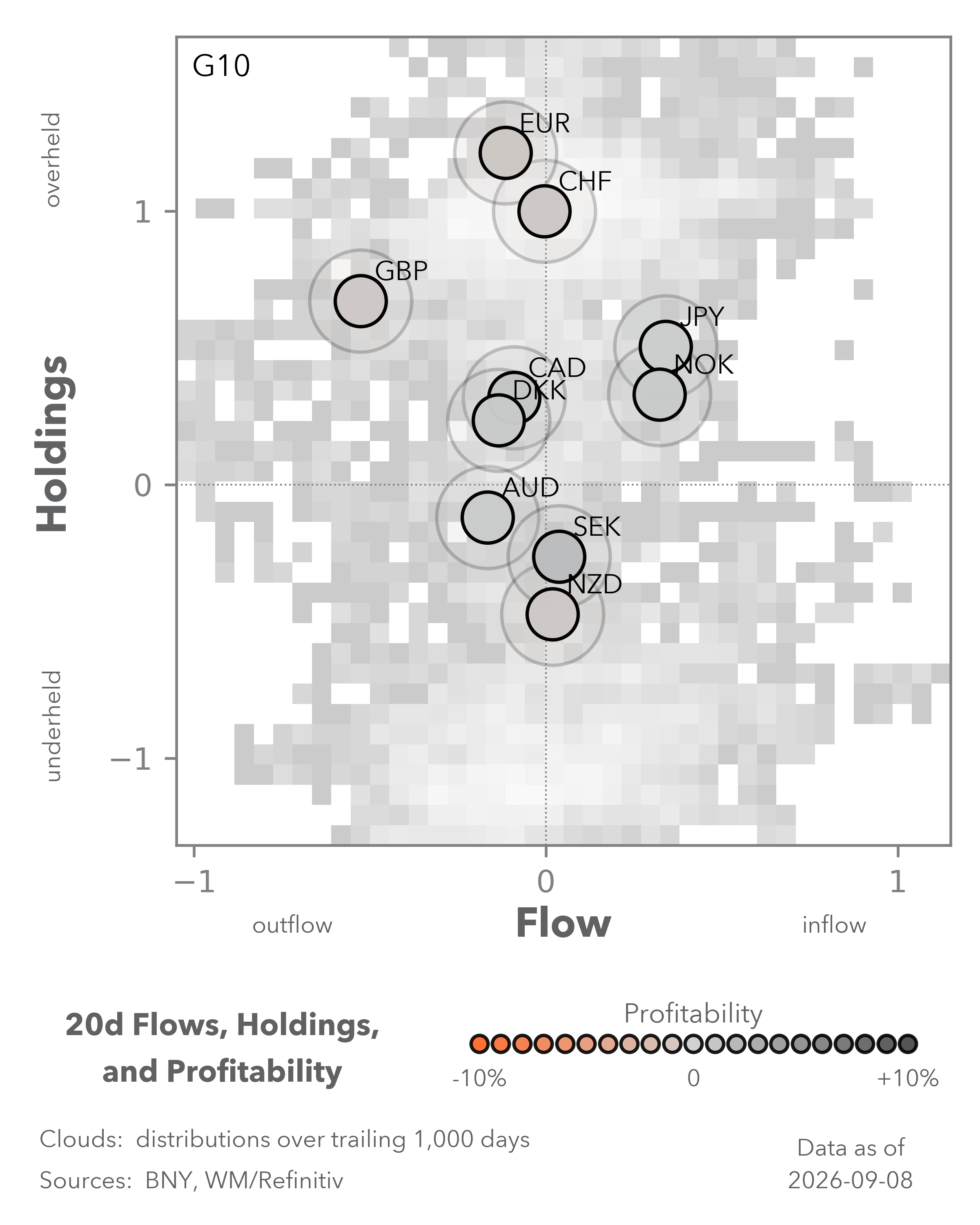
Until recently, interest in U.S. carry has held up the dollar against APAC FX. Using an equally weighted basket of the dollar against the JPY, CNY, TWD and KRW, the dollar is now down close to 6% year to date, but the DXY has fallen further. The July FOMC decision led to a significant round of unwinding in dollar longs, but mostly against developed market currencies where central banks were clearly hawkish (e.g., the EUR), or where nominal rates were more manageable (e.g., GBP). The dollar’s valuations needed to adjust to account for positioning and inflows, but the adjustment was in the wrong places. We acknowledge that CNY could be the outlier given realized appreciation and the very poor price outlook.
Forward Look
Measured by total trade exposure, the EUR remains important, but USDMXN and USDCNY combined – neither of which are reflected in the DXY – account for almost a quarter of U.S. imports. Consequently, the notion that the dollar has weakened materially this year based on DXY doesn’t reflect the realities of trade and financial conditions as pertaining to the U.S. economy. There’s every chance that the Fed will move ahead of the ECB in applying restriction right now. A downward adjustment in EURUSD is entirely manageable (and the dollar is less important for U.S. financial conditions in any case) if the dollar continues to soften against APAC names. Most importantly this is a form of dollar weakness that conforms to U.S. Treasury Secretary Scott Bessent’s FX views; in August, he opined that “the euro is much closer to an equilibrium price.”
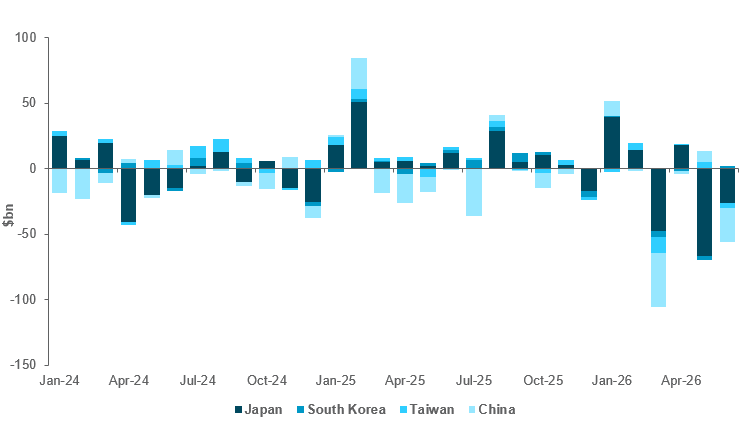
EXHIBIT #3: INTERVENTION MATTERS BUT WATCH BALANCE OF PAYMENTS
Source: BNY, Bloomberg
Our take
FX markets aside, the U.S. Department of the Treasury is clearly paying close attention to foreign demand for government debt. Asian savings economies remain major UST holders, and Secretary Bessent has stressed the importance of avoiding disorderly portfolio adjustments triggered by FX moves. Official data show that APAC reserve holdings were already being reduced before Japan’s latest intervention. March was particularly volatile, as the oil shock created sudden balance-of-payments pressures and forced energy-importing economies to raise liquidity. With energy prices rising again, similar pressures could re-emerge, increasing the risk of further reserve liquidation.
Forward look
If oil prices remain elevated into the winter, we expect some renewed use of reserves. This is broader than a Treasury issue: iFlow showed large cross-border outflows from other major reserve assets, including Bunds and gilts, in March. Any repeat should be less severe, given stronger regional buffers, but the direction of risk is clear. APAC currencies would likely come under pressure from weaker current accounts and higher import bills, rather than from a renewed recycling of domestic savings into U.S. assets. The U.S. is therefore right to favor more FX adjustment in Asia, even if that comes with some reduction in Treasury holdings, but this remains manageable only while the broader balance-of-payments backdrop stays stable.
Prefer selective APAC FX appreciation over further EUR-led dollar weakness. Stay structurally constructive on JPY, KRW and CNY while current-account support holds, but monitor energy prices closely: a renewed oil shock would weaken regional FX and raise the risk of further reserve-asset liquidation.