FX will react as oil surges
FX: G10 & EM, published every Thursday, provides a detailed analysis of global foreign exchange movements in major and emerging economies around the world together with macro insights.
FX: G10 & EM, published every Thursday, provides a detailed analysis of global foreign exchange movements in major and emerging economies around the world together with macro insights.

Geoff Yu
Time to Read: 4 minutes
Oil at $95 is an FX shock, but not a broad Asia balance-of-payments crisis. ASEAN and India have stronger current-account buffers and lighter positioning, while the cleaner opportunity is in high-carry commodity FX such as BRL, CLP and ZAR. NOK may get oil-linked demand, but elevated holdings and limited Norges Bank buying cap the upside.
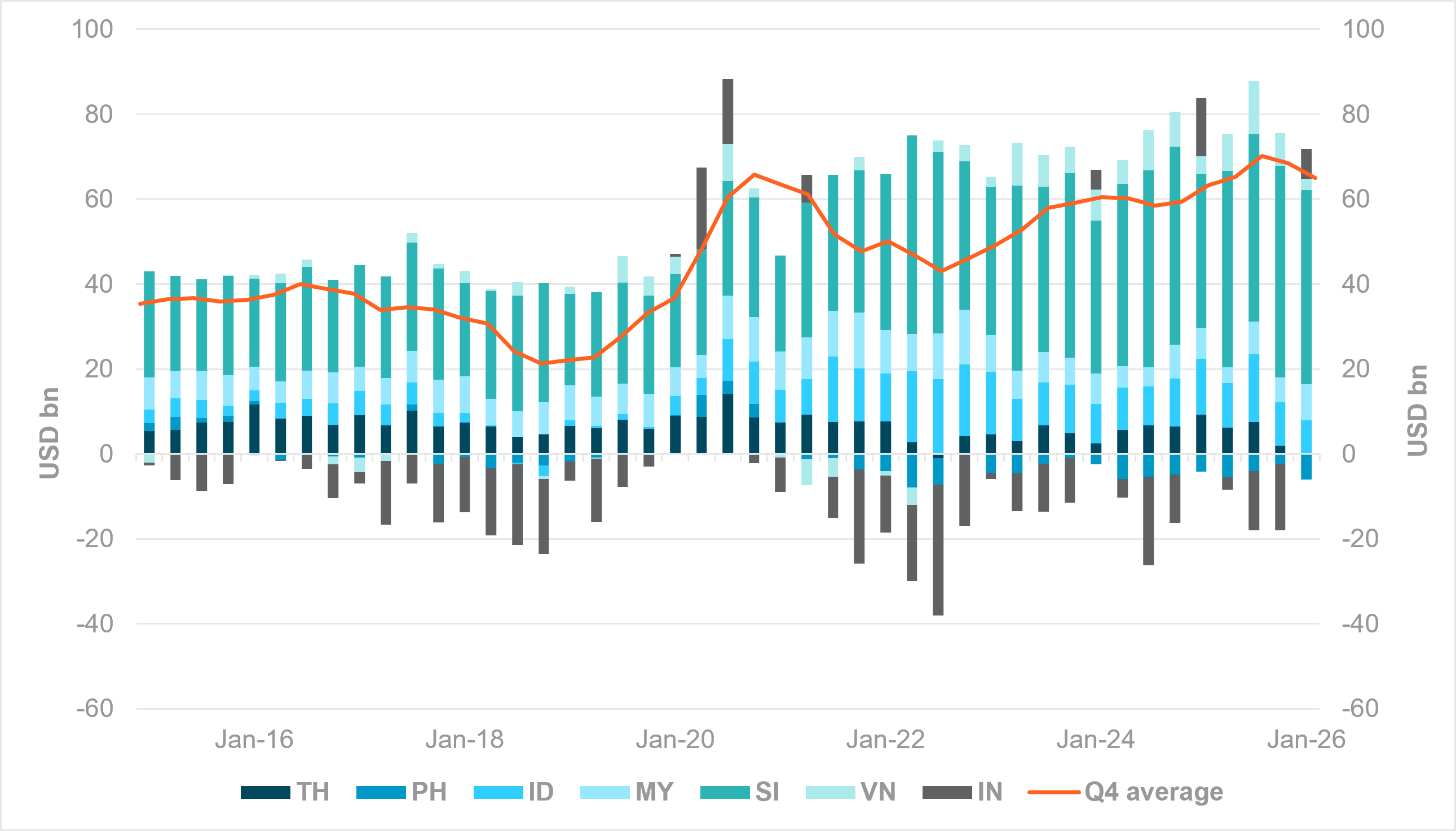
EXHIBIT #1: QUARTERLY CURRENT ACCOUNTS, ASEAN NATIONS AND INDIA
Source: BNY, Macrobond
Our take
Brent crude prices touched $95/bbl on Wednesday, and there is no sign of de-escalation. Consequently, markets are pricing in a repeat of early March, when balance-of-payments stress materially pressured currencies. The central banks of the Philippines and India reportedly intervened to stabilize their currencies on Wednesday. Bank Indonesia pledged ongoing active management of exchange rates at its policy decision, and attention remains on Japan, where real rates stand to decline again. That adds pressure on the JPY, which no longer benefits from a strong current-account surplus.
Forward Look
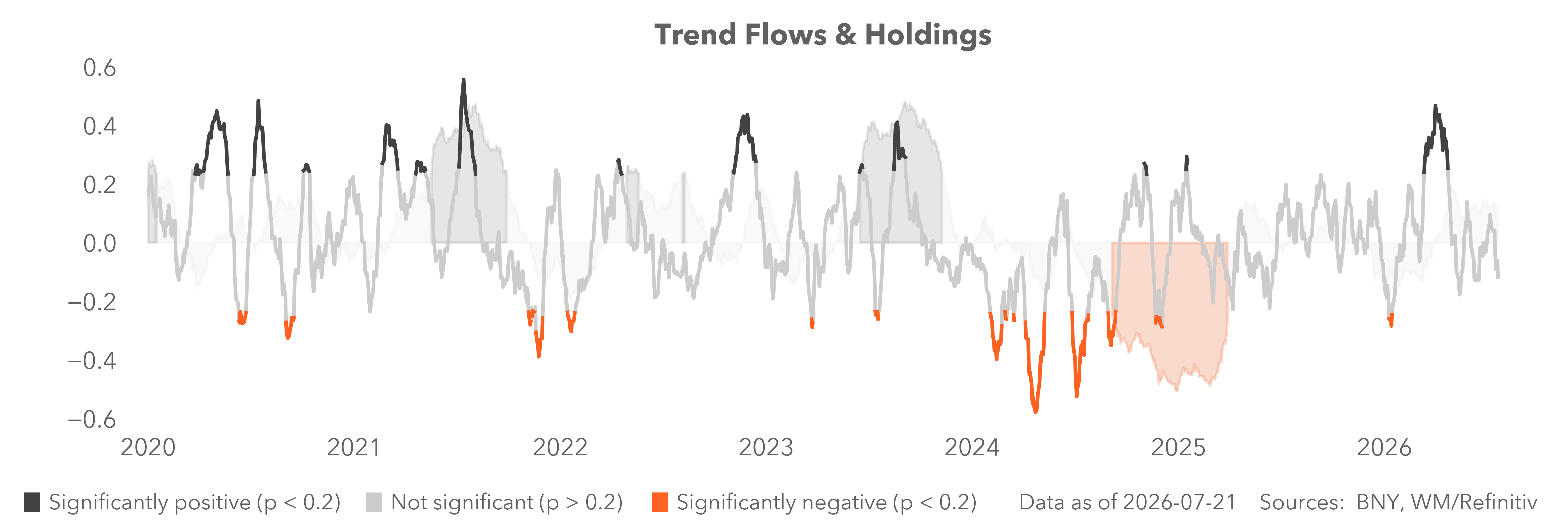
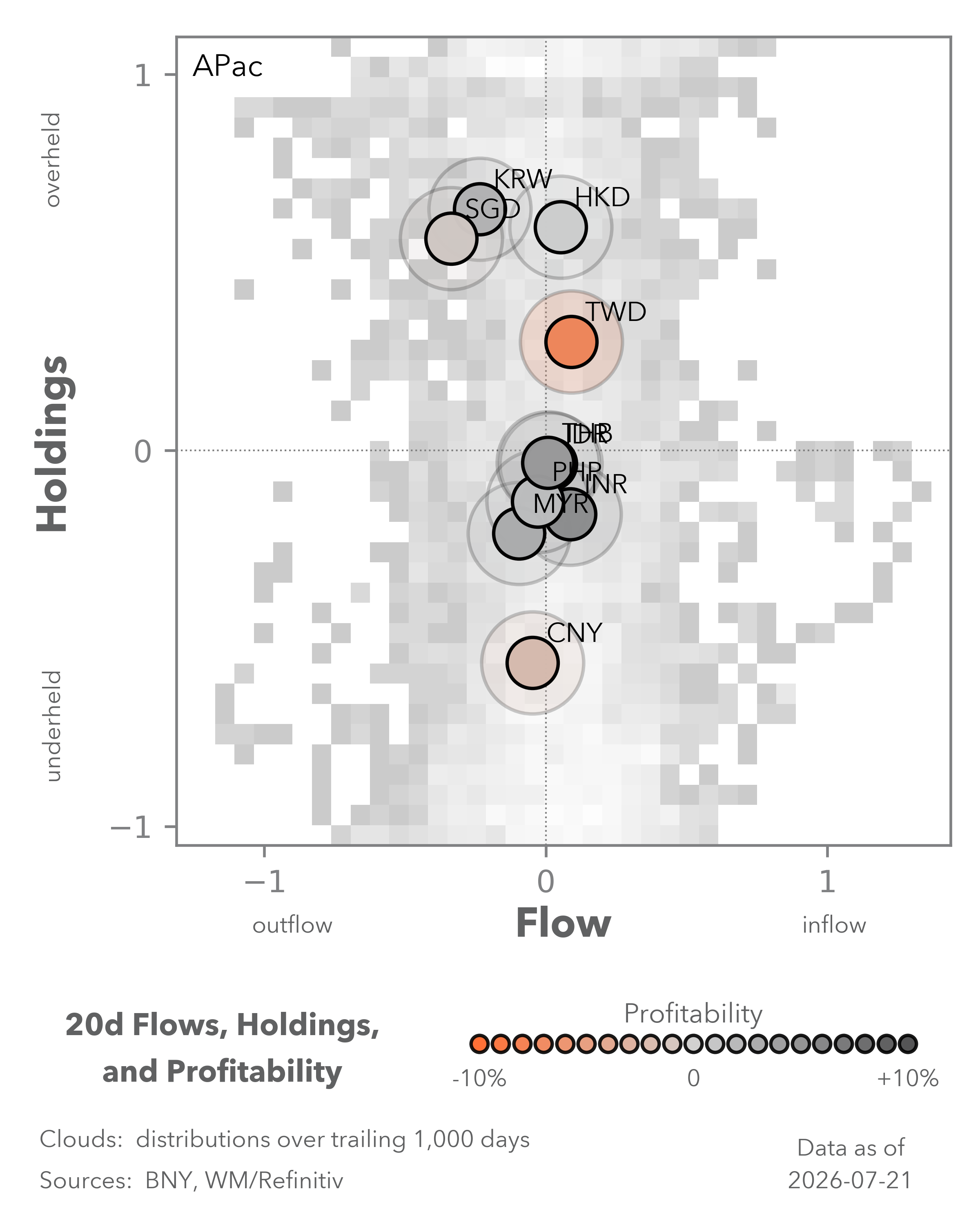
A sharp rise in crude prices isn’t trivial for Asia’s energy importers. Taiwan and South Korea were already facing capital outflows on the financial account, and a lack of dollar liquidity will exacerbate currency weakness. However, we would not overplay the risk of destabilizing pressure or a financial-stability event. The surprise surge in import bills in March tested the region’s resilience, and authorities moved quickly, cutting demand and limiting the erosion in real rates. Fiscal consolidation was the main avenue, and many such measures remain in place, so the marginal “pain” on the economy should be limited this time.
The region’s balance-of-payments position is also in relatively good shape. Official data indicate that in the run-up to the conflict, ASEAN and India were running the highest current-account surpluses in a decade. The reserve drain around the world in March was severe, and while this had a knock-on impact on government bond holdings globally, ultimately the process was manageable. Current holdings of the region’s currencies are also far lighter by comparison, limiting flow potential. Vigilance is warranted. As Bank Indonesia noted in Wednesday’s decision, the shock calls for “closer fiscal-monetary policy synergy” to bolster external resilience. Asia has made significant progress on this through Q2, and we expect that resilience to hold in the near term.
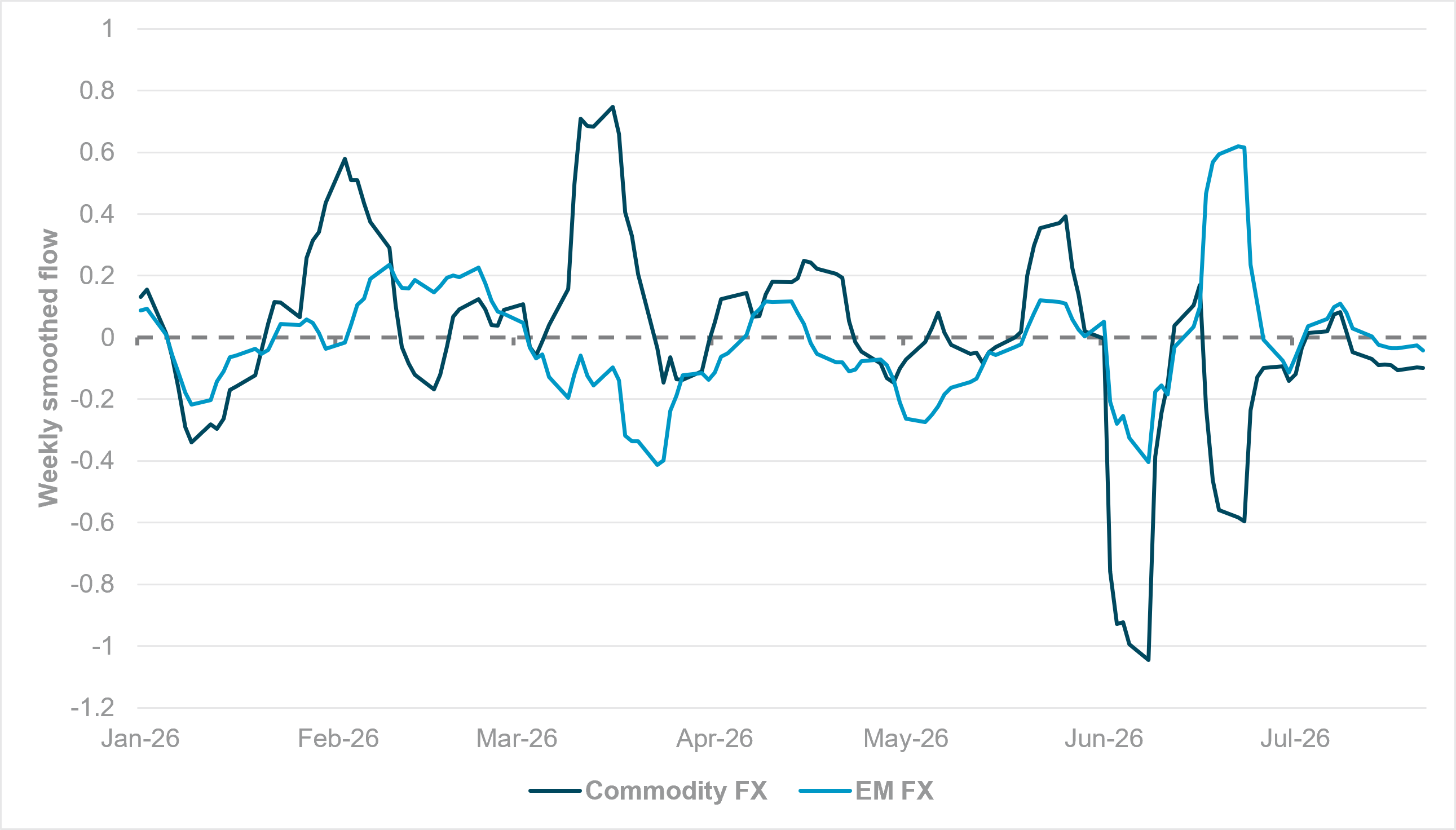
EXHIBIT #2: WEEKLY SMOOTHED FLOW, COMMODITY FX (BRL, CLP, ZAR) AND EM FX AGGREGATE
Source: BNY
Our take
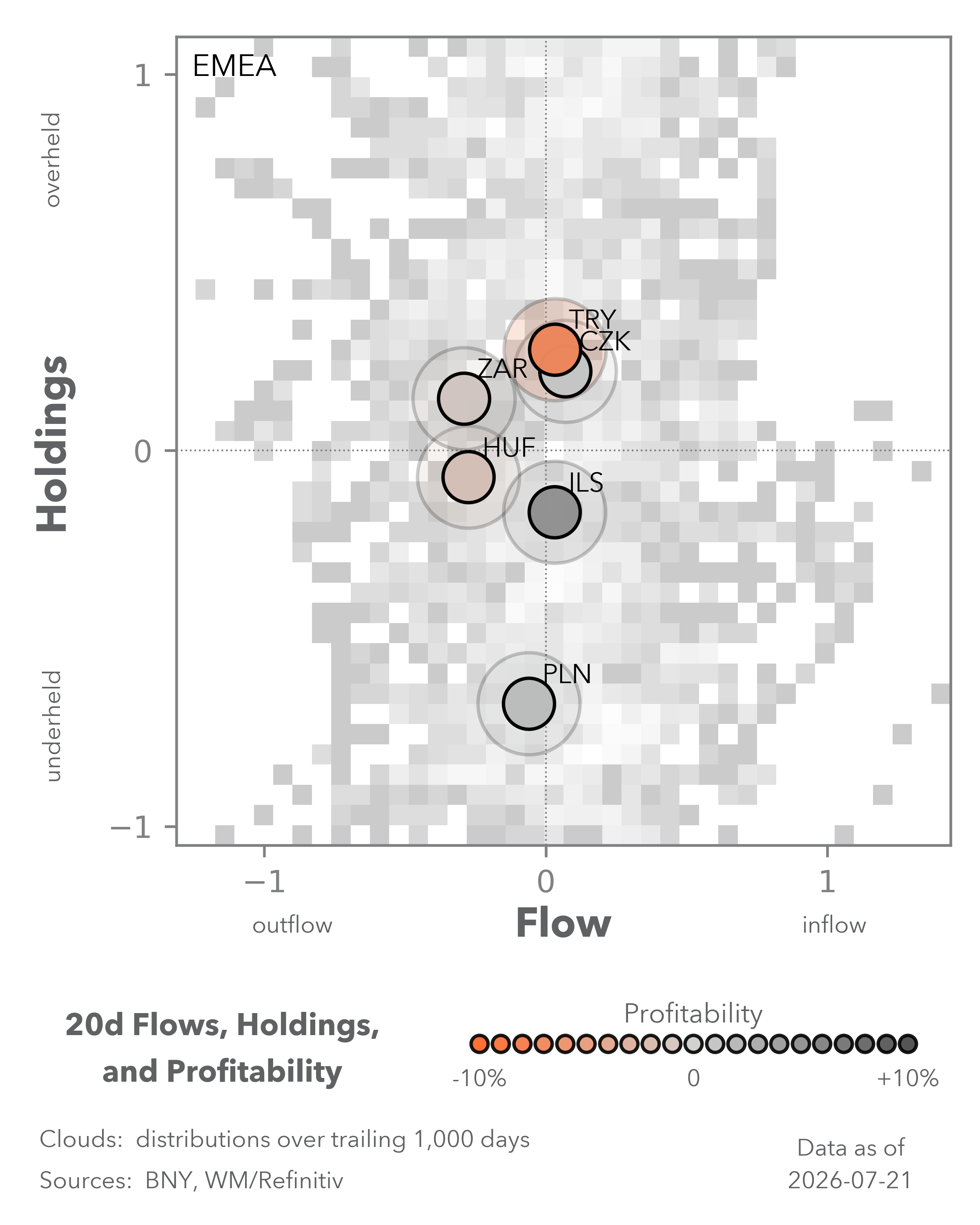
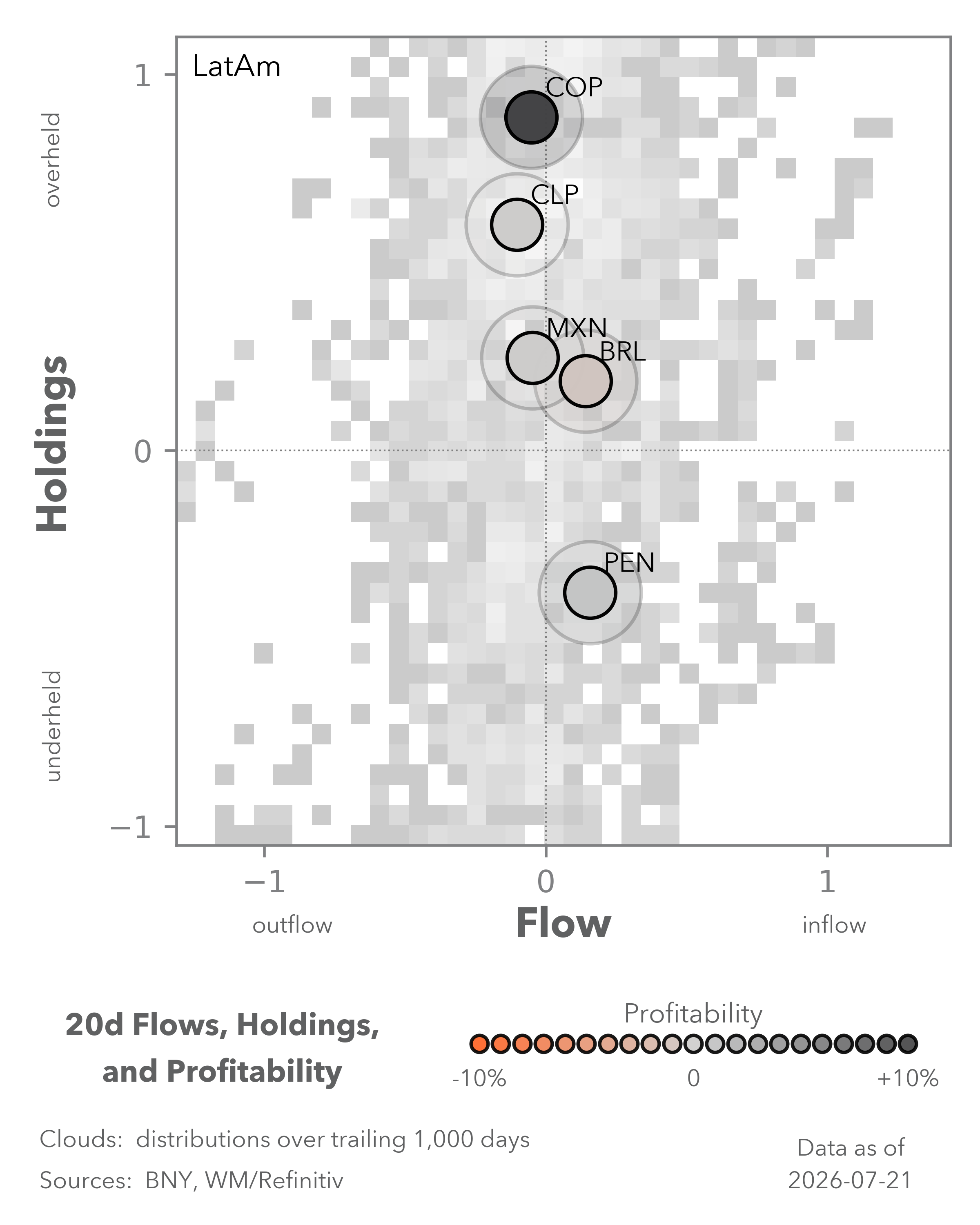
Stronger resilience and lighter positioning across energy-importing economies mean adding to EM FX shorts as an escalation hedge doesn’t offer strong risk-reward. There is good potential, however, to look at a recovery in currencies that benefit from another energy price surge. The commodity FX basket in iFlow, comprising BRL, CLP and ZAR, had its best period of buying in the first half of March in anticipation of better terms of trade. Commodity price levels aside, geography mattered as markets anticipated a pick-up in exports from non-conflict zones.
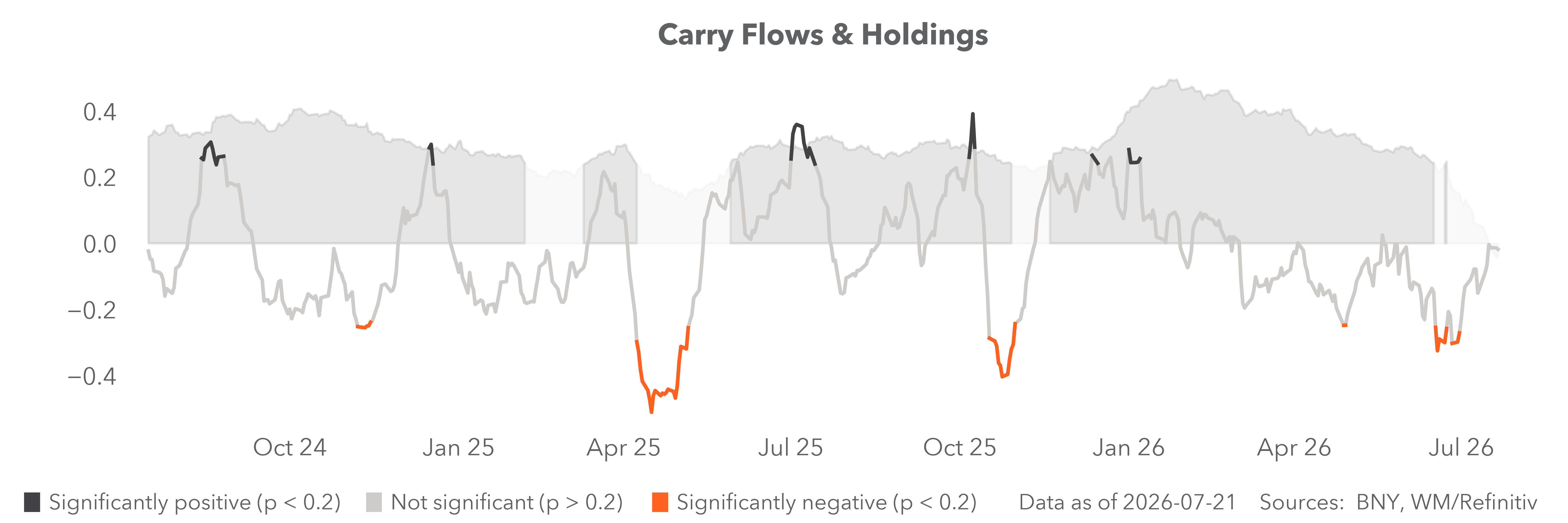
The ceasefire led to severe outflows from the group (Exhibit 2). The broader carry universe is flat in general, which is the opening for this group to outperform the rest of EM.
Forward Look
Global demand is soft outside the artificial intelligence/semiconductor ecosystem, so a comprehensive and sustained uplift in commodity prices is unlikely. China’s weak growth is an additional drag, but it’s subject to near-term stimulus risk. For BRL, CLP and ZAR, keeping real rates supported is the primary anchor for strength. This likely means COPOM stays restrained on easing, and the SARB signals that tightening isn’t yet over after today’s meeting. As long as the Fed doesn’t surprise to the hawkish side, select carry trades have room to perform. In this environment the preference tilts toward high-yielders with commodity exposure.
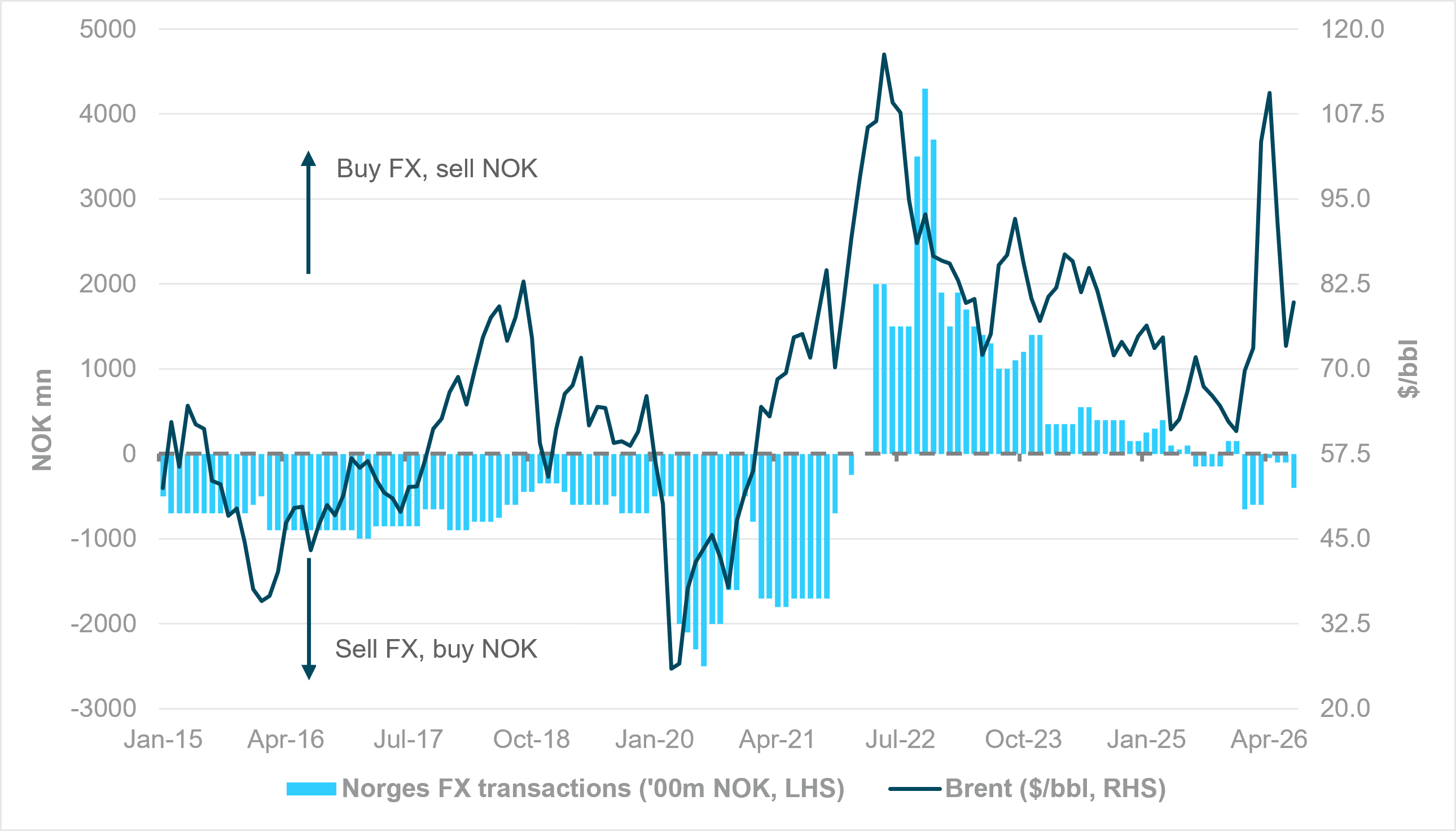
EXHIBIT #3: NORGES BANK FX TRANSACTIONS VS. BRENT CRUDE PERFORMANCE
Source: BNY, Norges Bank, Macrobond, Bloomberg. Most recent figure for Brent is July average.
Our take
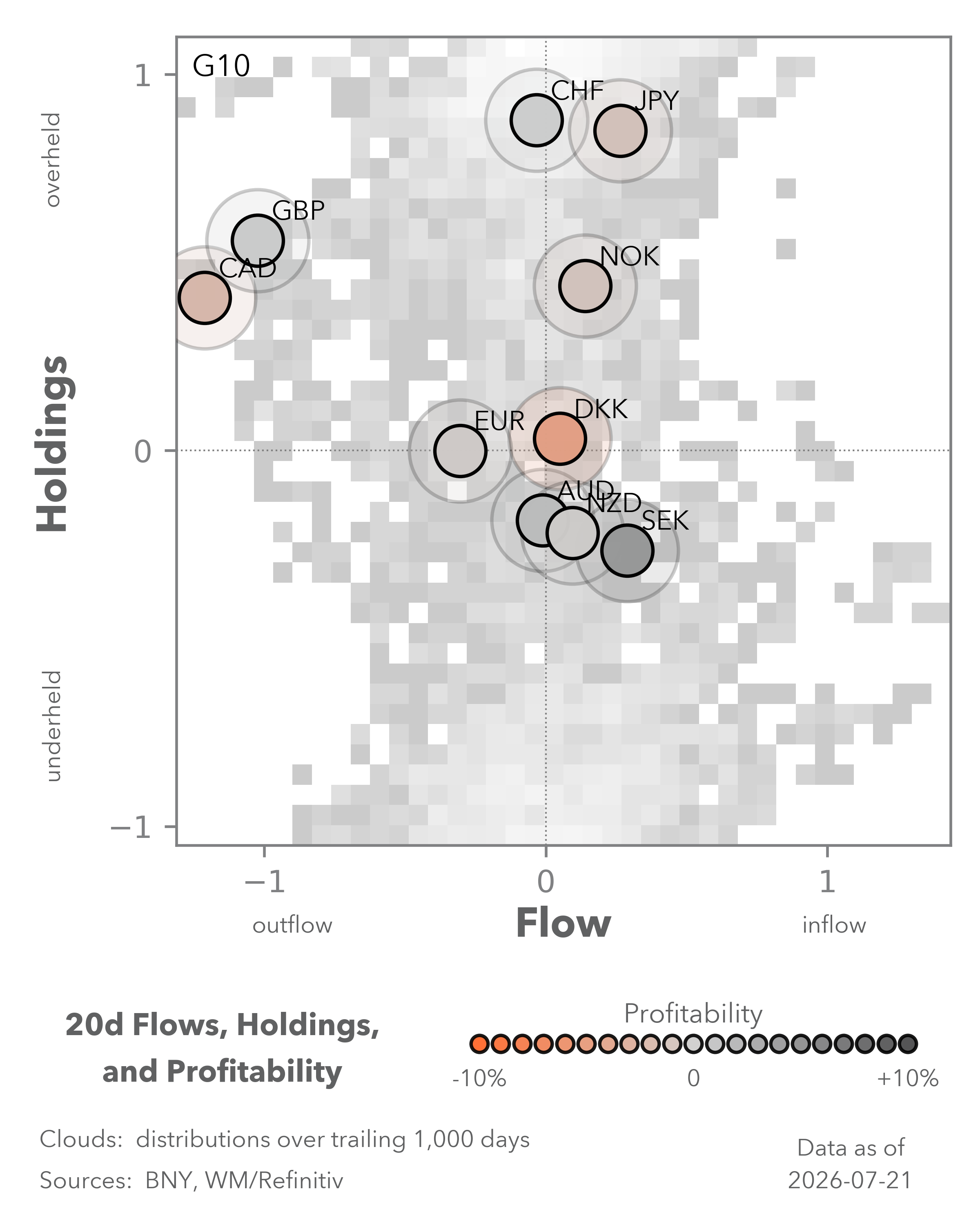
In G10, NOK will again find demand as markets price in improved terms of trade from oil and natural gas sales. Additional support may come from Norges Bank being seen as the most hawkish central bank in Western Europe. These factors were already true in March, and holdings remain elevated by iFlow standards. EURNOK is currently only 2.5% away from the 12-month low in May, so risk-reward isn’t compelling. On a holdings basis alone, there is better value in adding to energy equities, especially Norwegian ones. Energy comprises 29% of the MSCI Norway, far above the 4.3% share for the MSCI Europe Index. For dollar investors, the hedge is cheap.
Forward look
We voiced concern in Q1 that Norges Bank’s own FX transactions would not have any amplification effect and could become a headwind. Oil receipts remain high, which means NOK purchase requirements for the non-oil budget will be relatively low. Norges Bank’s buying of NOK through Q2 was the lightest since purchases restarted 12 months ago. The recent drop pushed the July requirement up to NOK 400mn per day, but there is now downside risk to total transactions as energy receipts grow. Coupled with more subdued domestic inflation and wage growth, Norges Bank support for NOK in all forms will stay tepid.
Don’t chase broad EM FX shorts. Use energy and commodity strength to rotate into select high-carry commodity exporters, especially BRL, CLP and ZAR, while staying cautious on NOK. Monitor Asian central bank intervention and oil-driven import pressure but treat Asia stress as manageable unless reserves or current-account data deteriorate.