“Fed neutral” trades and themes
FX: G10 & EM provides a detailed analysis of global foreign exchange movements in major and emerging economies around the world together with macro insights.
FX: G10 & EM provides a detailed analysis of global foreign exchange movements in major and emerging economies around the world together with macro insights.

Geoff Yu
Time to Read: 4 minutes
Bottom line: The Fed outlook remains uncertain, but policy volatility is creating clear relative-value opportunities. Valuation extremes still favor surplus economies, where currencies can appreciate through tighter policy or a normalization in effective exchange rates. Several currencies are also under-positioned relative to their real-rate support, leaving room to outperform a dollar whose holdings look excessive even against a very hawkish Fed. Meanwhile, iFlow Trend shows momentum strategy performance near its weakest level of the year, increasing the scope for mean reversion.
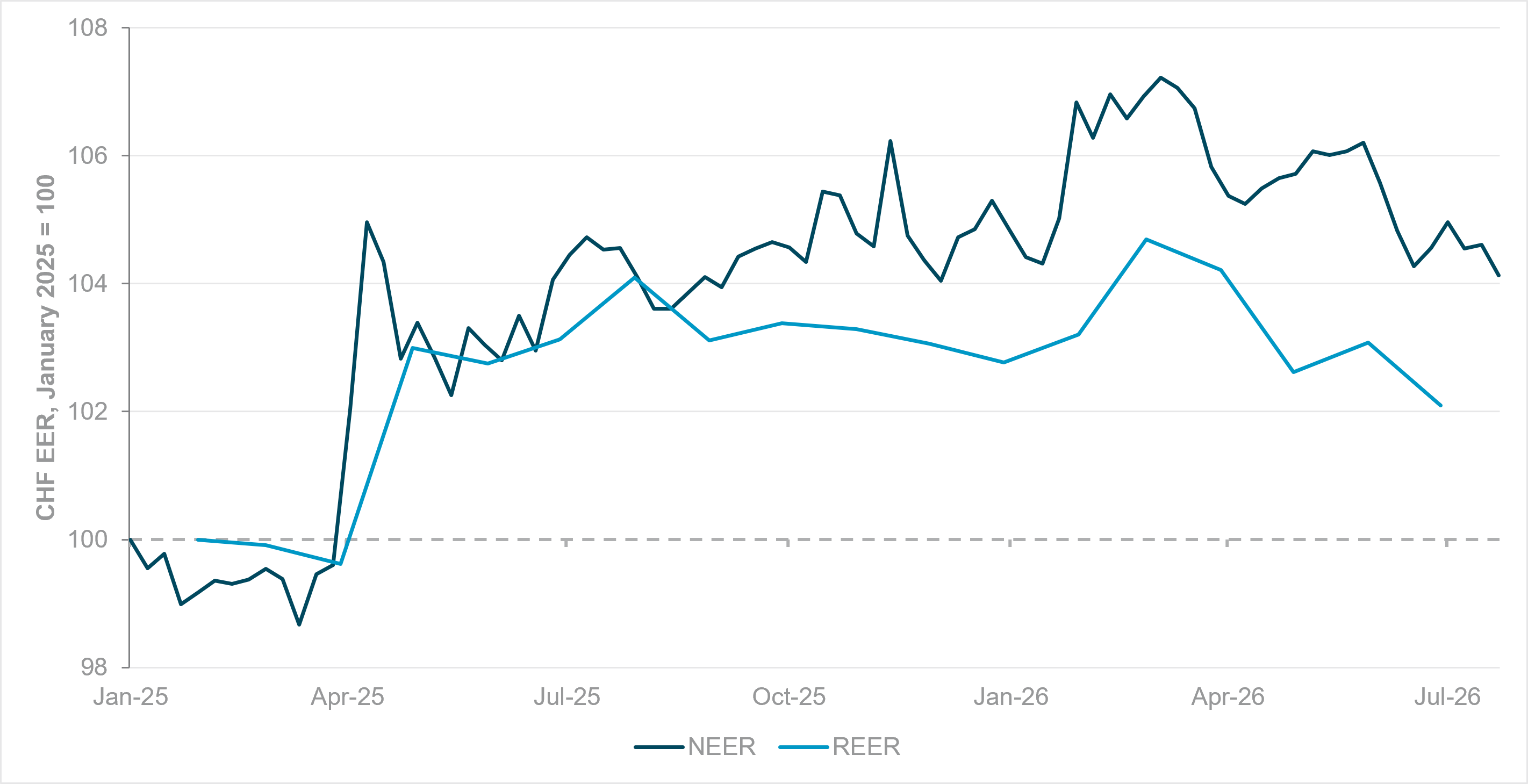
EXHIBIT #1: CHF REAL AND NOMINAL EFFECTIVE EXCHANGE RATES (REER, NEER)
Source: BNY, Macrobond
Our take
The franc met further resistance this week after reports that the Swiss National Bank is likely to remain on hold for an extended period. We’re surprised the market is reacting to these headlines, given how clear the SNB’s conditional forecasts – which explicitly give this guidance – already are. The recent rise in global yields has reinforced the franc’s role as a funding currency, but valuations now point to meaningful recovery potential. CHF is close to its weakest level in a year on a NEER basis and at a 15-month low in REER terms. Beyond the balance-of-payments backdrop, these weaker valuations should also increase the SNB’s tolerance for currency strength, making intervention a remote risk.
Forward Look
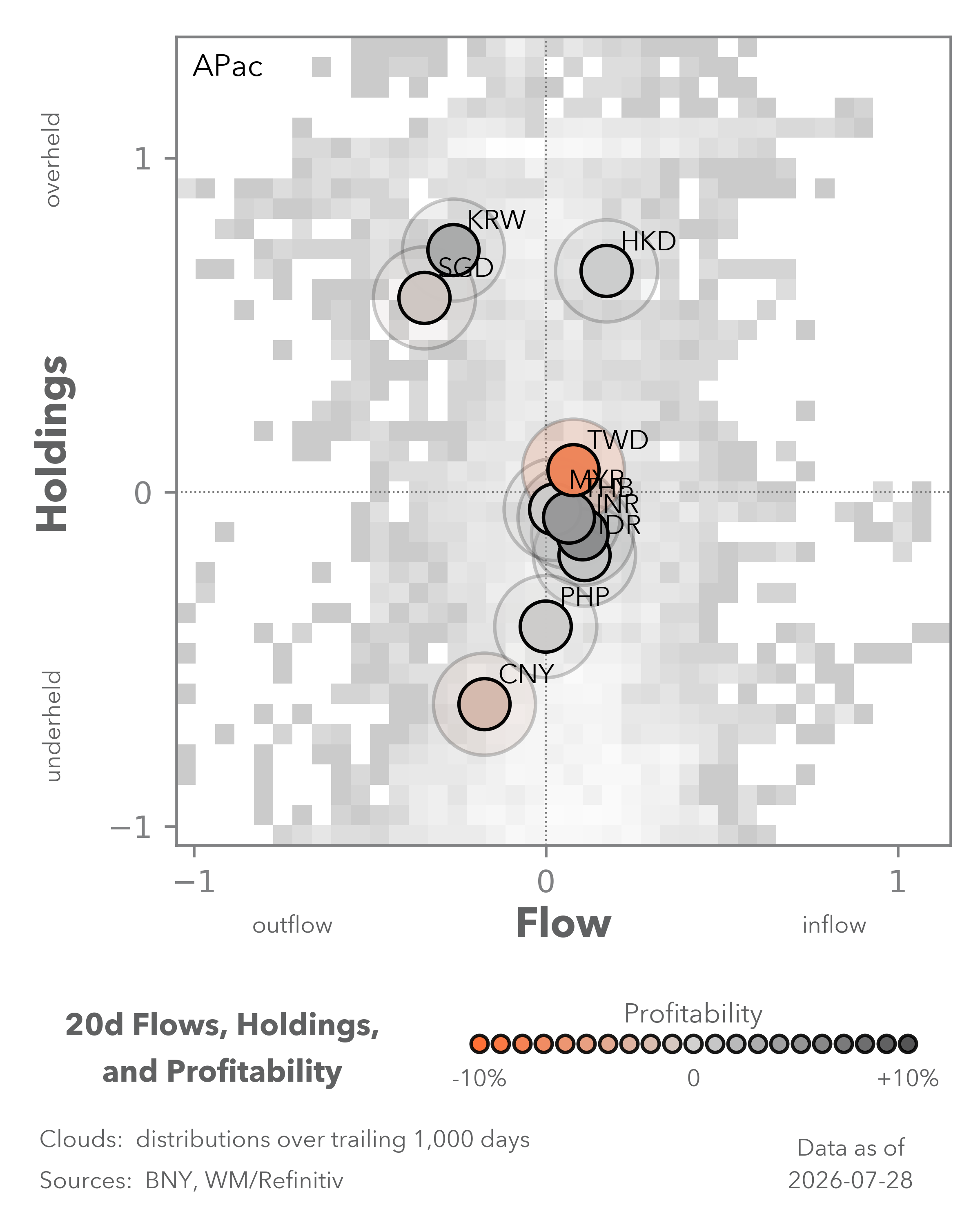
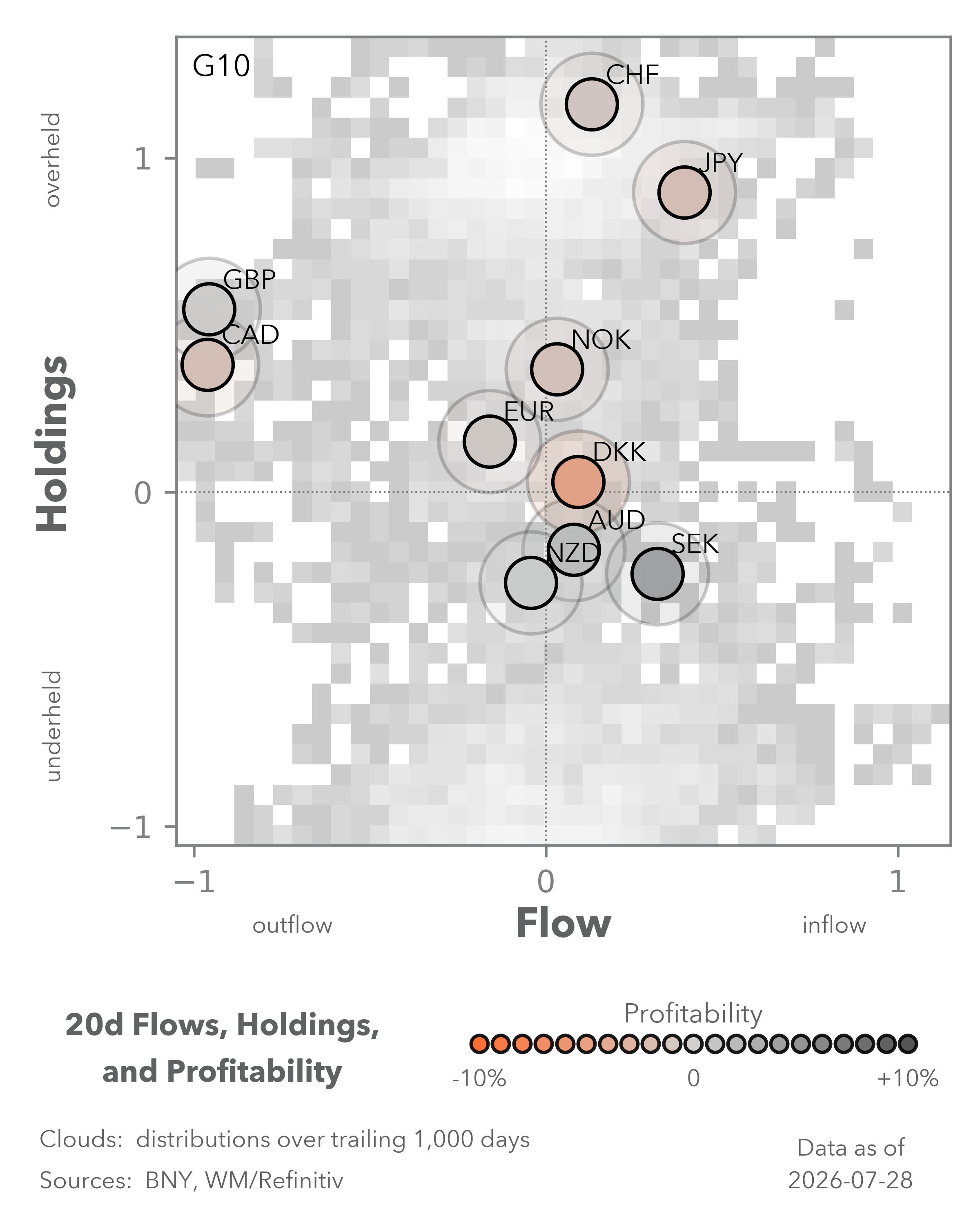
Owning CHF remains expensive in carry terms. To reduce the impact of the Fed on dollar pairs, we prefer carry-efficient expressions against APAC currencies, especially SGD and CNY. The franc has weakened sharply against both in recent months, leaving the clearest scope for mean reversion. These surplus currencies may still struggle against the dollar while the current policy backdrop persists, but they offer better relative value against CHF. We avoid TWD and KRW because equity hedging flows remain a headwind. CHFJPY also offers less value, despite continued concerns over policy credibility in Japan.
EXHIBIT #2: WEEKLY SMOOTHED FLOW, COMMODITY FX (BRL, CLP, ZAR) AND EM FX AGGREGATE
Source: BNY
Our take
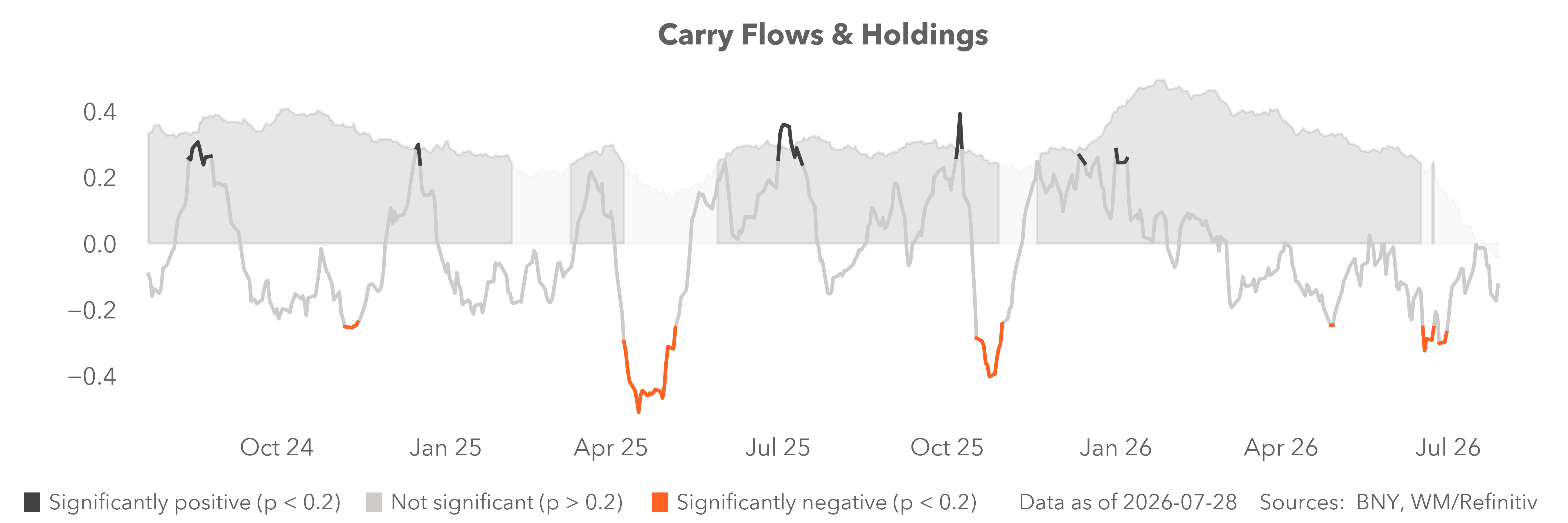
Carry trades are unlikely to perform consistently until the Fed shifts decisively away from inflation vigilance. U.S. real rates are not especially high, but they will continue to anchor global financial conditions. Even so, there are opportunities within carry where current positioning doesn’t reflect the underlying real-rate support.
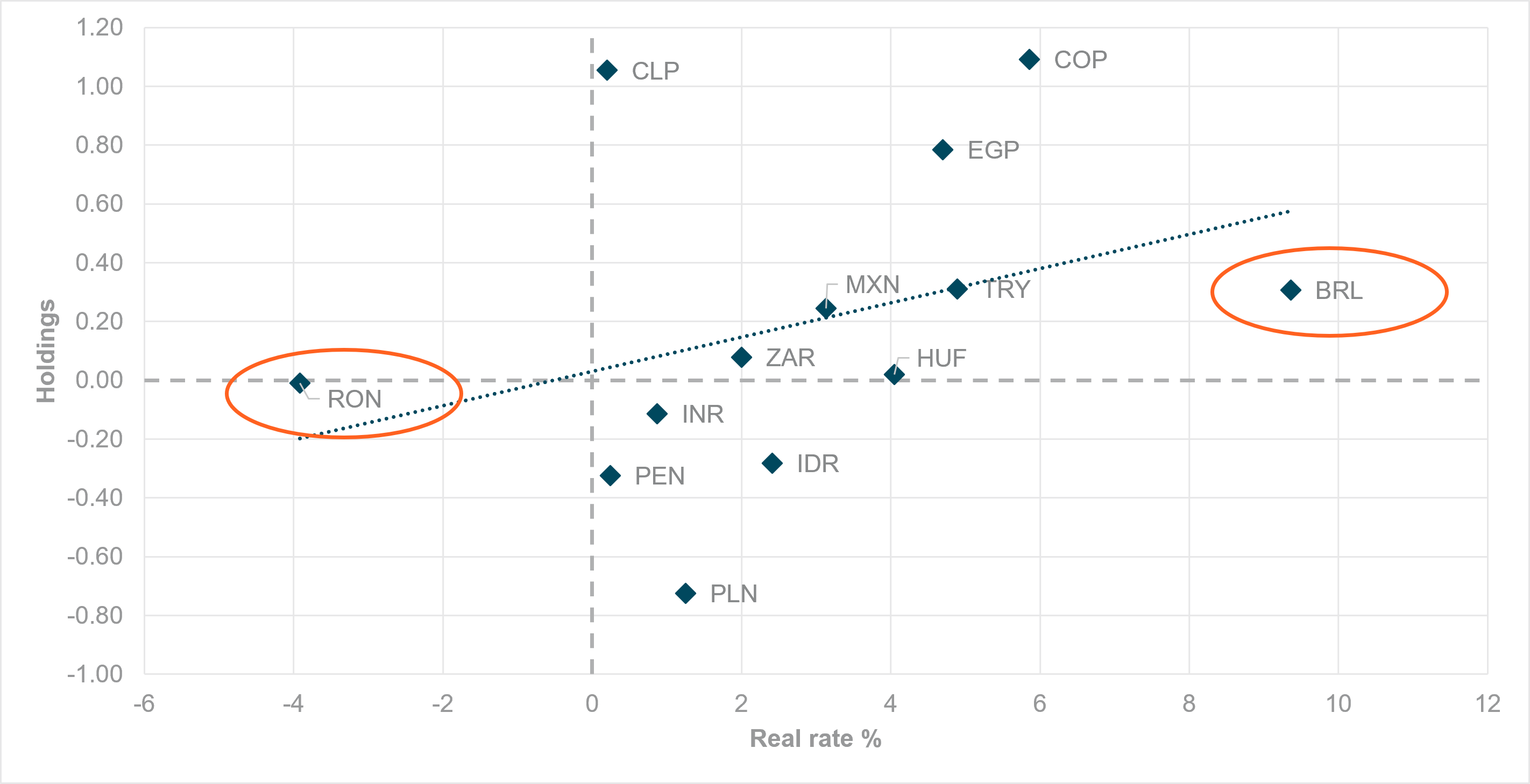
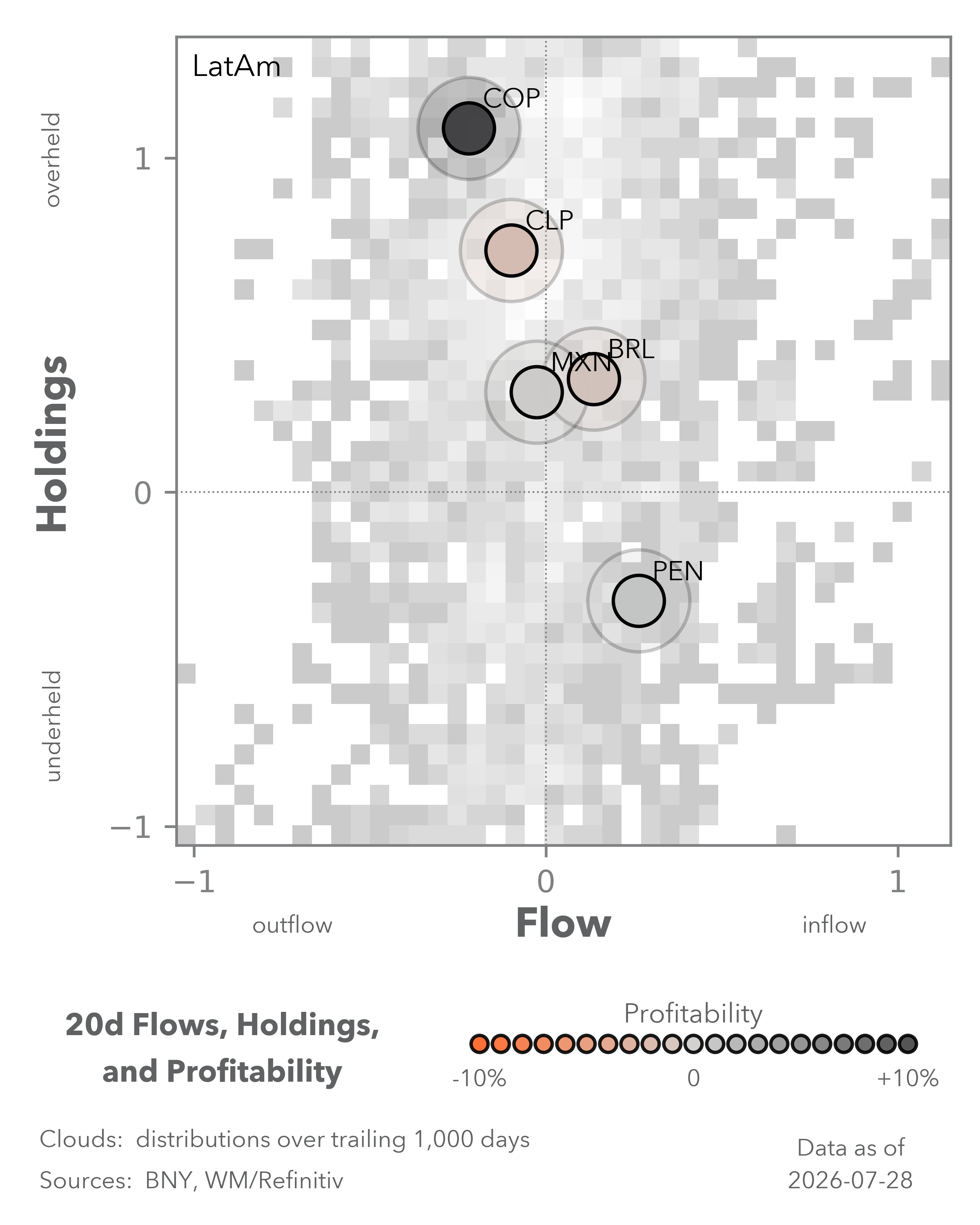
When we compare iFlow holdings across high-yielding EM currencies – with real rates defined as policy rates adjusted for the latest annualized CPI – a clear positive relationship emerges, along with several outliers. BRL has the highest real rate in the group but is only lightly overheld. RON is the only carry currency with materially negative real rates, yet positioning remains broadly flat. Unless the policy outlook changes sharply in either economy, a return toward the normal relationship between real rates and holdings should support BRL inflows and RON selling.
Forward Look
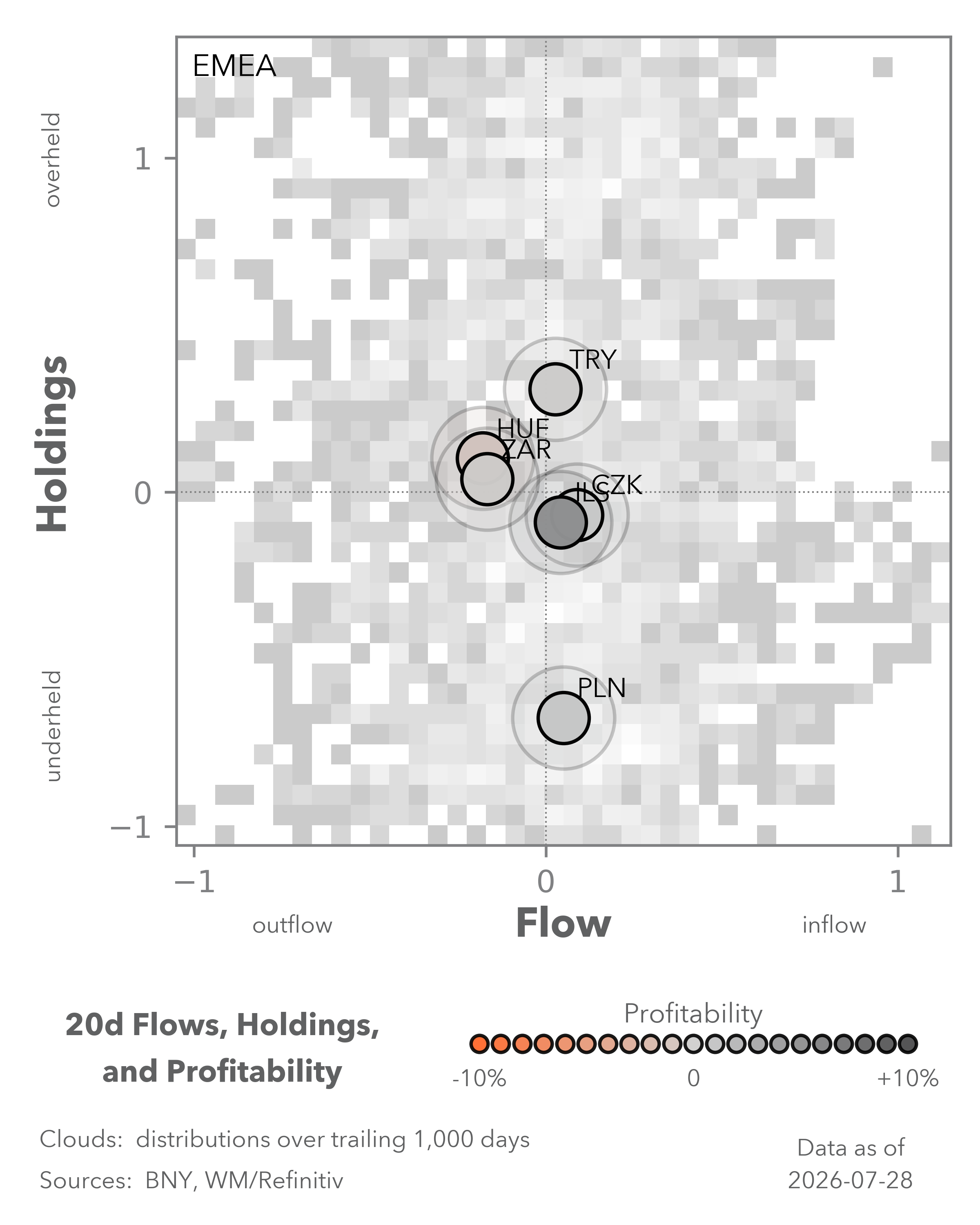
BRL vs. RON is difficult to implement directly, but the double-digit real-rate gap captures the core objective: maximize the buffer against a hawkish Fed. The same framework points to other opportunities. CLP and COP look significantly overheld relative to their real-rate support, while PLN remains notably underheld. Outright positions in these currencies therefore offer better risk-reward, especially PLN, where a move against EUR provides an additional expression.
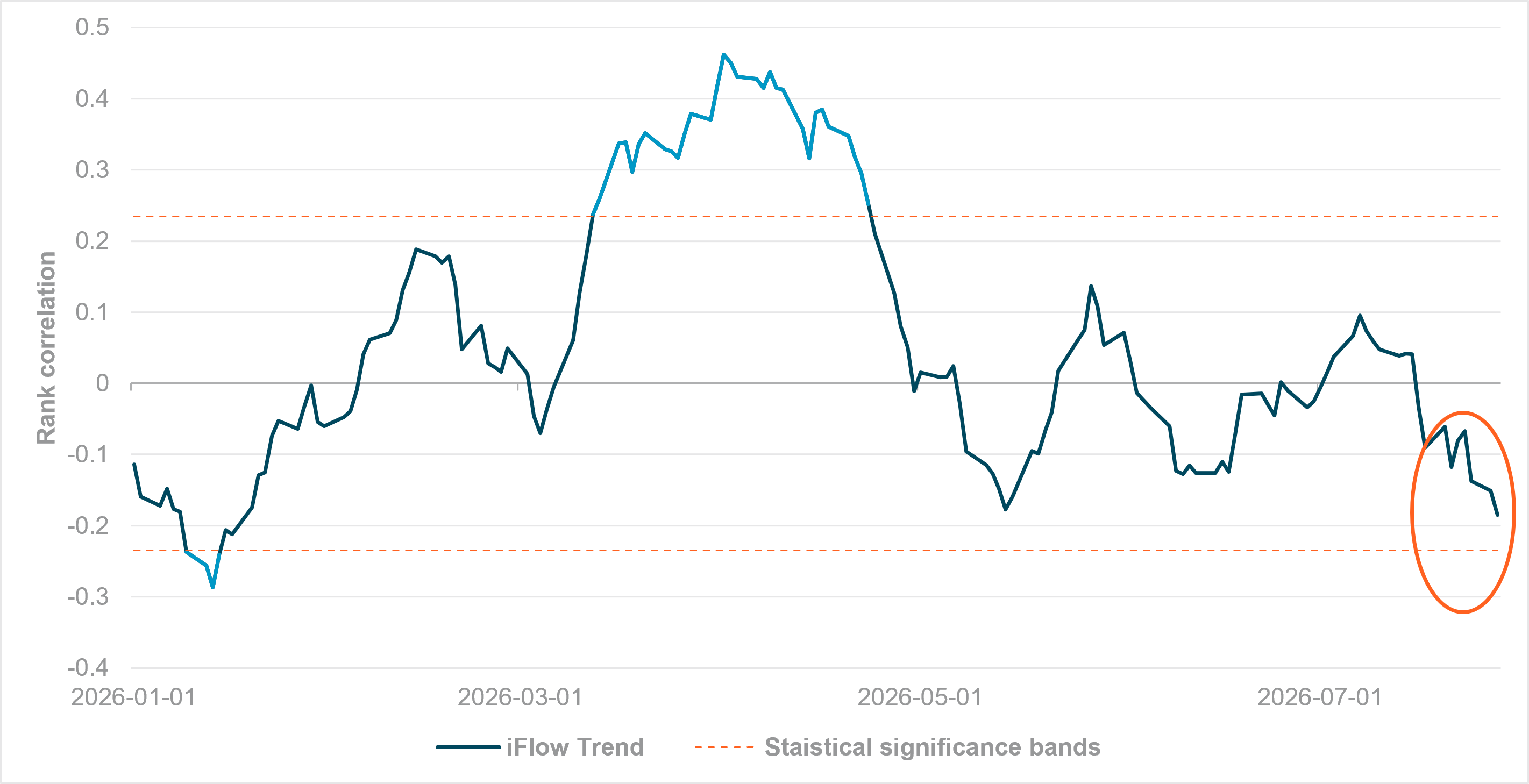
EXHIBIT #3: IFLOW TREND YEAR TO DATE
Source: BNY
Our take
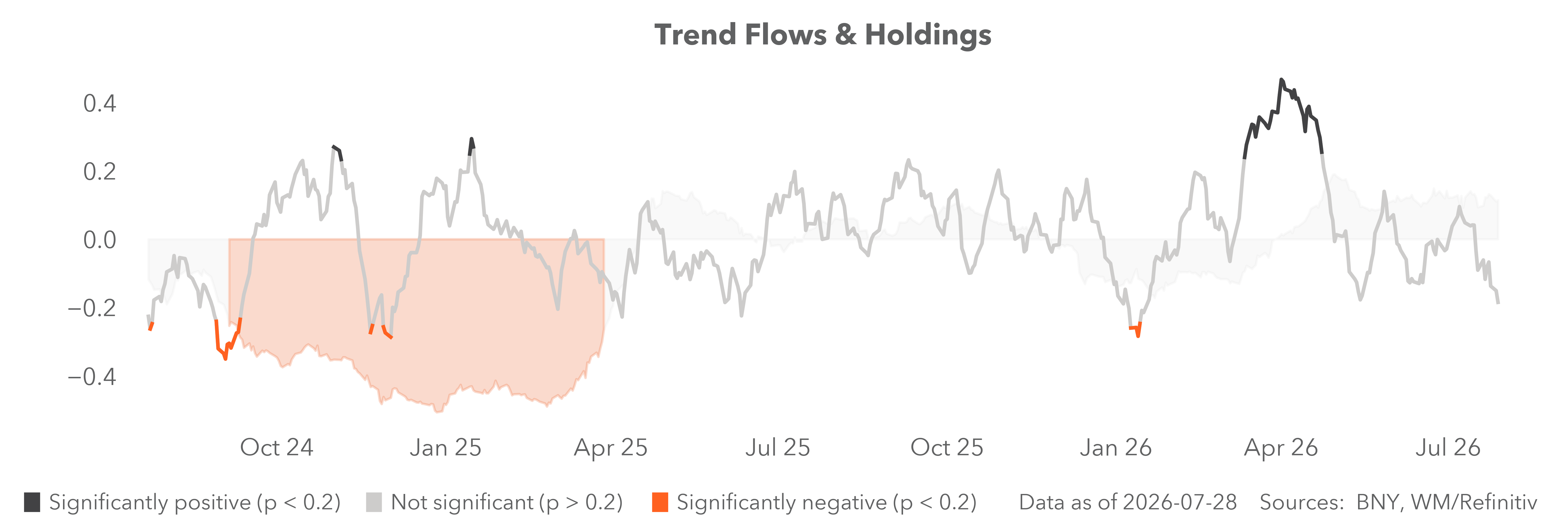
iFlow Trend measures whether FX flows are reinforcing or fading currency momentum. It compares each currency’s spot trend, based on 50-day and 200-day moving averages, with its realized flow performance. A high reading means investors are buying the strongest currencies and selling the weakest. This was clear during the most intense phase of the conflict in March and April, when weak spot performance aligned with heavy selling.
That relationship is now reversing. iFlow Trend is falling sharply and could move into statistically significant negative territory within days, indicating that flows are increasingly moving against prevailing spot momentum. This shift appears broader than any single event, including the Fed meeting.
Forward Look
HUF and SEK show the clearest divergence. HUF ranks second for spot momentum but sits in the bottom five for realized flows. SEK is among the weakest currencies on spot momentum but ranks second for flows. HUFSEK rose 15% from early March to late June but has already fallen 3% this month. As valuations stretched, investors began hedging HUF and adding SEK exposure, effectively fading the earlier momentum move.
Counter-momentum positioning is not yet crowded, but the setup is developing. The January signal lasted only four sessions, while the pro-momentum phase from mid-March ran for more than four weeks, the longest such run since late 2022. This creates a growing opportunity to identify the strongest flow-momentum divergences and position for mean reversion.
Focus on relative-value and mean-reversion trades that reduce direct Fed exposure. Favor CHF recovery against SGD and CNY, use BRL and PLN where real-rate support exceeds current positioning, and stay cautious on overheld CLP, COP and RON. In momentum, watch HUFSEK closely: flows are already fading the earlier move, but the broader counter-trend signal is not yet crowded.