Bessent’s JPY warning applies across surplus Asia
FX: G10 & EM provides a detailed analysis of global foreign exchange movements in major and emerging economies around the world together with macro insights.
FX: G10 & EM provides a detailed analysis of global foreign exchange movements in major and emerging economies around the world together with macro insights.

Geoff Yu
Time to Read: 5 minutes
Bottom line: The U.S.–Japan intervention signals a more proactive U.S. Treasury Department approach to currency misalignment, and Japan is unlikely to be the final case. THB, TWD, KRW, CHF and VND warrant particular attention given weak effective exchange rates, managed currency regimes or large bilateral surpluses with the U.S. However, intervention is only a signal: lasting adjustment requires stronger domestic demand and credible policy changes. Forced Treasury liquidation remains a limited risk, as only Japan and China hold enough to move the market, and both positions remain relatively sticky.
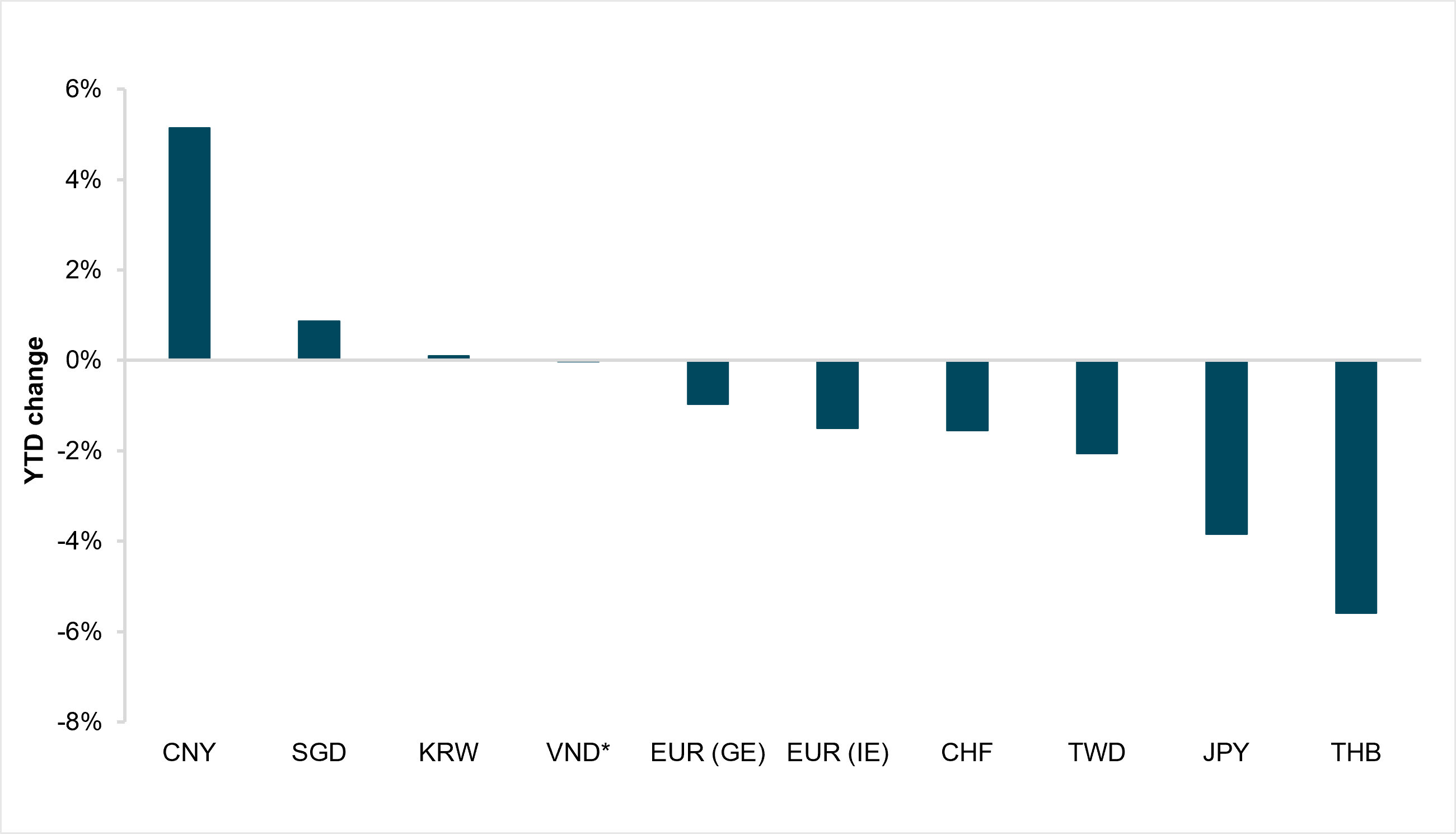
EXHIBIT #1: NOMINAL EFFECTIVE EXCHANGE RATE (NEER) PERFORMANCE
Source: BNY, Bloomberg, BIS (as of July 31); *VND refers to dollar spot rate
Our take
On Wednesday, the FX department head of Taiwan’s central bank noted that the recent U.S.-Japan FX interaction had no impact on the Taiwan dollar. Technically, this is true, as the exchange rate behaved normally, subject to usual central bank guidance. However, we believe that undervalued currency across the region should be on watch. U.S. Treasury Secretary Scott Bessent said this week that intervention “can give market signals but policy is key.” This applies to Japan, where structural factors are acute and require more urgent remedies. The same message should also be heard across Asia. The U.S. operates a “stronger dollar” or “benign neglect” policy, but there is realization that exchange rate misalignments are impacting the U.S. economy through the strong dollar. Bessent himself stated that the support for Japan in propping up the JPY is also “of help for the U.S. economy.”
The message is clear from Treasury’s semi-annual report on international economic and exchange rate policy, where the U.S. identifies countries where potential exchange manipulation is done “for purposes of preventing effective balance of payments adjustments or gaining unfair competitive advantage in international trade.” The latest report published last month identified ten currencies on the monitoring list, and the JPY wasn’t even the worst offender; the THB has weakened the most against the dollar (Exhibit 1). The Treasury’s report tracks currency performance over a four-quarter period to December 2025, during which THB appreciated 9% against USD. We expect the next iteration to be far less charitable, as Thailand is designated as having a “significant” bilateral trade surplus against the U.S.
Forward Look
Bessent was very calibrated in his remarks on the renminbi, noting that “many people” believed CNY is undervalued, without stating it explicitly as was done with JPY and KRW earlier in the year. CNY’s strong performance against the USD this year and other political considerations have played a role. He also viewed the euro as being closer to fair value. This leaves currencies such as the CHF, TWD, JPY and THB all at risk of Treasury’s direct or indirect sanction.
The KRW is not in the clear either. Had recent unwinding due to equity market volatility not taken place, KRW’s NEER performance would have been one of the worst on the list. Joint interaction on JPY sent a signal that the U.S. is being more proactive in managing misalignments. Intervention is a “market-friendly” option compared to tariffs and border-adjustment taxes, but the U.S. likely expects behavior to change.
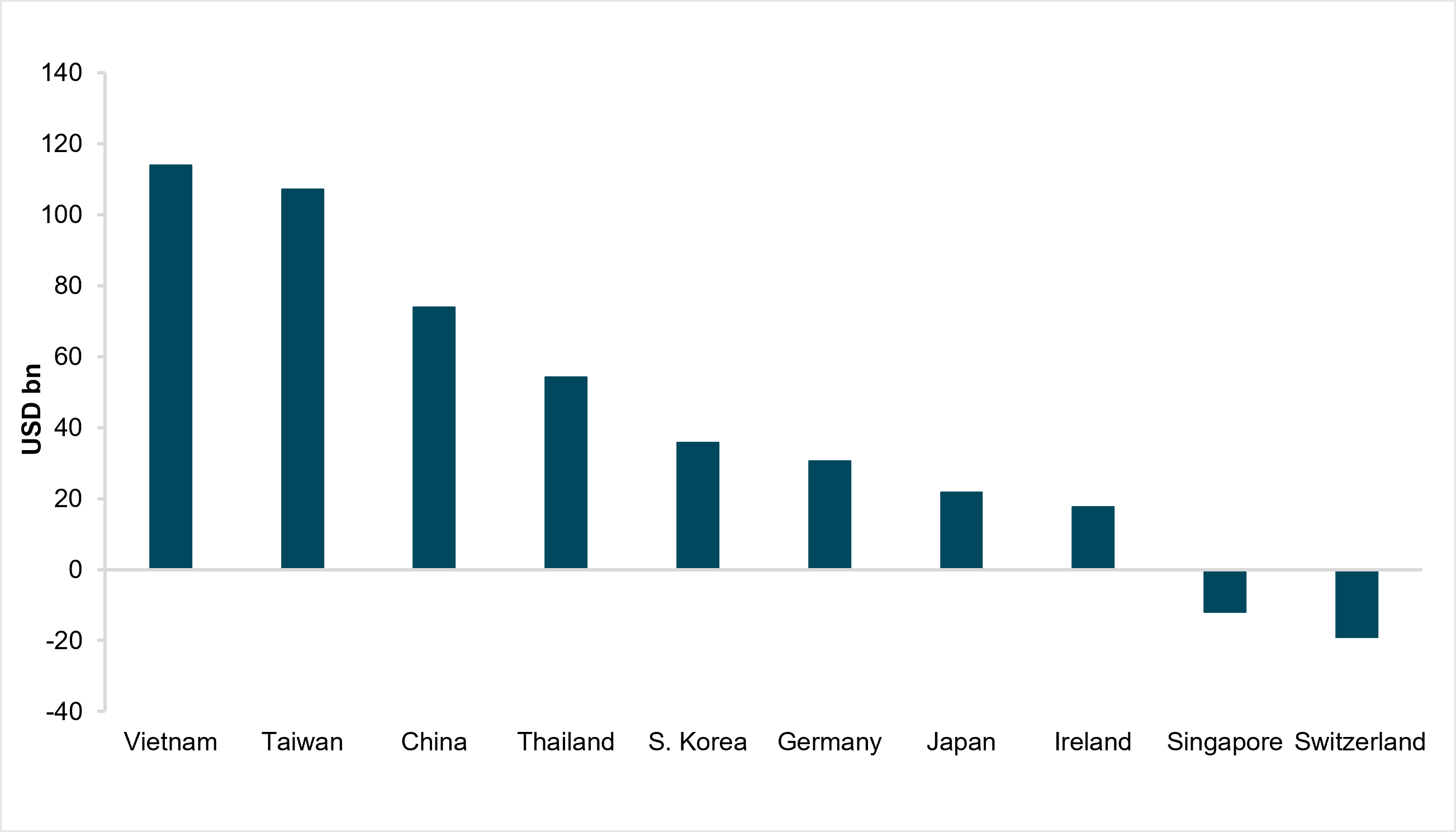
EXHIBIT #2: YEAR-TO-DATE TRADE BALANCE VS. THE U.S.
Source: BNY, Bloomberg
Our take
Current accounts across APAC this year have been affected by the oil price spike so when determining misalignments, we expect the Treasury to focus more on bilateral surpluses versus the U.S. Even on this measure, Japan has the lowest surplus of the economies on the list (with Singapore running a deficit). Vietnam and Taiwan have year-to-date bilateral surpluses above $100bn, though for the former we expect much of the improvement reflects transhipments of Chinese exports via the country. VND is a heavily managed currency, but relatively high inflation has helped push up its real effective exchange rates (REER). In contrast, Taiwanese inflation has only surpassed 2% twice in the last 12 months, adding to REER underperformance. The Taiwanese economy is now running a current account surplus of 22% of GDP. The circumstances are exceptional but by any definition, this is a serious imbalance that needs to be corrected.
Forward Look
Current account adjustments tend to be slower as they require a fundamental increase in domestic demand. Outside of raw materials, this has always been a challenge for APAC economies, but local governments are realizing that change is needed – potential growth may never recover otherwise, and export reliance is an increasingly risky strategy in a de-globalizing world. South Korea is subsidizing fabrication plant construction in poorer parts of the country and even mulled greater distribution of higher levels of tax receipts from semiconductor firms. China is also talking about unleashing household demand, but deployment of resources is proving a more challenging process. The U.S. has also asked China to purchase more goods in the past as part of tariff negotiations, but this is no substitute for genuine domestic demand expansion. Bessent’s comments on Japan’s “policy follow-through” are correct, but economies in the region need to acknowledge that this is for their own good rather than in the interest of the U.S.
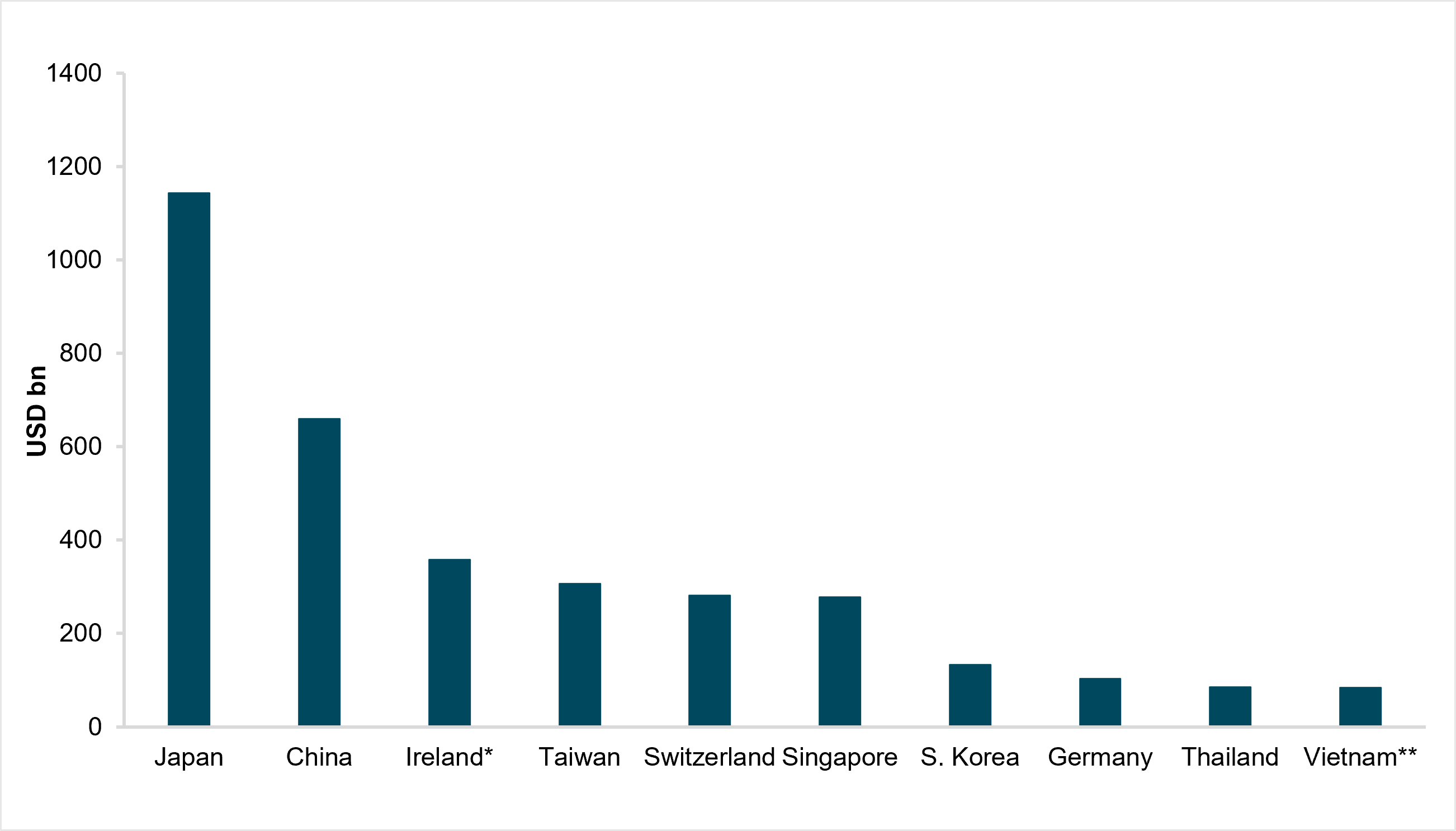
EXHIBIT #3: FOREIGN HOLDERS OF TREASURYS, AS REPORTED BY U.S. TREASURY
Source: BNY; *Ireland’s figure refers to financial intermediary holdings; **Vietnam holdings is official reserves.
Our take
Another reason for the U.S. to help Japan was to avoid a vicious spiral where Japan may have been required to sell U.S. Treasury holdings to generate the liquidity to prop up the exchange rates. In theory, this is a risk but in reality, we doubt that sudden liquidation of Treasury holdings was ever in the cards. Japan is sticking to the IMF definitions of three rounds of three-day intervention per six-month period, and the amounts are now generally well understood by markets and largely pre-funded. The only time when the Foreign and International Monetary Authorities (FIMA) repo facility was put to heavy use was during the early days of the pandemic, when the world faced a comprehensive liquidity squeeze.
Furthermore, looking at the holdings based on Treasury figures, only Japan and China have sizable enough holdings to make a difference to the Treasury market, and we generally see their holdings as sticky. China has capital controls, which represent another barrier to liquidity risk. The only likely “flight of foot” country is Ireland, where the holdings reflect custodied assets of financial intermediaries domiciled in the country.
Forward Look
The FIMA and central bank repo facilities are genuinely strong backstops, as demonstrated during the liquidity crisis in H1 2020. If anything, the bulk of last week’s Treasury moves were attributable to the market’s reaction to the Fed decision, though concerns may have emerged that selling by Japan for intervention purposes would have exacerbated the move.
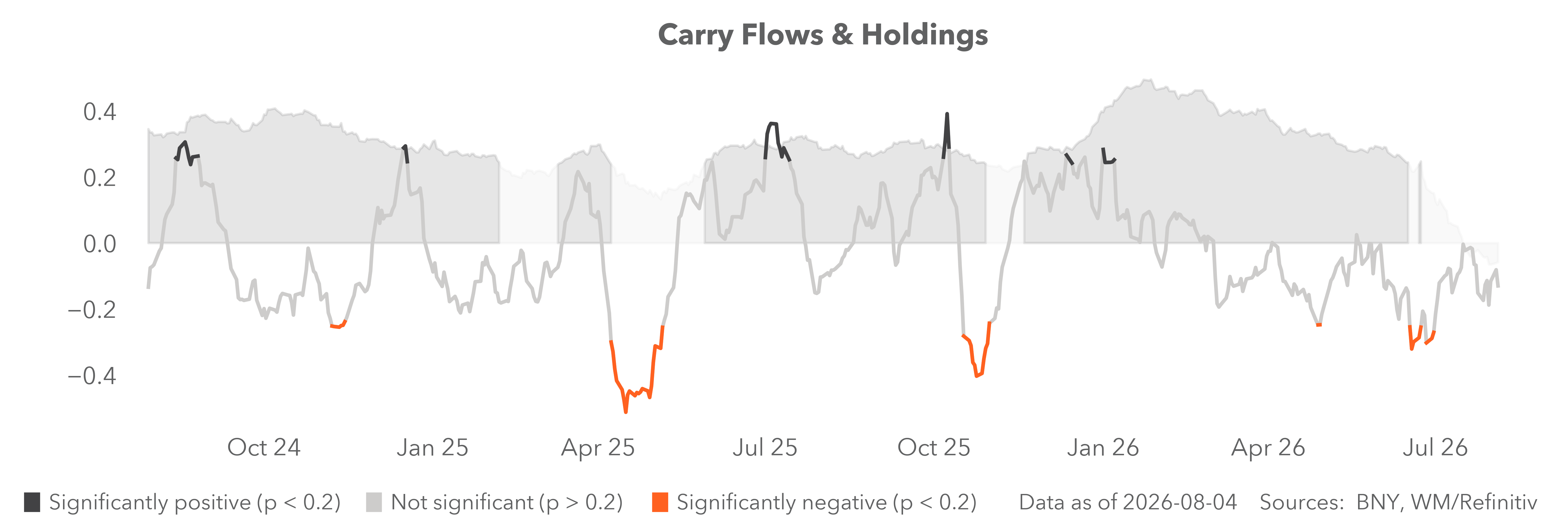
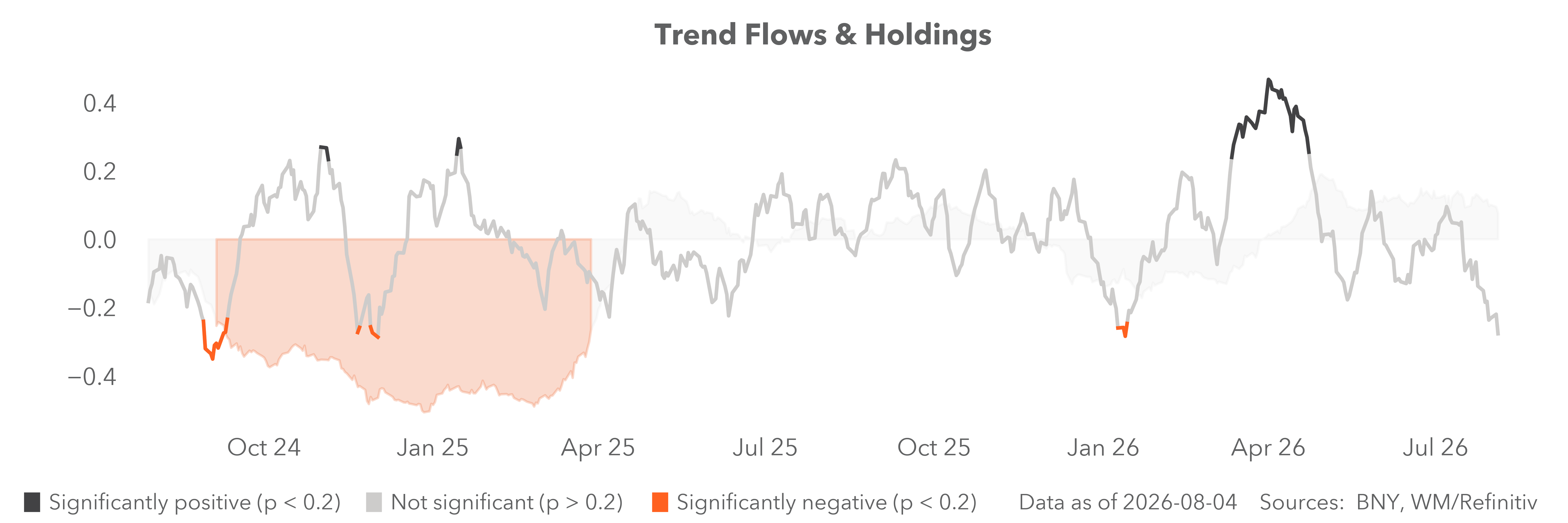
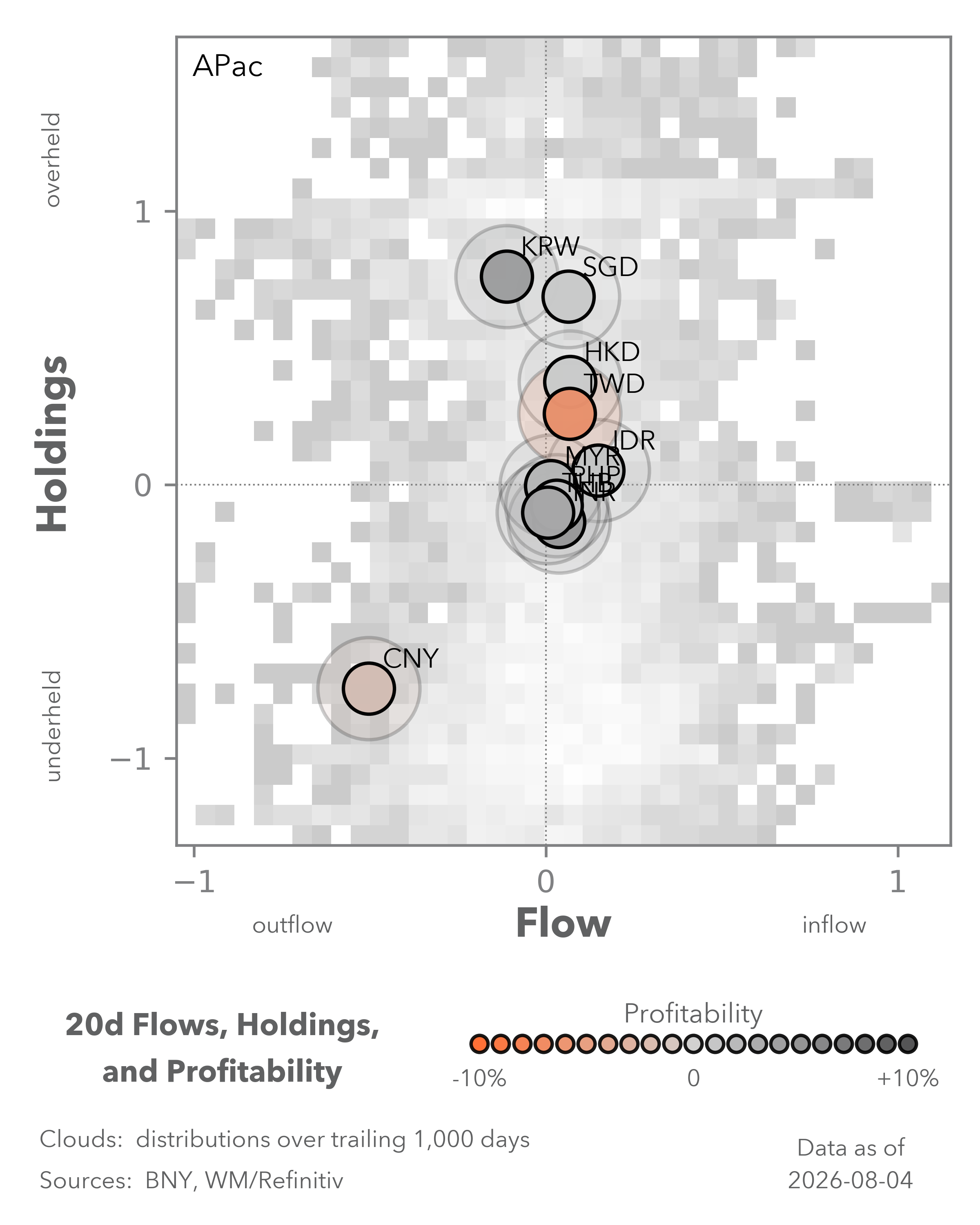
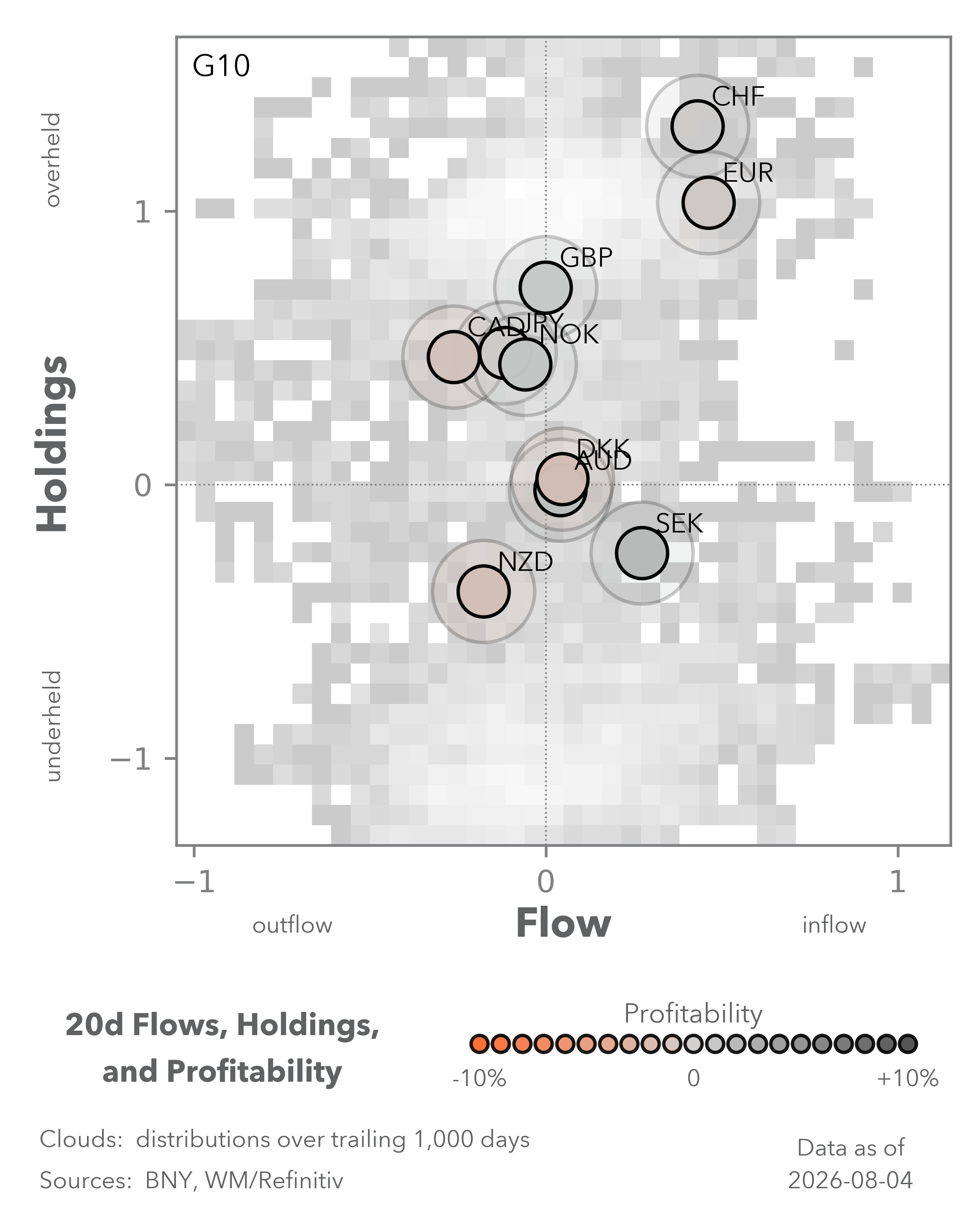
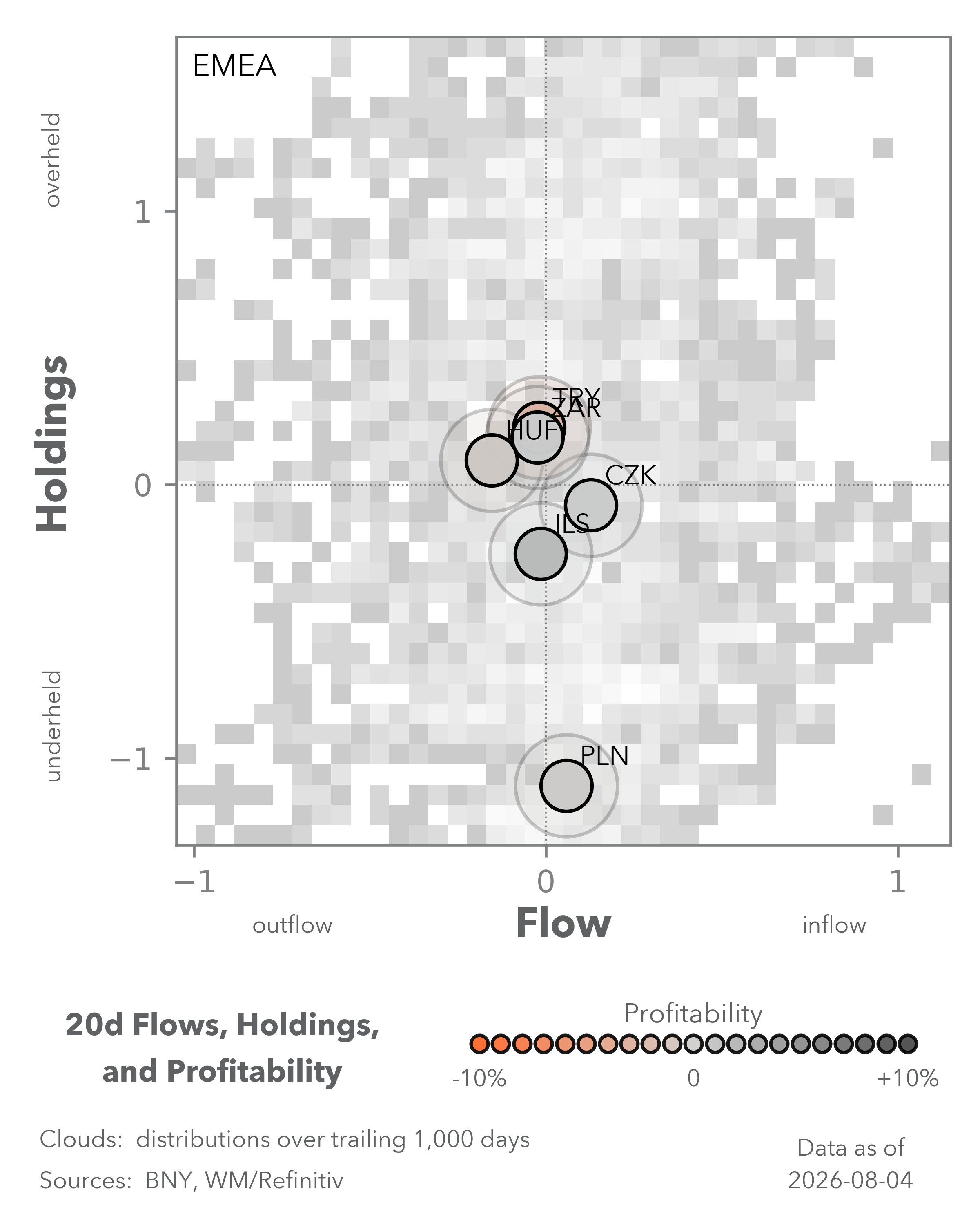
The lesson here is telling though: JPY fell and the JGB curve steepened because of lack of credibility in monetary policy and fiscal concerns. The same characterization can be given to the U.S. Our flow data show that home bias remains strong in the U.S. Treasury market, but investor patience is not infinite either. Bessent’s message is as relevant in Washington, D.C. as in Tokyo.
Treat undervalued Asian currencies as increasingly policy-sensitive rather than purely macro-driven trades. Monitor Treasury language and the next FX report for pressure on TWD, THB, KRW and VND, while recognizing that CNY scrutiny may remain more calibrated. Don’t position for disorderly Treasury selling by reserve managers; focus instead on whether governments allow currency appreciation, expand domestic demand, and improve fiscal credibility. The latter also applies to the U.S.