Resilient through uncertainty
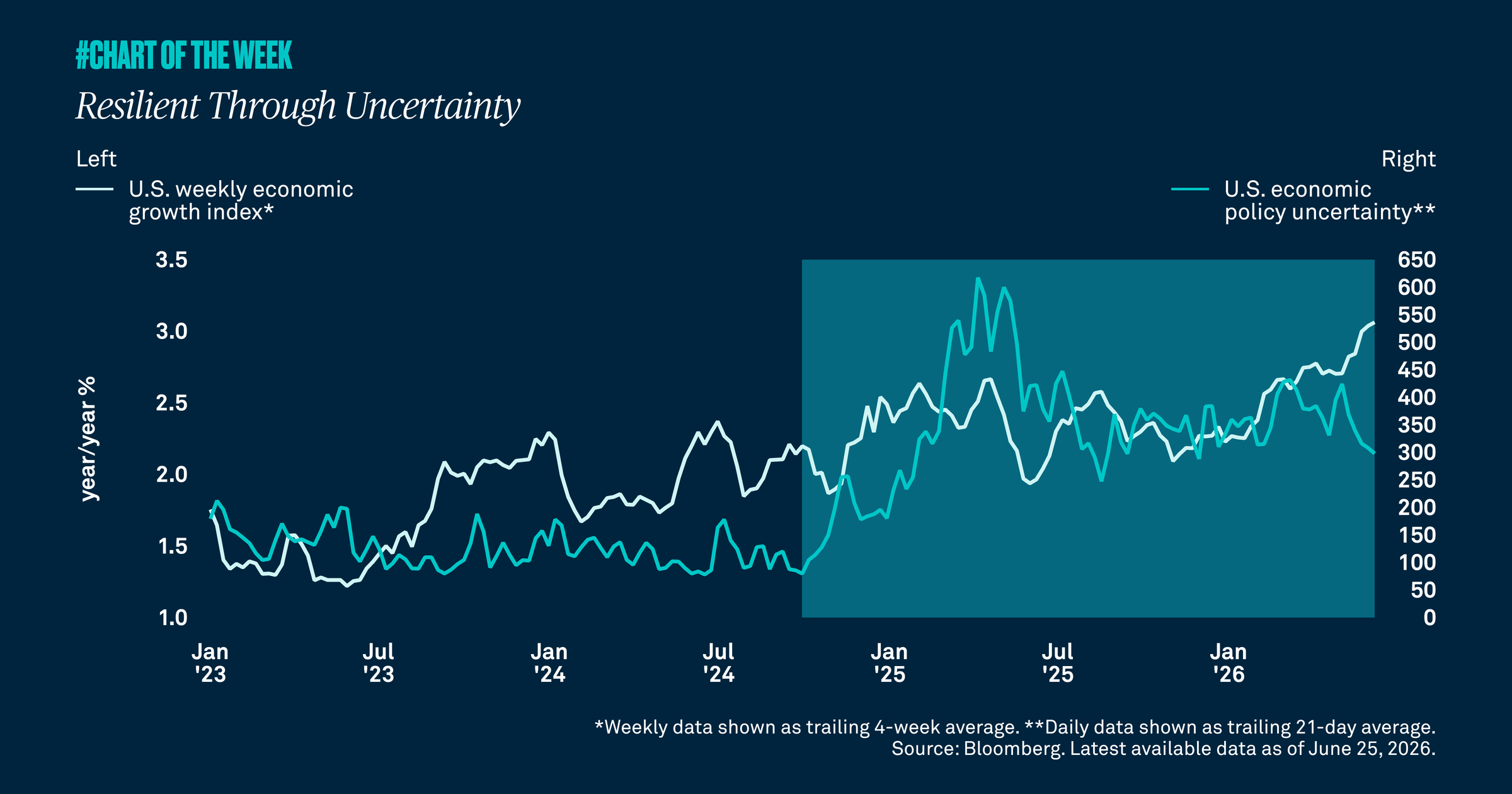
U.S. policy uncertainty has remained elevated and consumer sentiment has weakened. Even so, the economy has stayed resilient, and because growth has held up better than sentiment and headlines suggest, we continue to forecast 2% U.S. growth in 2026, in line with trend.
 3 mins Reading time
Published on 30 June 2026
3 mins Reading time
Published on 30 June 2026


U.S. policy uncertainty — a dependable catalyst for investor anxiety — has remained elevated in recent years, with the Economic Policy Uncertainty Index running well above its long-run average. At the same time, consumer sentiment has deteriorated amid fears of a growth slowdown, which have prompted a reassessment of the outlook for risk assets.
Still, the economic backdrop has remained notably resilient — stronger than many investors and analysts expected — despite policy shocks like tariff changes and government shutdowns.
While the noise around the growth narrative has been loud, it has still been mostly noise. Policy uncertainty and investor unease have been real, but the economy has continued to absorb both. As a result, we reiterate our growth forecast for 2026 of 2%, in-line with trend.
959106 Exp : 30 June 2027
YOU MIGHT ALSO LIKE
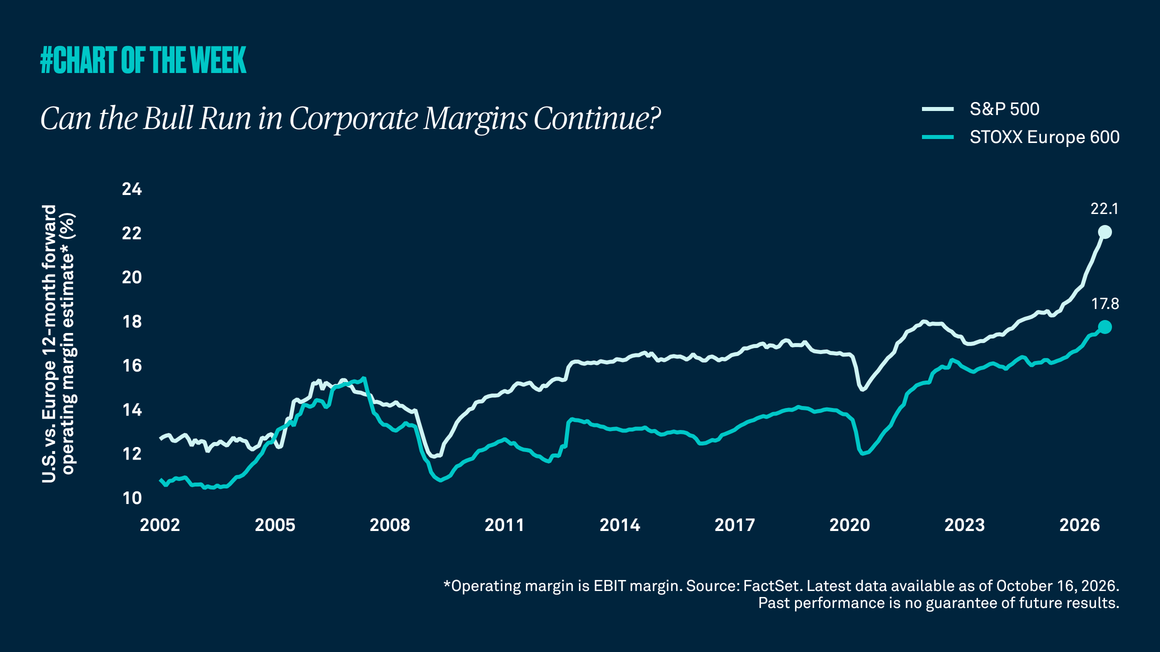
Higher inflation and elevated interest rates typically weigh on corporate profitability, yet corporate margins continue to climb to record highs. While that strength is evident both in the U.S. and abroad, U.S. outperformance versus Europe is now the widest on record. Stronger margins have helped contribute to better-than-expected earnings and reinforce U.S. equity leadership. The question now is whether that strength can persist?
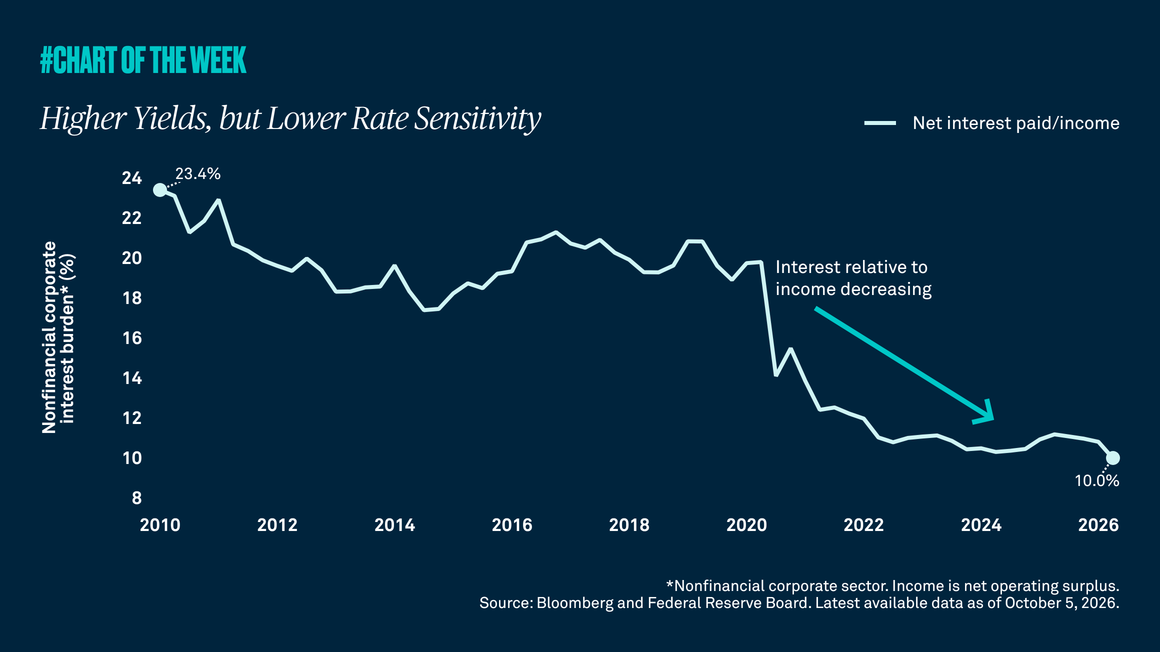
Higher interest rates have become a frequently cited risk to corporate earnings and the economy. The conventional thinking is straightforward: when borrowing costs rise, companies face higher interest expenses, profits come under pressure, and economic growth slows. While there is truth to that relationship, the current cycle may differ from investors’ expectations.
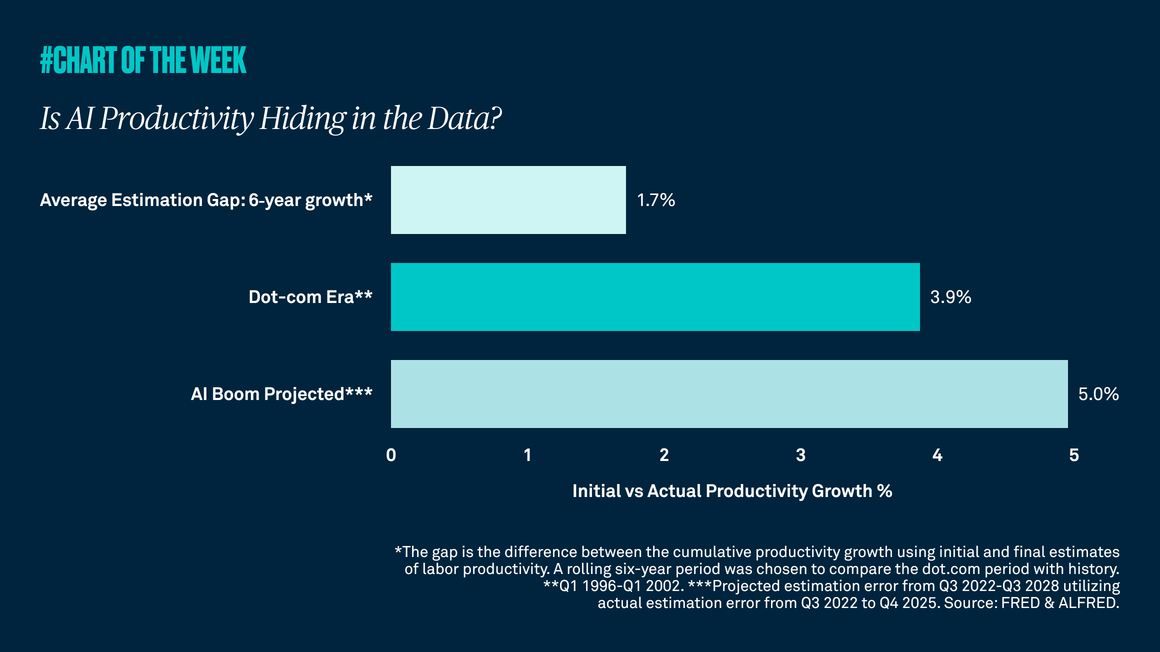
Both the dot-com era and the rise of artificial intelligence suggest that early productivity data can understate the actual economic impact of transformative technologies. In the case of the internet, later revisions to productivity gains surpassed early estimates. The same may prove true for AI, implying stronger support for growth.
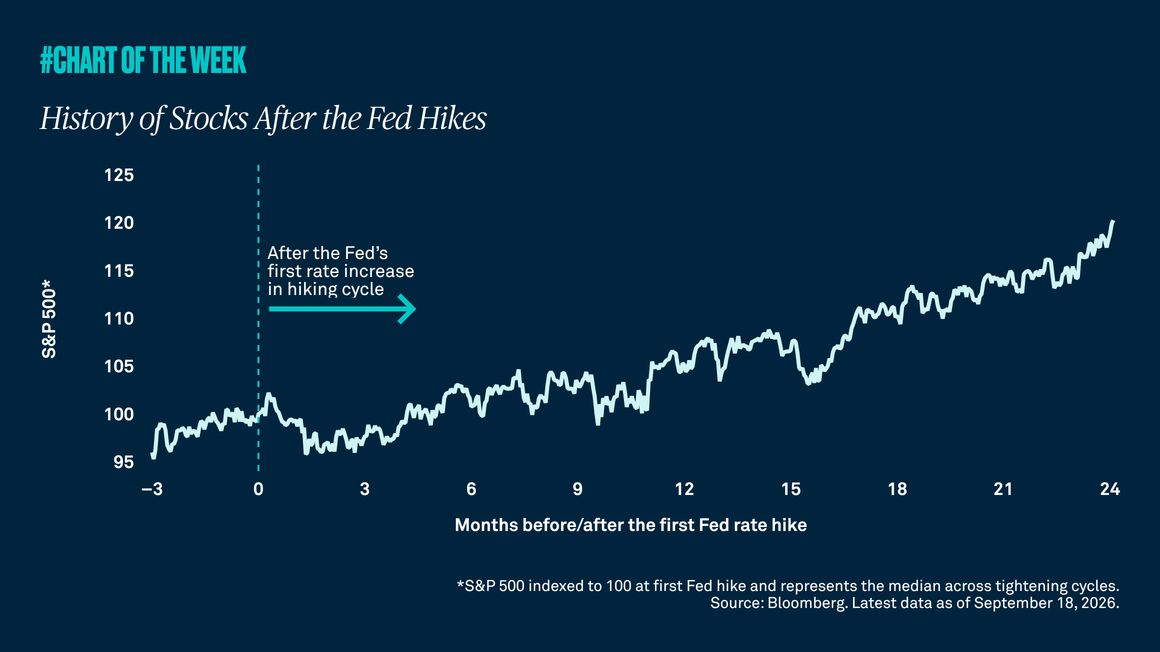
History of stocks after the Fed hikes
History of stocks after the fed hikes
Sticky inflation and resilient growth have revived monetary tightening, increasing the risk of higher-for-longer rates and near-term volatility. We continue to believe economic resilience and strong corporate profits should continue to provide a favorable backdrop for stocks, and would use periods of market weakness to add selectively to equities. Additionally, owning real assets can help hedge against inflation.
