Getting real in retail
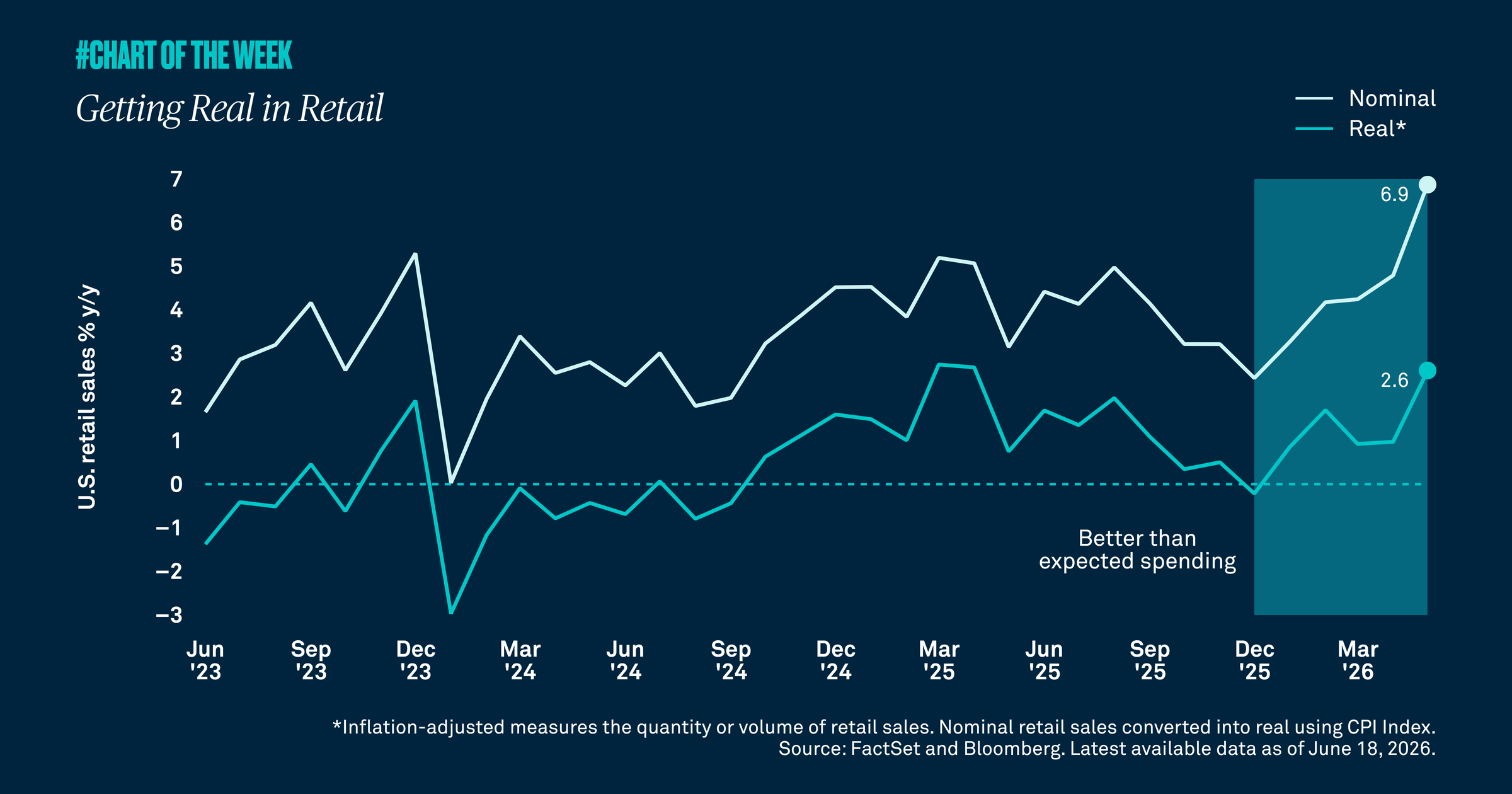
Despite persistent concerns that sticky inflation would erode purchasing power and drag consumer spending lower, the May retail sales data tells a different story. Spending is up not just in dollar terms, but in quantity, highlighting continued consumer resilience.
 3 mins Reading time
Published on 22 June 2026
3 mins Reading time
Published on 22 June 2026


Nominal retail sales rose 6.9% year-over-year in May, the strongest growth rate in several years and more than double the average pace recorded since 2023. Importantly, this was not simply a reflection of higher prices. Real, inflation-adjusted retail sales grew 2.6% year-over-year — roughly 2% above the average — confirming that consumers are buying more, not just paying more.
However, U.S. consumer spending has not been uniform. The K-shaped dynamic (where higher-income households continue to spend while lower-income consumers face more meaningful pressure) is real and ongoing. While pockets of stress exist, total spending has held up and increased.
That said, the picture is not without risk. Higher inflation could weaken the spending momentum and lead to slower economic growth. For now, the increase in total consumer buying activity supports our constructive forward outlook and justifies remaining invested.
956241 Exp : 22 June 2027
YOU MIGHT ALSO LIKE
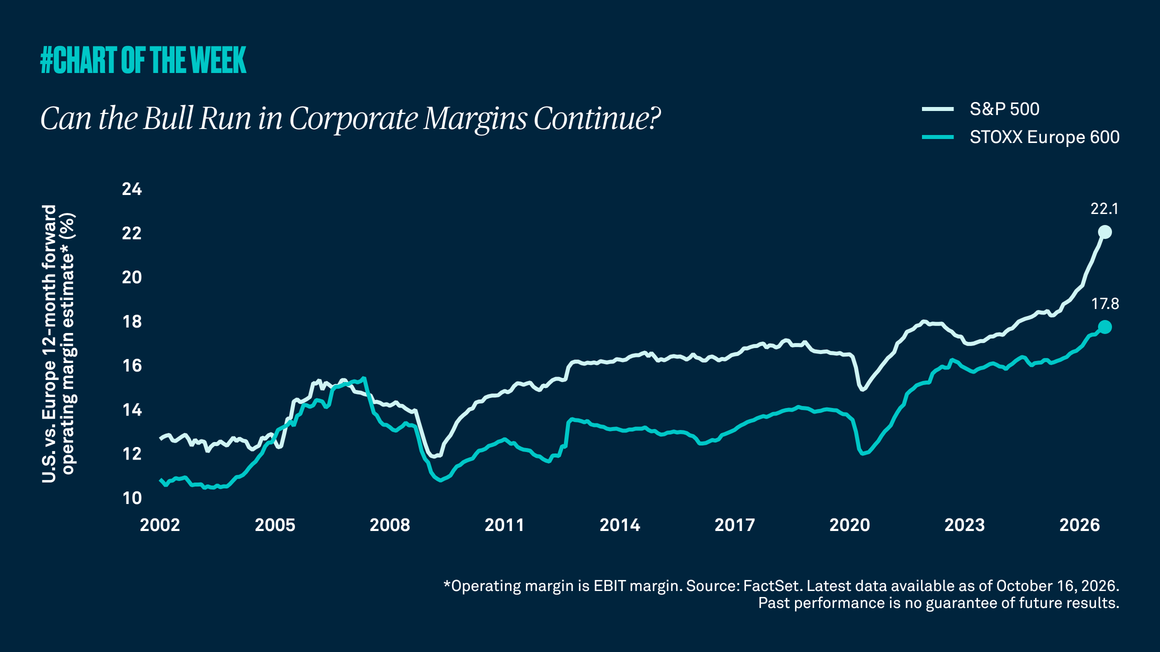
Higher inflation and elevated interest rates typically weigh on corporate profitability, yet corporate margins continue to climb to record highs. While that strength is evident both in the U.S. and abroad, U.S. outperformance versus Europe is now the widest on record. Stronger margins have helped contribute to better-than-expected earnings and reinforce U.S. equity leadership. The question now is whether that strength can persist?
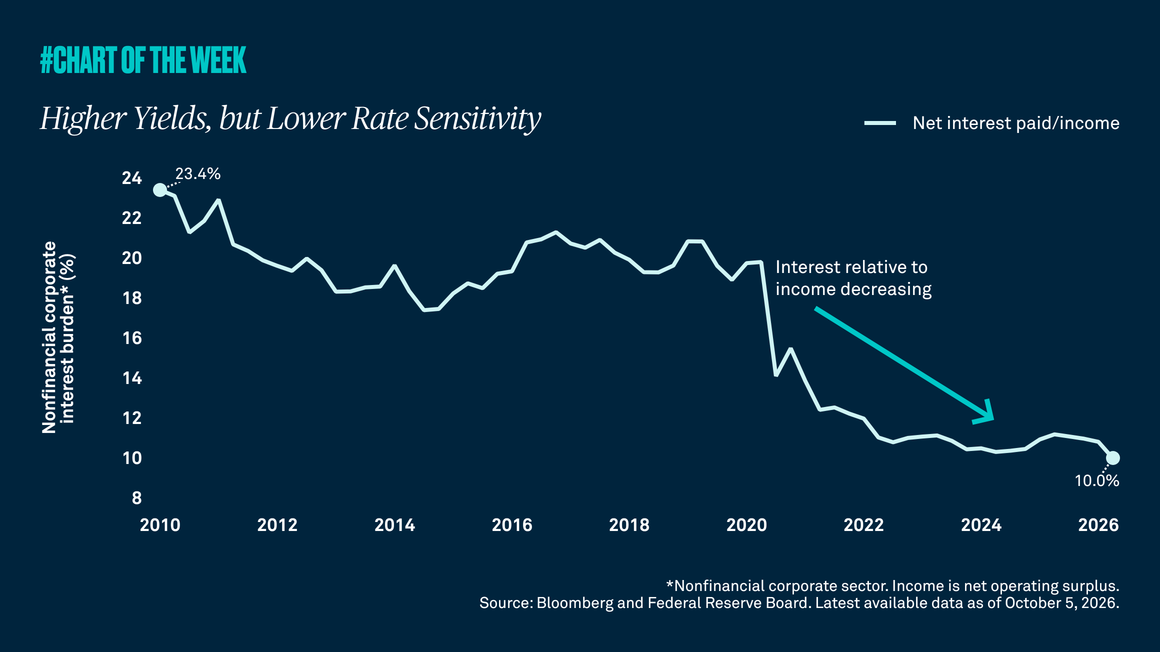
Higher interest rates have become a frequently cited risk to corporate earnings and the economy. The conventional thinking is straightforward: when borrowing costs rise, companies face higher interest expenses, profits come under pressure, and economic growth slows. While there is truth to that relationship, the current cycle may differ from investors’ expectations.
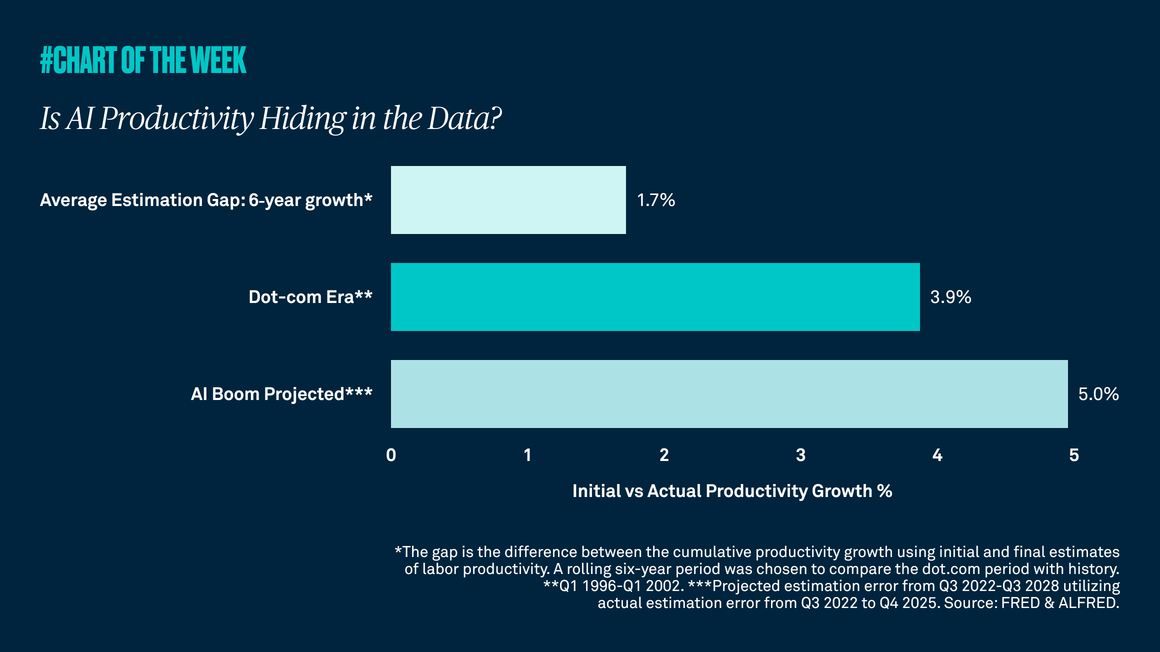
Both the dot-com era and the rise of artificial intelligence suggest that early productivity data can understate the actual economic impact of transformative technologies. In the case of the internet, later revisions to productivity gains surpassed early estimates. The same may prove true for AI, implying stronger support for growth.
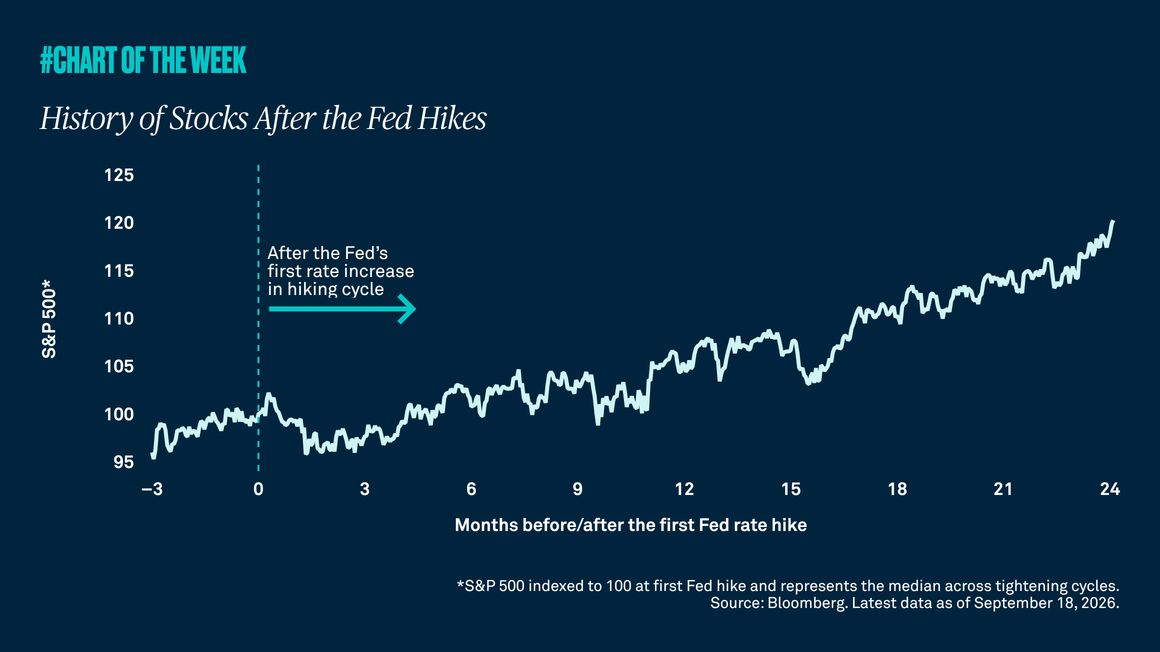
History of stocks after the Fed hikes
History of stocks after the fed hikes
Sticky inflation and resilient growth have revived monetary tightening, increasing the risk of higher-for-longer rates and near-term volatility. We continue to believe economic resilience and strong corporate profits should continue to provide a favorable backdrop for stocks, and would use periods of market weakness to add selectively to equities. Additionally, owning real assets can help hedge against inflation.
