Muni yields are attractive
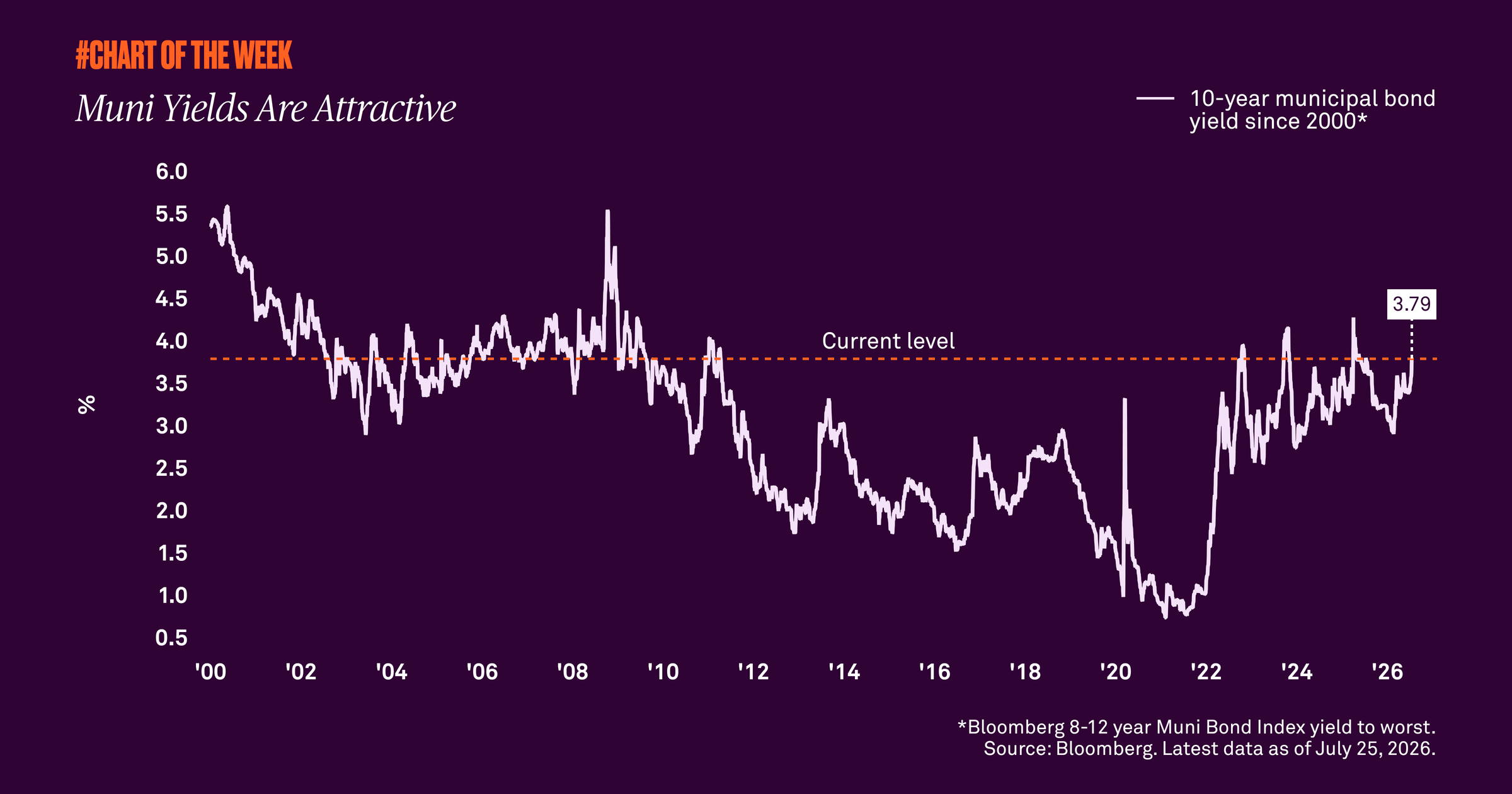
The war in Iran has increased volatility across fixed income markets, pushing municipal bond yields higher as investors reassess inflation risk, energy costs and the path of Federal Reserve policy. Even so, historically elevated municipal bond yields present a compelling opportunity for tax-sensitive investors.
 3 mins Reading time
Published on 21 July 2026
3 mins Reading time
Published on 21 July 2026


The war in Iran has added pressure to fixed income markets, particularly in U.S. Treasuries. The 10-year Treasury yield recently traded near 4.7% as investors repriced inflation risk and the economic effects of higher energy costs and what that may mean for monetary policy. At the same time, municipal bond yields have risen as well, with 10-year tax-free bond yields reaching roughly 3.8% or 6.3% on a tax-equivalent basis. This is key because entry-point yield is often a strong indicator of long-term return potential.
While yield volatility is likely to persist, our Tax-Managed Fixed Income solution seeks to uncover value in the municipal bond market through disciplined security selection, active risk management and tax-aware portfolio management.
WI-976076 Exp : 29 July 2027
YOU MIGHT ALSO LIKE
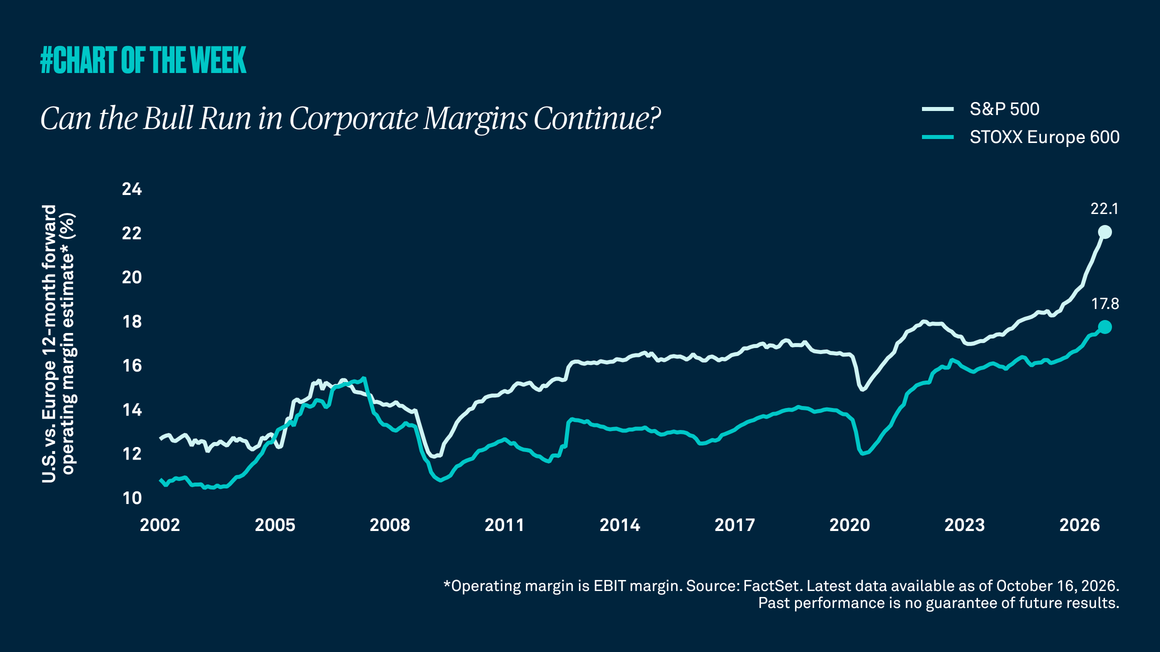
Higher inflation and elevated interest rates typically weigh on corporate profitability, yet corporate margins continue to climb to record highs. While that strength is evident both in the U.S. and abroad, U.S. outperformance versus Europe is now the widest on record. Stronger margins have helped contribute to better-than-expected earnings and reinforce U.S. equity leadership. The question now is whether that strength can persist?
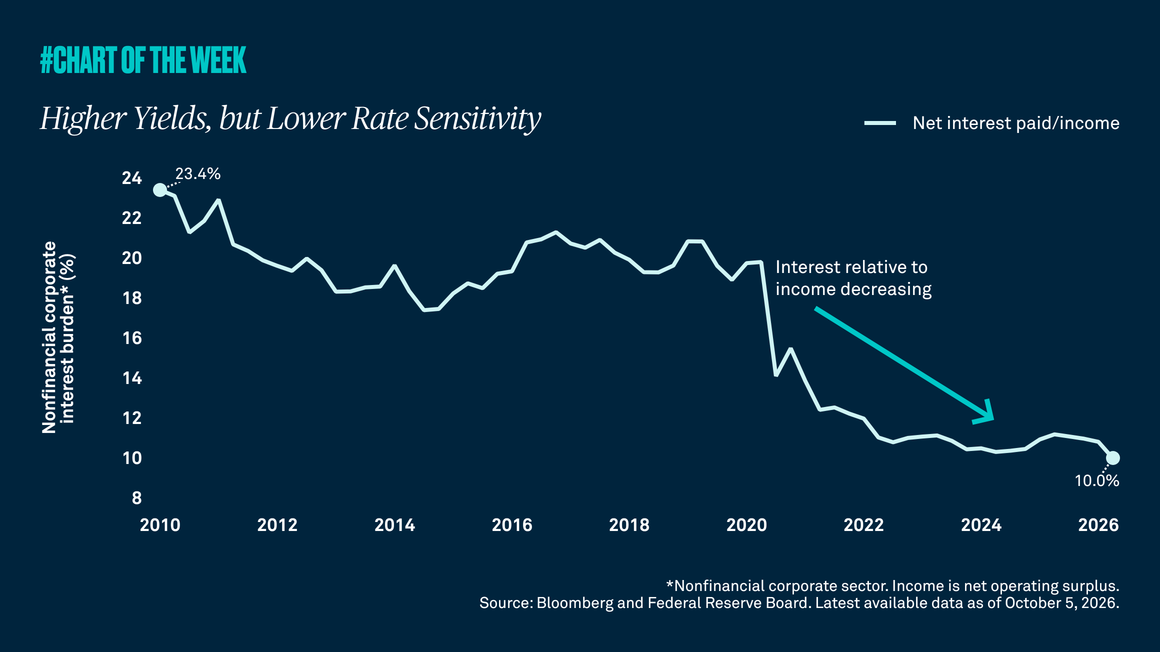
Higher interest rates have become a frequently cited risk to corporate earnings and the economy. The conventional thinking is straightforward: when borrowing costs rise, companies face higher interest expenses, profits come under pressure, and economic growth slows. While there is truth to that relationship, the current cycle may differ from investors’ expectations.
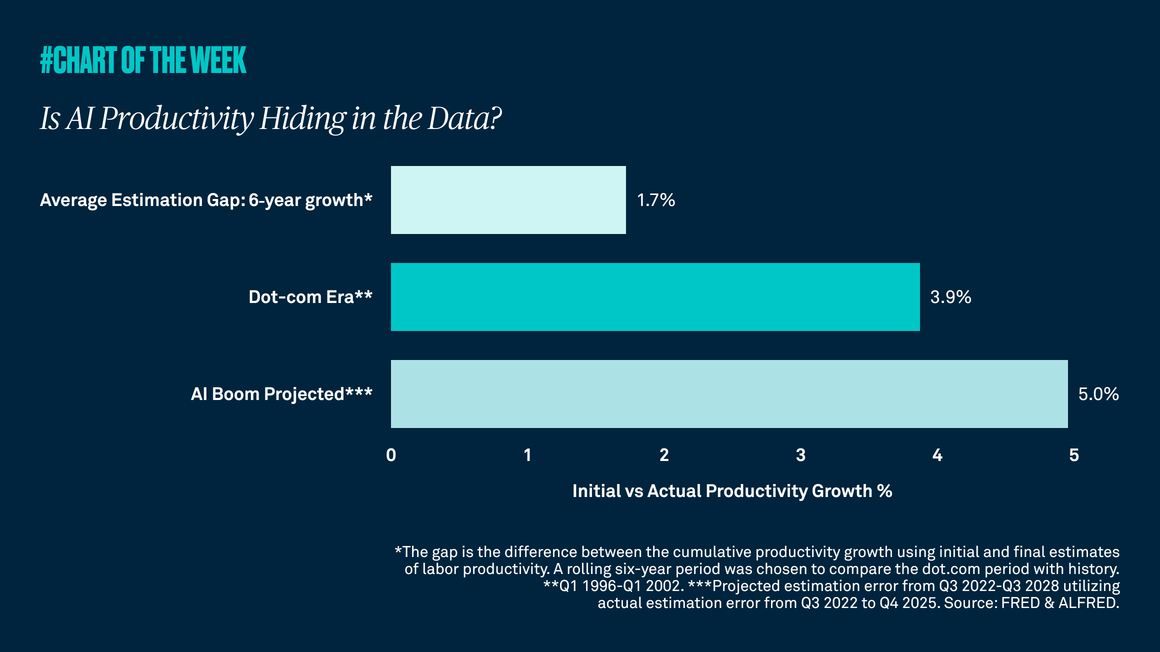
Both the dot-com era and the rise of artificial intelligence suggest that early productivity data can understate the actual economic impact of transformative technologies. In the case of the internet, later revisions to productivity gains surpassed early estimates. The same may prove true for AI, implying stronger support for growth.
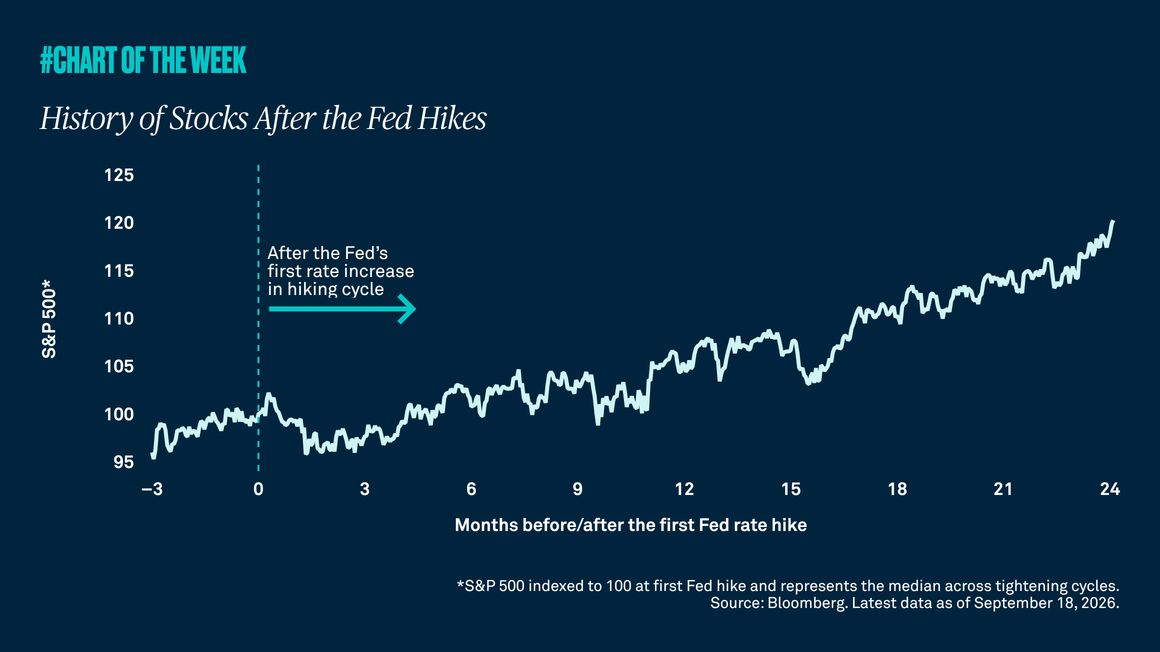
History of stocks after the Fed hikes
History of stocks after the fed hikes
Sticky inflation and resilient growth have revived monetary tightening, increasing the risk of higher-for-longer rates and near-term volatility. We continue to believe economic resilience and strong corporate profits should continue to provide a favorable backdrop for stocks, and would use periods of market weakness to add selectively to equities. Additionally, owning real assets can help hedge against inflation.
