Getting real with real assets
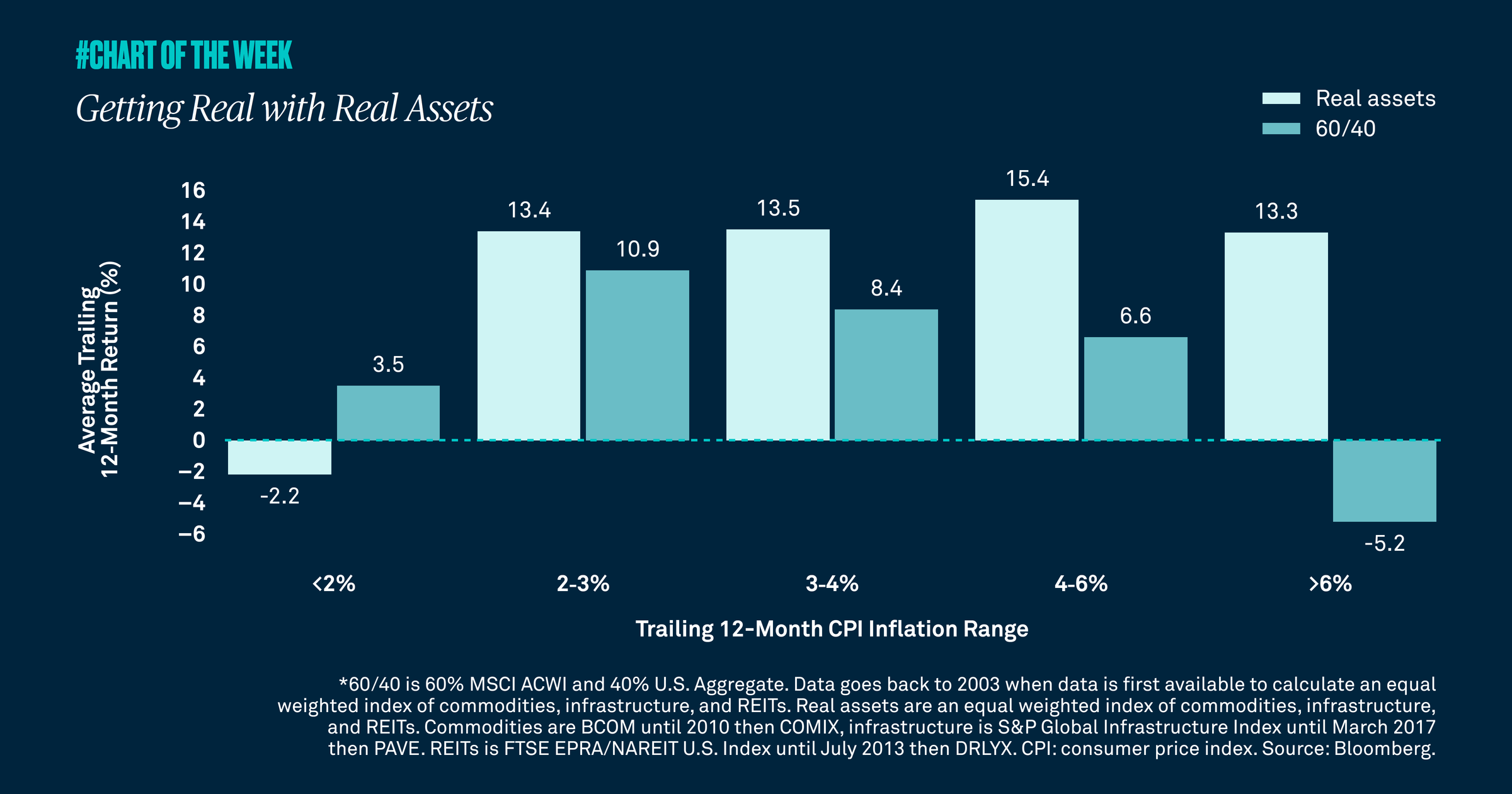
Inflation appears to have transitioned from its pre-Covid average of 2% to a stickier point closer to 3%, and we do not expect a near-term return to prior levels. In this environment, we believe real assets, such as commodities, infrastructure and REITs, can provide inflation protection, diversification and return potential.
 3 mins Reading time
Published on 25 August 2026
3 mins Reading time
Published on 25 August 2026


Before Covid, consumer inflation averaged about 2%, in line with the Federal Reserve’s target. Today, inflation appears to be operating in a new regime closer to 3%. It remains sticky, and we do not expect a near-term return to prior levels. In our view, the sharp rise in longer-dated global bond yields to multi-year highs suggests markets are also pricing in persistently higher inflation.
Against this backdrop, real assets — particularly commodities, infrastructure and REITs — remain well positioned. Historically, these areas have performed well during periods of elevated inflation. We also see further upside from a durable capital expenditure and manufacturing cycle, supported by aging infrastructure replacement, onshoring across industries, higher defense spending and continued artificial intelligence-related investment. Commodities and infrastructure should be key beneficiaries of these trends.
Real estate investment trusts (REITs) are also attractive now. They add exposure to income-producing real estate, where rents and property values can rise with inflation, complementing the inflation sensitivity of commodities and infrastructure.
Taken together, we believe that an allocation to real assets with exposure to commodities, infrastructure and REITs can help protect against inflation while enhancing returns and improving diversification. As a result, we have increased our exposure to the asset class.
991549 Exp : 25 August 2027
YOU MIGHT ALSO LIKE
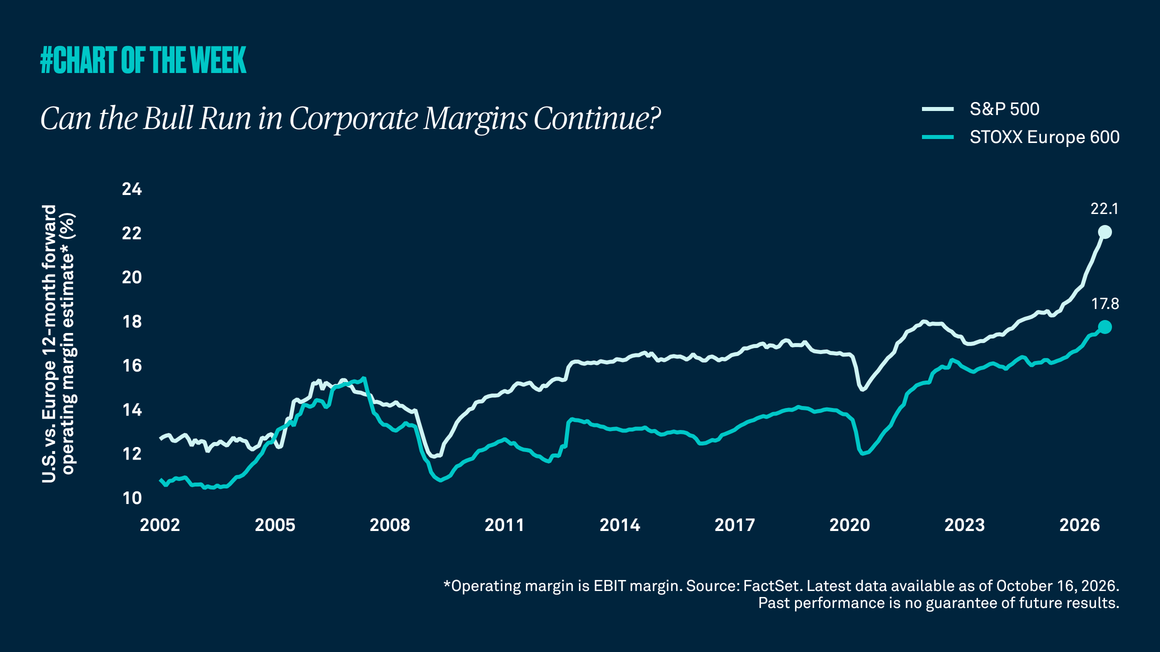
Higher inflation and elevated interest rates typically weigh on corporate profitability, yet corporate margins continue to climb to record highs. While that strength is evident both in the U.S. and abroad, U.S. outperformance versus Europe is now the widest on record. Stronger margins have helped contribute to better-than-expected earnings and reinforce U.S. equity leadership. The question now is whether that strength can persist?
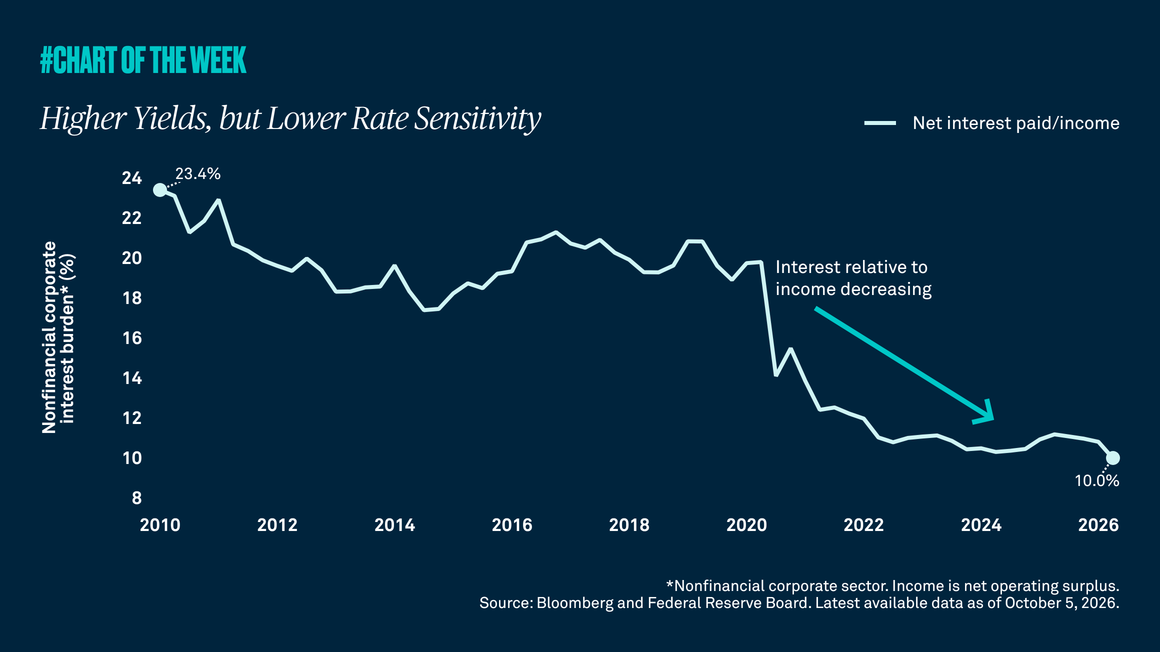
Higher interest rates have become a frequently cited risk to corporate earnings and the economy. The conventional thinking is straightforward: when borrowing costs rise, companies face higher interest expenses, profits come under pressure, and economic growth slows. While there is truth to that relationship, the current cycle may differ from investors’ expectations.
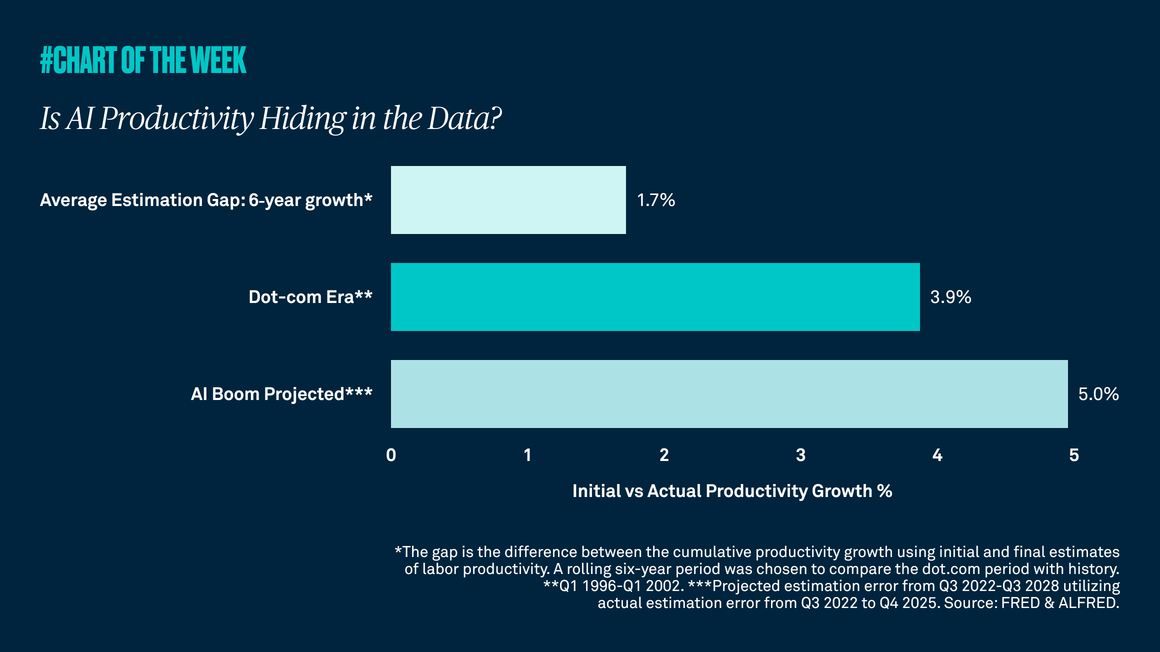
Both the dot-com era and the rise of artificial intelligence suggest that early productivity data can understate the actual economic impact of transformative technologies. In the case of the internet, later revisions to productivity gains surpassed early estimates. The same may prove true for AI, implying stronger support for growth.
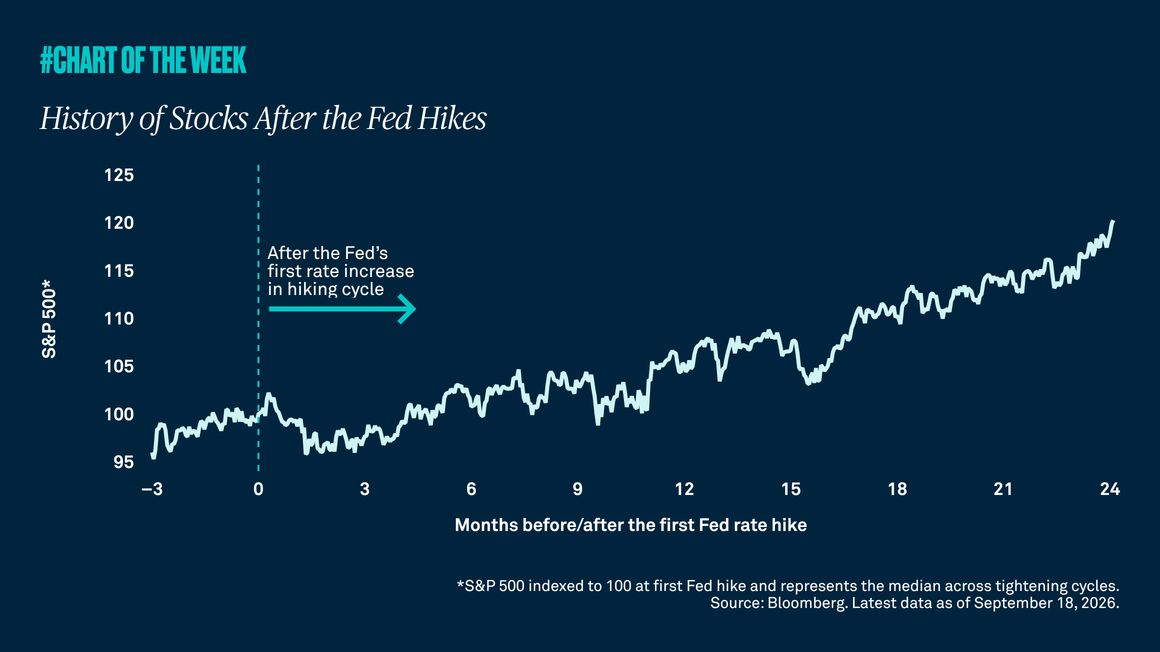
History of stocks after the Fed hikes
History of stocks after the fed hikes
Sticky inflation and resilient growth have revived monetary tightening, increasing the risk of higher-for-longer rates and near-term volatility. We continue to believe economic resilience and strong corporate profits should continue to provide a favorable backdrop for stocks, and would use periods of market weakness to add selectively to equities. Additionally, owning real assets can help hedge against inflation.
