Is the market rally broadening?
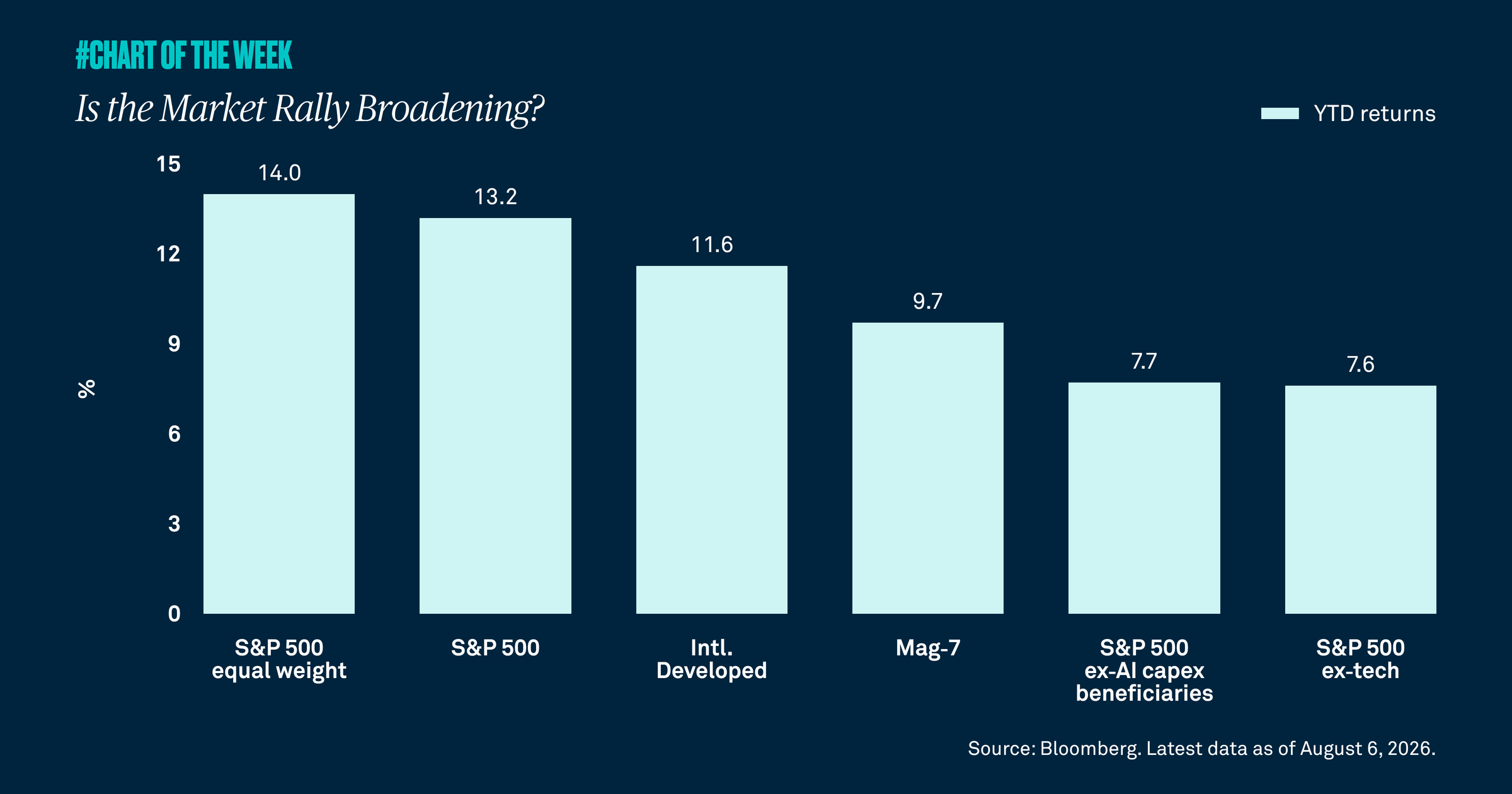
Stocks, as measured by the S&P 500, are up over 13% through early August. The solid gains have been fueled by a resilient economy, steady consumer spending, optimism around artificial intelligence and better-than-expected earnings growth. Still, some investors worry the advance may be too concentrated in technology and that AI-capex monetization may fall short of expectations. A closer look suggests that it is not just tech moving the market higher.
 3 mins Reading time
Published on 11 August 2026
3 mins Reading time
Published on 11 August 2026


With technology companies on track to deliver a roughly 50% earnings growth rate in 2026, it is not surprising that the sector has remained a major driver of market performance. However, market gains are not solely reliant on technology and AI-linked names. Excluding these, the S&P 500 is still posting solid gains of 8% year to date, which is a healthy sign and indicative of broader market strength.
A key measure of market breadth is the comparison between the market-cap weighted S&P 500 to the equal-weighted S&P 500. It may surprise some investors to learn that the equal-weighted S&P 500 index is modestly outperforming the S&P 500 so far this year, with a gain of 14% versus 13.2% through early August. This suggests sectors beyond technology and AI capex are contributing to moving the market higher.
Another way to evaluate whether the market is broadening is to look at how many stocks are trading above their recent trend. Currently, about 72% of S&P 500 companies are trading above their 200-day moving average. That is the highest level since December 2024.
Collectively, these measures suggest that breadth is improving – a constructive sign for the forward outlook.
984441 Exp : 11 August 2027
YOU MIGHT ALSO LIKE
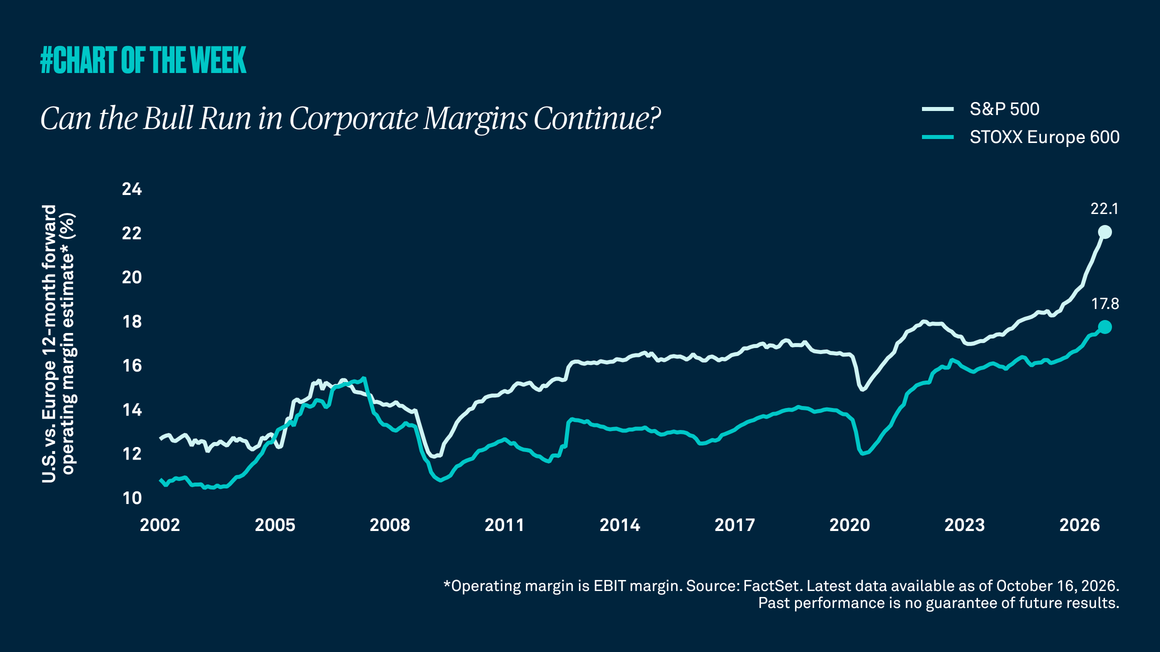
Higher inflation and elevated interest rates typically weigh on corporate profitability, yet corporate margins continue to climb to record highs. While that strength is evident both in the U.S. and abroad, U.S. outperformance versus Europe is now the widest on record. Stronger margins have helped contribute to better-than-expected earnings and reinforce U.S. equity leadership. The question now is whether that strength can persist?
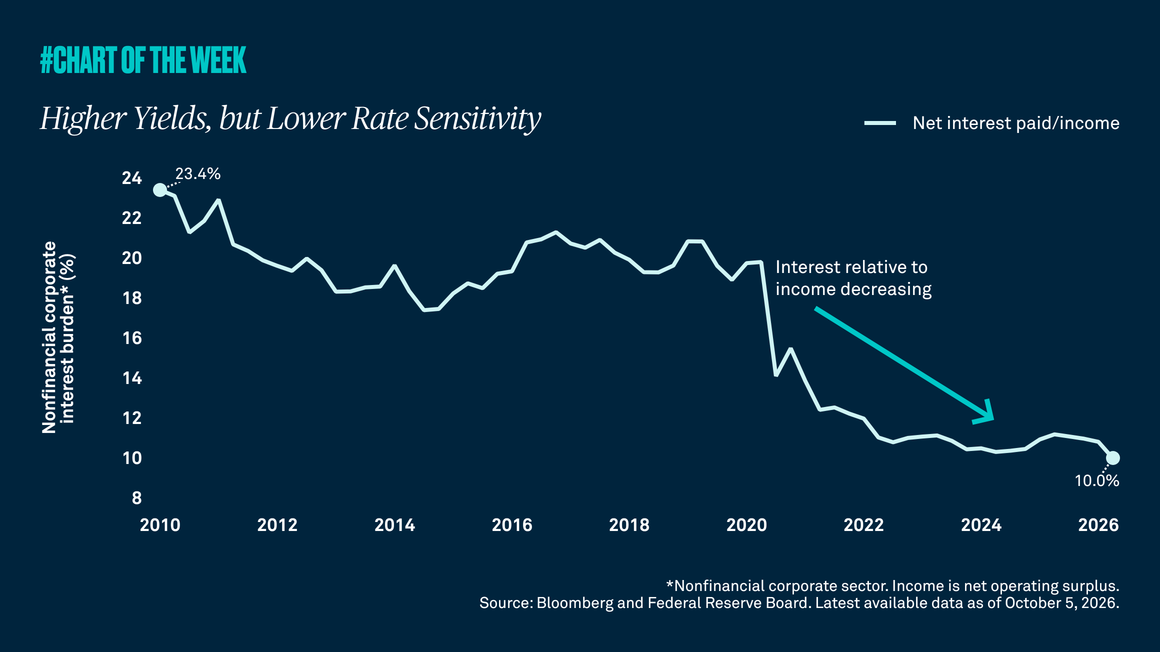
Higher interest rates have become a frequently cited risk to corporate earnings and the economy. The conventional thinking is straightforward: when borrowing costs rise, companies face higher interest expenses, profits come under pressure, and economic growth slows. While there is truth to that relationship, the current cycle may differ from investors’ expectations.
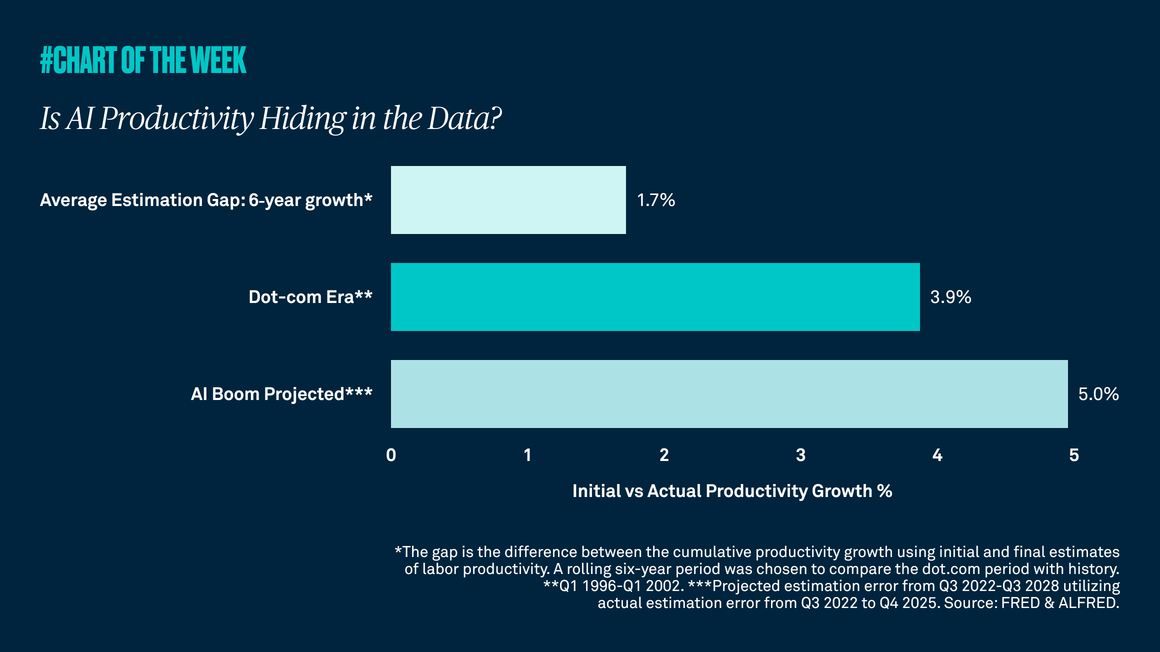
Both the dot-com era and the rise of artificial intelligence suggest that early productivity data can understate the actual economic impact of transformative technologies. In the case of the internet, later revisions to productivity gains surpassed early estimates. The same may prove true for AI, implying stronger support for growth.
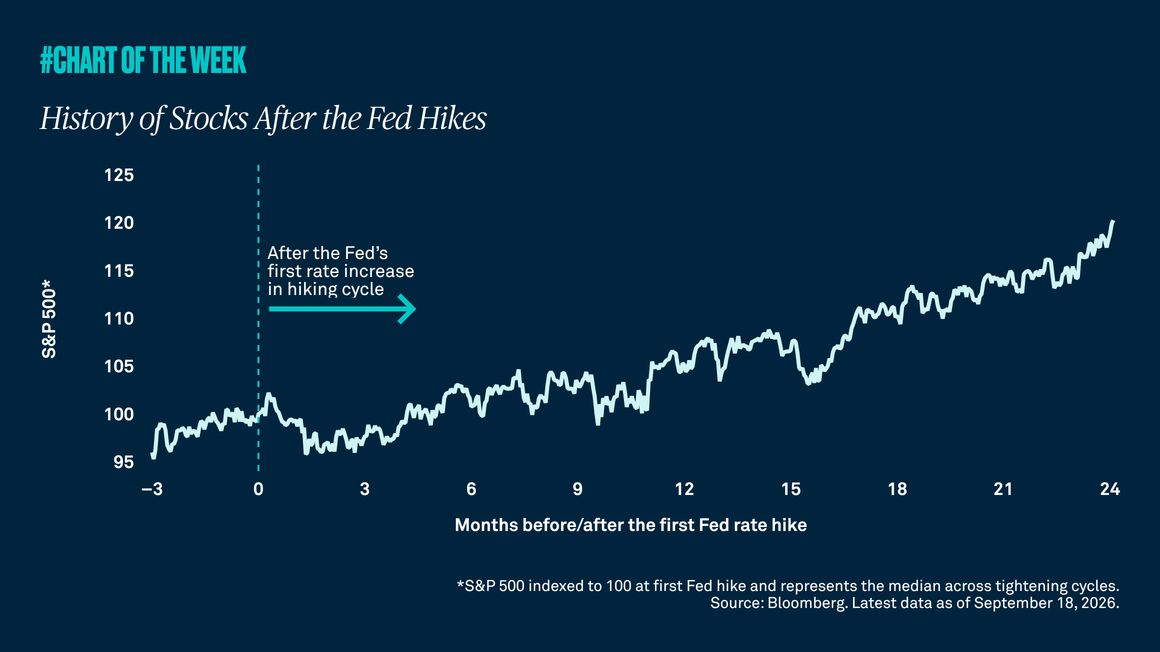
History of stocks after the Fed hikes
History of stocks after the fed hikes
Sticky inflation and resilient growth have revived monetary tightening, increasing the risk of higher-for-longer rates and near-term volatility. We continue to believe economic resilience and strong corporate profits should continue to provide a favorable backdrop for stocks, and would use periods of market weakness to add selectively to equities. Additionally, owning real assets can help hedge against inflation.
