Fed friction?
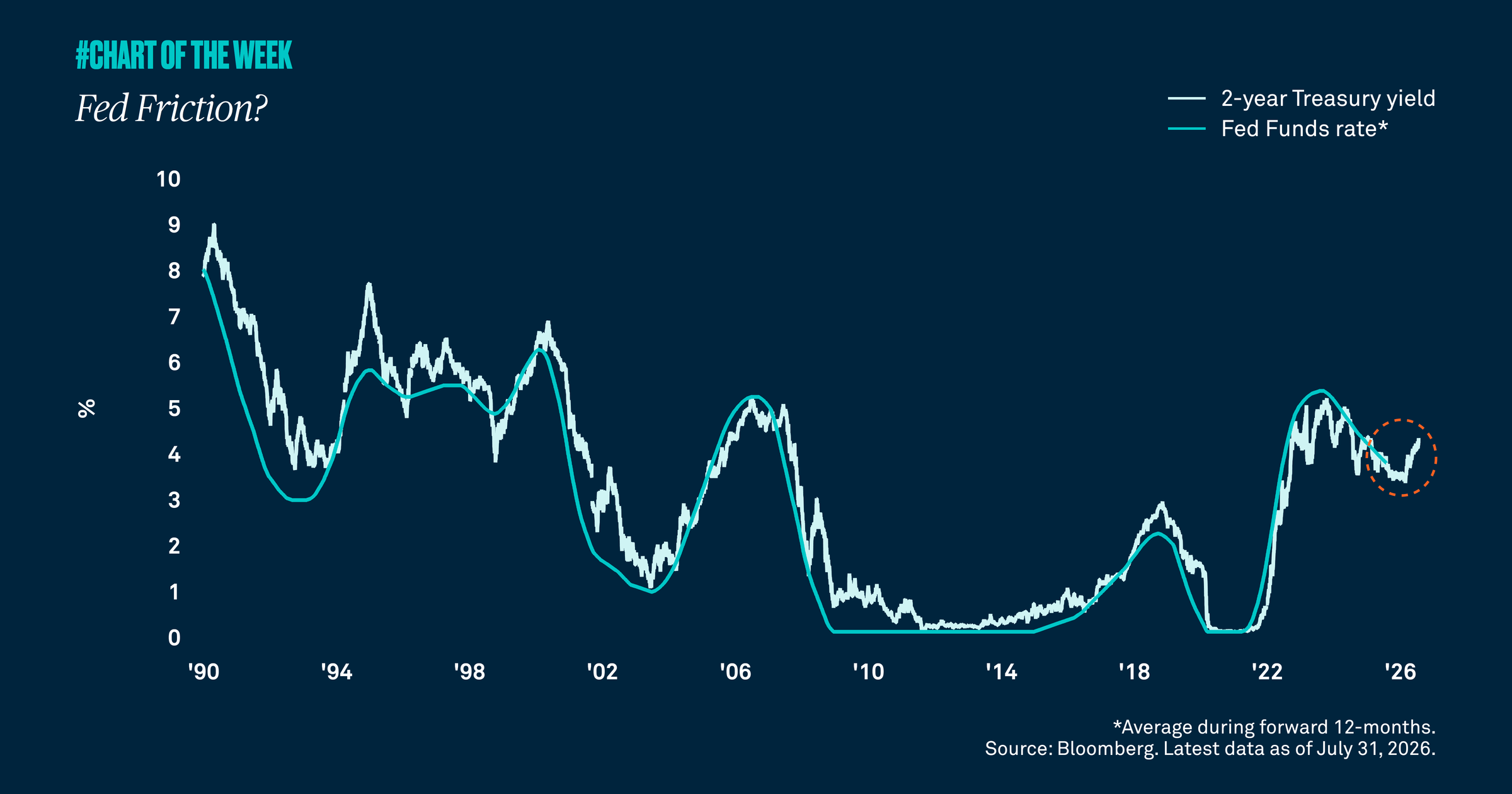
Markets are navigating tensions between a Fed that offers less guidance and an inflation backdrop that remains sticky. Added uncertainty from Middle East tensions and energy-price swings is further shaping sentiment, with recent moves in Treasury yields suggesting the market wants the Fed to hike. However, with yield volatility expected to linger in the near term, we see today’s elevated Treasury yields as an especially compelling opportunity in fixed income.
 3 mins Reading time
Published on 04 August 2026
3 mins Reading time
Published on 04 August 2026


Renewed tensions in the Middle East, volatile energy prices, and still-resilient U.S. growth would be enough to unsettle fixed income markets. Last week only added to that unease: the Federal Open Market Committee left the fed funds rate unchanged, and Chair Kevin Warsh followed through on the less transparent approach to forward guidance he had signaled, deepening uncertainty around the path of policy ahead.
The market continues to expect the central bank to hike by year end, although near-term expectations came down slightly after the meeting. Futures still imply meaningful odds of additional tightening by year end, and based on history, recent moves in the two-year Treasury yield suggest that investors see Fed action as plausible.
Still, the Fed has made clear that its next move will hinge on inflation, and June core inflation data were somewhat softer, indicating some progress even if price levels remain above target.
This week began with renewed U.S.-Iran talks, which helped push yields lower as oil prices retreated and some energy-driven inflation fears eased. But with bond volatility still high and several Treasury yields recently touching year-to-date highs, we continue to view current yield levels as attractive entry points. We expect the Fed to stay patient and data-dependent for longer than investors seem to currently anticipate, which in our view, underscores the opportunity in today’s yields.
980571 Exp : 04 August 2027
YOU MIGHT ALSO LIKE
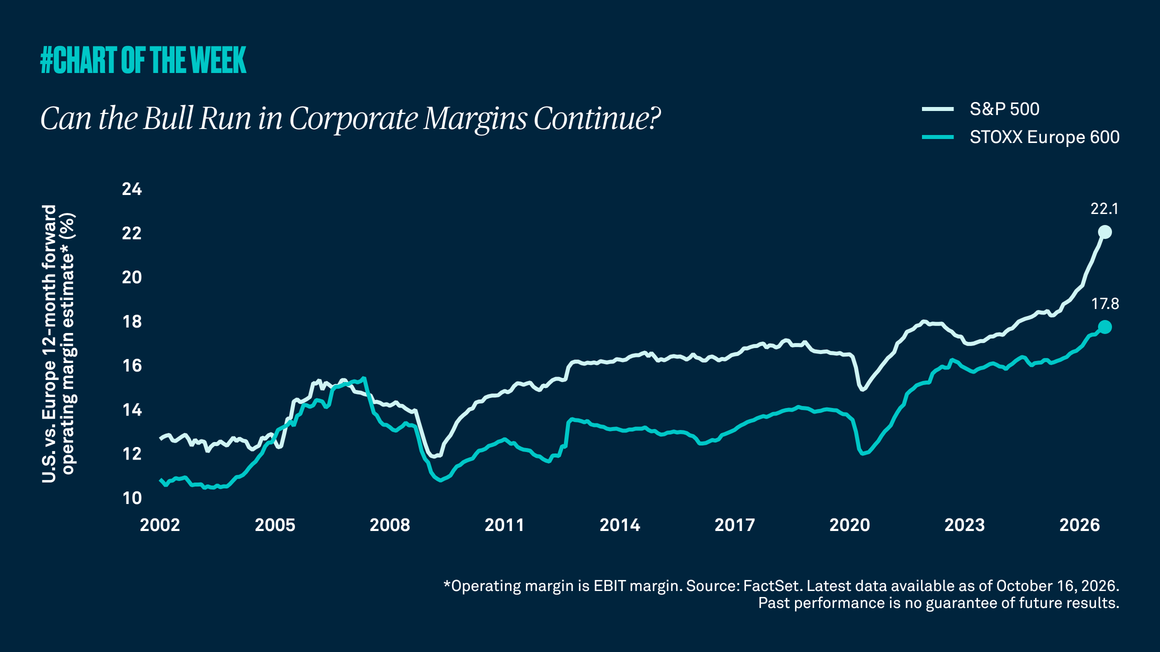
Higher inflation and elevated interest rates typically weigh on corporate profitability, yet corporate margins continue to climb to record highs. While that strength is evident both in the U.S. and abroad, U.S. outperformance versus Europe is now the widest on record. Stronger margins have helped contribute to better-than-expected earnings and reinforce U.S. equity leadership. The question now is whether that strength can persist?
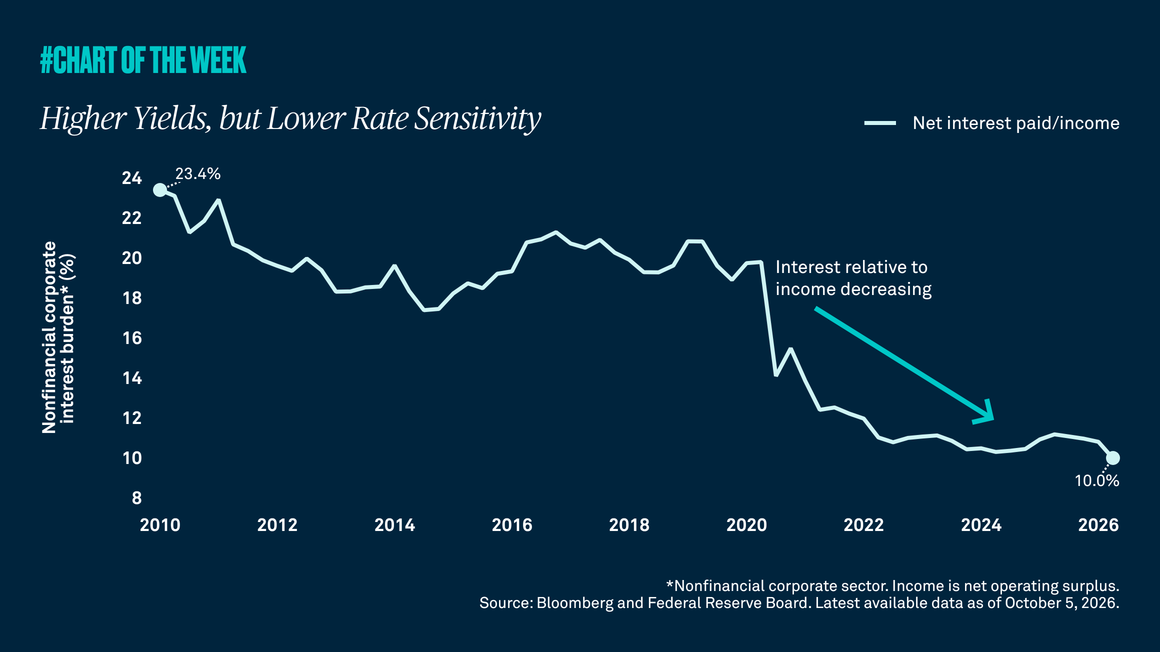
Higher interest rates have become a frequently cited risk to corporate earnings and the economy. The conventional thinking is straightforward: when borrowing costs rise, companies face higher interest expenses, profits come under pressure, and economic growth slows. While there is truth to that relationship, the current cycle may differ from investors’ expectations.
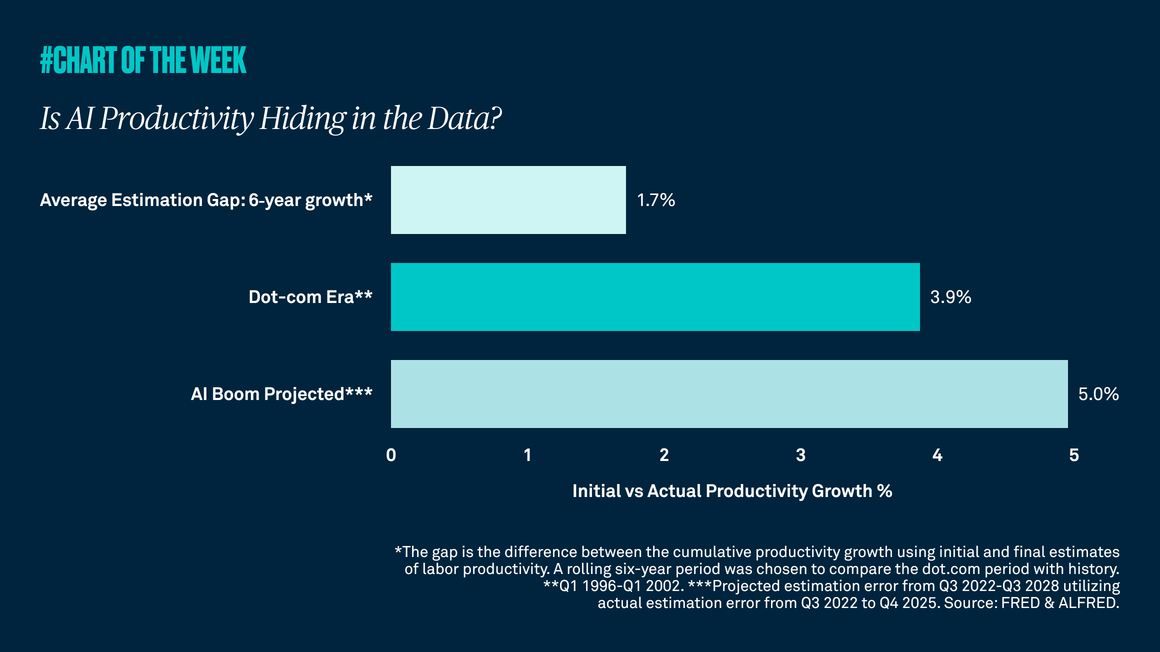
Both the dot-com era and the rise of artificial intelligence suggest that early productivity data can understate the actual economic impact of transformative technologies. In the case of the internet, later revisions to productivity gains surpassed early estimates. The same may prove true for AI, implying stronger support for growth.
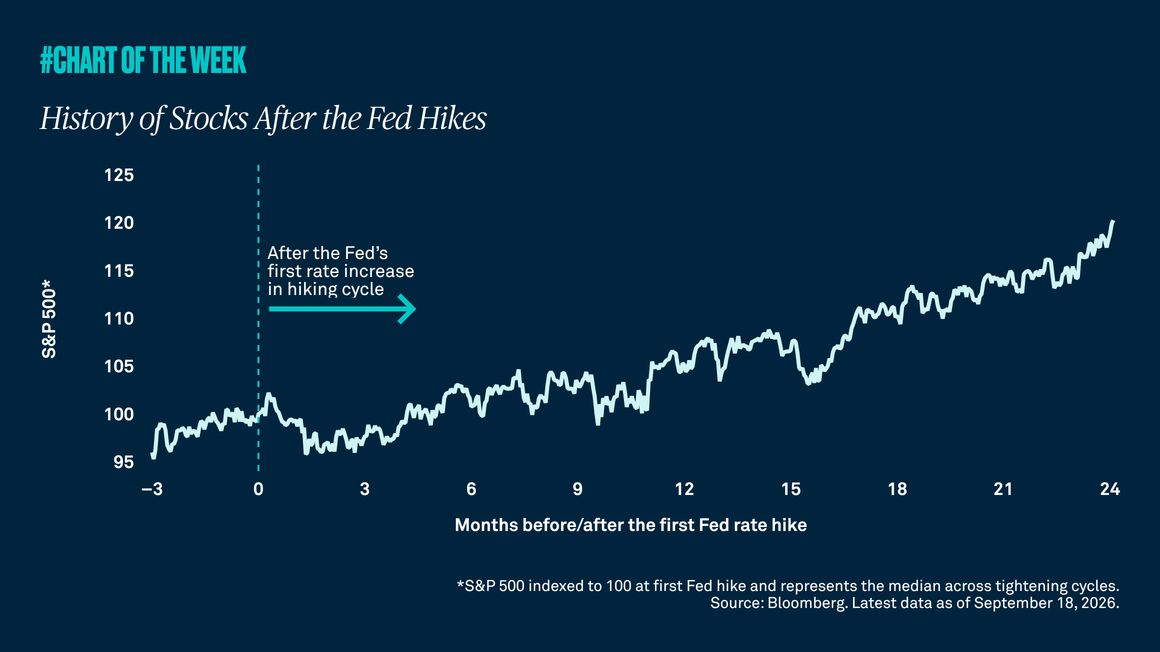
History of stocks after the Fed hikes
History of stocks after the fed hikes
Sticky inflation and resilient growth have revived monetary tightening, increasing the risk of higher-for-longer rates and near-term volatility. We continue to believe economic resilience and strong corporate profits should continue to provide a favorable backdrop for stocks, and would use periods of market weakness to add selectively to equities. Additionally, owning real assets can help hedge against inflation.
