Retail sales remain resilient
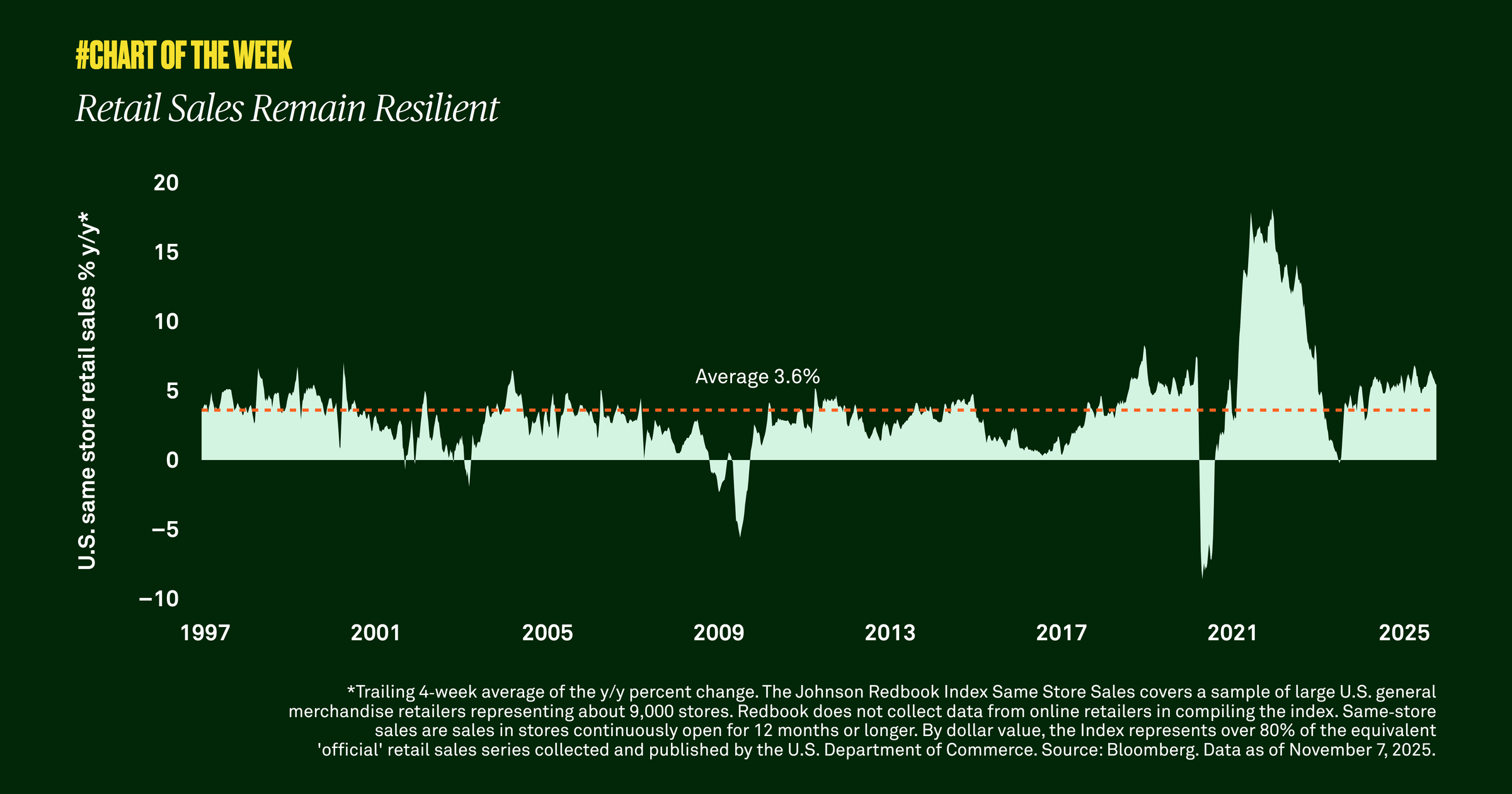
Considering the slowing job market, we dove into retail sales data to search for signs of the direction of household spending. We analyzed existing-store sales and found that, despite the softening labor market and concerns about growth, aggregate consumer spending remains resilient.
 3 mins Reading time
Published on 11 November 2025
3 mins Reading time
Published on 11 November 2025


In the wake of the government shutdown, investors have been turning to alternate sources of data in the private domain. Last week, a private outplacement firm announced that October layoffs were higher than many anticipated, raising concerns that growth could slow. With that in mind, we dove into retail sales data to search for signs of a consumer slowdown; after all, consumption comprises 70% of gross domestic product (GDP), and a softening labor market could potentially subdue spending.
We found that the consumer’s shopping habits remain resilient. Same store retail sales, which measure in-store sales for existing stores, grew 5.7% year over year in October — 2% above the historical average going back to 1997.
In our view, retail sales will continue to be an important barometer of consumer health. While there have been differences in spending by income cohort, thus far total spending has remained resilient, In addition, next year households will enjoy some relief when the Federal Reserve’s easing results in lower borrowing costs. They can also expect stimulus of an estimated $160 billion in additional tax refunds compared to 2025. We believe consumption should continue to support positive economic growth this year and next.
837753 Exp : 11 November 2026
YOU MIGHT ALSO LIKE
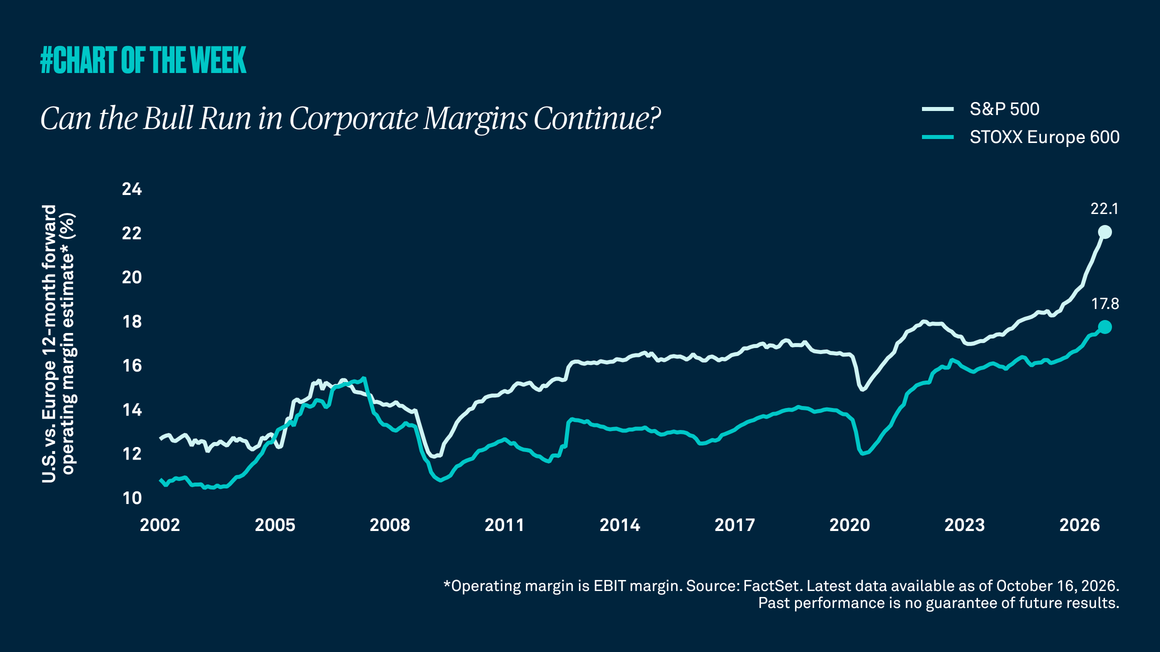
Higher inflation and elevated interest rates typically weigh on corporate profitability, yet corporate margins continue to climb to record highs. While that strength is evident both in the U.S. and abroad, U.S. outperformance versus Europe is now the widest on record. Stronger margins have helped contribute to better-than-expected earnings and reinforce U.S. equity leadership. The question now is whether that strength can persist?
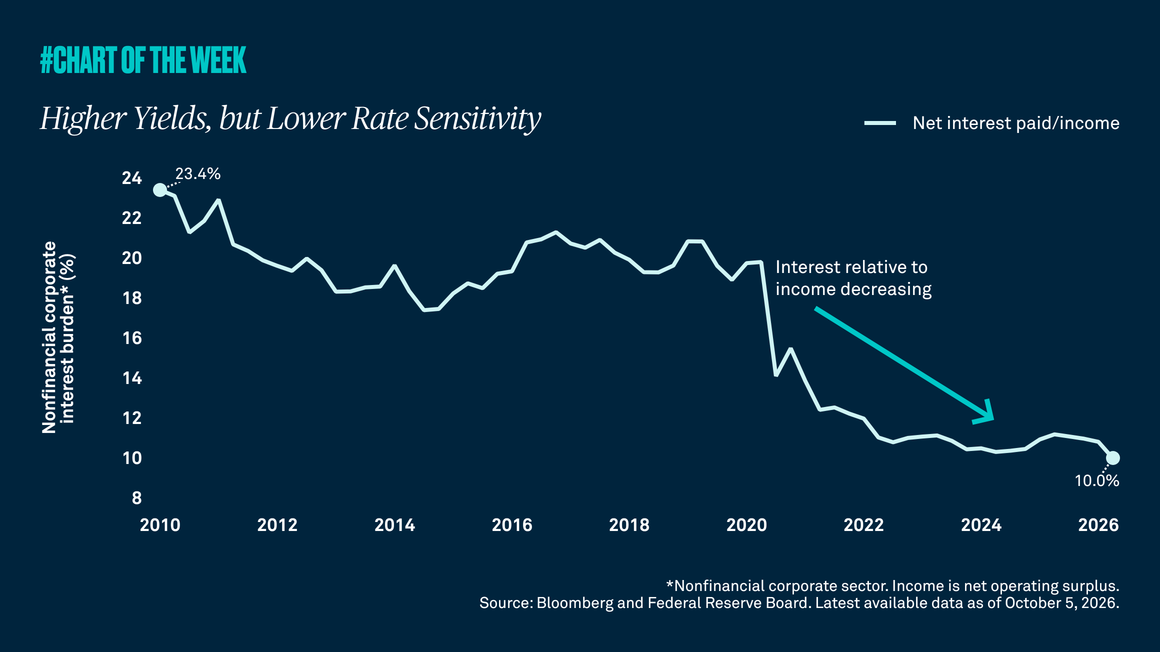
Higher interest rates have become a frequently cited risk to corporate earnings and the economy. The conventional thinking is straightforward: when borrowing costs rise, companies face higher interest expenses, profits come under pressure, and economic growth slows. While there is truth to that relationship, the current cycle may differ from investors’ expectations.
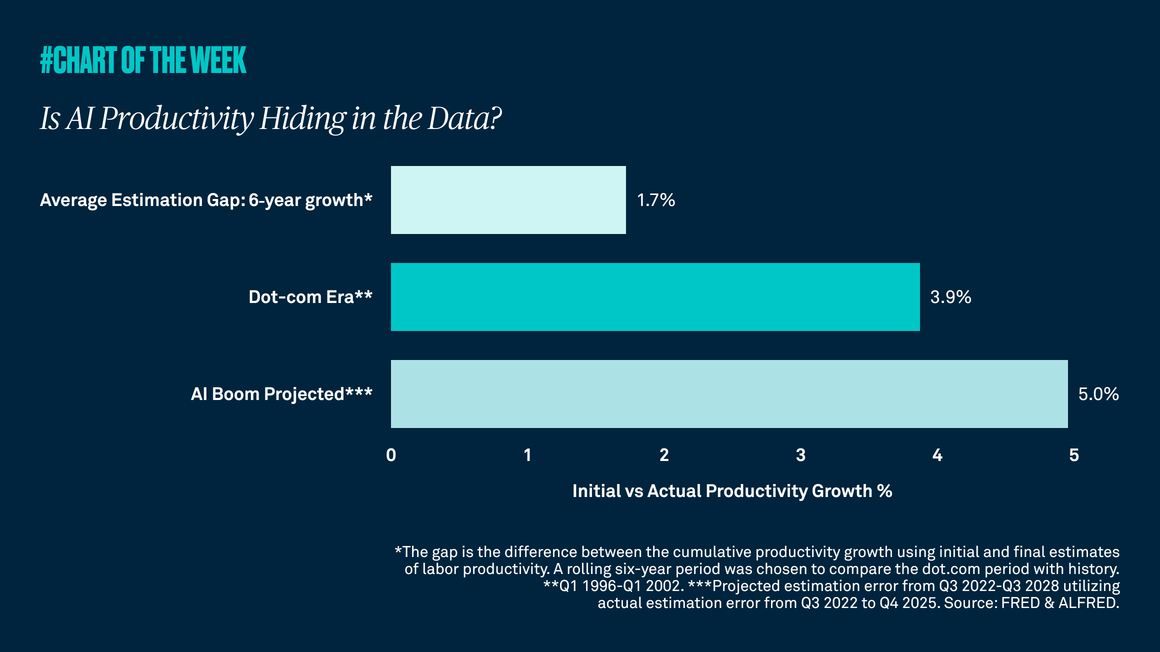
Both the dot-com era and the rise of artificial intelligence suggest that early productivity data can understate the actual economic impact of transformative technologies. In the case of the internet, later revisions to productivity gains surpassed early estimates. The same may prove true for AI, implying stronger support for growth.
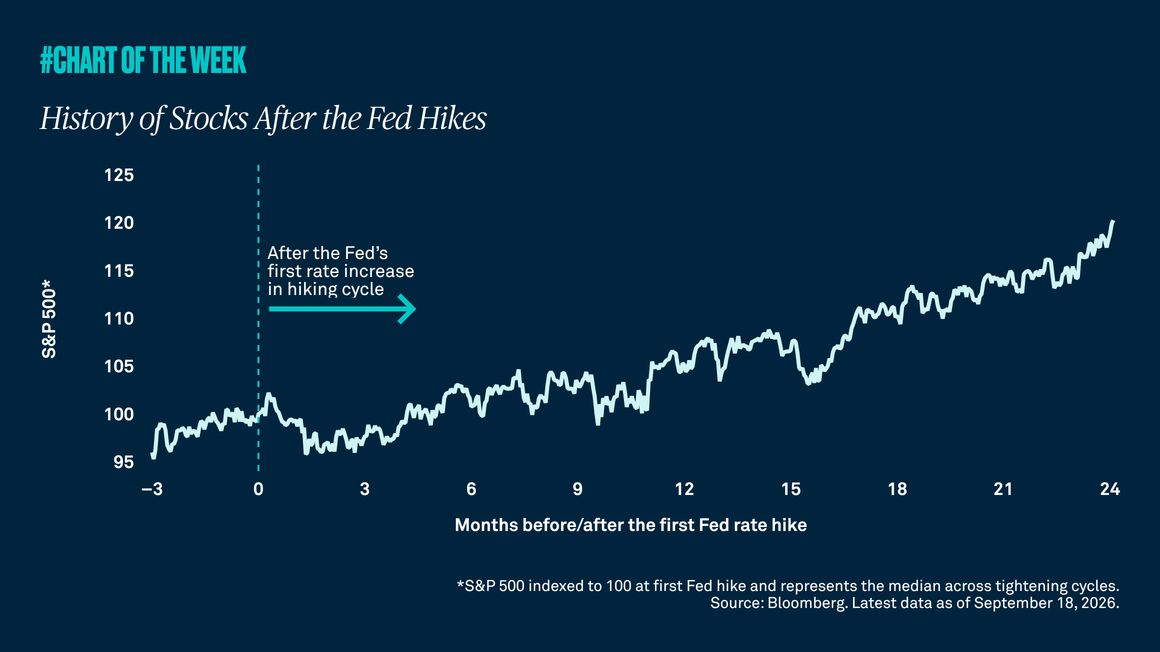
History of stocks after the Fed hikes
History of stocks after the fed hikes
Sticky inflation and resilient growth have revived monetary tightening, increasing the risk of higher-for-longer rates and near-term volatility. We continue to believe economic resilience and strong corporate profits should continue to provide a favorable backdrop for stocks, and would use periods of market weakness to add selectively to equities. Additionally, owning real assets can help hedge against inflation.
