Contained contagion?
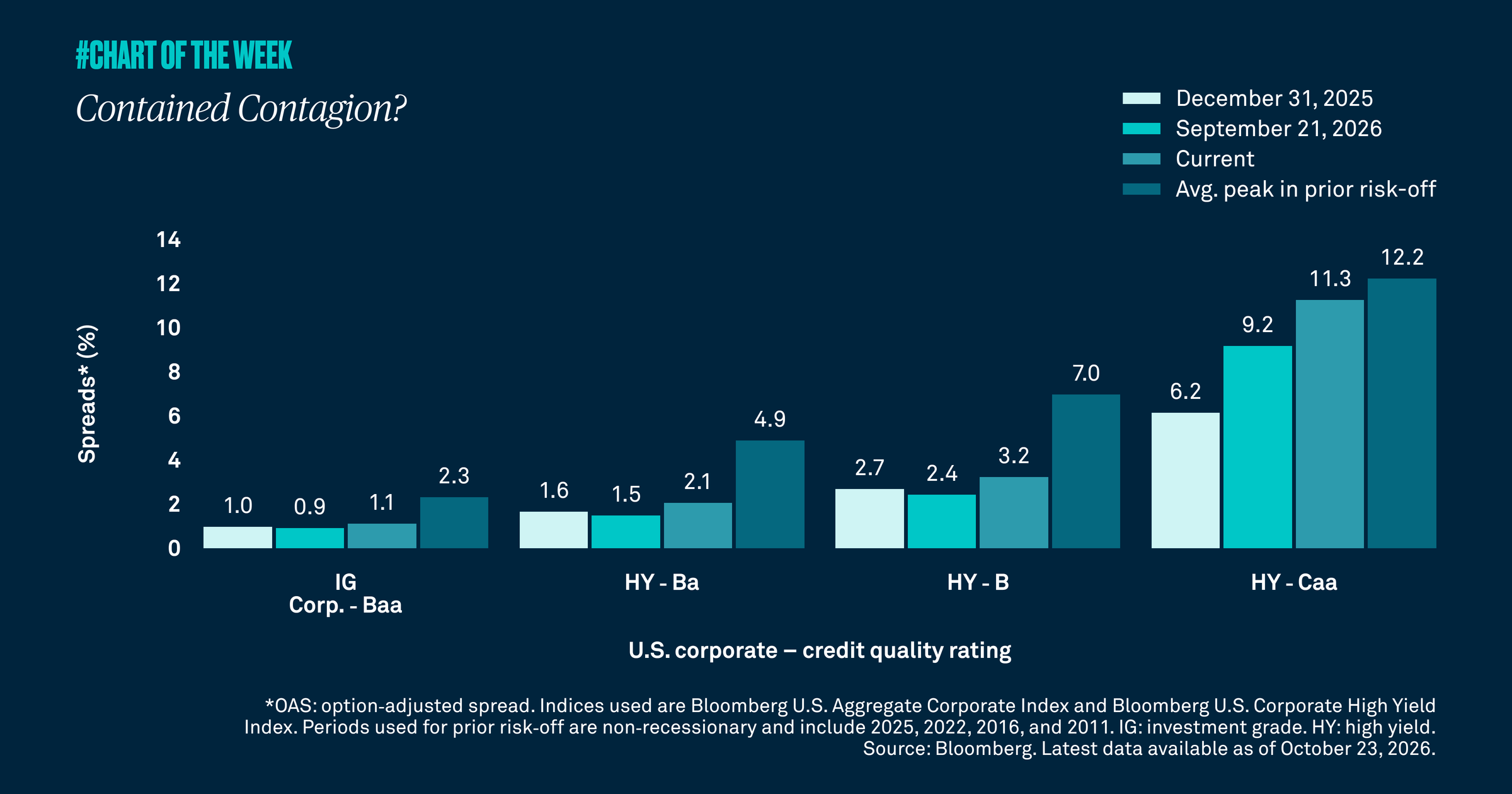
U.S. high yield credit spreads have widened year to date, reflecting greater investor caution about perceived default risk. The move also raises concerns about possible credit contagion. However, because spread widening has been concentrated in the lowest-quality issuers rather than higher-quality issuers, we don’t anticipate broader market stress.
 3 mins Reading time
Published on 27 October 2026


When high yield credit spreads widen, it signals that investors are demanding greater compensation to hold riskier corporate debt. That typically reflects rising concern about higher default risk or a weaker economic outlook. As stress builds in credit markets, financial conditions also tend to tighten.
In the U.S., high yield spreads have widened notably year to date, raising concern among some investors about the potential for credit contagion — when stress in one segment of the market spreads more broadly and fuels risk aversion across asset classes.
So far, however, the widening has been concentrated largely among the lowest-quality issuers. Spreads for higher-quality companies also remain well below the levels seen in prior risk-off periods. That suggests investors are repricing risk at the weakest end of the market rather than signaling systemic stress across the broader economy or credit system.
In our view, the market is differentiating between fragile borrowers and fundamentally stronger issuers, a sign of normal credit discipline, not broad contagion. We therefore remain constructive on the U.S. economic outlook, while continuing to monitor whether stress begins to spread to higher-quality issuers.
1027720 Exp : 27 October 2027
YOU MIGHT ALSO LIKE
Play the long game
Play the Long Game
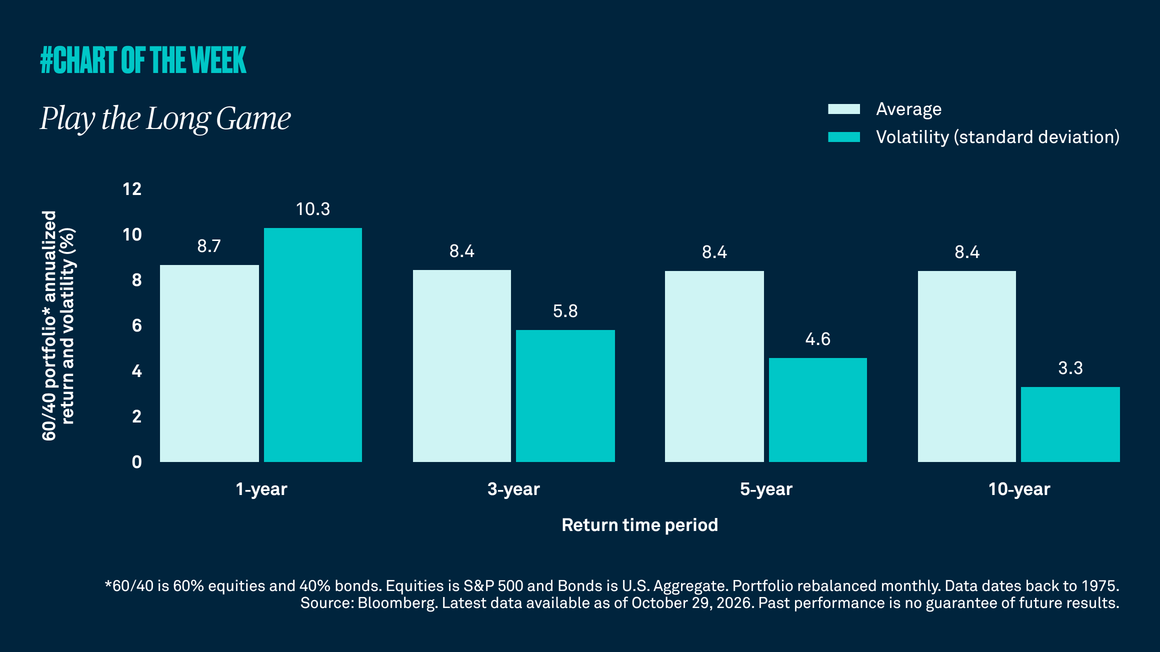
When it comes to investing, time matters. While headlines and short-term perspectives can lead investors to try and time the market, investors have historically been rewarded by playing the long game. Rather than overreacting to market noise, investing over longer time periods can help smooth the ride without sacrificing returns. The lesson: stay diversified and invested for the long term.
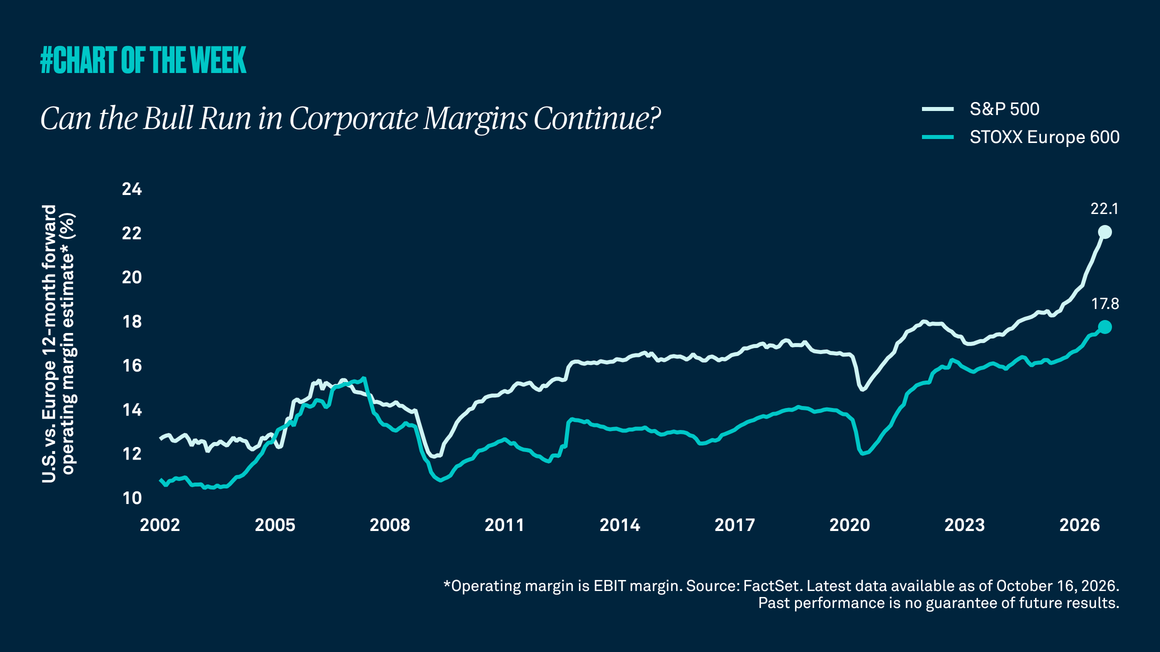
Higher inflation and elevated interest rates typically weigh on corporate profitability, yet corporate margins continue to climb to record highs. While that strength is evident both in the U.S. and abroad, U.S. outperformance versus Europe is now the widest on record. Stronger margins have helped contribute to better-than-expected earnings and reinforce U.S. equity leadership. The question now is whether that strength can persist?
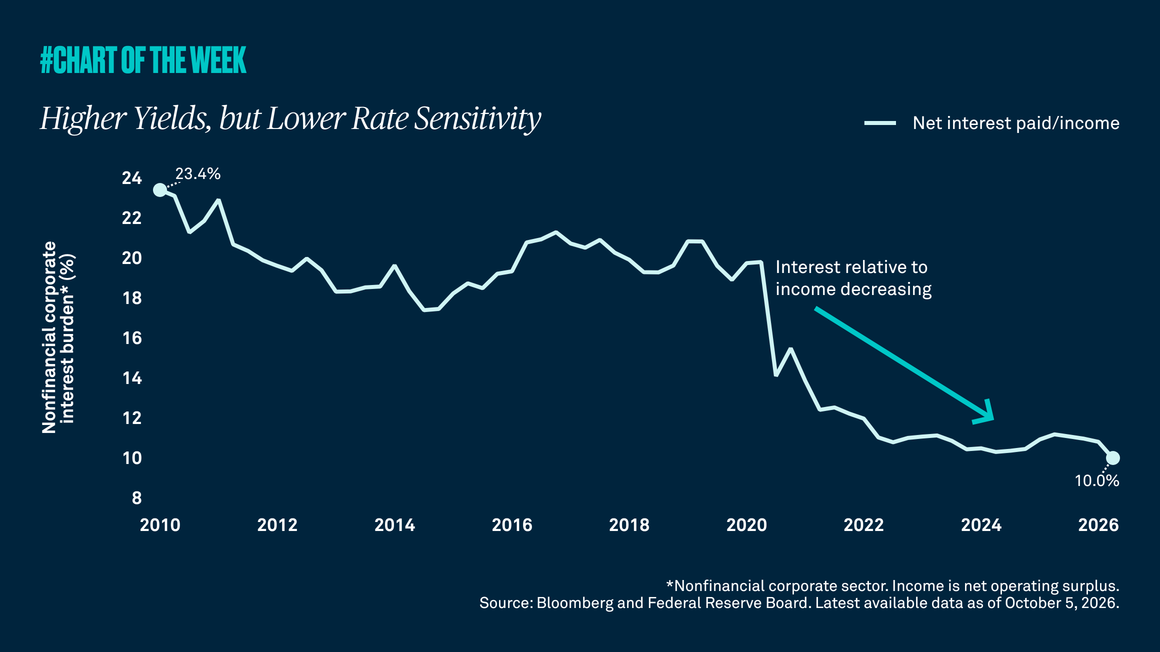
Higher interest rates have become a frequently cited risk to corporate earnings and the economy. The conventional thinking is straightforward: when borrowing costs rise, companies face higher interest expenses, profits come under pressure, and economic growth slows. While there is truth to that relationship, the current cycle may differ from investors’ expectations.
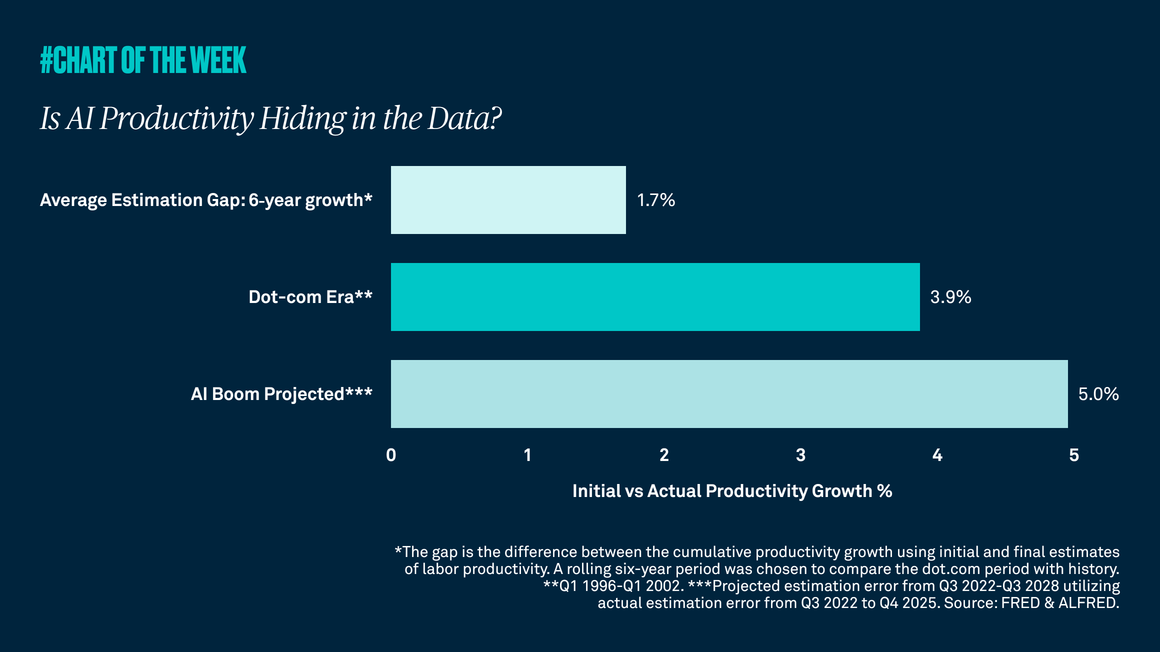
Both the dot-com era and the rise of artificial intelligence suggest that early productivity data can understate the actual economic impact of transformative technologies. In the case of the internet, later revisions to productivity gains surpassed early estimates. The same may prove true for AI, implying stronger support for growth.
