A broader foundation for earnings growth
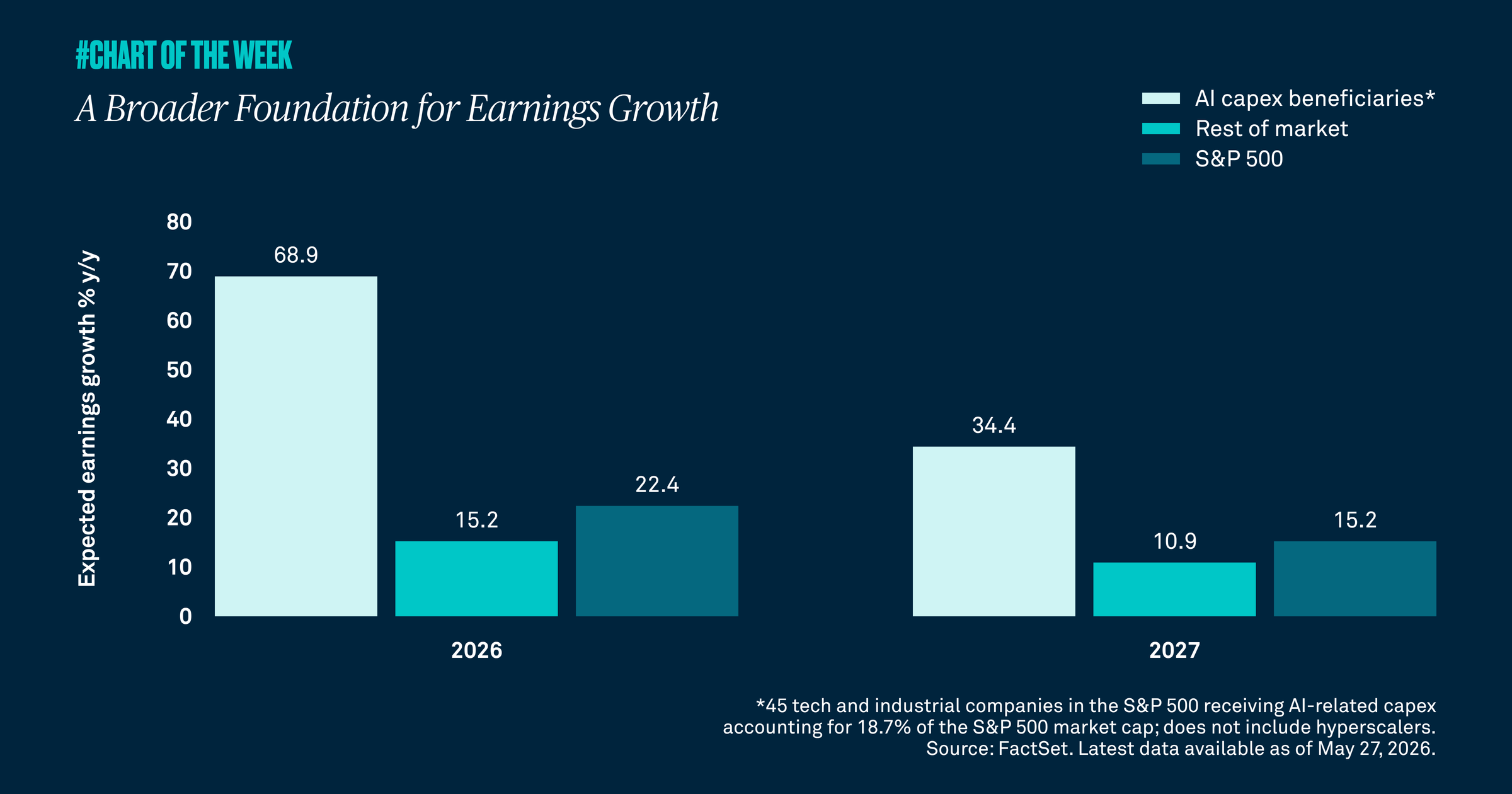
Although companies benefiting most directly from AI-related capital spending are the main drivers of higher earnings, strength is no longer confined to that group. Earnings across the broader market remain solid and are expected to grow more than 10% this year and next, suggesting the risk of concentrated market leadership may not be founded.
 3 mins Reading time
Published on 02 June 2026


First-quarter earnings were better than expected, with attention now shifting to full-year expectations. Consensus forecasts now call for S&P 500 earnings growth of 22% in 2026 and 15% in 2027. That optimism is partially rooted in companies most directly benefiting from AI-related capital spending. This group is expected to deliver earnings growth of about 70% this year and 34% next year, which raises the issue of whether a narrow set of stocks is responsible for the acceleration in earnings growth and much of the S&P 500’s year-to-date advance.
There is some truth there; however, that question does not capture the full picture. First-quarter results have come in stronger than expected, with S&P 500 earnings growth at about 29% and 85% of companies beating estimates. More importantly, earnings growth outside the top AI capital expenditure beneficiaries remains solid. That broader segment of the market is still expected to grow earnings by 15% this year and 11% next year — both above the roughly 10% average annualized growth rate for overall S&P 500 earnings since 2010.
While continued AI capex is likely in the near term, we view a market driven by broader earnings as more sustainable. Volatility could pick up near term given higher inflation and yields along with uncertainty surrounding the new Federal Reserve chair. Still, improving earnings with breadth keep us constructive on the future outlook.
946582 Exp : 02 June 2027
YOU MIGHT ALSO LIKE
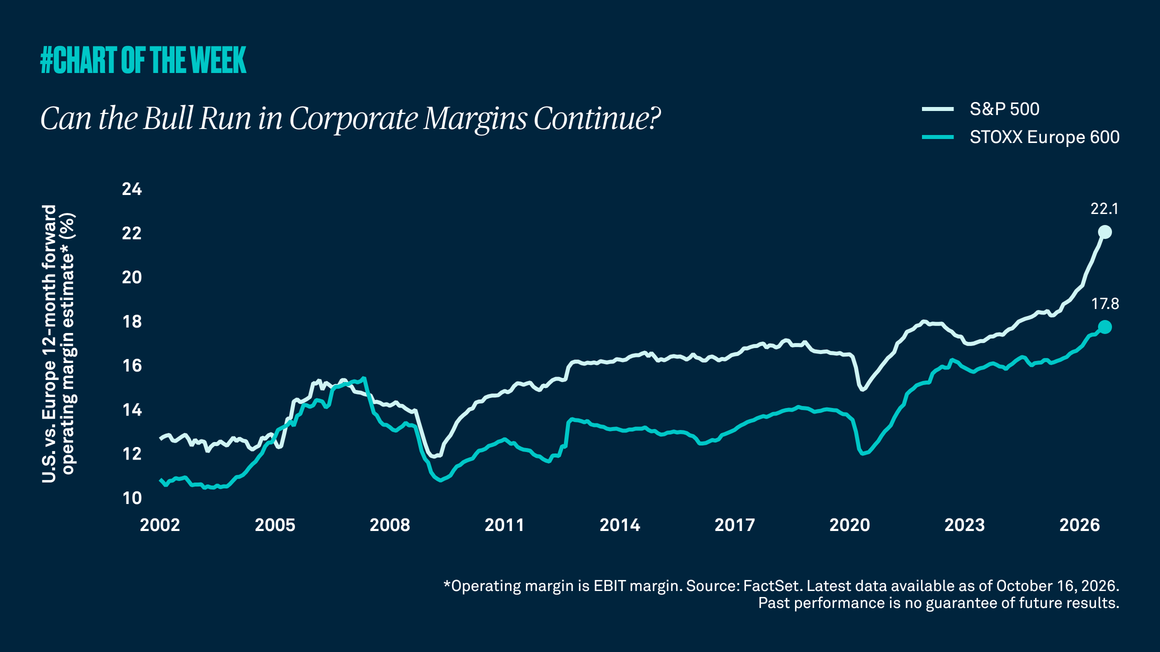
Higher inflation and elevated interest rates typically weigh on corporate profitability, yet corporate margins continue to climb to record highs. While that strength is evident both in the U.S. and abroad, U.S. outperformance versus Europe is now the widest on record. Stronger margins have helped contribute to better-than-expected earnings and reinforce U.S. equity leadership. The question now is whether that strength can persist?
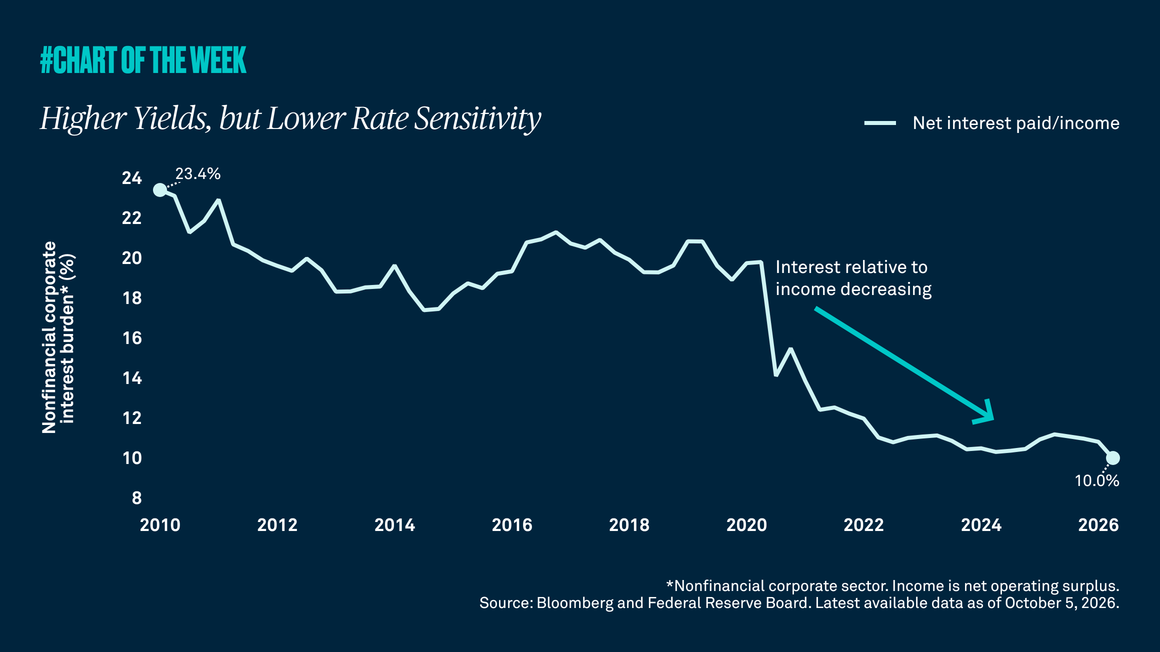
Higher interest rates have become a frequently cited risk to corporate earnings and the economy. The conventional thinking is straightforward: when borrowing costs rise, companies face higher interest expenses, profits come under pressure, and economic growth slows. While there is truth to that relationship, the current cycle may differ from investors’ expectations.
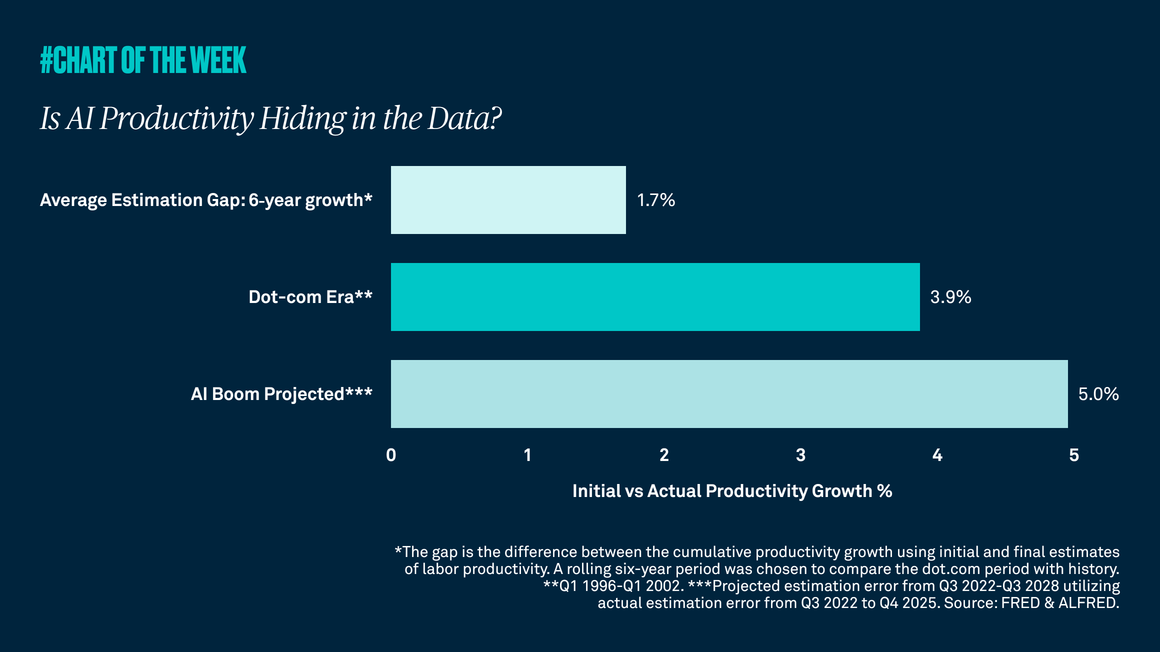
Both the dot-com era and the rise of artificial intelligence suggest that early productivity data can understate the actual economic impact of transformative technologies. In the case of the internet, later revisions to productivity gains surpassed early estimates. The same may prove true for AI, implying stronger support for growth.
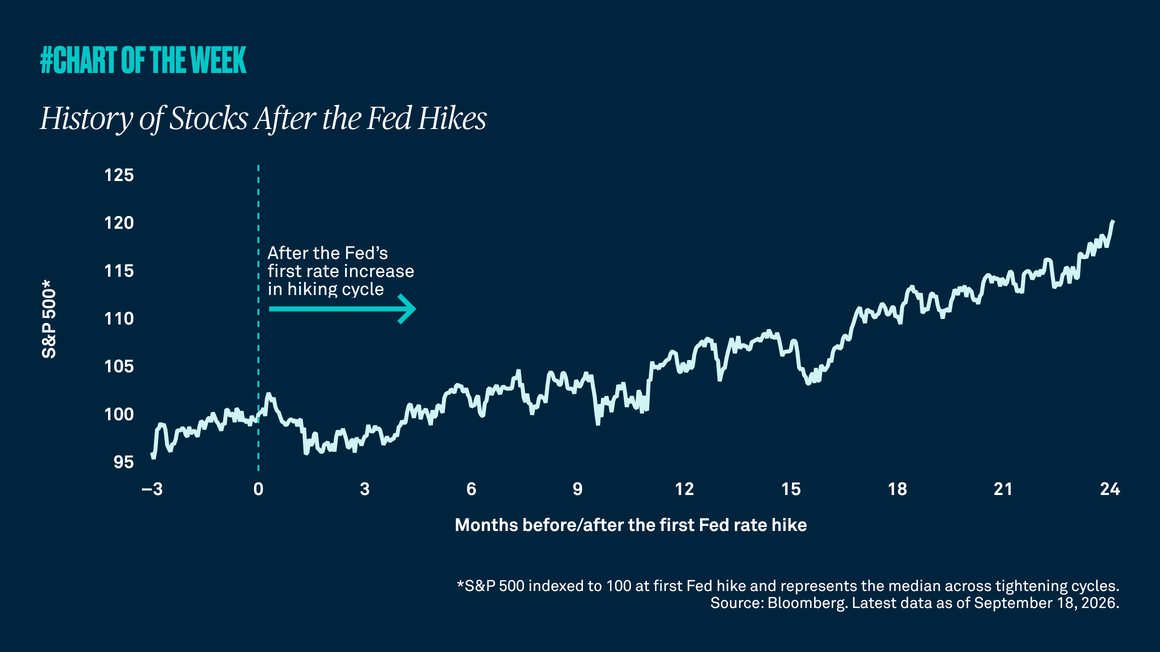
History of stocks after the Fed hikes
History of stocks after the fed hikes
Sticky inflation and resilient growth have revived monetary tightening, increasing the risk of higher-for-longer rates and near-term volatility. We continue to believe economic resilience and strong corporate profits should continue to provide a favorable backdrop for stocks, and would use periods of market weakness to add selectively to equities. Additionally, owning real assets can help hedge against inflation.
