
NEUSTE ARTIKEL
Alles ansehen

2026 Q4
Welcome to the Quarterly Investment Outlook. Formerly published as Vantage Point, the Quarterly Investment Outlook brings you the same forward-looking perspectives and investment insights in a more concise, easier-to-read format.

REPORT | MARKETS & ECONOMY
Powerful structural forces – AI‑driven innovation, infrastructure transformation, and shifting credit dynamics – are reshaping today’s investment landscape. We think investors require a more deliberate, adaptive approach to portfolio construction.

REPORT | MARKETS & ECONOMY
Our 10-Year Capital Market Assumptions look beyond cyclical fluctuations and focus on the structural forces poised to influence the decade ahead.
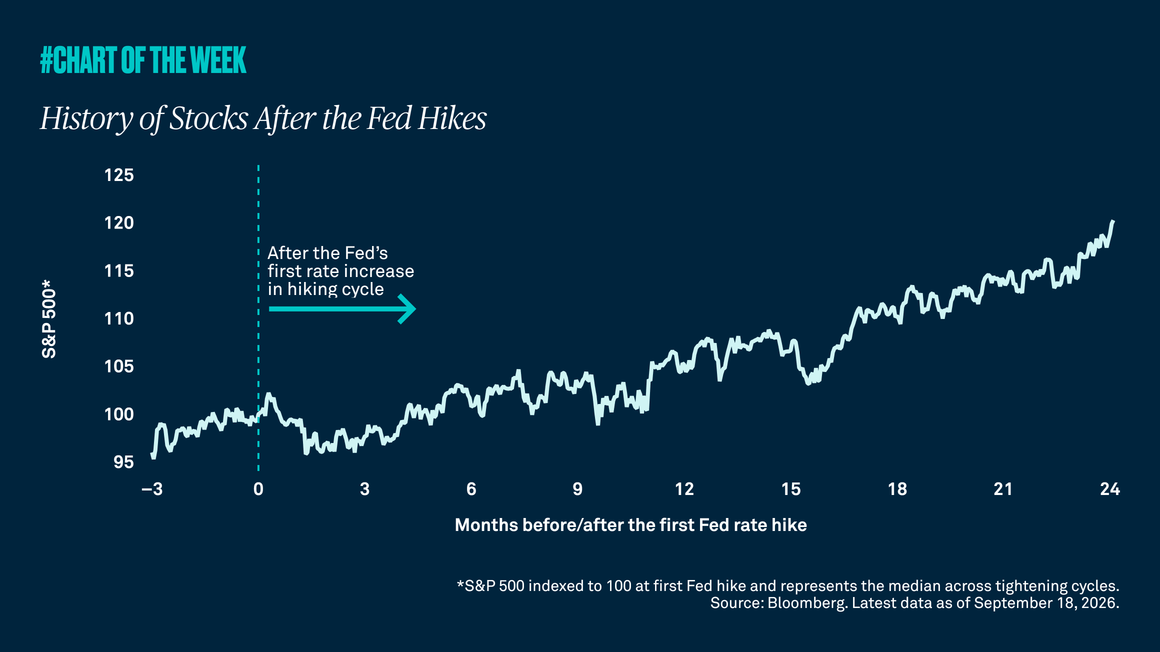
Chart of the Week |
Makroökonomisch
Sticky inflation and resilient growth have revived monetary tightening, increasing the risk of higher-for-longer rates and near-term volatility. We continue to believe economic resilience and strong corporate profits should continue to provide a favorable backdrop for stocks, and would use periods of market weakness to add selectively to equities. Additionally, owning real assets can help hedge against inflation.

Artikel |
Aktien
Value equities have historically shown resiliency during higher inflationary periods versus their growth counterparts. With inflation remaining elevated, we believe that value opportunities continue to be a compelling option for portfolio diversification and potential stability.
Artikel |
Makroökonomisch
The U.S. Federal Reserve’s (Fed) 25 basis point (bp) rate hike on September 16 marks the beginning of its effort to bring inflation back toward its 2% target. Under Chair Warsh, the Fed’s actions are now aligning with its hawkish rhetoric.

Artikel |
Anleihen
The forthcoming regulatory changes brought about by Solvency II reforms will create new opportunities for European insurers. The 2027 Solvency II reforms do more than reduce capital requirements for some asset classes; they also reduce some of the constraints that have prevented insurers from making certain investments for practical reasons.
INSIDE THE FUND MANAGER'S HEAD
Alles ansehen IFMH
BERICHT
Alles ansehen bericht
Berichte |
Makroökonomisch
Checkpoints is a comprehensive monthly chartbook highlighting major top-of-mind themes that could shape financial markets in the near term. In addition to the broader macroeconomic discussion, Checkpoints delivers detailed views on major asset classes, including global equities, fixed income and real assets.

Berichte |
Makroökonomisch
The U.S.’ extraction of President Maduro from Caracas on January 4 could alter the trajectory of geopolitics in the Americas.

Berichte |
Makroökonomisch
BNY's commitment to insight and perspectives comes to life through our investment and market leaders who gather quarterly to debate the key issues shaping markets today.
VIDEOS
Alles ansehen videos