
Please ensure Javascript is enabled for purposes of website accessibility

What Are the Top Estate Planning Worries of Ultra-Wealthy Families?

What Are the Top Estate Planning Worries of Ultra-Wealthy Families?

In 2025, the passage of the One Big Beautiful Bill Act (OBBBA) permanently increased the federal estate and gift tax exemption, providing greater legislative certainty and new opportunities to preserve wealth across generations. Yet estate planning for ultra-high-net-worth families continues to grow more complex. In BNY’s latest survey of estate planning and tax advisors conducted at the 60th Heckerling Institute on Estate Planning, advisors emphasized the increasing importance of technical expertise amid evolving planning strategies, as well as their clients’ most pressing concerns. The insights that follow highlight where advisors see the greatest planning opportunities and where ultra-high-net-worth clients are focusing their priorities in 2026.

What are the top two concerns expressed by your clients’ around wealth transfer planning heading into 2026?
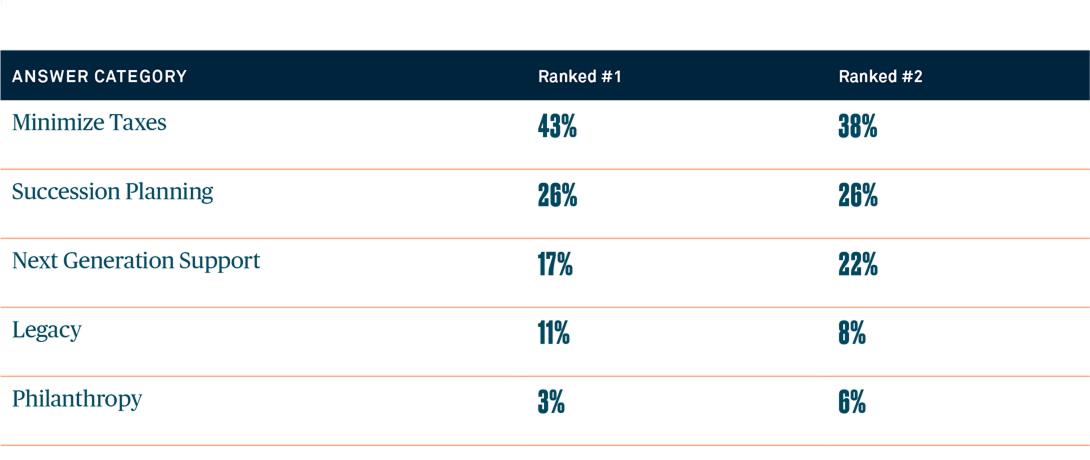
01estate-planning-concerns-in-2026

Those polled believe that tax optimization is the best way to support clients when it comes to making sure their estate plan is effective following passage of the OBBBA. Client education, legacy planning, estate plan administration and titling, and next-generation education are other ways to help ultra-wealthy families plan their estates to maximize benefits of the legislation.

Where do you think clients' need the most support in making sure their estate plan is effective following the passing of the OBBBA?
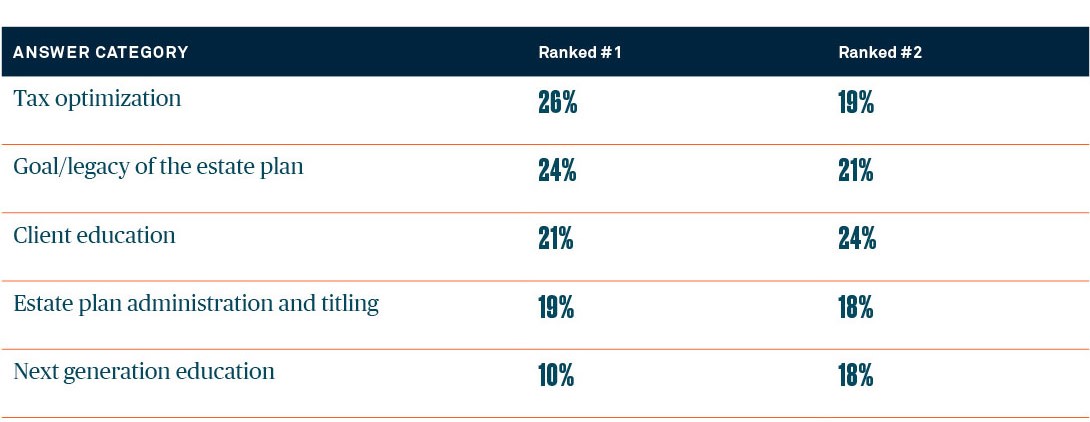
02estate-planning-concerns-in-2026

What are your clients' current biggest concerns around next-generation planning?
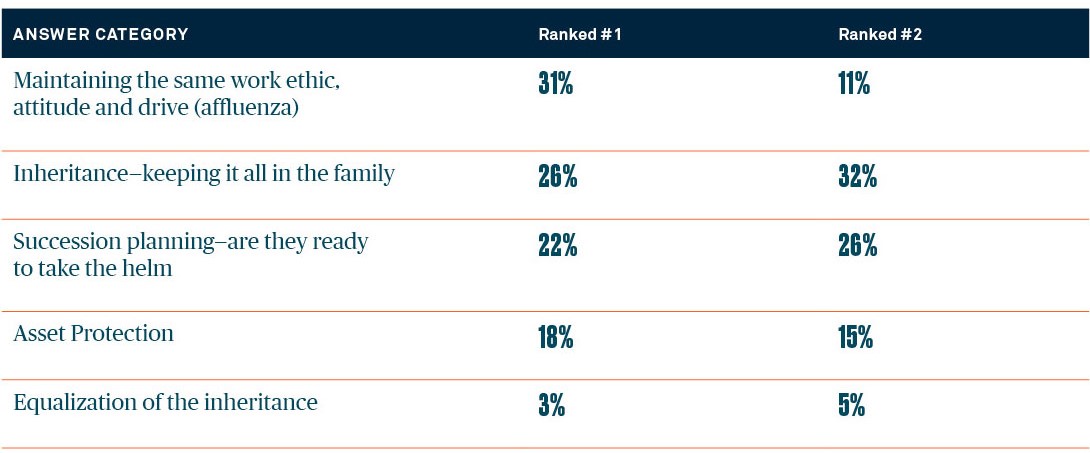
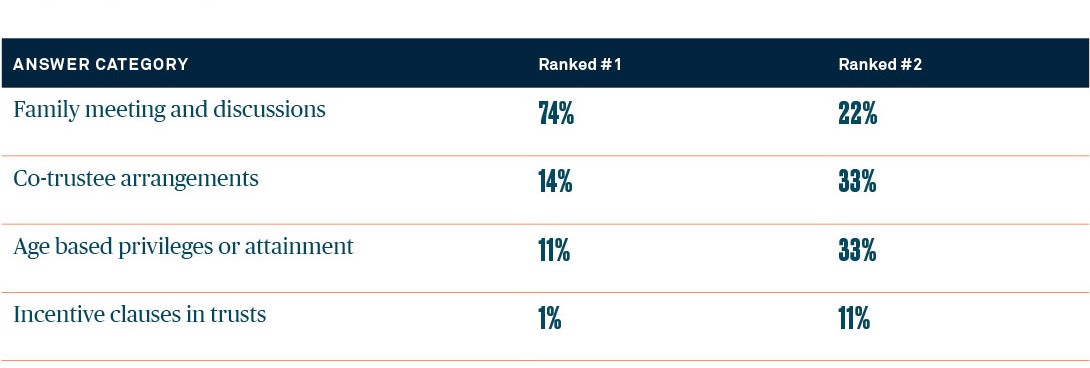
In next-generation planning, one of the biggest concerns professionals identified is “affluenza” — an excessive focus on wealth and material possessions without having to work for them. In other words, there is concern about whether the next generation will maintain the same work ethic, ambition, and drive. Inheritance ranked as their second-largest concern, particularly whether families will be able to preserve their wealth across generations. Additionally, 74% of the advisors we polled said family meetings or discussions were most effective for educating and guiding the next generation.

For the next generation, what trust drafting or financial education approaches do you find most effective in educating and guiding the next generation?
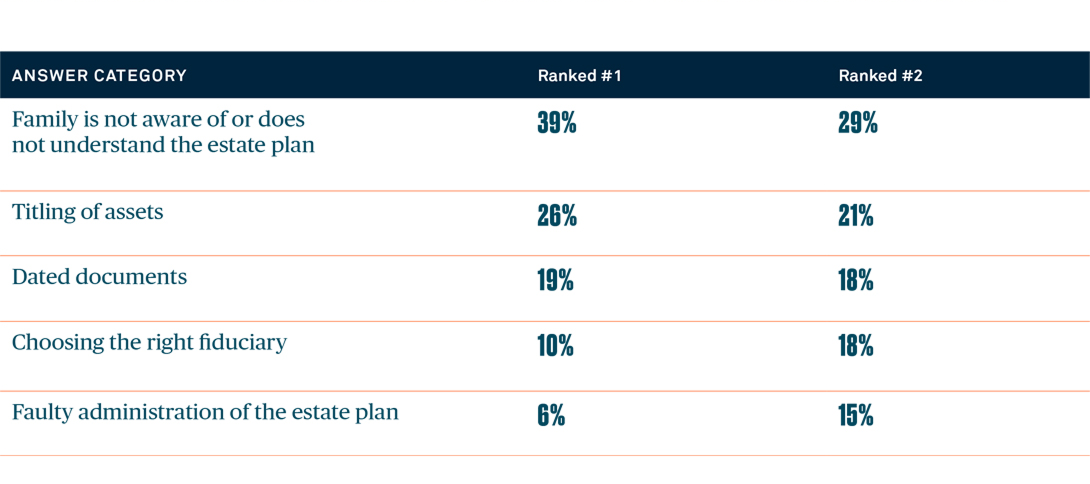
The estate planning professionals surveyed also identified concerns around their clients' estate plans this year.


Focus areas include:

  • A lack of awareness or understanding of the estate plan
  • Proper titling of assets
  • Out-of-date estate planning documents
  • Choosing the right fiduciary

Of particular note: 39% of the professionals said that families they work with were not aware of or did not understand their estate plan in 2025.

What are the most common mistakes or issues you’ve seen with your client’s estate plan in the past year?
05-estate-planning-concerns-in-2026

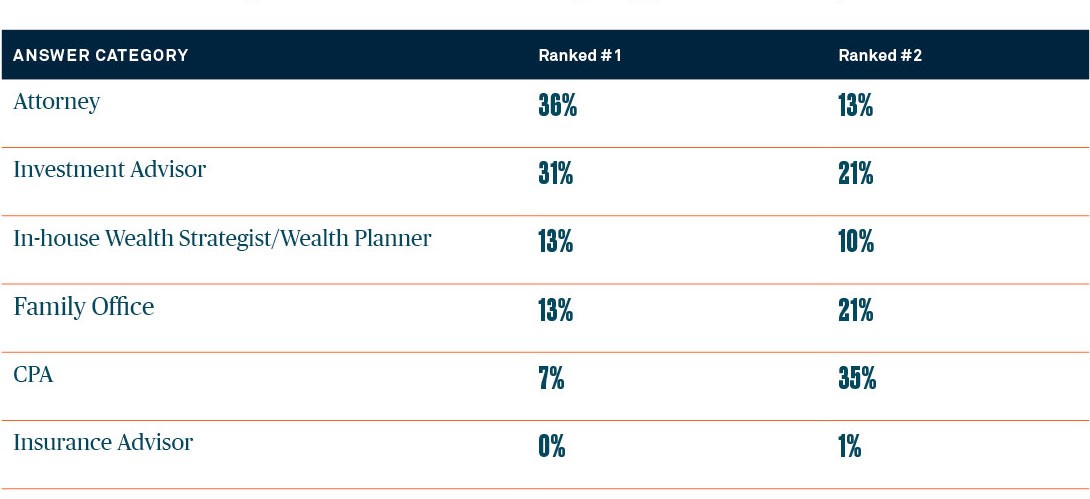
Our survey participants also usually coordinate with an investment advisor, attorney, CPA and family office when working on their clients’ estate plans.

Who are the advisors that you most often coordinate with regarding your client's estate plan?
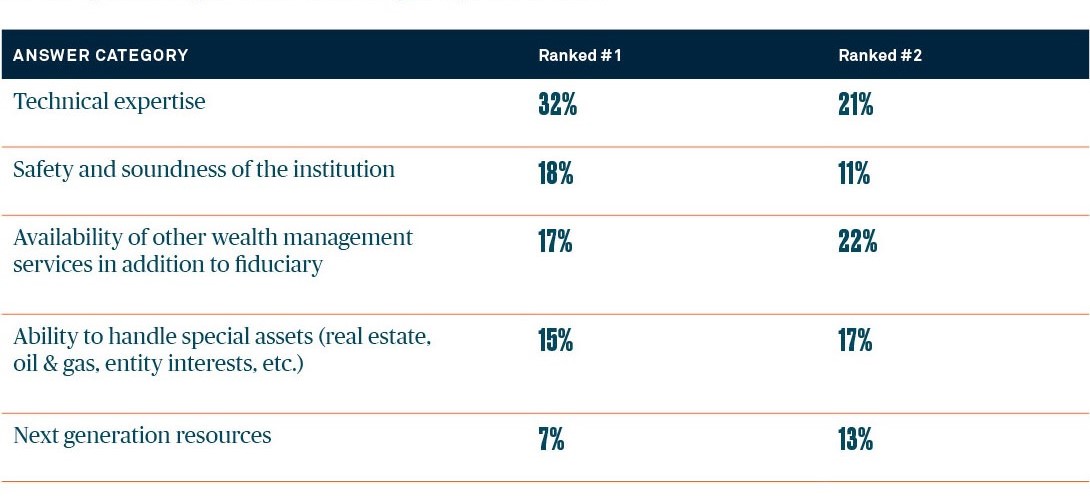
What are you looking for when considering a corporate trustee?
07estate-planning-concerns-in-2026

The main attribute when considering a corporate trustee was identified as technical expertise. Safety and soundness, ability to handle special assets, availability of other wealth management services, and next-generation resources are other important corporate trustee considerations.

Why Technical Expertise Matters

Technical expertise is especially important when administering complex trust structures and multigenerational wealth plans. Ultra-wealthy families often hold concentrated business interests, private investments, real estate and other illiquid assets that require careful oversight. A corporate trustee with deep fiduciary, tax and administrative expertise can help ensure trusts are executed according to their governing documents while navigating evolving tax rules, reporting obligations and family dynamics. This level of technical capability helps reduce operational risk and provides continuity across generations.


How BNY Wealth Can Help

Administering trusts for ultra-wealthy families requires deep fiduciary, tax and administrative expertise. BNY Wealth works closely with families and their advisors to deliver disciplined trust administration and integrated wealth management solutions designed to support multigenerational objectives. Contact us to learn more.


RELATED CONTENT
Preserving Your Family Legacy with Strategic Philanthropy
Article  |  Business Owners

Long seen as the exclusive purview of ultra-high net worth families (UHNW), strategic philanthropy is now a mainstream concept. For those families and individuals involved in philanthropy, even at modest asset levels, conversations between donors and recipients are changing dramatically. Families are evolving in how they view their philanthropic efforts and goals, as they seek to make more of an impact on the causes that are important to them.

Multigenerational Philanthropy: Aligning Family Values for Impact
Article  |  Business Owners

Philanthropy is often where generational differences in wealthy families become most visible. While it brings family members together around shared purpose, it can also reveal contrasting priorities, values and views on how capital should create impact. In many families, philanthropy becomes the first arena where different visions of legacy emerge.

Q&A: How the One Big Beautiful Bill’s $15M Estate Exemption Reshapes Multigenerational Giving
Article  |  Business Owners

Explore how individuals, married couples, and ultra-wealthy estates should adapt—from simple lifetime gifting to sophisticated structures like GRATs, dynasty trusts, and valuation-discount strategies.

A Guide to Creating a Successful Family Office
Article  |  Wealth Planning

While wealthy families have many options for managing assets, those with $250 million or more establish private wealth management firms called family offices, which provides them with more control, privacy and customization.

This material is provided for illustrative/educational purposes only. This material is not intended to constitute legal, tax, investment or financial advice. Effort has been made to ensure that the material presented herein is accurate at the time of publication. However, this material is not intended to be a full and exhaustive explanation of the law in any area or of all of the tax, investment or financial options available. The information discussed herein may not be applicable to or appropriate for every investor and should be used only after consultation with professionals who have reviewed your specific situation.


The Bank of New York Mellon, DIFC Branch (“DIFC”) is communicating these materials on behalf of The Bank of New York Mellon. The Bank of New York Mellon is a wholly owned subsidiary of The Bank of New York Mellon Corporation. This material is intended for Professional Clients only and no other person should act upon it. DIFC is regulated by the Dubai Financial Services Authority and is located at Dubai International Financial Centre, The Exchange Building 5 North, Level 6, Room 601, P.O. Box 506723, Dubai, UAE.


The Bank of New York Mellon, ADGM Branch (“ADGM”) is communicating these materials on behalf of The Bank of New York Mellon. The Bank of New York Mellon is a wholly owned subsidiary of The Bank of New York Mellon Corporation. This material is intended for Professional Clients only and no other person should act upon it. ADGM is regulated by the Financial Services Regulatory Authority and is located at Abu Dhabi Global Markets, Al Maryah Tower, Level 4, Unit 404, P.O. Box 764645, Abu Dhabi, UAE.


The Bank of New York Mellon is supervised and regulated by the New York State Department of Financial Services and the Federal Reserve and authorized by the Prudential Regulation Authority. The Bank of New York Mellon London Branch is subject to regulation by the Financial Conduct Authority and limited regulation by the Prudential Regulation Authority. Details about the extent of our regulation by the Prudential Regulation Authority are available from us on request. The Bank of New York Mellon is incorporated with limited liability in the State of New York, USA. Head Office: 240 Greenwich Street, New York, NY 10286, USA.


In the U.K. a number of the services associated with BNY Wealth’s Family Office Services–International are provided through The Bank of New York Mellon, London Branch, One Canada Square, London, E14 5AL. The London Branch is registered in England and Wales with FC No. 005522 and BR000818.


Investment management services are offered through BNY Mellon Investment Management EMEA Limited, BNY Mellon Centre, One Canada Square, London E14 5AL, which is registered in England No. 1118580 and is authorized and regulated by the Financial Conduct Authority. Offshore trust and administration services are through BNY Mellon Trust Company (Cayman) Ltd.

This document is issued in the U.K. by The Bank of New York Mellon. In the United States the information provided within this document is for use by professional investors.


This material is a financial promotion in the U.K. and EMEA. This material, and the statements contained herein, are not an offer or solicitation to buy or sell any products (including financial products) or services or to participate in any particular strategy mentioned and should not be construed as such.


BNY Mellon Fund Services (Ireland) Limited is regulated by the Central Bank of Ireland BNY Mellon Investment Servicing (International) Limited is regulated by the Central Bank of Ireland.


Trademarks and logos belong to their respective owners.


BNY Wealth conducts business through various operating subsidiaries of The Bank of New York Mellon Corporation. BNY is the corporate name of The Bank of New York Mellon Corporation and may be used to reference the corporation as a whole and/or its various subsidiaries generally.


©2026 The Bank of New York Mellon. All rights reserved.


 WM-897992-2026-03-09

SUBSCRIBE