Your Active Wealth Podcast
DATE PUBLISHED: NOVEMBER 10, 2025
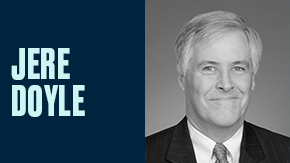
In this episode of Your Active Wealth, Terry Sylvester Charron, head of investment advisory and planning solutions at BNY Wealth, speaks with Jere Doyle, senior wealth strategist at BNY Wealth, to take a deeper dive into one of the most consequential components of the One Big Beautiful Bill Act (OBBBA): expanded tax breaks for qualified small business stock (QSBS).
Section 1202 can make your small-business exit nearly tax-free, and the One Big Beautiful Bill Act makes it even more generous.
Jere not only dissects what exactly changed regarding qualified small business stock as a result of the new legislation, but he also explains notable enhancements to the Opportunity Zone Investment Program.
Subscribe to Your Active Wealth on your favorite podcast platform via Apple Podcasts, Spotify, Amazon Music, Pocketcast and more.
Featuring:
Host: Terry Sylvester Charron, Head of Investment Advisory and Planning Solutions
Guest: Jere Doyle, Senior Wealth Strategist
[00:00:00] VO: What do you want your wealth to do for you? Welcome to Your Active Wealth from BNY Wealth, where we offer insights that can help support the life you want to live and the legacy you wish to create. We tackle timely topics through the lens of the five strategies that comprise our Active Wealth framework: Invest, Protect, Manage, Borrow and Spend, and provide guidance on navigating the unpredictable to help you build and sustain wealth.
[00:00:30] Terry: I'm Terry Sylvester Charron, head of investment advisory and planning solutions at BNY Wealth and host of today's episode. As a follow-up from our recent podcast, 2025 Tax Changes, What's New?, we're taking a closer look at one of the most consequential, yet under-discussed parts of the One Big Beautiful Bill Act, the major updates to Qualified Small Business Stock, or QSBS. For entrepreneurs, family offices, and private investors, Section 1202 of the tax code has long offered one of the most powerful incentives for patient private capital. And now, with the One Big Beautiful Bill Act, those incentives have been expanded, modernized, and made more accessible than ever. We'll also touch briefly on the new framework for Opportunity Zones, another area reshaped by this legislation. But our focus today is on what these QSBS changes mean for wealthy investors and business owners. To unpack all of this, I'm joined again by Jere Doyle, senior wealth strategist, at BNY Wealth. Jere, first off, thank you for being with us today. Let's start with the big picture. The One Big Beautiful Bill Act has been described as a once-in-a-decade tax reset. When it comes to private markets, what stands out the most?
[00:02:08] Jere: What’s most significant is that the Act makes two major wealth-building tools. First, Opportunity Zones, which the One Big Beautiful Bill Act made permanent, and two, Qualified Small Business Stock or QSBS. For Opportunity Zones, it introduces a 10-year designation cycle. For QSBS, it expands the rules, dramatically making it easier for founders, investors, and family offices to qualify and benefit. It's a clear signal that Washington wants to encourage long-term, private capital, not just short-term gains.
[00:02:44] Terry: Let's briefly touch on Opportunity Zones, since many investors still have positions there. What should they know about the new landscape?
[00:02:53] Jere: Well, the biggest change is permanence. The December 2026 recognition date under the former Opportunity Zone program is still in effect. That's when you had to recognize the deferred gain from prior investments in Opportunity Zones. However, the One Big Beautiful Bill Act creates new 10-year rolling designation cycles. The first one runs from 2027 to 2036. And that gives investors ongoing opportunities to launch or invest into new qualified Opportunity Zone funds. Eligibility rules have also tightened to focus on truly low-income areas. An Opportunity Zone in a rural area is allowed to add 30% to the cost basis of the investment. Compare that with the 10% add to basis for other Opportunity Zones investments. It's a cleaner, more focused version of the original program with a stronger compliance and reporting framework.
[00:03:52] Terry: So, this new legislation creates a more stable environment for opportunities on investors. Got it. But the bigger story for our listeners is the changes to the tax benefits of qualified small business stock, which is where I want us to spend the rest of our time today.
[00:04:11] Jere: Exactly, Terry. QSBS is where we see many significant structural changes and the biggest opportunities for investors to rethink how they're going to hold and exit private businesses.
[00:04:24] Terry: So, let's start with the basics. What exactly did the One Big Beautiful Bill Act change about qualified small business stocks?
[00:04:34] Jere: Well, previously, investors needed to hold the QSBS for five years in order to receive a 100% exclusion of their capital gains. And that only applied the stock that was acquired after September 27, 2010. Under the new bill, the One Big Beautiful Bill Act, you can now exclude 50% of the gain if you've held the stock for three years, 75% of gain if held the for four years, and 100% of the game if you've held the stock for five years. And this is a major transformation that rewards private capital but provides more flexibility for folks who may need liquidity sooner.
[00:05:16] Terry: Wow, that's a big shift, especially for founders and investors who want optionality.
[00:05:23] Jere: Yeah, that's right, that gives a timeline where they can actually plan around when they're going to dispose of their company as opposed to an all or nothing holding for five years before you can defer the gain.
[00:05:37] Terry: And what about the types of businesses that qualify? I feel that's an area where investors really get tripped up.
[00:05:45] Jere: Well, in the past, under the original qualified small business stock, before the changes made by the One Big Beautiful Bill Act, the companies that were eligible were the companies that had, at the time you acquired the stock, only $50 million of assets. The One Big Beautiful Bill Act has increased that threshold to $75 million and that amount is indexed for inflation. So now if you have a company that, at the time you acquire qualified small business stock, is worth less than $75 million dollars you qualify, assuming you meet the other requirements, as QSBS. So this opens up the QSBS benefits to a broader range of mid-size private companies, particularly in sectors like technology, healthcare, clean energy, and advanced manufacturing. It also recognizes that today's startups grow faster and raise more capital than they did a decade ago, and the law reflects that reality.
[00:06:41] Terry: And the exclusion amount itself, that's been increased as well. Is that right?
[00:06:47] Jere: Yes, that's been changed as well. The maximum amount per tax per exclusion previously was the greater of 10 times your cost basis or $10 million. Well, they've increased that $10 million to $15 million. And that $15 million starting in 2027 is indexed for inflation. The 10 times basis rule still applies. So, investors can exclude the greater of, starting next year, $15 million or 10 times their original investment in the company. And that's a meaningful expansion, especially for entrepreneurs and investors whose stakes have risen significantly since obtaining the original investment.
[00:07:27] Terry: Well, let's move on and talk strategy. How might family offices and ultra high net worth investors use this QSBS legislation more deliberately under these new rules?
[00:07:40] Jere: Well, a couple of things come to mind. First of all, this so-called stacking, that $10 million exclusion is not just for one person. If you gift stock to other people, like non-grantor trusts for your children, let's say you had five kids including yourself, you've got six times up to $10 million exclusion. So, you can exclude quite a bit of capital gain by dispersing your stock among other investors. The other thing is sequencing. This involves deferring gains through a qualified Opportunity Zone investment first, then reinvesting into QSBS qualified stock for long-term exclusion. And then you got to think about how the entity is structured. Only C Corporations qualify as qualified small business stocks. So, you might want to think about structuring your business as a C Corporation to meet the Section 1202 qualified small-business stock requirements. We're in a sophisticated planning space right now, but the opportunities for tax-free compounding are enormous when done correctly.
[00:08:44] Terry: That's really interesting. And it sounds like this is evolving from a niche tax perk that few know about into a more foundational element of a private market strategy. Is that right?
[00:08:58] Jere: Exactly, for family offices, QSBS isn't about saving taxes on one exit from the business. It's about structuring ownership and succession in a way that multiplies those benefits for generations.
[00:09:12] Terry: So, Jere, now let's speak directly to those listeners who may not be founders or business owners. Why should QSBS still be on their radar?
[00:09:23] Jere: Because QSBS isn't just for business owners. Any investor participating in a qualified private company, whether through a direct investment, venture capital, or family office syndicates can benefit. So, you don't have to be a founder or an original investor, you can invest in a private company. QSBS is one of the few remaining ways to achieve total exclusion of capital gains up to the $15 million limit or the 10 times cost basis, if greater. The One Big Beautiful Bill Act expands both the reach and the availability of that benefit. This is an anchor for anyone allocating to private markets with a long-term horizon.
[00:10:05] Terry: So as you look ahead, what should investors and advisors be doing now to make the most of these changes?
[00:10:13] Jere: First of all, take a look at your portfolio and identify any existing or potential qualified small business stock eligible investments. You may be surprised at what is in your portfolio that may qualify as QSBS. Next, review the business structure of your holding. If you hold interest in S-corps or LLCs, they don't qualify. So you got to think about exploring whether a C Corporation conversion makes sense and whether or not once you convert to a C Corporation, your stock will qualify as QSBS. And then finally, it's important to coordinate across all the disciplines. Your tax, estate planning, and investment advisors should all be on the same page in the same room going forward. In other words, collaboration amongst advisors.
[00:11:01] Terry: Jere, it's always great to have you on the podcast. Thank you again for joining us today to explain how the Act impacts our clients. I know our listeners will come away with actionable guidance that will help them adjust their tax and estate planning strategies. For more on how BNY Wealth can help you sustain and grow your wealth, visit us at bny.com/wealth, or reach out to a BNY Wealth Manager. Thank you for joining us and we'll see you on our next episode of Your Active Wealth.
[00:11:38] VO: Thank you for listening to this episode of Your Active Wealth. Be sure to subscribe to this podcast on Apple Podcasts, Spotify, or wherever you listen to podcasts, and visit bny.com/wealth to view the latest insights on the subjects that matter most to you.
BNY Wealth conducts business through various operating subsidiaries of The Bank of New York Mellon Corporation. BNY and Bank of New York Mellon are corporate names of The Bank of New York Mellon Corporation and may be used to reference the corporation as a whole and/or its various subsidiaries generally. This material does not constitute a recommendation by BNY of any kind and is provided for illustrative/educational purposes only. The information herein is not intended to provide tax, legal, investment, accounting, financial or other professional advice on any matter, and should not be used or relied upon as such. Effort has been made to ensure that the material presented herein is accurate at the time of publication. However, this material is not intended to be a full and exhaustive explanation of all of the investment or financial options available. The information discussed herein may not be applicable to or appropriate for every investor and should be used only after consultation with professionals who have reviewed your specific situation. This material, and the statements contained herein, are not an offer or solicitation to buy or sell any products (including financial products) or services or to participate in any particular strategy mentioned and should not be construed as such. Any investment strategies referenced in this material come with investment risks, including loss of value and/or loss of anticipated income. Past performance does not guarantee future results.
The views expressed within this material are those of the contributors and not necessarily those of BNY. BNY has not independently verified the information contained in this material and makes no representation as to the accuracy, completeness, timeliness, merchantability or fitness for a specific purpose of the information provided in this material. BNY assumes no direct or consequential liability for any errors in or reliance upon this material.
BNY will not be responsible for updating any information contained within this material and opinions and information contained herein are subject to change without notice. This material may not be reproduced or disseminated in any form without the prior written permission of BNY. Trademarks, logos and other intellectual property marks belong to their respective owners.
© 2025 The Bank of New York Mellon. All rights reserved.
Listen to more episodes

Podcast | Investments
Alicia Levine and Dan Clifton on 2026: consumer refunds, deregulation, Fed cuts, tariffs and midterm dynamics—why policy could turn headwinds into tailwinds for growth and earnings.
Podcast | Business Owners
Terry Sylvester Charron, head of investment advisory and planning solutions, and Jere Doyle, senior wealth strategist, unpack changes to Qualified Small Business Stock as result of OBBBA.
Podcast | Private Banking
Scott Lillis, regional president, Mid-Atlantic Region, and Lynda Ly, private banking manager, explain our strategic cash management framework
Podcast | Business Owners
Alex Murray, market president of Newport Beach, and Boryana Zamanoff, senior wealth strategist, break down key insights from our report, Mastering the Sale.