Please ensure Javascript is enabled for purposes of website accessibility Building resilience in multi-asset portfolios
uk
en
intermediary
intermediary
false
true
Gathering data
Disclaimer Not Available

Building resilience in multi-asset portfolios

Building resilience in multi-asset portfolios

Diversification, disciplined risk management and a forward-looking approach to selecting investments are necessary for multi-asset portfolios in 2026, says BNY Investments Newton FutureLegacy portfolio manager, Bhavin Shah.

noimage


    Key points:

  • Global growth is set to moderate in 2026, but trade shifts and inflation pressures keep challenges on the horizon.
  • Stock markets remain highly concentrated, with US dominance heightening correlation and downside risk.
  • Selective exposure to emerging markets, especially India and China, could add growth and diversification to portfolios.
  • AI spending is expected to surge, with agentic AI and biotech breakthroughs boosting productivity, drug discovery, and new business models.
  • Diversification and discipline are important to manage volatility amid geopolitical risks, policy shifts and stretched tech valuations.


3009300 Exp:  30 April 2026
RELATED CONTENT
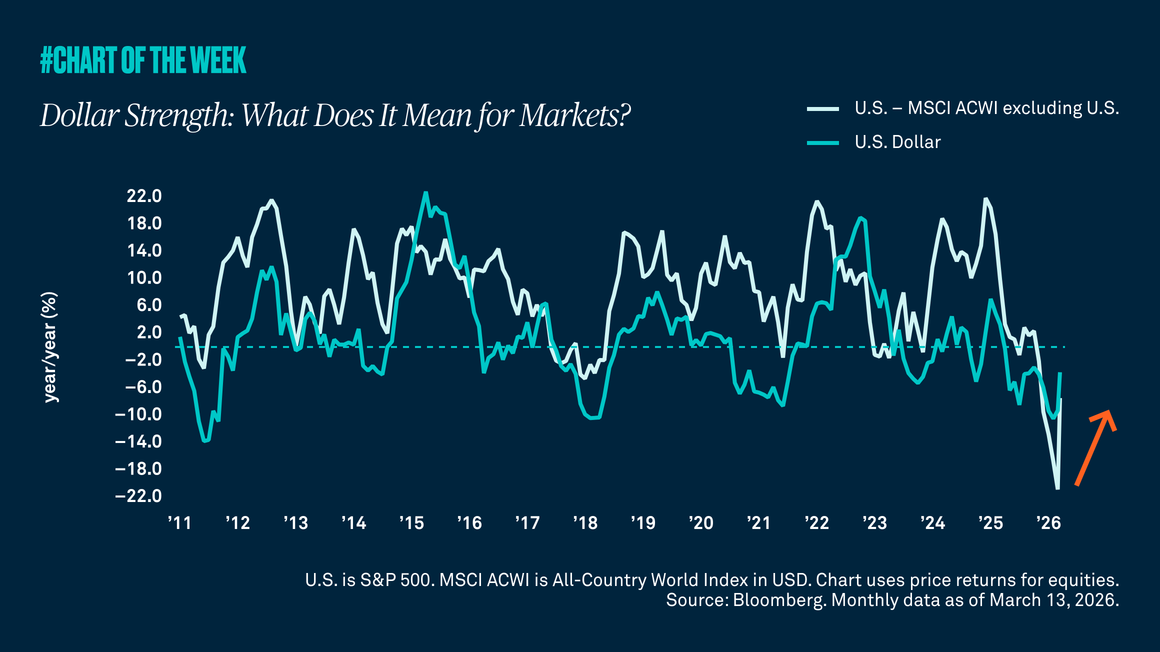
Dollar strength: what does it mean for markets?
Chart of the week | Macroeconomic

Geopolitical tensions have lifted oil prices, sent U.S. stocks slightly lower and driven flows into the safety of the U.S. dollar, which has strengthened versus peers. While a weaker dollar previously supported international equity outperformance, dollar stabilization now suggests that tailwind is fading, underscoring the importance of diversification across regions and asset classes.

The 3 aspects of quality
IFMH | Equities

Walter Scott identifies quality companies using three key factors. Client investment manager Murdo MacLean explains why each matters.

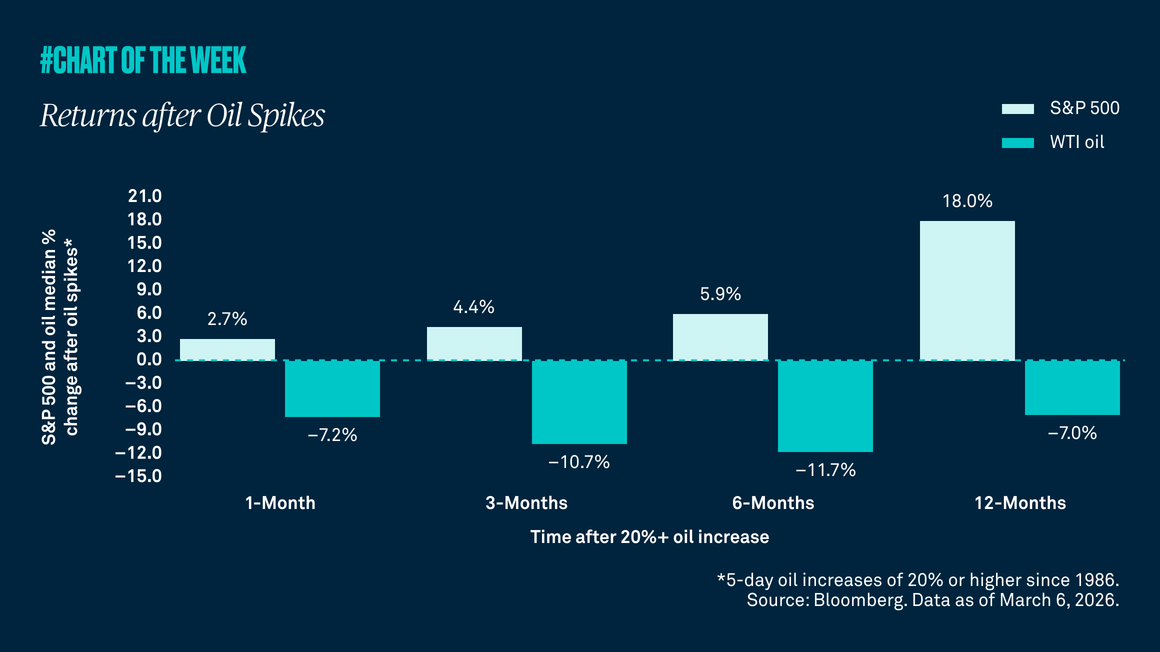
Returns after oil spikes
Chart of the week | Macroeconomic

The Strait of Hormuz, which moves about 20% of global oil, has seen many ships that normally travel through it curtail their activity. Consequently, WTI oil was up over 36% in the five days after the oil supply shock began. Yet equities barely budged, signaling a temporary supply shock, not a larger crisis. Historically, after similar price spikes equities tend to move higher while oil prices decline — further evidence for avoiding emotion-driven investing.

Monthly Checkpoints
Reports | Macroeconomic

Checkpoints is a comprehensive monthly chartbook highlighting major top-of-mind themes that could shape financial markets in the near term. In addition to the broader macroeconomic discussion, Checkpoints delivers detailed views on major asset classes, including global equities, fixed income and real assets.

Gathering data
Disclaimer Not Available

This is a marketing communication