Please ensure Javascript is enabled for purposes of website accessibility Time to Buy Tech?
lu
en
institutional
institutional
false
true
Gathering data
Disclaimer Not Available

Time to buy tech?

 Time to buy tech?

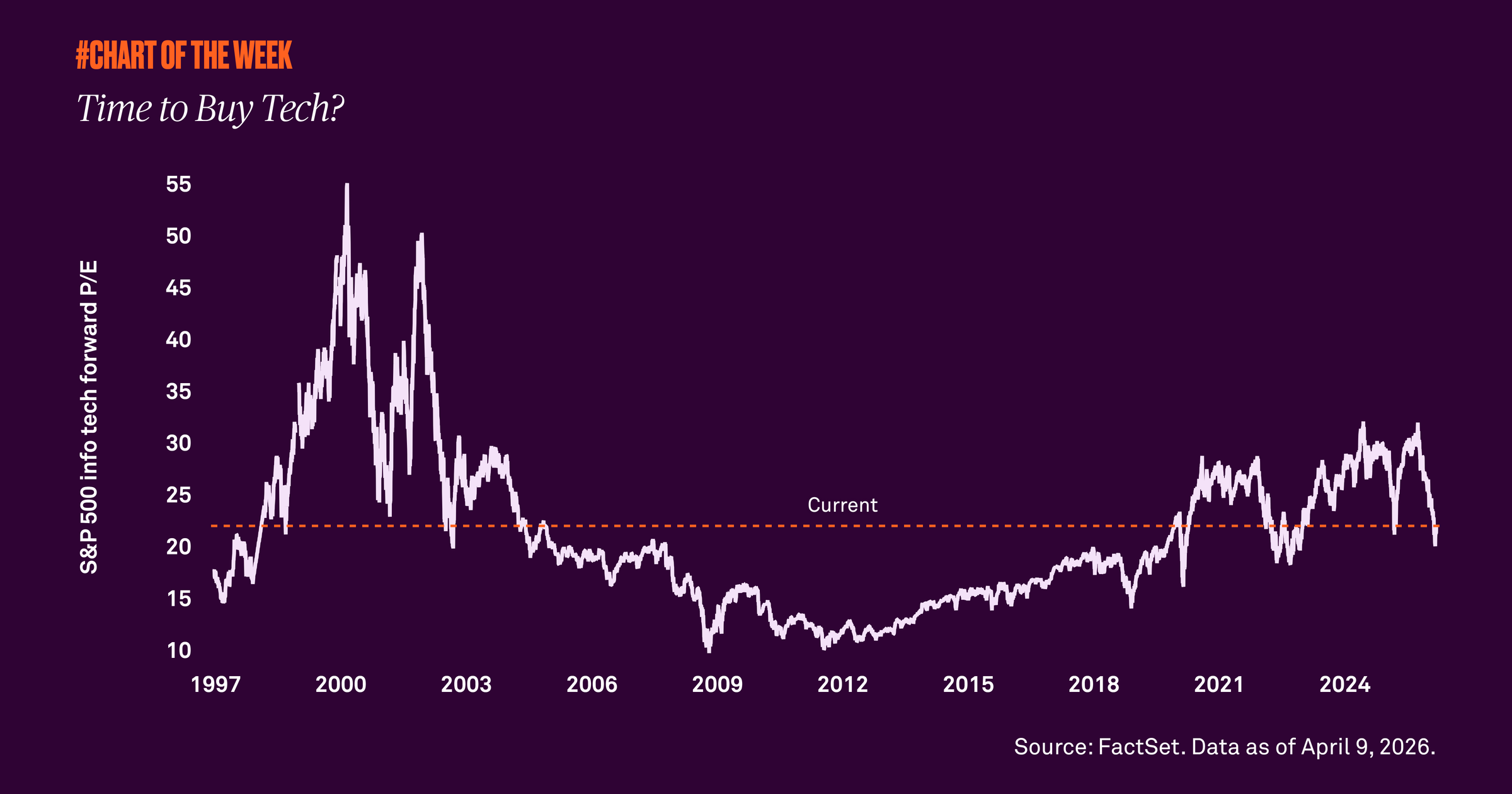
Technology valuations have meaningfully declined over the past year, but the sector continues to stand out for its strong earnings growth and relative resilience. While near-term uncertainty remains, tech still appears well positioned as a key driver of broader market growth.

Is it time to buy tech?

The sector has broadly declined over the last six months, driving valuations to multi-year lows that are nearly in line with those of the S&P 500. The price-to-earnings ratio of the technology sector has fallen from 32x to a low of 20x, and now stands at 22x.

At the same time, the technology sector continues to post some of the strongest earnings growth among all S&P 500 sectors. The sector is expected to deliver 37% earnings growth in 2026 compared to18% for the entire index. Outside of software, which has sold off on concerns about artificial intelligence, tech stocks have remained resilient. The sector has even outperformed since the war with Iran began and is now 4.4% higher compared to the S&P 500’s 0.1%.

While further downside in technology is possible, valuations have adjusted significantly, suggesting the worst of the sell-off may be behind us. The near-term outlook is clouded by geopolitics, but we don’t consider tech much riskier than the broader market, and we expect the sector will remain a primary source of growth.  
RELATED CONTENT
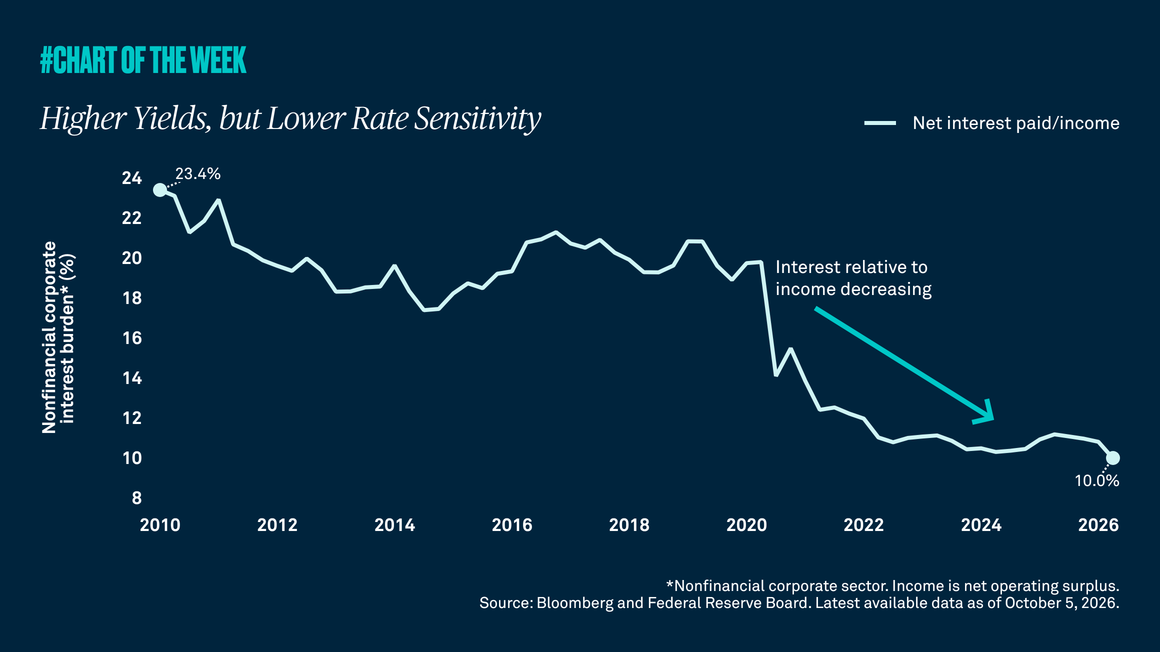
Higher yields, but lower sensitivity
Chart of the Week | Macroeconomic

Higher interest rates have become a frequently cited risk to corporate earnings and the economy. The conventional thinking is straightforward: when borrowing costs rise, companies face higher interest expenses, profits come under pressure, and economic growth slows. While there is truth to that relationship, the current cycle may differ from investors’ expectations.

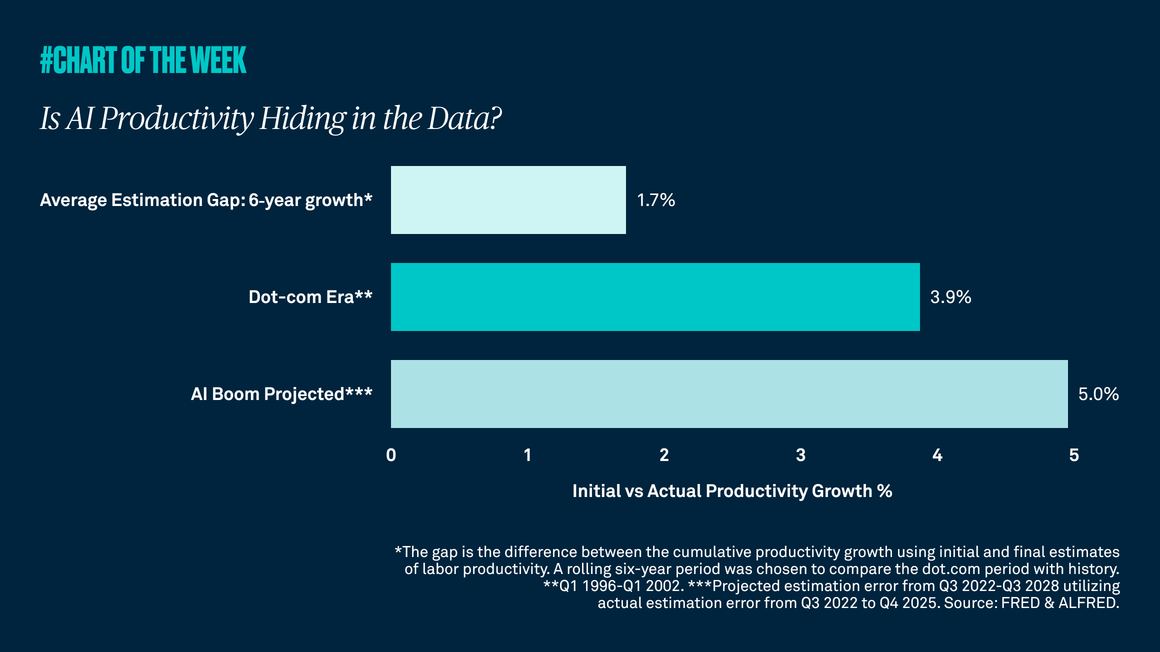
Is AI productivity hiding in the data?
Chart of the Week | Macroeconomic

Both the dot-com era and the rise of artificial intelligence suggest that early productivity data can understate the actual economic impact of transformative technologies. In the case of the internet, later revisions to productivity gains surpassed early estimates. The same may prove true for AI, implying stronger support for growth.

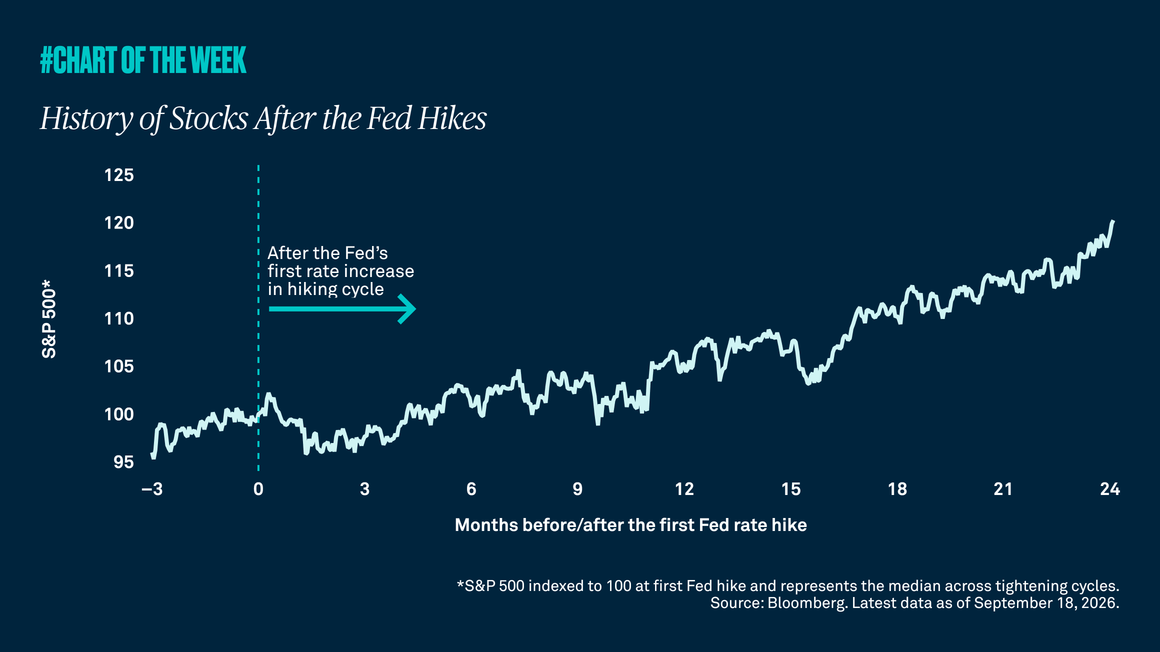
History of stocks after the fed hikes
Chart of the Week | Macroeconomic

Sticky inflation and resilient growth have revived monetary tightening, increasing the risk of higher-for-longer rates and near-term volatility. We continue to believe economic resilience and strong corporate profits should continue to provide a favorable backdrop for stocks, and would use periods of market weakness to add selectively to equities. Additionally, owning real assets can help hedge against inflation.

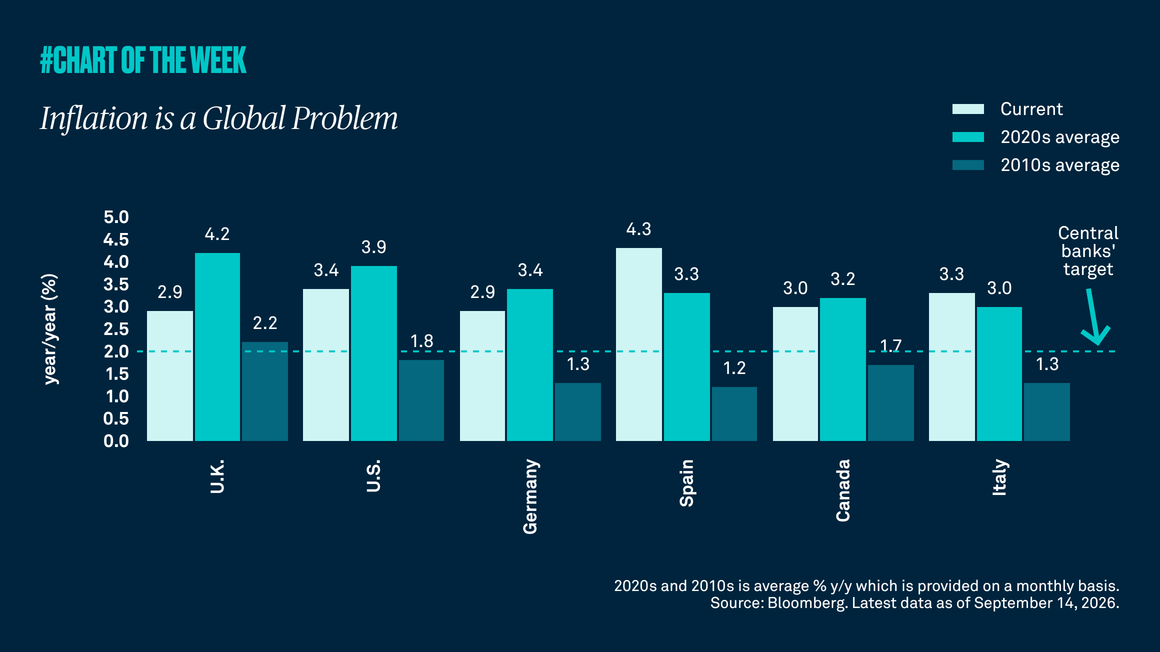
Inflation is a global problem
Chart of the Week | Macroeconomic

Resilient economic growth, sticky inflation driven by higher energy prices and continued geopolitical uncertainty are complicating the path back to central-bank price targets. We believe policymakers are likely to adopt a tightening bias but remain data dependent.

Gathering data
Disclaimer Not Available

This is a marketing communication