Please ensure Javascript is enabled for purposes of website accessibility Is AI Productivity Hiding in the Data?
lu
en
institutional
institutional
false
true
Gathering data
Disclaimer Not Available

Is AI productivity hiding in the data?

Is AI productivity hiding in the data?

Both the dot-com era and the rise of artificial intelligence suggest that early productivity data can understate the actual economic impact of transformative technologies. In the case of the internet, later revisions to productivity gains surpassed early estimates. The same may prove true for AI, implying stronger support for growth.
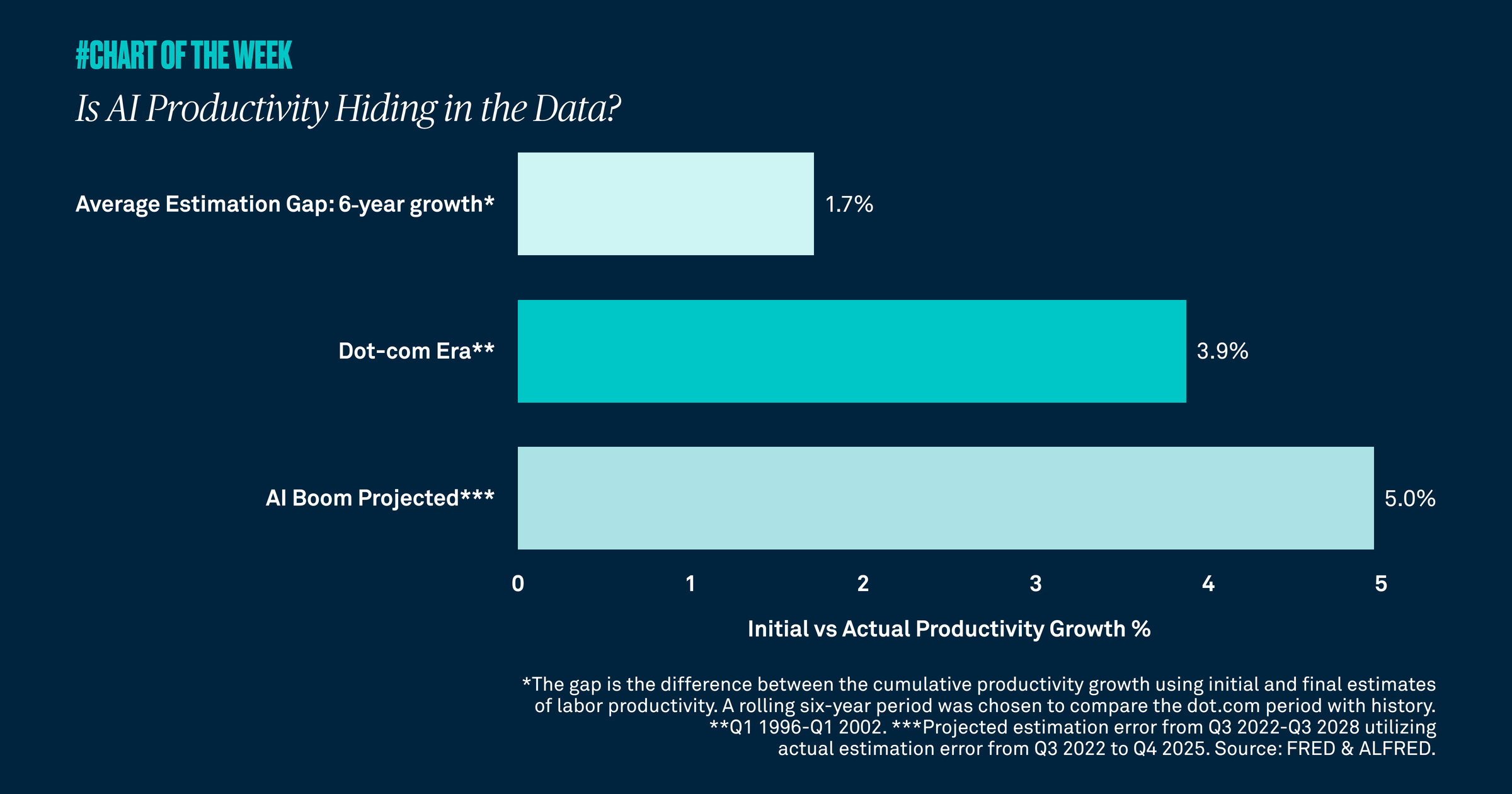
 

Despite the dot-com era equity sell-off between 2000-2002, underlying investments in digital infrastructure proved extremely impactful. They laid the groundwork for productivity gains and permanently changed how companies operate. Artificial intelligence appears to be following a similar path today, emerging as a transformative technology reshaping how businesses and consumers function.

Notably, early estimates of productivity growth during the internet buildout understated its eventual impact, and later data revisions revealed gains that were stronger than initially forecast. A similar pattern may now be emerging with AI, with upward revisions on track to surpass the internet boom. This means the effects of AI on productivity could be underestimated, which would be positive for future growth. 
RELATED CONTENT
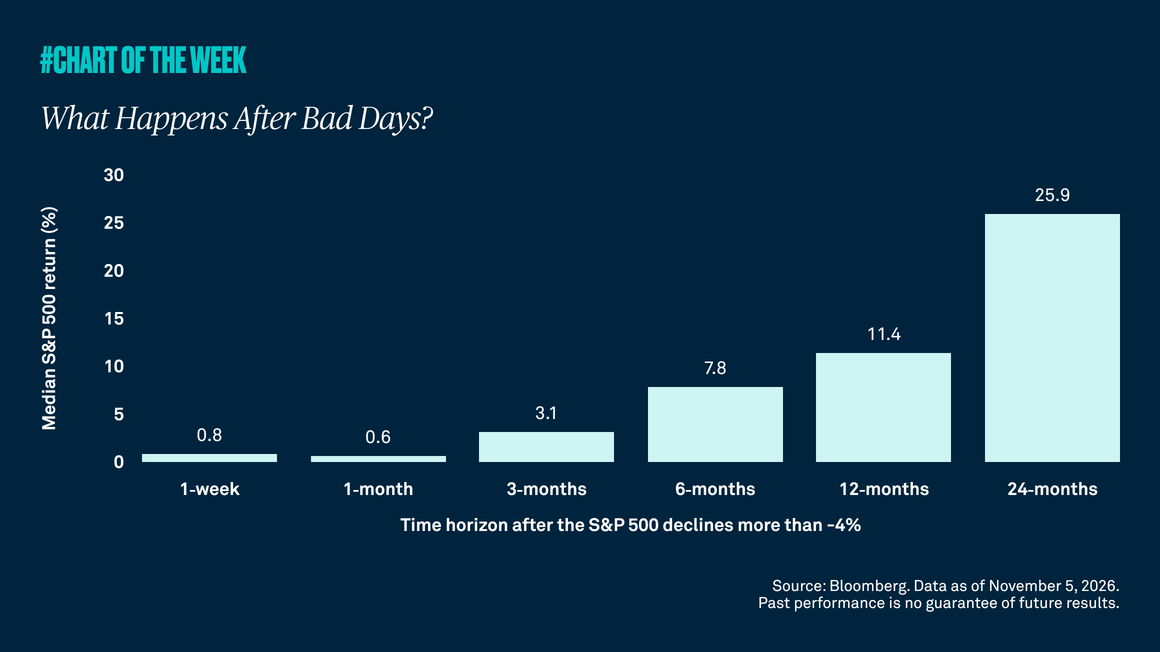
What happens on bad days?
Chart of the Week | Macroeconomic

The recent one-day equity selloff reflected weaker sentiment amid election uncertainty and concerns that slower artificial intelligence spending could weigh on growth and earnings. Still, pullbacks of this magnitude have often been followed by solid returns, and we remain constructive given the economy’s resilience and AI’s long-term potential.

Play the long game
Chart of the Week | Macroeconomic

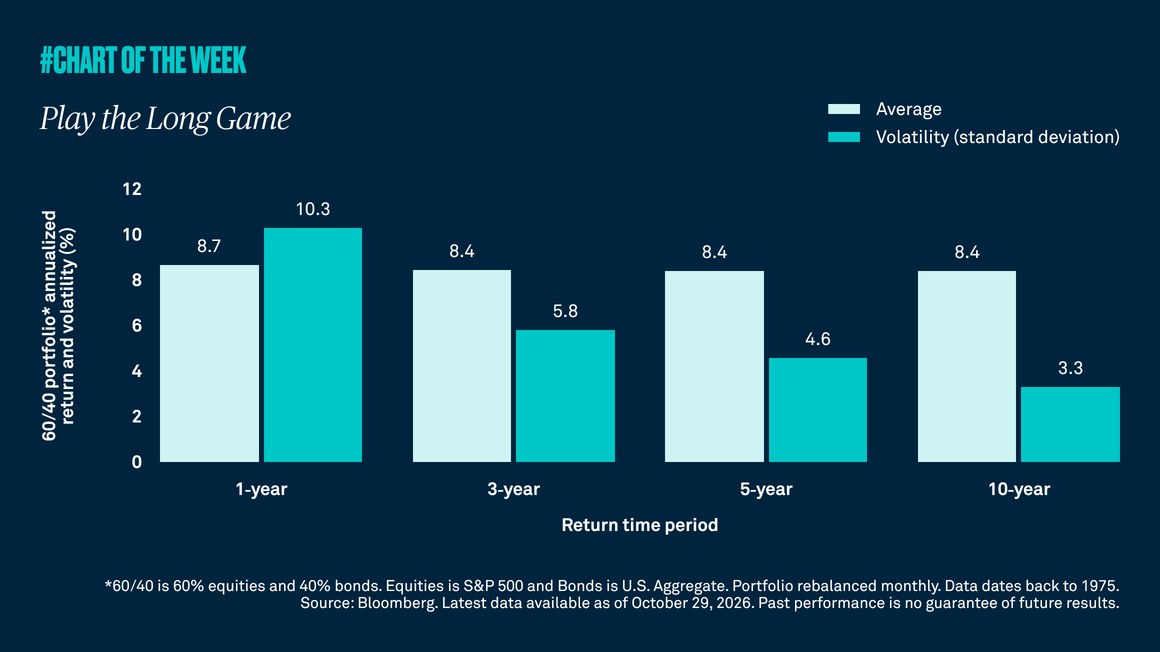
When it comes to investing, time matters. While headlines and short-term perspectives can lead investors to try and time the market, investors have historically been rewarded by playing the long game. Rather than overreacting to market noise, investing over longer time periods can help smooth the ride without sacrificing returns. The lesson: stay diversified and invested for the long term.

Contained contagion?
Chart of the Week | Macroeconomic

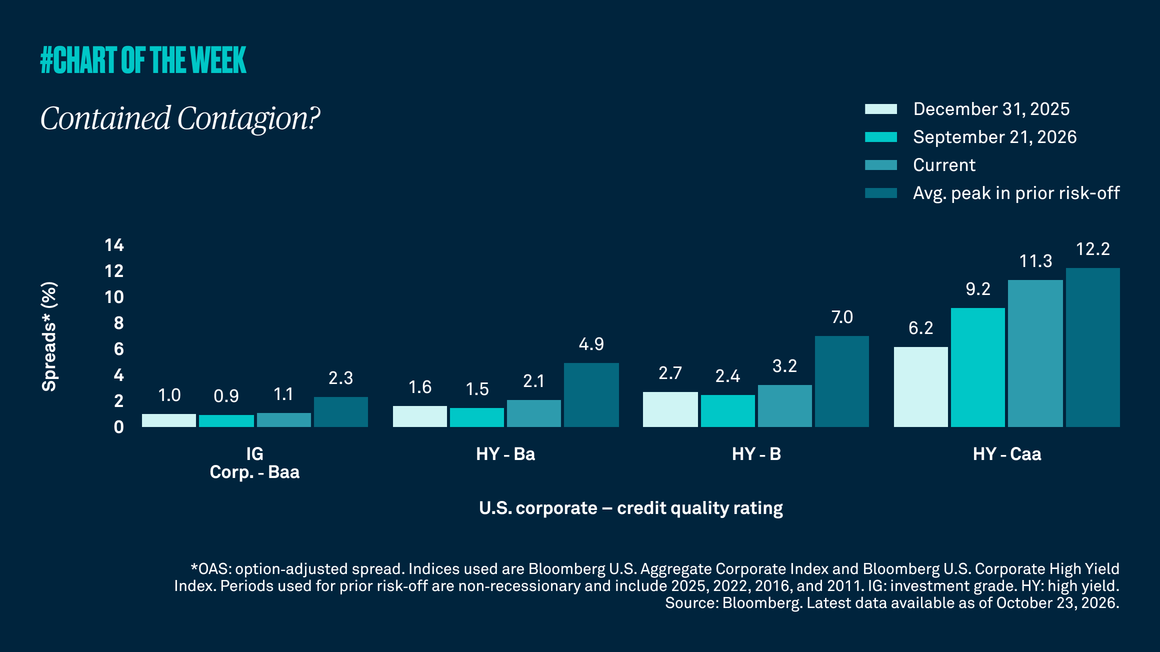
U.S. high yield credit spreads have widened year to date, reflecting greater investor caution about perceived default risk. The move also raises concerns about possible credit contagion. However, because spread widening has been concentrated in the lowest-quality issuers rather than higher-quality issuers, we don’t anticipate broader market stress.

Can the bull run in corporate margins continue?
Chart of the Week | Macroeconomic

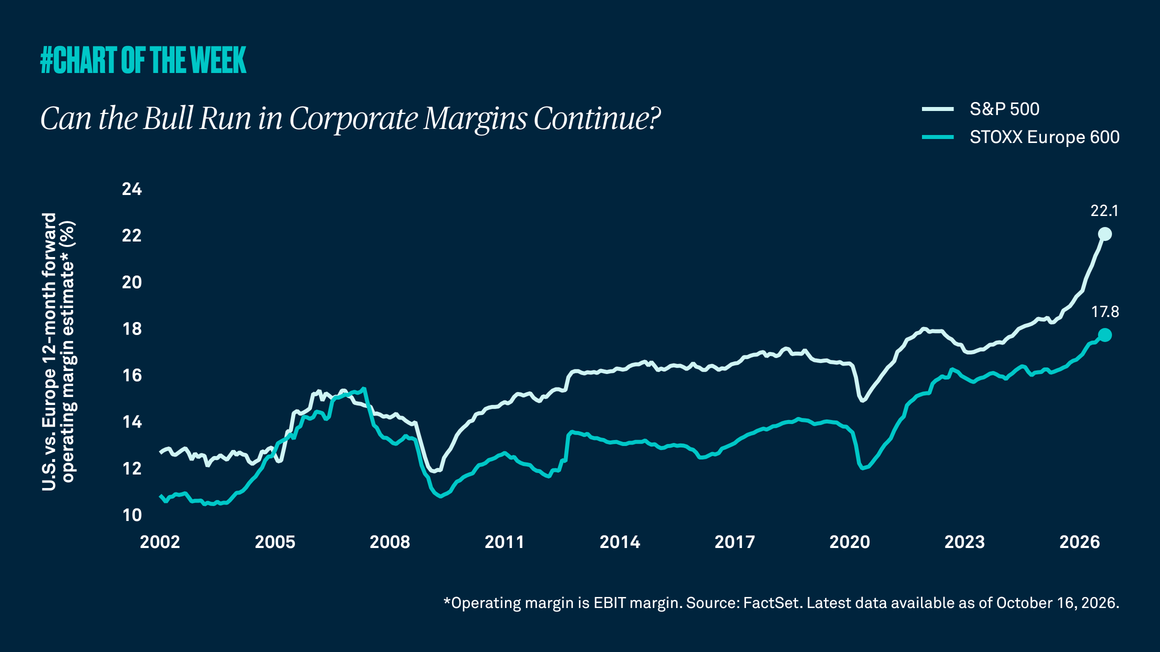
Higher inflation and elevated interest rates typically weigh on corporate profitability, yet corporate margins continue to climb to record highs. While that strength is evident both in the U.S. and abroad, U.S. outperformance versus Europe is now the widest on record. Stronger margins have helped contribute to better-than-expected earnings and reinforce U.S. equity leadership. The question now is whether that strength can persist?

Gathering data
Disclaimer Not Available

This is a marketing communication