KI, robuster Welthandel und ein schwächerer US‑Dollar lenken den Blick auf jene Länder, die das globale Wachstum vorantreiben. Schwellenländer haben seit Jahren nicht mehr so vielversprechend ausgesehen.
Abgeschrieben und wiederentdeckt: Die aufstrebenden Volkswirtschaften der Welt haben eine lange Geschichte zyklischer Comebacks. Genau das erleben wir derzeit erneut – und der aktuelle Aufschwung könnte erst am Anfang stehen. Zudem erscheint das heutige Umfeld robuster als eine typische Erholung. Laut Internationalem Währungsfonds (IWF) sind die Schwellenländer in jedem Jahr dieses Jahrhunderts schneller gewachsen als die Industrieländer. Bis Ende 2025 hatte sich der Wachstumsvorsprung auf 2,6 Prozentpunkte ausgeweitet – der höchste Wert seit einem Jahrzehnt. Vereinfacht gesagt: Wachsen Schwellenländer schneller als entwickelte Volkswirtschaften, fließt Kapital tendenziell in diese Märkte.
Wir sind überzeugt, dass drei zentrale strukturelle Veränderungen dafür verantwortlich sind.
1. Schwellenländer treiben den KI‑Boom an
Wenn der Handel das Rückgrat der Schwellenländer ist, dann ist Künstliche Intelligenz (KI) das prägende Thema dieser Ära.
Zölle, Handelsbeschränkungen und Diskussionen über eine mögliche KI‑Blase mögen bei Investoren für Unsicherheit gesorgt haben. Gleichzeitig haben sich jedoch einige asiatische Märkte still und leise ins Zentrum des globalen KI‑Ökosystems positioniert.
Fragt man nach den Unternehmen, die man mit KI verbindet, fallen meist dieselben großen US‑Technologiekonzerne – die sogenannten Magnificent Seven. Doch diese Unternehmen sind auf ein komplexes Netzwerk aus Chipproduzenten, Spezialverpackungen und Hardwareherstellern angewiesen – ein Netzwerk, dessen Schwerpunkt in Asien liegt.
Während also einige US‑Technologieriesen erheblich von KI profitieren dürften, gilt dies ebenso für Hardwarehersteller in Ländern wie Südkorea und Taiwan. Und dabei bleibt es nicht: Diese Hersteller sind wiederum auf Industriemetalle und Rohstoffe wie Kupfer, Lithium und Seltene Erden angewiesen, die überwiegend aus anderen Schwellenländern stammen. Chile allein liefert mehr als ein Viertel der weltweiten Kupferproduktion und verzeichnet eine stark steigende Nachfrage durch KI‑Rechenzentren.
Mit zunehmenden KI‑Investitionen gewinnen Schwellenländer, die Energie und kritische Rohstoffe produzieren, an Preissetzungsmacht und Absatzsicherheit. Dies führt zu höheren Exporterlösen und verbesserten Terms of Trade. Asiatische Hardware‑Zentren beziehen Rohstoffe aus Lateinamerika, Afrika und anderen Teilen Asiens – was den Handel zwischen Schwellenländern stärkt und die Abhängigkeit von einzelnen Handelsrouten reduziert.
KI ist somit weniger ein Cluster weniger US‑Technologieunternehmen als vielmehr ein globales Super‑Netzwerk aus Hardware, Software und Infrastruktur.
Dies treibt die Rohstoffpreise und wirkt sich sowohl auf makroökonomischer als auch auf Unternehmensebene positiv auf Schwellenländer aus. Für Rohstoffexporteure verbessern höhere Preise die fiskalische Lage und die außenwirtschaftlichen Bilanzen. Entscheidend für die langfristige Perspektive ist, dass diese Rohstoffrallye nicht lediglich auf einen schwächeren US‑Dollar oder erhöhte Risikobereitschaft zurückzuführen ist, sondern auf echte Nachfrage aus einer sich wandelnden Weltwirtschaft.
Der frühere chinesische Infrastrukturboom wurde mittlerweile von der Nachfrage nach Energie und KI abgelöst. In vielen Schwellenländern beobachten wir stärkere Währungen, steigende Währungsreserven und teils eine schneller als erwartete Hinwendung zu einer lockereren Geldpolitik – ein unterstützendes Umfeld für Unternehmen.
Indem sie sowohl kritische Rohstoffe liefern als auch zentrale Produktionsstandorte bereitstellen, könnten Schwellenländer für Jahre im Zentrum dieser neuen technologischen Ära stehen.
2. Robuster Handel
Auch der Handel in Schwellenländern zeigt sich bemerkenswert widerstandsfähig. Trotz Zöllen und Handelsbeschränkungen konnten viele Schwellenländer ihre Handelsvolumina auf einem gesunden Niveau halten – und die Nachfrage kommt aus vielen Richtungen. Globale KI‑Investitionen stützen etwa taiwanesische Halbleiterhersteller, während sich die industrielle Basis in Indien weiter stärkt.
Der Bedarf an multi‑regionalen Produktionsnetzwerken lässt die Halbleiter‑ und Elektronik‑Lieferketten wachsen, während sich Handelsrouten für Energie und Metalle zunehmend in Richtung von Schwellenländerproduzenten verlagern. Hochfrequente Indikatoren – also Echtzeitdaten zur Wirtschaftsaktivität – zeigen, dass sich Exportaufträge und Zollvolumina auf wichtigen Handelsrouten stabilisiert haben, auch wenn westwärts gerichtete Lieferungen schwanken.
Länder weltweit beziehen Energie und Metalle aus Schwellenländern, während flexible Vertragsstrukturen die Auswirkungen von Zöllen und Sanktionen abfedern. Mit mehr Käufern und Verkäufern aus anderen Schwellenländern bleiben die Handelsvolumina stabil – selbst bei rückläufigen Lieferungen in westliche Märkte. Das stärkt die Preissetzungsmacht der Exporteure, unterstützt die außenwirtschaftlichen Bilanzen und kann lokale Währungen stärken.
3. Ein schwächerer US‑Dollar
Ein starker US‑Dollar war traditionell ein Gegenwind für Schwellenländer: Er verteuert die Bedienung von Dollar‑denominierten Schulden, schwächt lokale Währungen und schmälert Anlegerrenditen. Dieses Umfeld prägte weite Teile der vergangenen 15 Jahre. Seit Anfang 2025 jedoch hat sich der Dollar zunehmend abgeschwächt – mit umgekehrter Wirkung.
Schuldenlasten sinken, Rohstoffpreise steigen, Renditen in Lokalwährung verbessern sich und Zentralbanken in Schwellenländern gewinnen geldpolitischen Spielraum. Zwar bleibt die USA der tiefste Kapitalmarkt der Welt, doch politische Volatilität belastet zunehmend den Dollar. Historisch gingen Phasen hoher US‑Doppeldefizite häufig mit einer gezielten Abschwächung der Währung einher.
Diese Verschiebungen sind für globale Kapitalströme von großer Bedeutung. Schon moderate Umschichtungen von hoch bewerteten US‑Assets hin zu unterbewerteten Schwellenländern können überdurchschnittliche Renditen erzeugen. Kapital, das die USA verlässt, findet häufig seinen Weg in höher wachsende Schwellenländer.
Im Jahr 2025 stammte rund ein Drittel der etwa 33 Billionen US‑Dollar, die ausländische Investoren in US‑Assets investiert hatten, aus Schwellenländern. Dennoch sind globale Investoren weiterhin untergewichtet in dieser Anlageklasse. Eine Rotation weg von US‑Assets, robustes Wachstum in Schwellenländern und ein schwächerer Dollar beginnen jedoch, diesen Trend umzukehren.
Ein schwächerer US‑Dollar verstärkt diese Entwicklung zusätzlich: Er verbessert die globale Liquidität, senkt Absicherungskosten und erleichtert die Kapitalaufnahme für Unternehmen und Staaten in Schwellenländern. Gleichzeitig geht er häufig mit einer höheren globalen Risikobereitschaft einher, was Kapitalzuflüsse in Regionen mit besseren Wachstumsperspektiven begünstigt. Zusammengenommen stärken diese Faktoren die drei zentralen Pfeiler – Wachstumsvorsprung gegenüber Industrieländern, glaubwürdige wirtschaftspolitische Rahmenbedingungen und unterstützende globale Finanzbedingungen – und lassen Schwellenländer gut positioniert für weiteres Wachstum erscheinen.
Attraktivität von Unternehmensanleihen in Hartwährung
Aus Sicht eines aktiven Managers waren die Argumente für Unternehmensanleihen in Hartwährung aus Schwellenländern selten so überzeugend wie heute.
Das aktuelle makroökonomische Umfeld – ein nachlassender US‑Dollar, moderatere globale Inflation und solides Wachstum in den Schwellenländern – trifft in besonderem Maße auf die spezifischen Stärken dieser Anlageklasse und schafft damit einen günstigen Einstiegszeitpunkt für Investoren.
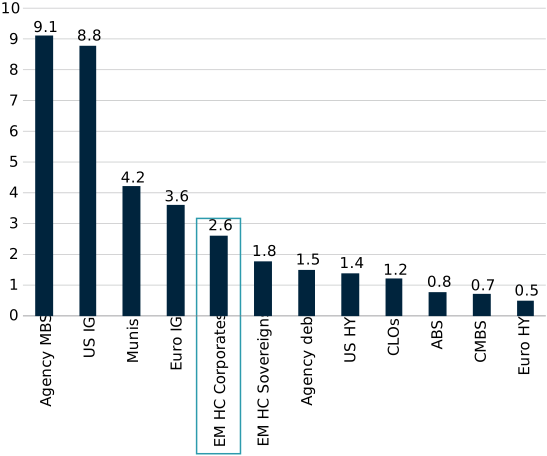
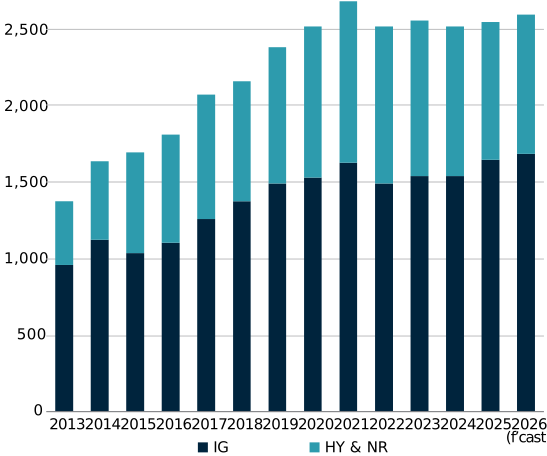
Unternehmensanleihen aus Schwellenländern bilden heute ein breit diversifiziertes und umfangreiches Anlageuniversum von rund 2,5 Billionen US‑Dollar. Damit sind sie doppelt so groß wie sowohl Staatsanleihen der Schwellenländer in Hartwährung (1,2 Billionen US‑Dollar) als auch der US‑High‑Yield‑Markt (1,2 Billionen US‑Dollar) und nähern sich zunehmend der Größenordnung des europäischen Investment‑Grade‑Marktes (3,1 Billionen US‑Dollar) an.
Mit Engagements in rund 70 Ländern und einer sektoralen Struktur, die mit der entwickelter Märkte vergleichbar ist, hat die Bandbreite an Anlagechancen deutlich zugenommen.
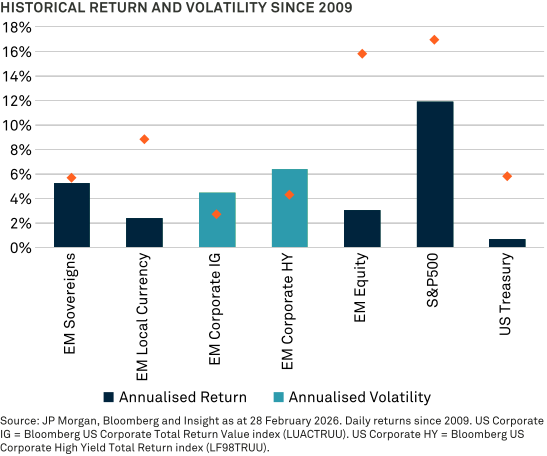
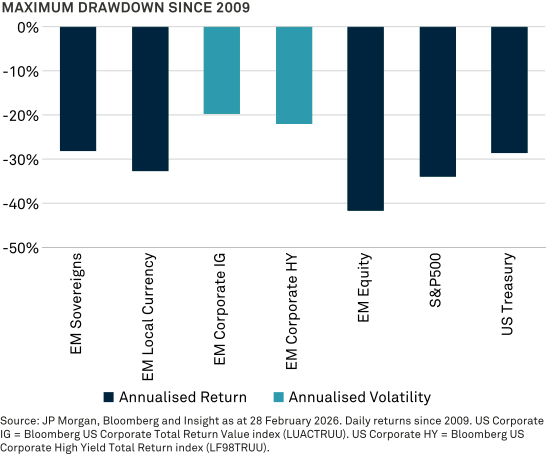
Zudem wird die Investorenbasis mittlerweile mehrheitlich von lokalen Anlegern dominiert (53 %), was in der Regel für höhere Stabilität und geringere Volatilität sorgt. Infolgedessen haben Unternehmensanleihen aus Schwellenländern die höchsten risikoadjustierten Renditen im Vergleich zu Schwellenländer‑Staatsanleihen, lokalen EM‑Märkten oder EM‑Aktien erzielt.
Figure 1: An asset class of significant size and average investment grade rating1
1Source: JP Morgan as of December 2025.
Starke Fundamentaldaten untermauern die Argumente für eine Allokation zum jetzigen Zeitpunkt.
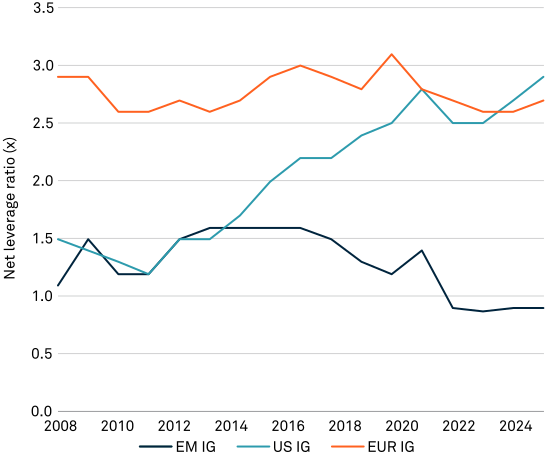
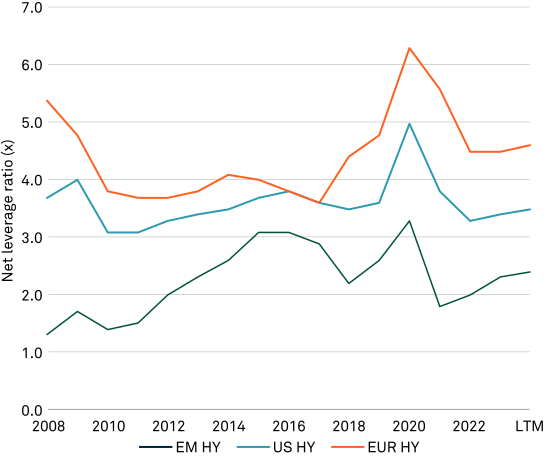
Die Bilanzen von Unternehmen aus Schwellenländern sind weiterhin solider als die vieler Unternehmen in den Industrieländern. Der Verschuldungsgrad von EM‑Investment‑Grade‑Unternehmen liegt bei etwa der Hälfte des Niveaus von US‑ und europäischen IG‑Unternehmen. Auch im High‑Yield‑Segment bleibt die Verschuldung von EM‑Unternehmen mit 2,6‑fach deutlich unter der von US‑High‑Yield‑Unternehmen (3,5‑fach) und europäischen High‑Yield‑Unternehmen (4,7‑fach).
Diese Verbesserungen spiegeln sich in zwei aufeinanderfolgenden Jahren mit Netto‑Rating‑Upgrades sowie in Ausfallraten, die sich bei rund 3 % normalisiert haben – und damit auf dem Niveau von High‑Yield‑Anleihen aus den Industrieländern liegen.
Auch die technischen Faktoren sprechen für die Anlageklasse. Die Nettoemission dürfte 2026 bereits das fünfte Jahr in Folge negativ bleiben, da Tilgungen, Kuponzahlungen und Rückkäufe weiterhin das Neuangebot übersteigen. Dies sorgt für ein günstiges Angebots‑Nachfrage‑Verhältnis – insbesondere in einem Umfeld, in dem die Zuflüsse in Fonds für Hartwährungsanleihen wieder an Dynamik gewinnen.
Figure 2: Emerging market corporate fundamentals remain stronger than global counterparts2
Bewertungen runden das attraktive Investmentargument ab und machen Unternehmensanleihen aus Schwellenländern derzeit besonders interessant.
Bereinigt um die verbesserten Fundamentaldaten bleiben die Spreads im Vergleich zu globalen Pendants attraktiv hoch und ziehen verstärkt das Interesse von Crossover‑Investoren an, die nach Rendite suchen, ohne dafür ein deutlich höheres Risiko einzugehen. Angesichts eines schrumpfenden Angebots, sich weiter verbessernder Fundamentaldaten und einer globalen Kapitalrotation weg von hoch bewerteten US‑Kreditmärkten sind EM‑Unternehmensanleihen gut positioniert, um eine Outperformance zu erzielen.
In Kombination mit dem schwächeren US‑Dollar ergibt sich derzeit eine außergewöhnliche Konstellation, in der zyklische Rückenwinde und strukturelle Verbesserungen zusammenkommen. Für Investoren, die auf laufende Erträge und ein ausgewogenes Risiko‑Rendite‑Profil setzen, könnte jetzt ein idealer Zeitpunkt sein, das Engagement in Unternehmensanleihen aus Schwellenländern zu erhöhen.
Figure 3: Spread compensation relative to risk3
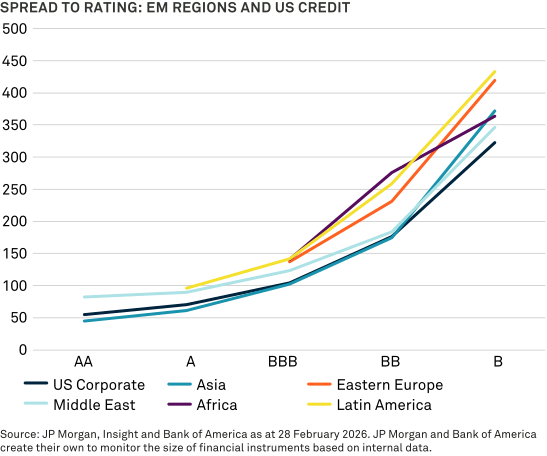
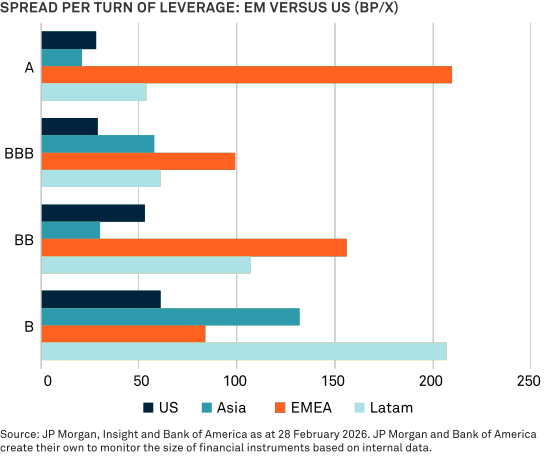
Figure 4: Emerging market corporates have achieved attractive risk-adjusted returns over time4
3181200 Exp: 15 September 2026