Please ensure Javascript is enabled for purposes of website accessibility The Global Economy Is Holding Up
ch
de
intermediary
intermediary
false
true
Gathering data
Disclaimer Not Available

The global economy is holding up

The global economy is holding up

This past year was rife with risks to the global economy: policy changes, tariff uncertainty and more. Yet, the global economy held up as manufacturing and services activity strengthened across the world. We see an opportunity for U.S. investors to diversify geographically.
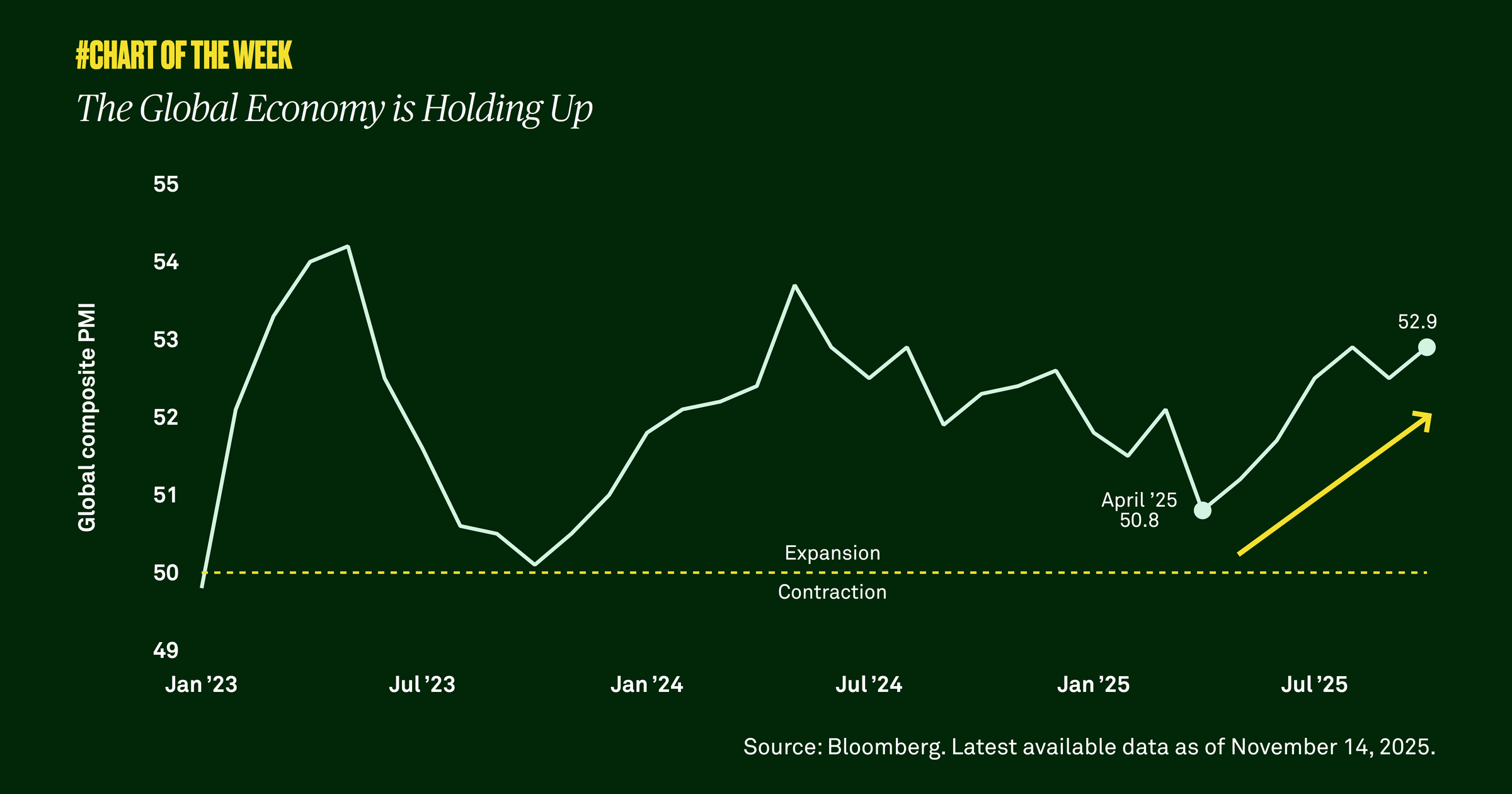
Chart-of-the-week-twentyseven


The global economy remained resilient this past year during a time of pronounced policy and tariff uncertainty, as well as geopolitical tensions. Yet, fiscal support, monetary easing and strong capital expenditures helped economies deliver positive growth.

A key measure of economic conditions, the Global Composite Purchasing Managers’ Index (PMI), a weighted average of the global manufacturing and services PMIs, provides a snapshot of overall worldwide economic health. A reading above 50 indicates economic expansion, while a reading below 50 suggests a contraction. This metric is at its highest since August 2024 and underpins our positive outlook for global growth as we head into 2026.

A strong global economy is important to investors because increased economic activity leads to higher corporate profits, boosting stock prices.  It is one of the reasons we maintain a constructive view on equities and why diversification across regions remains important.
VERWANDTE THEMEN
What happens on bad days?
Chart of the Week | Makroökonomisch

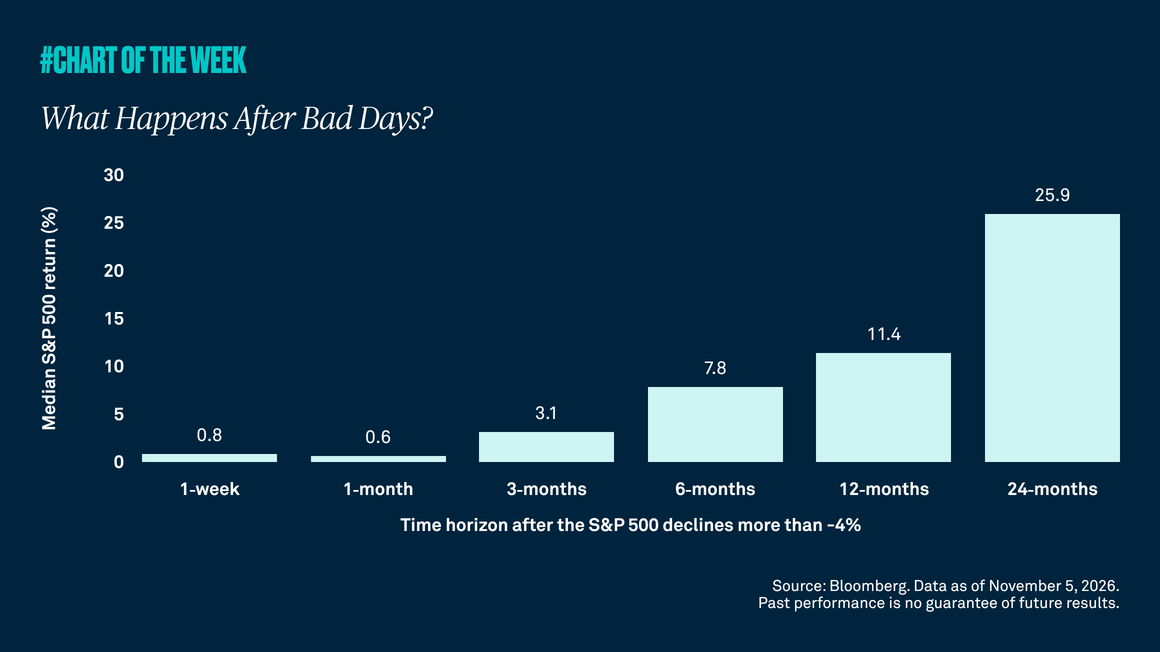
The recent one-day equity selloff reflected weaker sentiment amid election uncertainty and concerns that slower artificial intelligence spending could weigh on growth and earnings. Still, pullbacks of this magnitude have often been followed by solid returns, and we remain constructive given the economy’s resilience and AI’s long-term potential.

Play the long game
Chart of the Week | Makroökonomisch

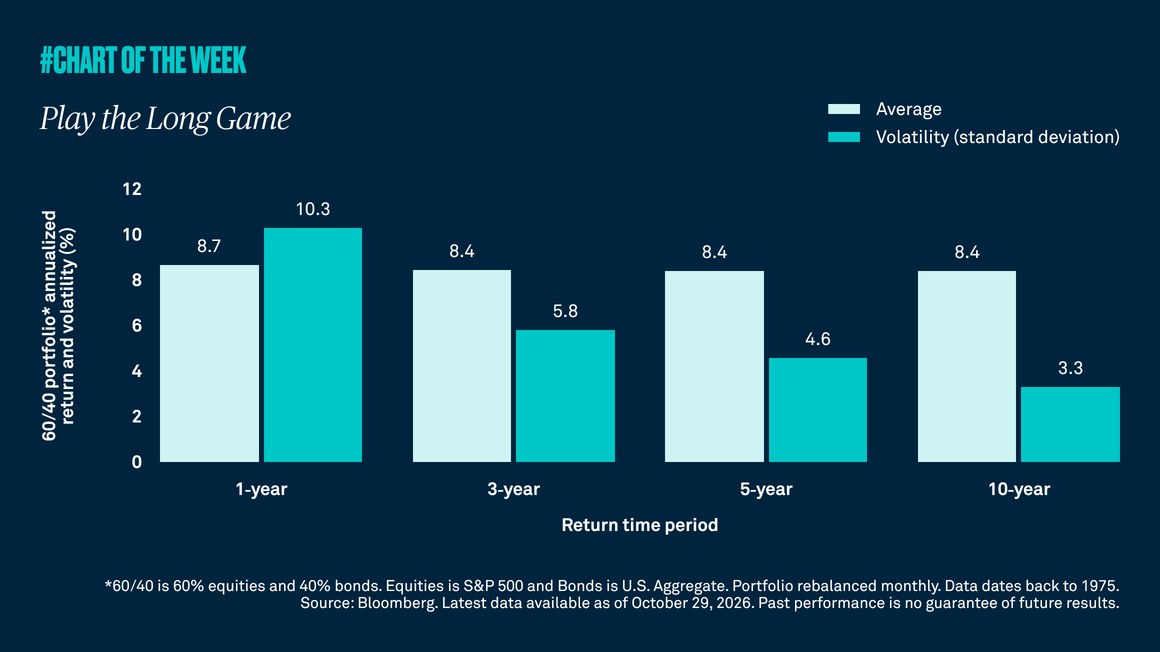
When it comes to investing, time matters. While headlines and short-term perspectives can lead investors to try and time the market, investors have historically been rewarded by playing the long game. Rather than overreacting to market noise, investing over longer time periods can help smooth the ride without sacrificing returns. The lesson: stay diversified and invested for the long term.

Contained contagion?
Chart of the Week | Makroökonomisch

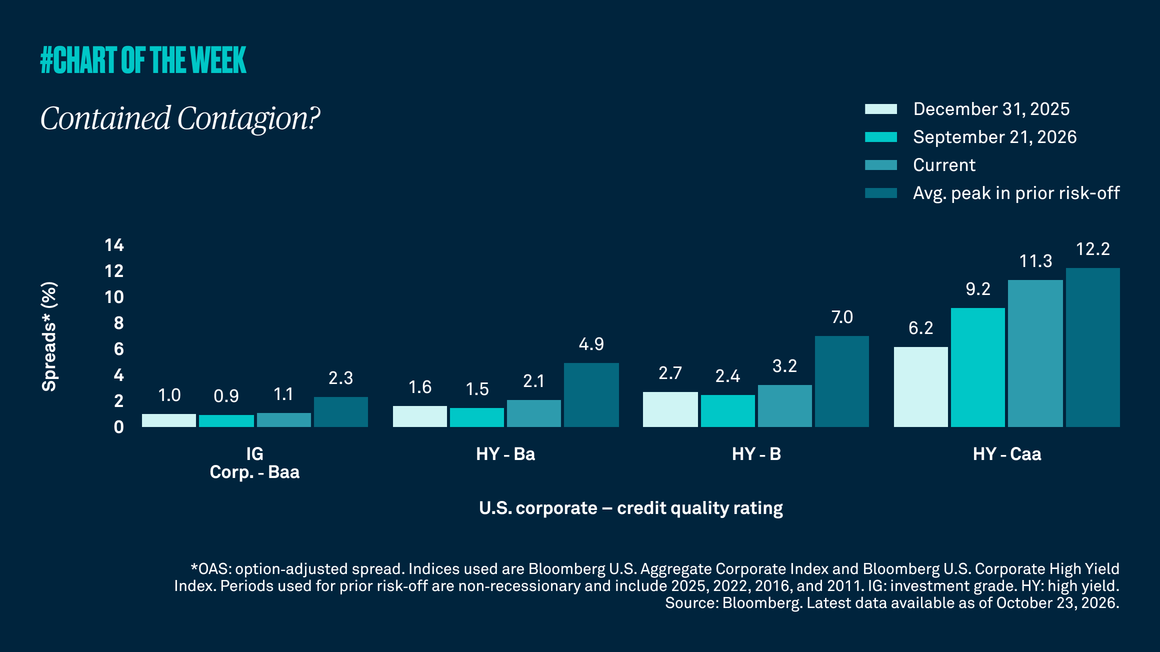
U.S. high yield credit spreads have widened year to date, reflecting greater investor caution about perceived default risk. The move also raises concerns about possible credit contagion. However, because spread widening has been concentrated in the lowest-quality issuers rather than higher-quality issuers, we don’t anticipate broader market stress.

Can the bull run in corporate margins continue?
Chart of the Week | Makroökonomisch

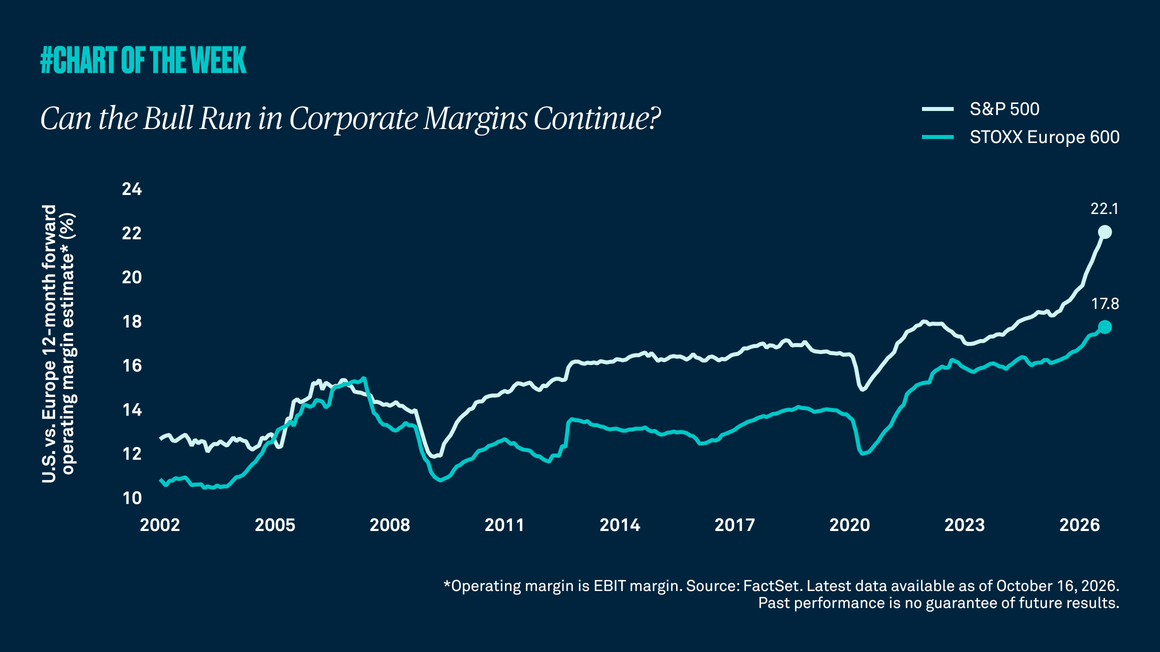
Higher inflation and elevated interest rates typically weigh on corporate profitability, yet corporate margins continue to climb to record highs. While that strength is evident both in the U.S. and abroad, U.S. outperformance versus Europe is now the widest on record. Stronger margins have helped contribute to better-than-expected earnings and reinforce U.S. equity leadership. The question now is whether that strength can persist?

Gathering data
Disclaimer Not Available

Dies ist eine Marketingkommunikation