Please ensure Javascript is enabled for purposes of website accessibility S&P 500 Returns After All-Time Highs
ch
de
intermediary
intermediary
false
true
Gathering data
Disclaimer Not Available

S&P 500 Returns After All-Time Highs

S&P 500 Returns After All-Time Highs

The S&P 500 recently hit a new all-time high after a notable year of peaks in 2025. Is now the time for caution? History tells us attractive performance often follows record highs.  
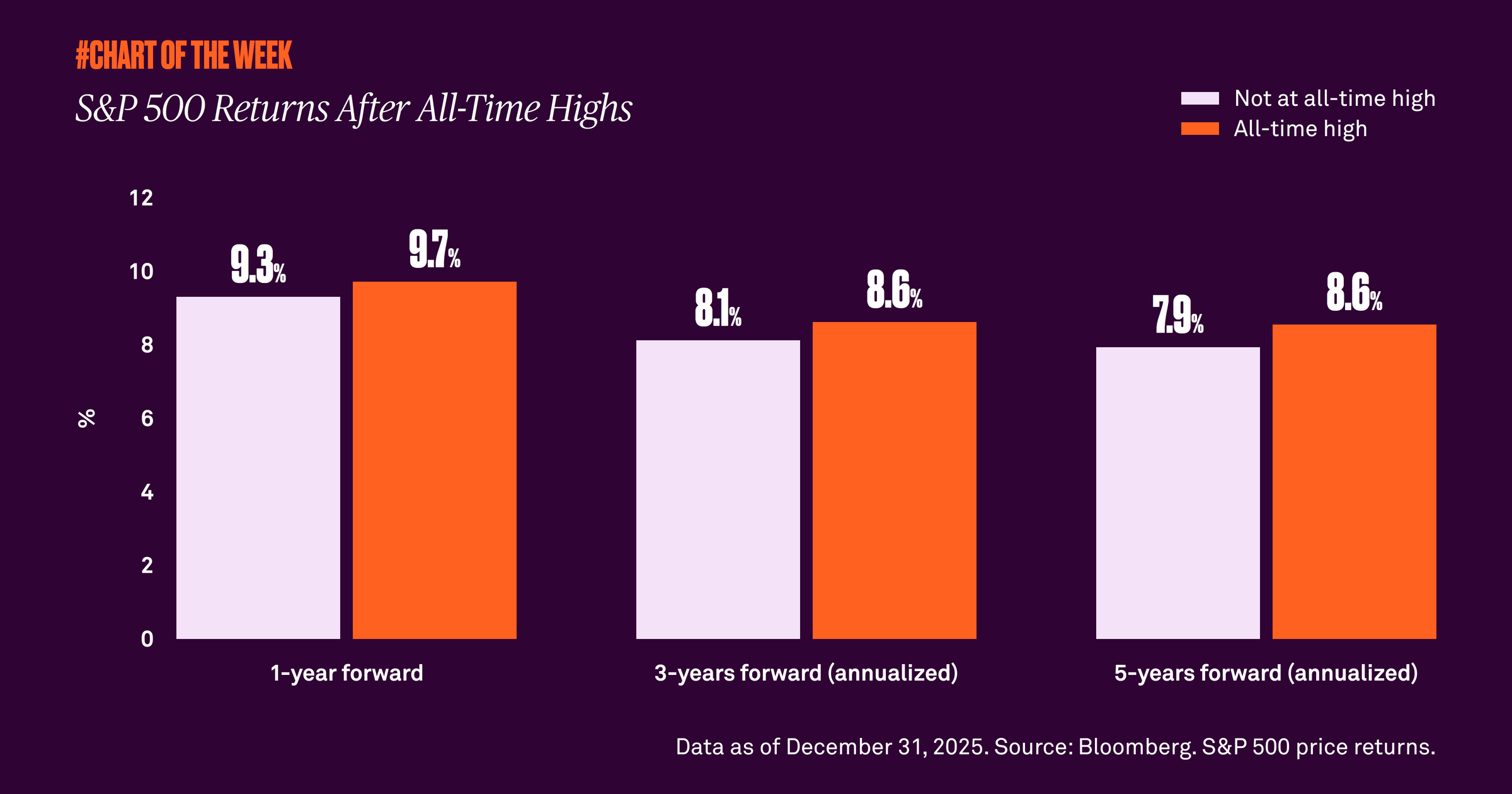

Last week, the S&P 500 set a record closing high that neared the still unbroached 7,000 level, after reaching a notable record of 39 all-time highs throughout 2025. Last year’s performance reflects the fifth most all-time highs in a year since 2000 and the 15th most in the entire history of the index.

However, when markets reach new highs, some investors become overly cautious and conclude that the market has hit a ceiling. It’s therefore important to recognize that historically, forward returns after new all-time highs are higher on average than those following other days.

This is a key reason why we advise investors to stay invested at all times, including now. Even when faced with headlines on matters such as geopolitics, the labor market and artificial intelligence capital expenditures, looking past the noise and keeping a long-term perspective is the best way to build wealth.
VERWANDTE THEMEN
Getting real in retail
Chart of the Week | Makroökonomisch

Despite persistent concerns that sticky inflation would erode purchasing power and drag consumer spending lower, the May retail sales data tells a different story. Spending is up not just in dollar terms, but in quantity, highlighting continued consumer resilience.

Higher inflation, contained expectations
Chart of the Week | Makroökonomisch

Inflation has jumped since the Strait of Hormuz closed, squeezing consumers through higher gas and utility bills and pressuring businesses with higher freight and operating costs. Yet, longer-term inflation expectations remain contained, suggesting this looks more like a temporary energy shock than a lasting inflation upswing.

Steady hiring, fewer layoffs
Chart of the Week | Makroökonomisch

May’s jobs report showed a labor market that is improving, with payroll growth exceeding expectations and layoffs down sharply from last year. Steady hiring and fewer layoffs should continue to support consumer spending and U.S. economic growth.

A broader foundation for earnings growth
Chart of the Week | Makroökonomisch

Although companies benefiting most directly from AI-related capital spending are the main drivers of higher earnings, strength is no longer confined to that group. Earnings across the broader market remain solid and are expected to grow more than 10% this year and next, suggesting the risk of concentrated market leadership may not be founded.

Gathering data
Disclaimer Not Available

Dies ist eine Marketingkommunikation