Stocks, as measured by the S&P 500, are up over 13% through early August. The solid gains have been fueled by a resilient economy, steady consumer spending, optimism around artificial intelligence and better-than-expected earnings growth. Still, some investors worry the advance may be too concentrated in technology and that AI-capex monetization may fall short of expectations. A closer look suggests that it is not just tech moving the market higher.
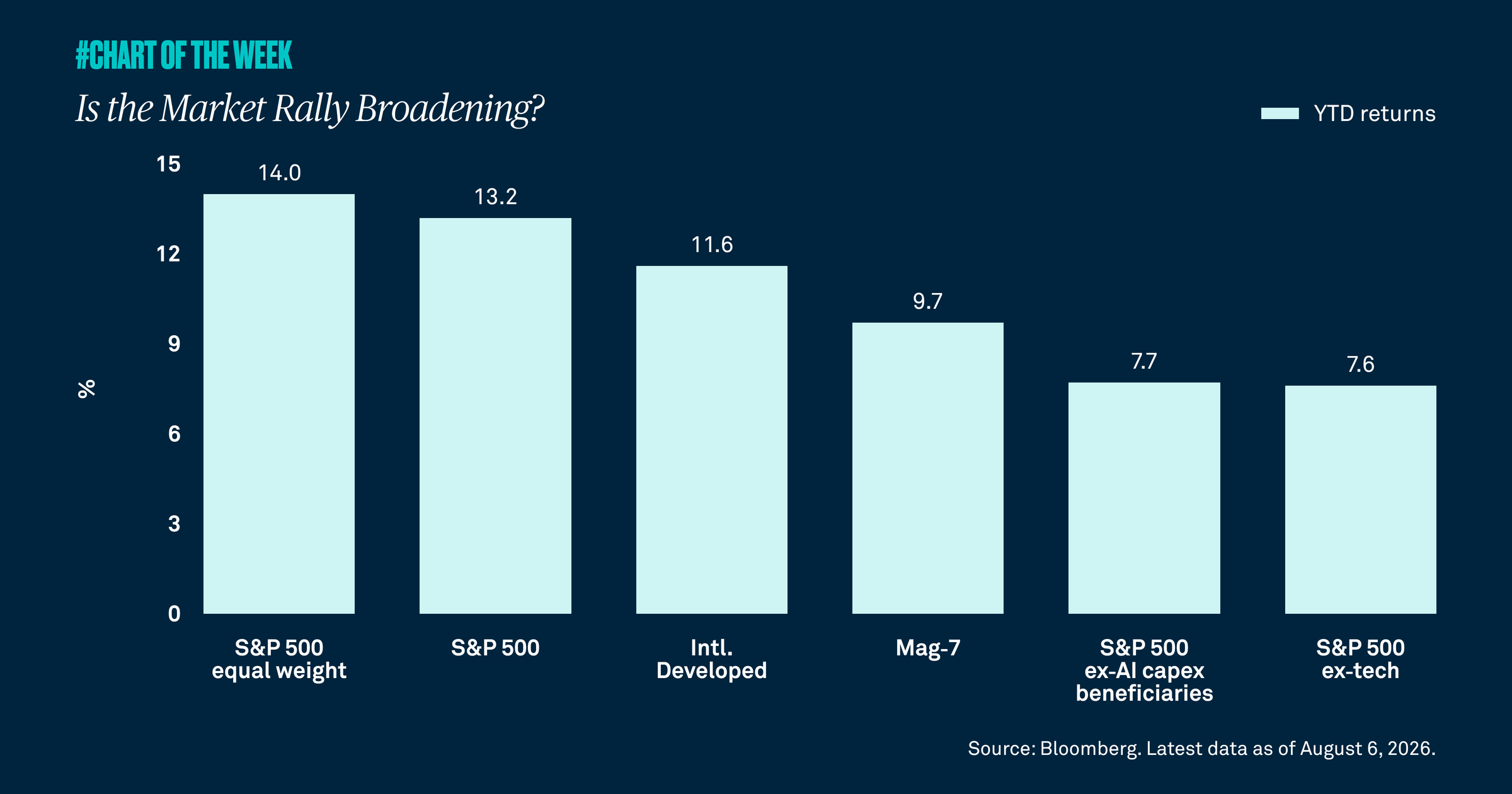
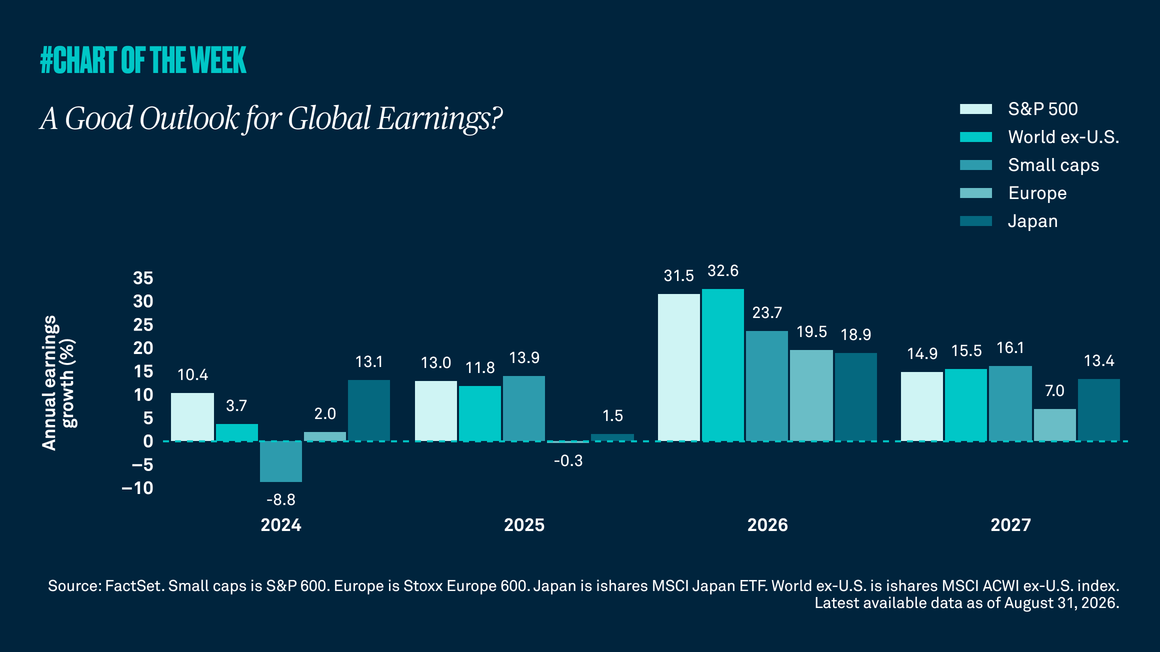
With technology companies on track to deliver a roughly 50% earnings growth rate in 2026, it is not surprising that the sector has remained a major driver of market performance. However, market gains are not solely reliant on technology and AI-linked names. Excluding these, the S&P 500 is still posting solid gains of 8% year to date, which is a healthy sign and indicative of broader market strength.
A key measure of market breadth is the comparison between the market-cap weighted S&P 500 to the equal-weighted S&P 500. It may surprise some investors to learn that the equal-weighted S&P 500 index is modestly outperforming the S&P 500 so far this year, with a gain of 14% versus 13.2% through early August. This suggests sectors beyond technology and AI capex are contributing to moving the market higher.
Another way to evaluate whether the market is broadening is to look at how many stocks are trading above their recent trend. Currently, about 72% of S&P 500 companies are trading above their 200-day moving average. That is the highest level since December 2024.
Collectively, these measures suggest that breadth is improving – a constructive sign for the forward outlook.