Please ensure Javascript is enabled for purposes of website accessibility Behind the Numbers: Q4 GDP
ch
de
intermediary
intermediary
false
true
Gathering data
Disclaimer Not Available

Gross domestic product undershot expectations last quarter, but the shortfall appears driven more by the temporary government shutdown than broad-based weakness. Consumer demand remains resilient, and with supportive fiscal policy, easing financial conditions and a steady labor market, the outlook points to a modest acceleration in economic activity this year. 
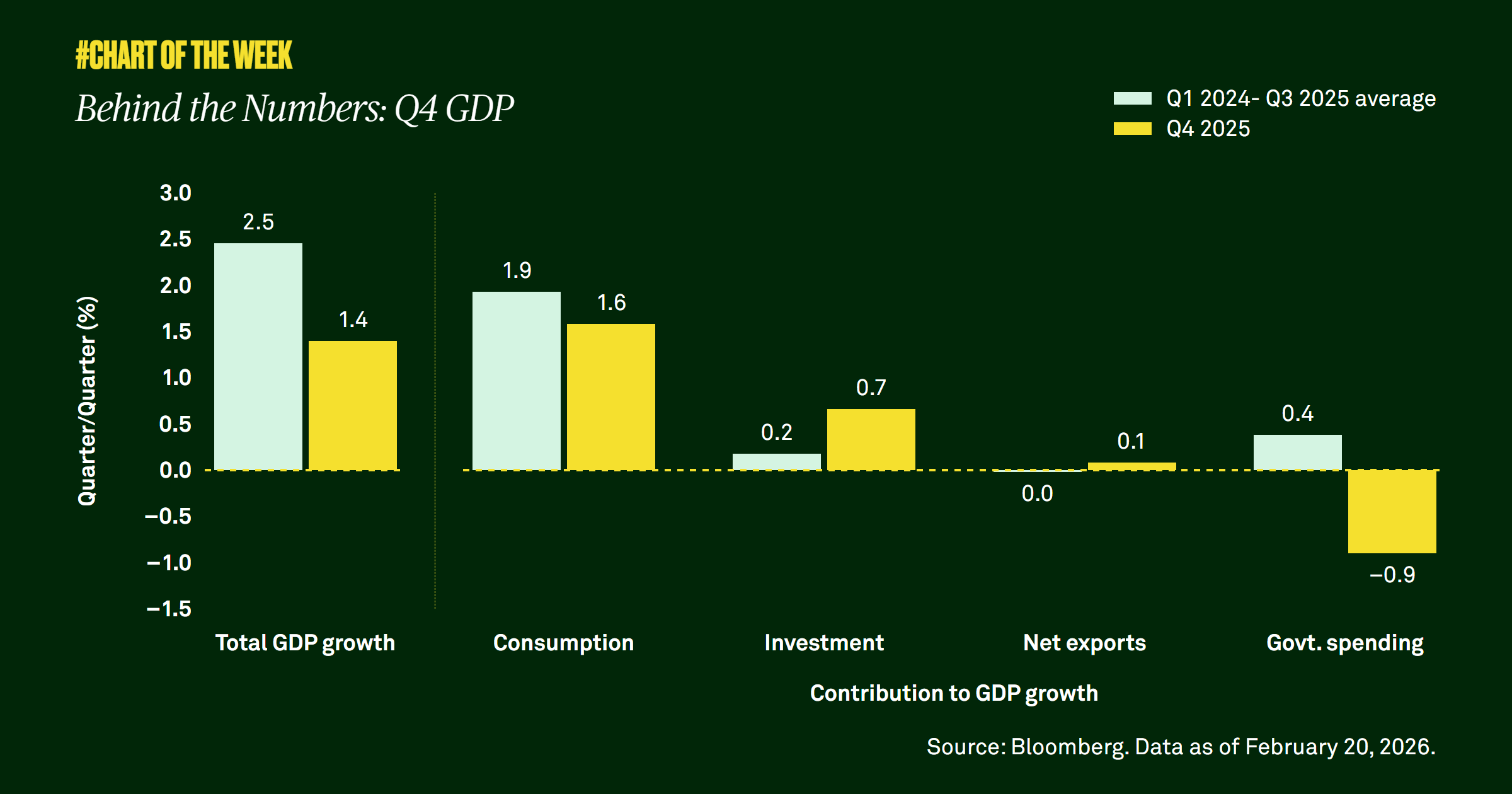

Last week’s fourth quarter gross domestic product (GDP) report came in at annualized pace of 1.4%, disappointing many Wall Street analysts who had anticipated 2.8%. For some investors, the news renewed concerns about an economic slowdown.

Growth was indeed softer than the 3% or more recorded in the previous two quarters, but the drivers of the miss are clear. The biggest drag was government spending at −0.9%, an unusually weak contribution that suggests the fourth quarter could have ended near 2.3% — above trend — absent the 43‑day government shutdown.

Consumption, the largest driver of GDP with a 70% share, slowed slightly to 1.6%, yet it remains resilient and in line with the average since 2024. We believe fiscal stimulus, lower interest rates and a steady job market will support household balance sheets and spending going forward.

Taken together, the evidence suggests the government shutdown — rather than a broad slowdown — drove the shortfall. Consensus GDP is 2.5% this year, and our target of 2.3% closely matches, reflecting our confidence in the economy amid a steady job market and sustained consumer spending.
VERWANDTE THEMEN
Inflation is a global problem
Chart of the Week | Makroökonomisch

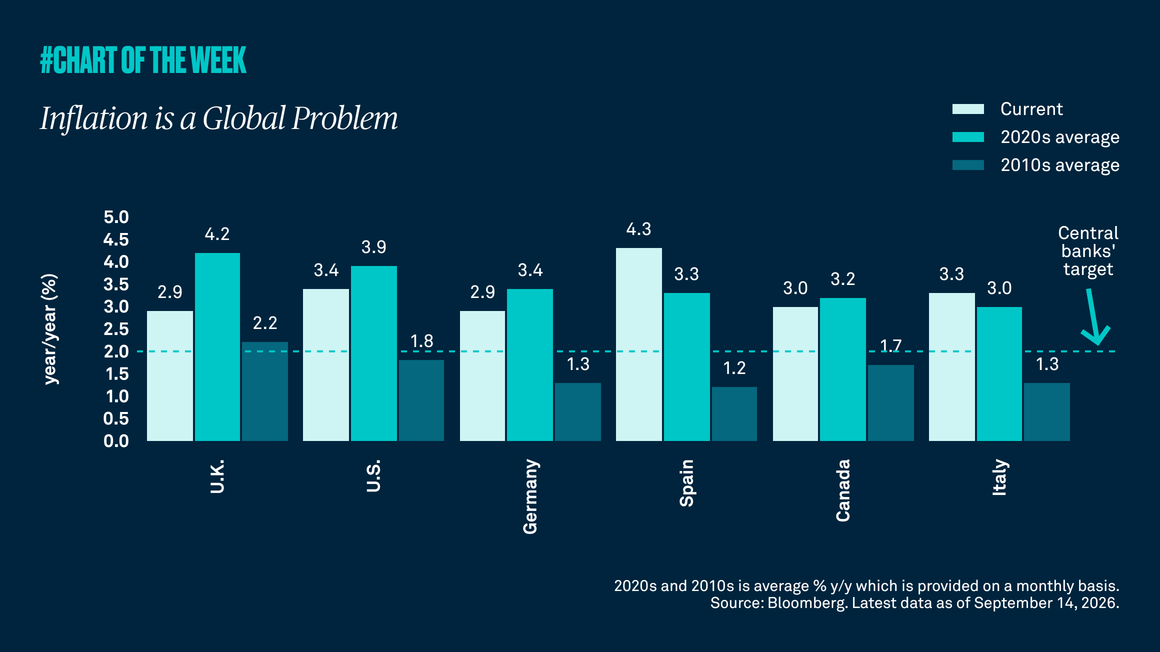
Resilient economic growth, sticky inflation driven by higher energy prices and continued geopolitical uncertainty are complicating the path back to central-bank price targets. We believe policymakers are likely to adopt a tightening bias but remain data dependent.

A good outlook for global earnings
Chart of the Week | Makroökonomisch

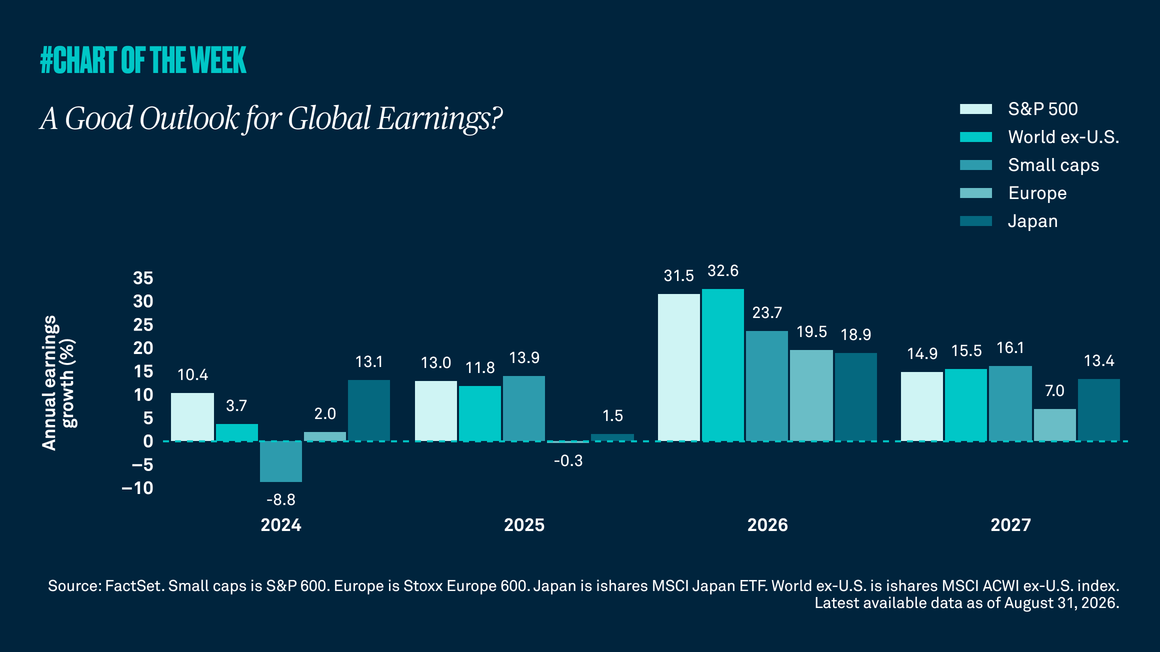
Global earnings growth has been strong this year, led by the U.S. and reinforced by improving profit growth across Europe, Japan and other major markets. While volatility may rise in the near term, above-average earnings and broader global participation remain supportive of global equities.

In a real regime shift?
Chart of the Week | Makroökonomisch

Higher inflation has been a dominant theme of the current decade. In addition to price shocks, it is being shaped by secular investment trends in infrastructure, defense spending, onshoring and the ongoing AI buildout. These structural changes reinforce the case for looking beyond traditional 60/40 portfolios to include real assets as a source of diversification and return potential in portfolios.

Getting real with real assets
Chart of the Week | Makroökonomisch

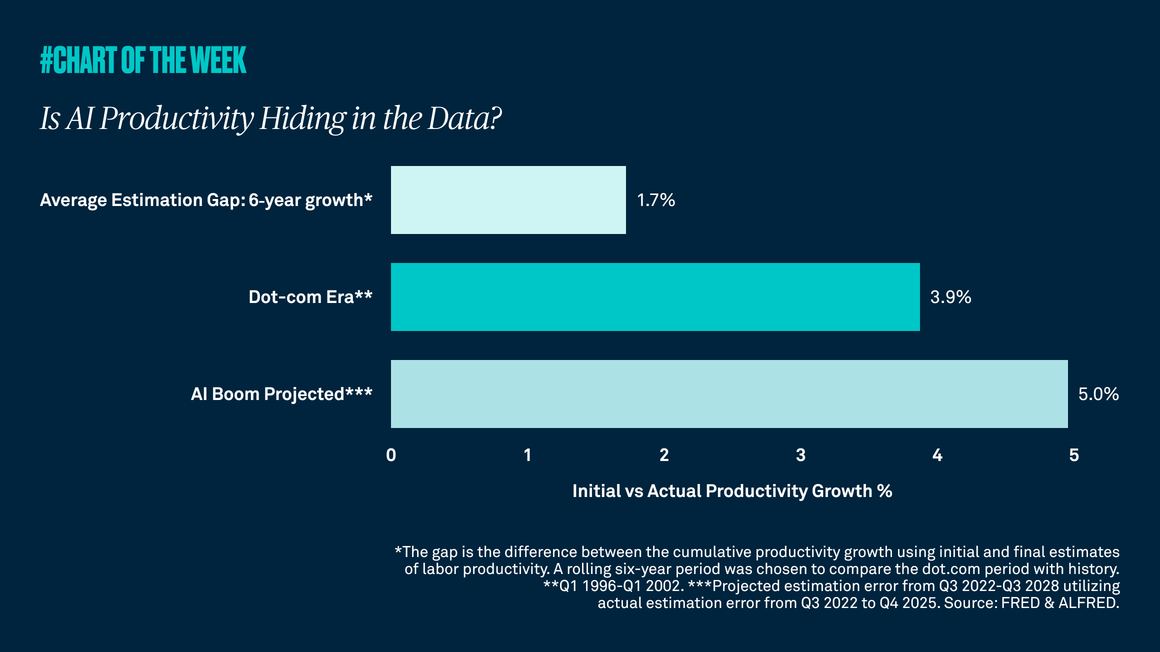
Inflation appears to have transitioned from its pre-Covid average of 2% to a stickier point closer to 3%, and we do not expect a near-term return to prior levels. In this environment, we believe real assets, such as commodities, infrastructure and REITs, can provide inflation protection, diversification and return potential.

Gathering data
Disclaimer Not Available

Dies ist eine Marketingkommunikation