Please ensure Javascript is enabled for purposes of website accessibility Margin Resilience Is Key
be
en
intermediary
intermediary
false
true
Gathering data
Disclaimer Not Available

Margin resilience is key

Margin resilience is key

This year U.S. equities have underperformed the rest of the world due largely to policy uncertainty. However, an important driver of U.S. equity outperformance over the longer term has been stronger earnings and profit margins relative to peers, and our view is these factors will continue to drive long-term U.S. exceptionalism.
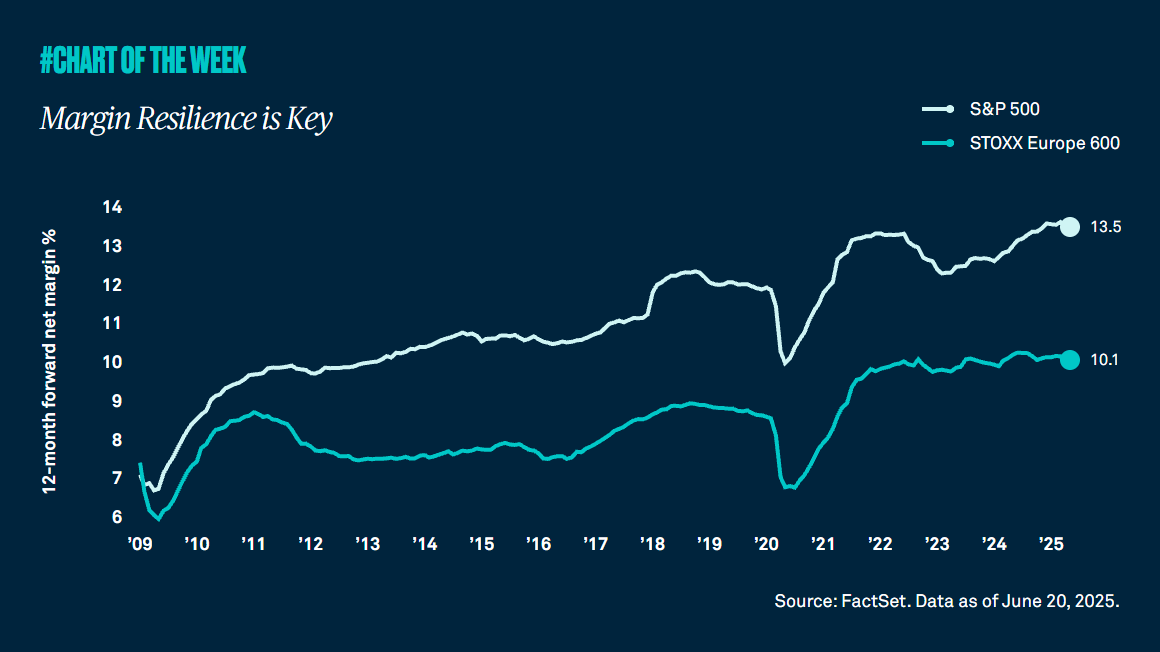


U.S. equities have had a challenging first half of the year, underperforming the rest of the world. A primary cause of this underperformance has been higher policy uncertainty and concerns about the impact of higher tariffs on growth.

While policy uncertainty can impact short-term volatility and lead to temporary underperformance, what does this mean for returns over the long term? An important driver of long-term returns is earnings and profit margins, where the U.S. has continued to outperform. In fact, since 2010 margins increased 6.4% to 13.5% as compared to a 2.7% increase in Europe to 10.1%. The difference between U.S. and European margins is now 3.4%, near the highest in history.

Additionally, technology leadership and increased adoption of artificial intelligence (AI) across diverse industries will likely support the continued expansion of U.S. margins, allowing them to surpass the rest of the world. Considering the many ways AI can improve profit margins for businesses, we anticipate that 2025 S&P 500 earnings per share will come in at $260-$270, demonstrating positive growth of roughly 8% as strong earnings and margin expansion continue to drive U.S. exceptionalism into the future.
RELATED CONTENT
Higher inflation, contained expectations
Chart of the Week | Macroeconomic

Inflation has jumped since the Strait of Hormuz closed, squeezing consumers through higher gas and utility bills and pressuring businesses with higher freight and operating costs. Yet, longer-term inflation expectations remain contained, suggesting this looks more like a temporary energy shock than a lasting inflation upswing.

Steady hiring, fewer layoffs
Chart of the Week | Macroeconomic

May’s jobs report showed a labor market that is improving, with payroll growth exceeding expectations and layoffs down sharply from last year. Steady hiring and fewer layoffs should continue to support consumer spending and U.S. economic growth.

A broader foundation for earnings growth
Chart of the Week | Macroeconomic

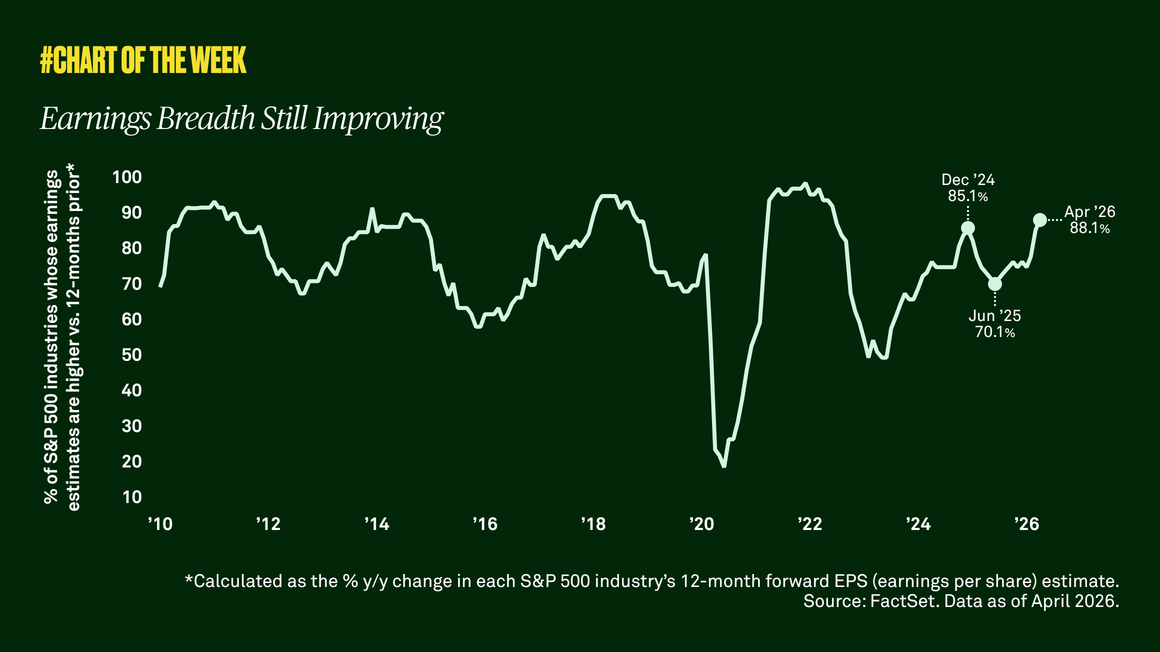
Although companies benefiting most directly from AI-related capital spending are the main drivers of higher earnings, strength is no longer confined to that group. Earnings across the broader market remain solid and are expected to grow more than 10% this year and next, suggesting the risk of concentrated market leadership may not be founded.

Is the job market stabilizing?
Chart of the Week | Macroeconomic

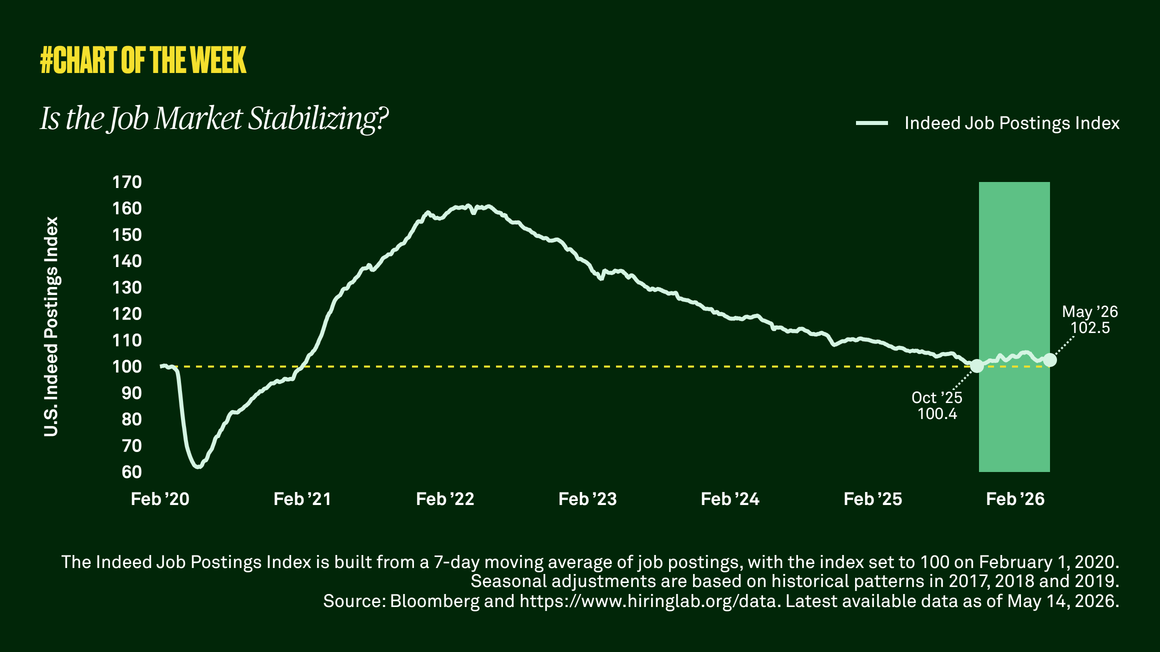
After sluggish job growth in 2025, investors are looking for signs that the labor market may be stabilizing. With consumer spending driving 70% of economic activity, an improving labor market is essential to sustaining economic growth.

Gathering data
Disclaimer Not Available

This is a marketing communication