Please ensure Javascript is enabled for purposes of website accessibility What Is Driving Slowing Inflation?
be
en
institutional
institutional
false
true
Gathering data
Disclaimer Not Available

What is driving slowing inflation?

What is driving slowing inflation?

Inflation came in cooler than expected in May. In fact, it’s down from January’s growth rate of 3.0% year over year to 2.4%. While stickier services components such as shelter have driven this decline, could the recent uptick in oil prices and higher tariffs pose headwinds?
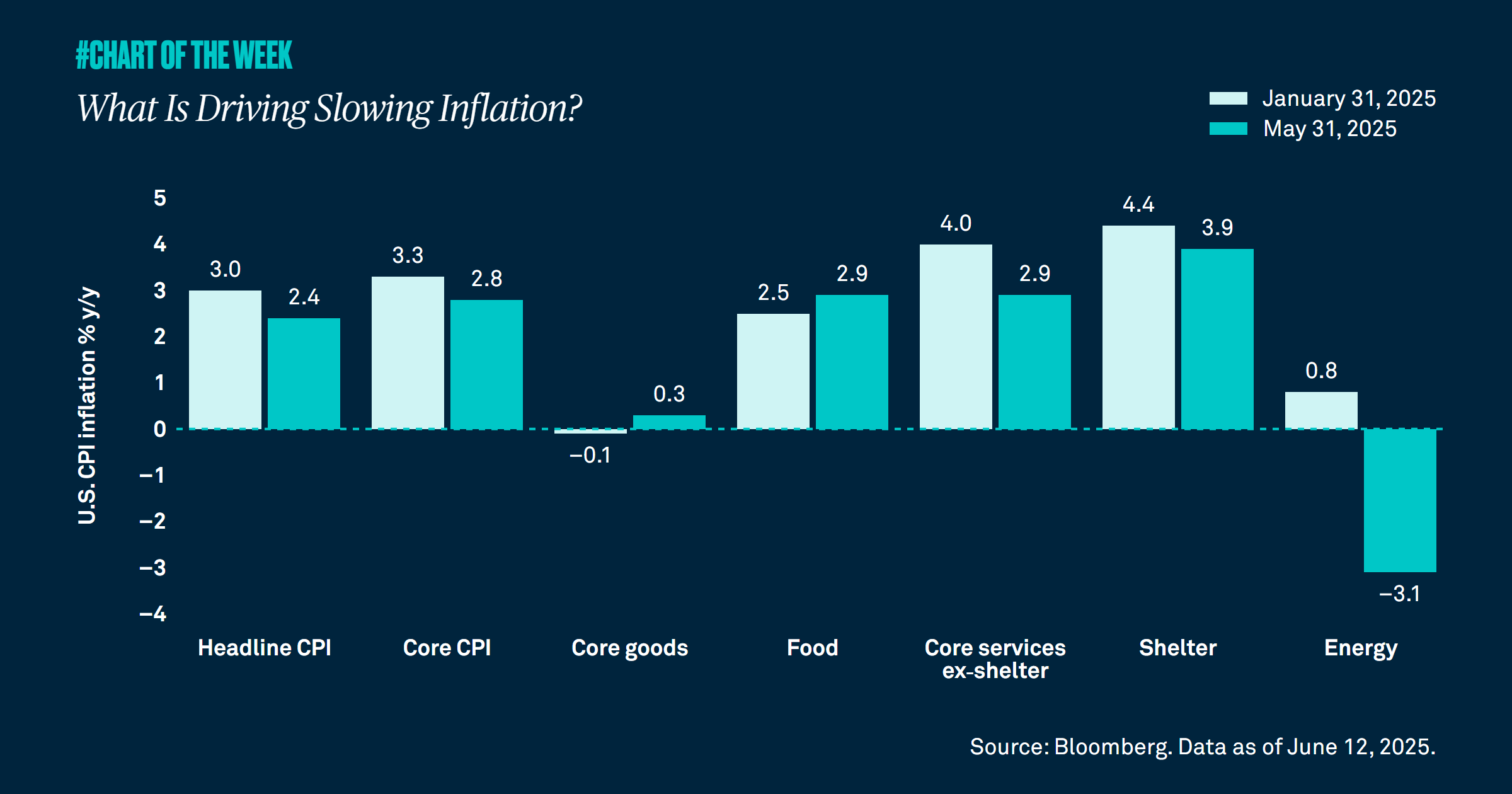


While we expected inflation to slow, it is encouraging to see the stickier components of services and shelter inflation driving the decline.

Led by services, the disinflation trend has been notable, with prices declining from a growth rate of 3.0% from a year ago in January to 2.4% in May. At 3.9% year over year, shelter inflation is the lowest it has been since November 2021, while core services at 2.9% is the lowest in more than four years.

However, could tariff-related price hikes and the recent increase in oil prices due to tensions in the Middle East hamper the downward path of inflation? We believe the impact of tariffs will amount to a one-time price adjustment as opposed to a long-term trend. Despite the roughly $17 increase in the price of oil since early May to $74 a barrel, it is only up 0.4% from a year ago. If there are no significant supply disruptions or if tensions de-escalate, the additional impact to energy prices or overall inflation should be limited. While the disinflation trend may slow from here, we maintain our year-end inflation forecast of 2.5-3.5%.
RELATED CONTENT
Steady hiring, fewer layoffs
Chart of the week | Macroeconomic

May’s jobs report showed a labor market that is improving, with payroll growth exceeding expectations and layoffs down sharply from last year. Steady hiring and fewer layoffs should continue to support consumer spending and U.S. economic growth.

A broader foundation for earnings growth
Chart of the week | Macroeconomic

Although companies benefiting most directly from AI-related capital spending are the main drivers of higher earnings, strength is no longer confined to that group. Earnings across the broader market remain solid and are expected to grow more than 10% this year and next, suggesting the risk of concentrated market leadership may not be founded.

Is the job market stabilizing?
Chart of the week | Macroeconomic

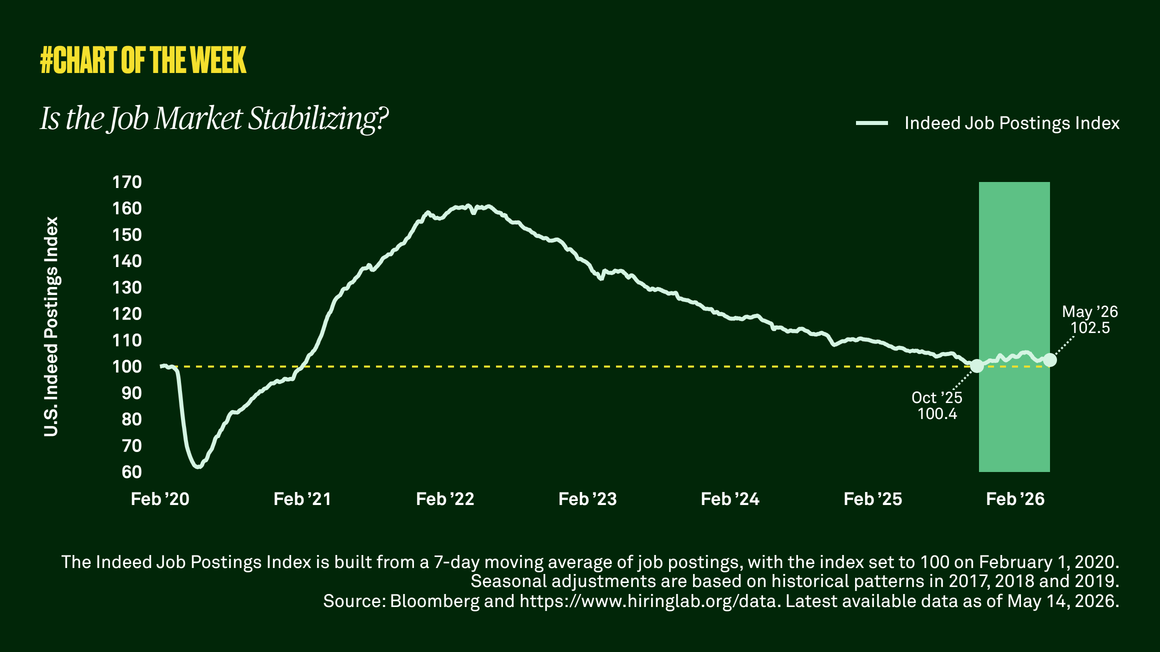
After sluggish job growth in 2025, investors are looking for signs that the labor market may be stabilizing. With consumer spending driving 70% of economic activity, an improving labor market is essential to sustaining economic growth.

Will Markets Remain Resilient?
Chart of the week | Macroeconomic

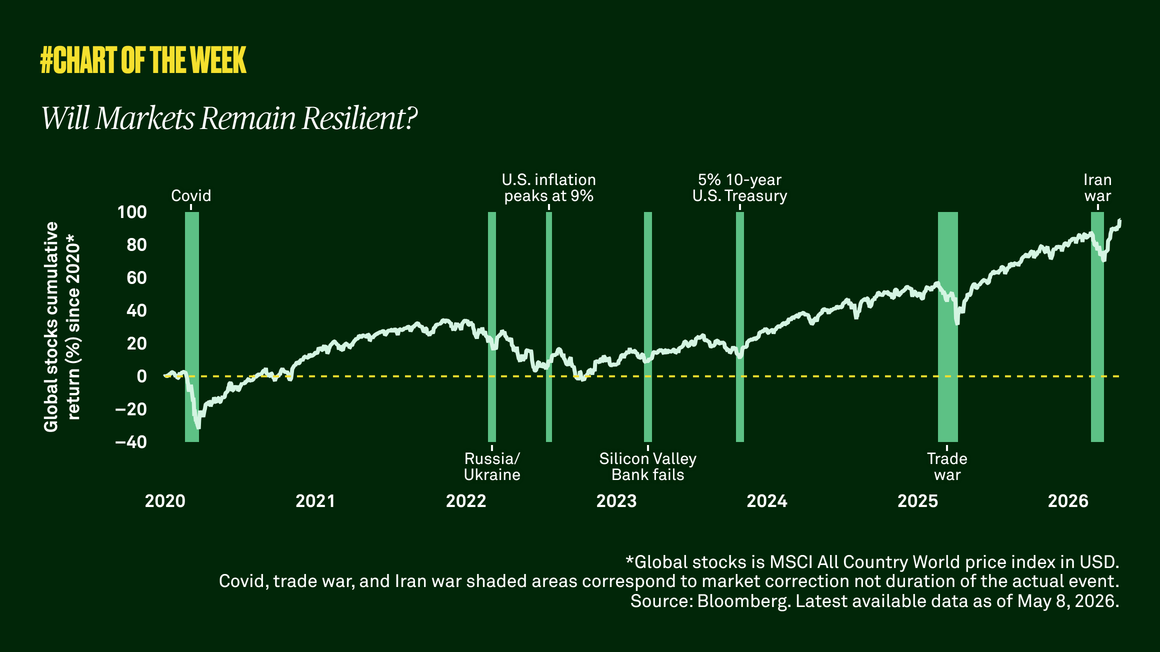
Global equities have risen an annualized 11% since 2020 despite repeated shocks, as resilient growth and earnings have helped markets recover from periods of volatility. While the U.S.-Iran conflict poses near-term inflation and growth risks, markets remain constructive as earnings expectations continue to improve.

Gathering data
Disclaimer Not Available

This is a marketing communication