Please ensure Javascript is enabled for purposes of website accessibility

Getting Real with Real Assets

Getting Real with Real Assets

Inflation appears to have transitioned from its pre-Covid average of 2% to a stickier point closer to 3%, and we do not expect a near-term return to prior levels. In this environment, we believe real assets, such as commodities, infrastructure and REITs, can provide inflation protection, diversification and return potential.
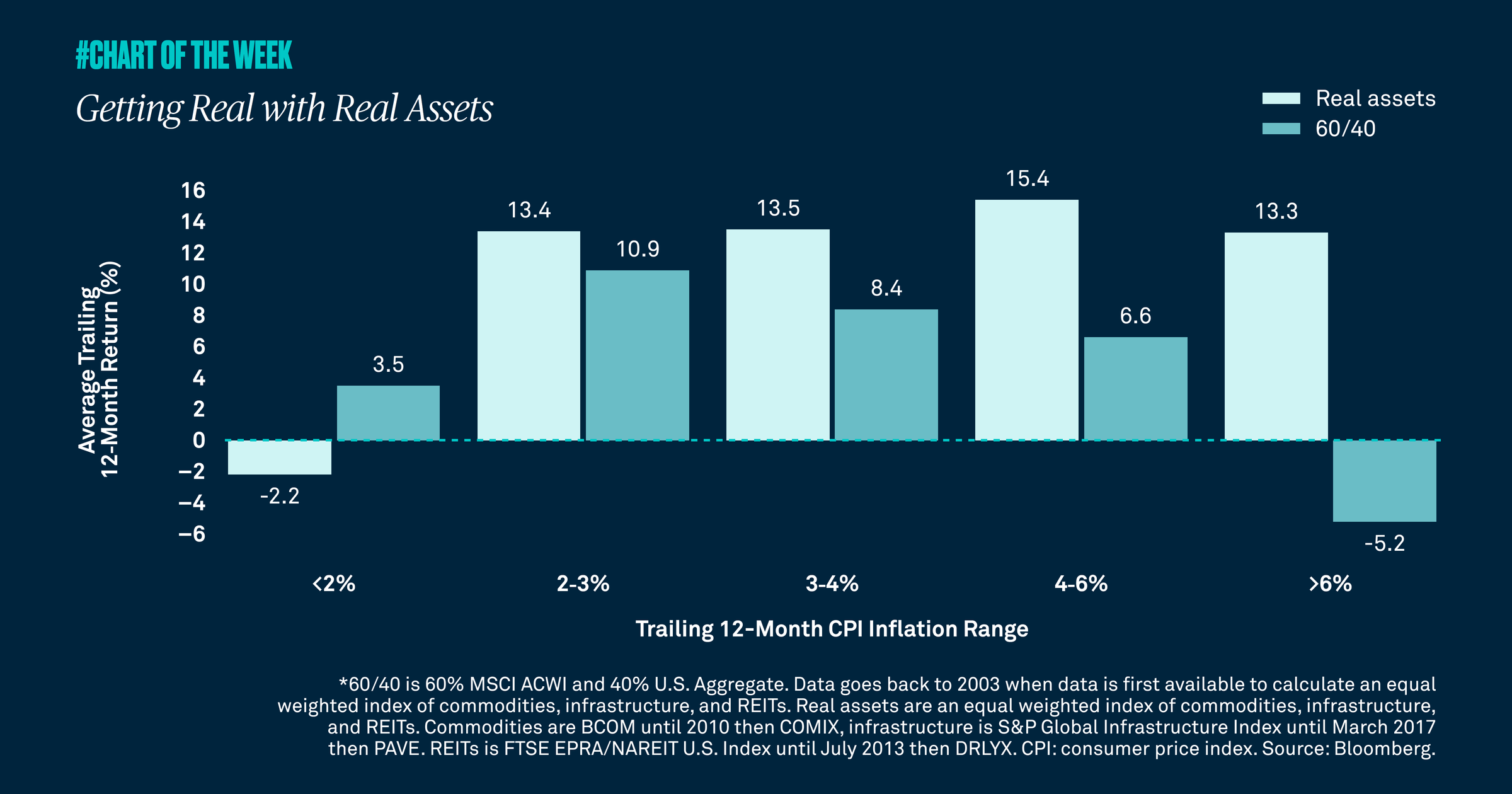
Before Covid, consumer inflation averaged about 2%, in line with the Federal Reserve’s target. Today, inflation appears to be operating in a new regime closer to 3%. It remains sticky, and we do not expect a near-term return to prior levels. In our view, the sharp rise in longer-dated global bond yields to multi-year highs suggests markets are also pricing in persistently higher inflation.
 

Against this backdrop, real assets — particularly commodities, infrastructure and REITs — remain well positioned. Historically, these areas have performed well during periods of elevated inflation. We also see further upside from a durable capital expenditure and manufacturing cycle, supported by aging infrastructure replacement, onshoring across industries, higher defense spending and continued artificial intelligence-related investment. Commodities and infrastructure should be key beneficiaries of these trends.
 

Real estate investment trusts (REITs) are also attractive now. They add exposure to income-producing real estate, where rents and property values can rise with inflation, complementing the inflation sensitivity of commodities and infrastructure.
 

Taken together, we believe that an allocation to real assets with exposure to commodities, infrastructure and REITs can help protect against inflation while enhancing returns and improving diversification. As a result, we have increased our exposure to the asset class.
  • Chart of the Week
RELATED CONTENT
Inflation Is a Global Problem
Article  |  Chart of the Week

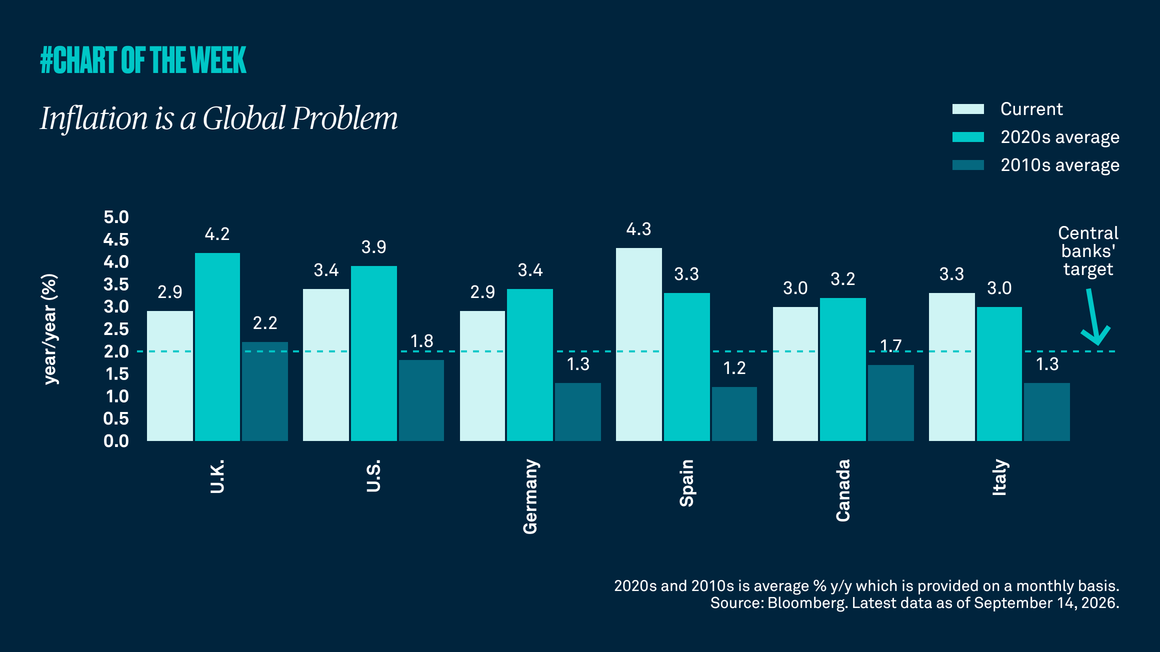
Resilient economic growth, sticky inflation driven by higher energy prices and continued geopolitical uncertainty are complicating the path back to central-bank price targets. We believe policymakers are likely to adopt a tightening bias but remain data dependent.

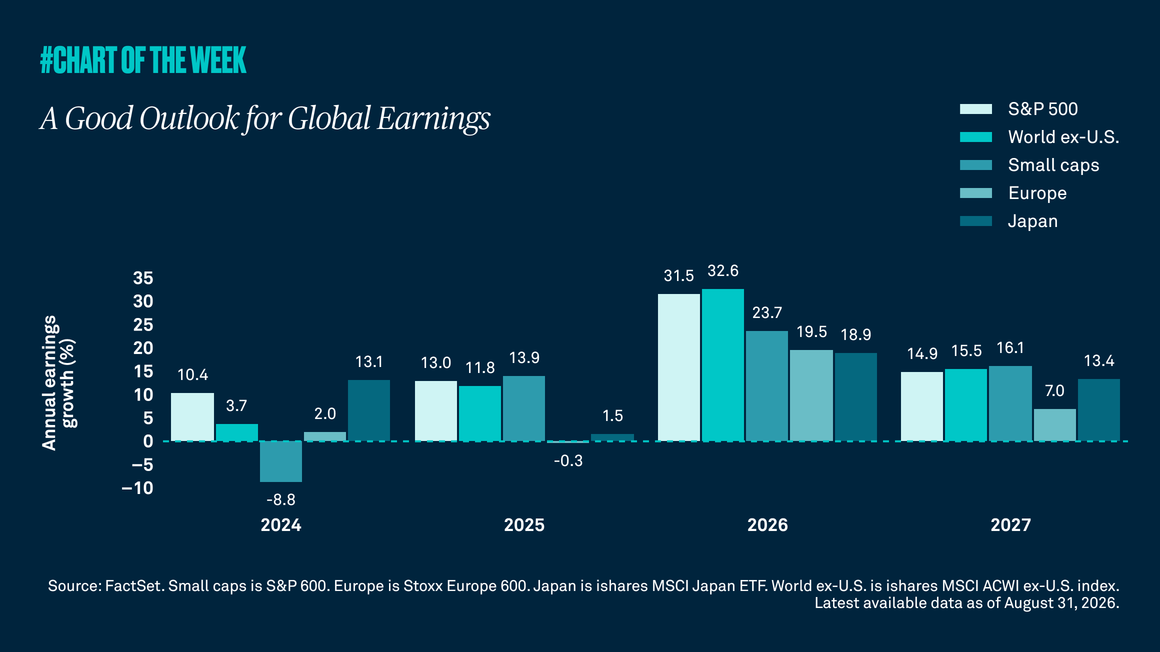
A Good Outlook for Global Earnings
Article  |  Chart of the Week

Global earnings growth has been strong this year, led by the U.S. and reinforced by improving profit growth across Europe, Japan and other major markets. While volatility may rise in the near term, above-average earnings and broader global participation remain supportive of global equities.

In a Real Regime Shift?
Article  |  Chart of the Week

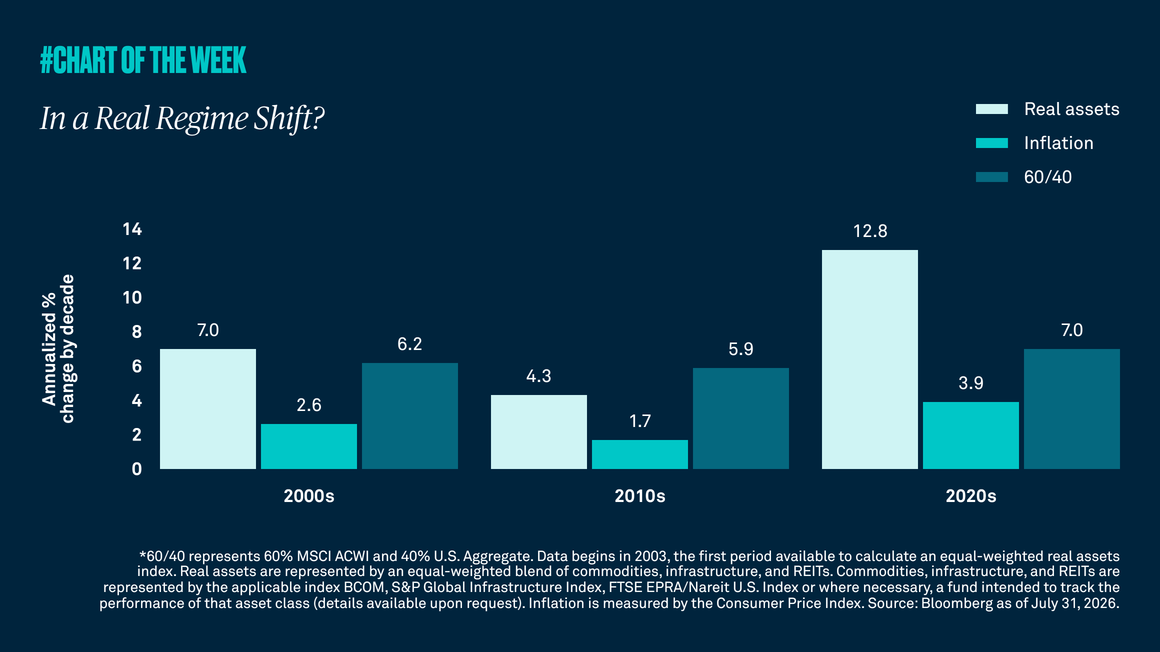
Higher inflation has been a dominant theme of the current decade. In addition to price shocks, it is being shaped by secular investment trends in infrastructure, defense spending, onshoring and the ongoing AI buildout. These structural changes reinforce the case for looking beyond traditional 60/40 portfolios to include real assets as a source of diversification and return potential in portfolios.

Not in a Bubble
Article  |  Chart of the Week

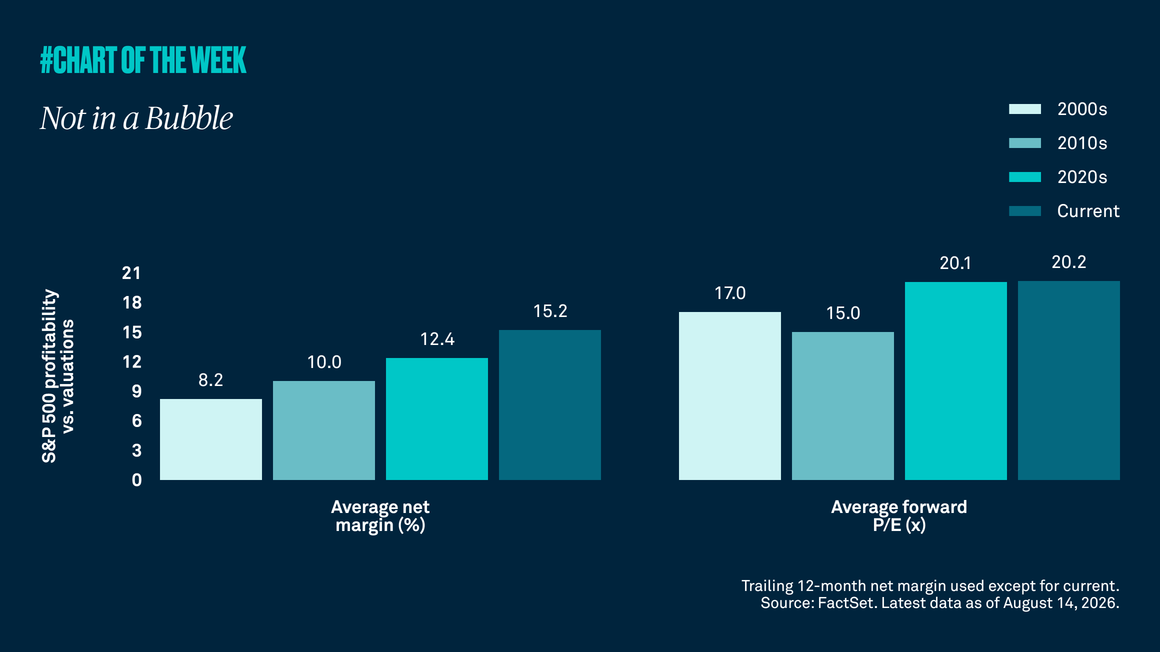
As the S&P 500 approaches all-time highs, there are renewed concerns among investors about elevated valuations. However, historically strong profitability and expected earnings growth appear to support current pricing. In addition, the current S&P 500 price-to-earnings (P/E) ratio is roughly equal to the average since Covid. As a result, we do not view U.S. equities as being in bubble territory and we remain constructive on the asset class.

This material is provided for illustrative/educational purposes only. All investment strategies referenced in this material come with investment risks, including loss of value and/or loss of anticipated income. Past performance does not guarantee future results. This material is not intended to constitute legal, tax, investment, or financial advice. Effort has been made to ensure that the material presented herein is accurate at the time of publication. However, this material is not intended to be a full and exhaustive explanation of the law in any area or of all of the tax, investment or financial options available.  The information discussed herein may not be applicable to or appropriate for every investor and should be used only after consultation with professionals who have reviewed your specific situation.

BNY Wealth conducts business through various operating subsidiaries of The Bank of New York Mellon Corporation. BNY is the corporate brand of The Bank of New York Mellon Corporation and may be used to reference the corporation as a whole and/or its various subsidiaries generally.


BNY Wealth will not provide products or services where those products or services are not permitted under applicable law or under firm policies. See Jurisdiction Disclosures https://www.bny.com/wealth/global/en/jurisdiction-disclosures.html


Banking services are provided by BNY Mellon, N.A. Member FDIC


Trademarks and logos belong to their respective owners.


©2026 The Bank of New York Mellon. All rights reserved.

WI-991549-2026-08-25

Let’s start a conversation.

SUBSCRIBE