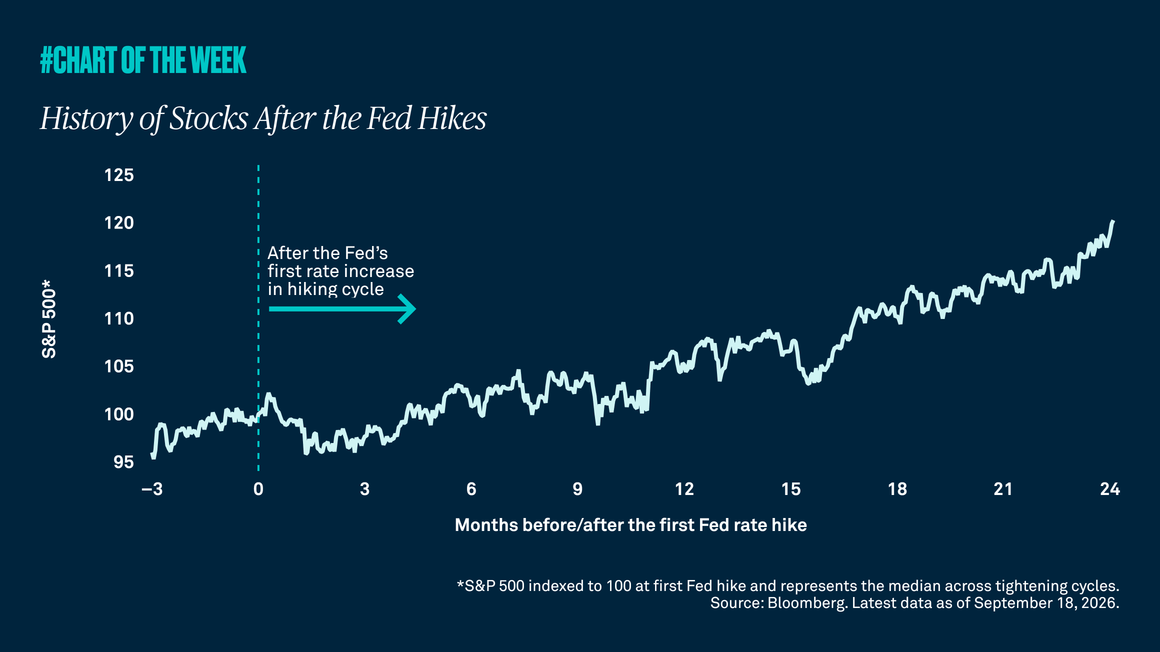
Higher interest rates have become a frequently cited risk to corporate earnings and the economy. The conventional thinking is straightforward: when borrowing costs rise, companies face higher interest expenses, profits come under pressure, and economic growth slows. While there is truth to that relationship, the current cycle may differ from investors’ expectations.
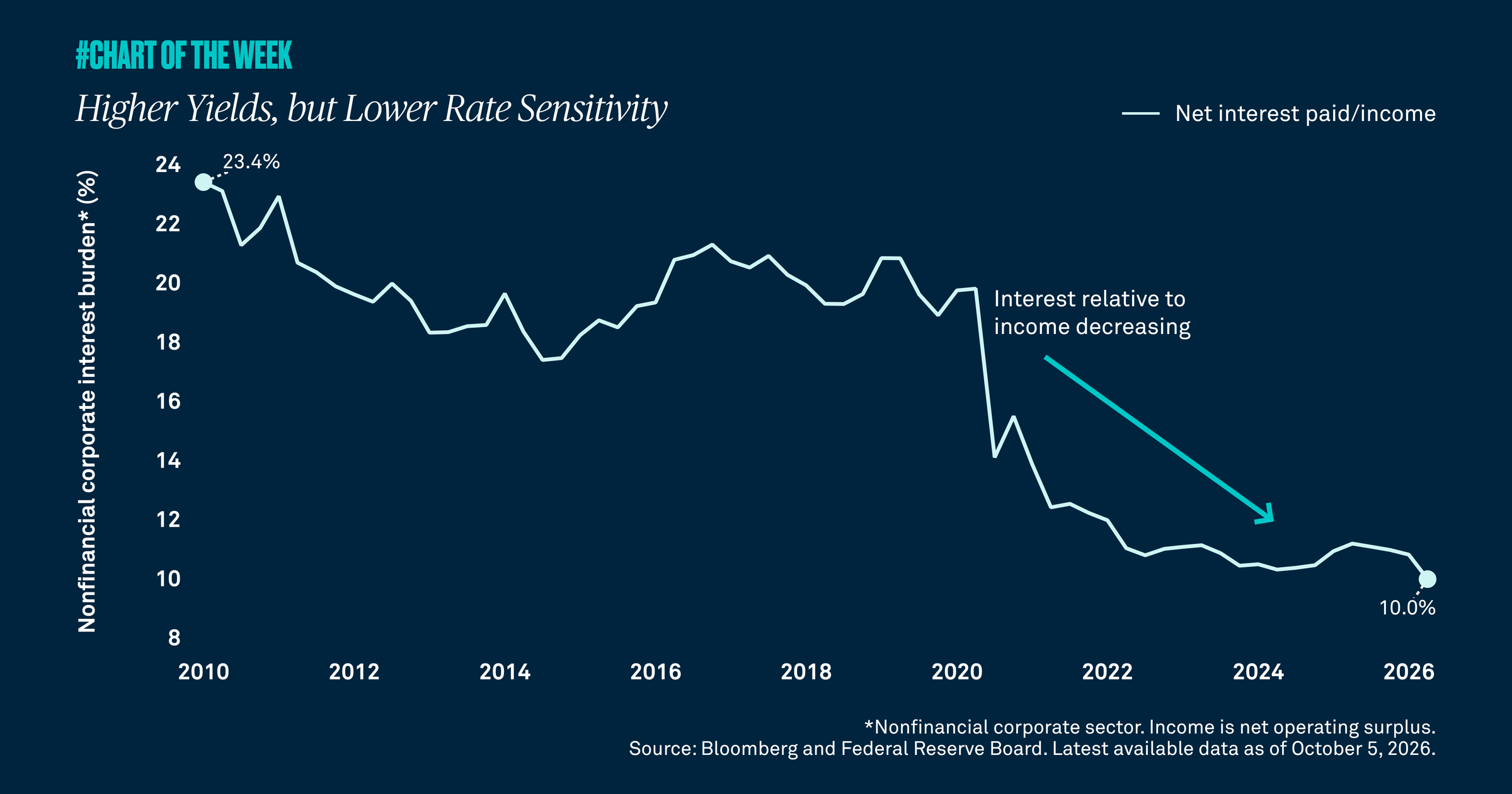
The recent rise in interest rates has raised concerns that higher borrowing costs could weigh on corporate profits and ultimately slow economic activity. However, our analysis suggests that the U.S. corporate sector appears less sensitive to higher interest rates than it was in prior decades. Specifically, net interest paid as a share of income has fallen from roughly 23% in 2010 to about 10% today — nearly a historic low.
Much of this improvement reflects stronger corporate balance sheets. Many companies refinanced debt at low rates, extended maturities and locked in favorable financing over the past decade. As a result, higher rates have not translated into a proportionate increase in the overall interest burden.
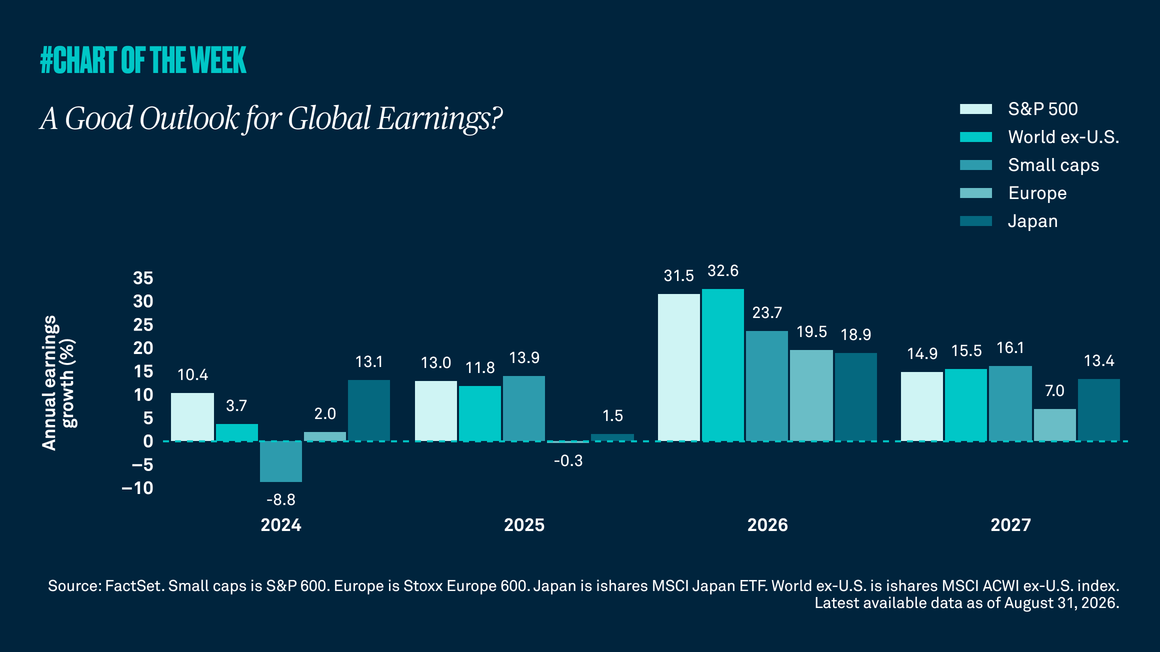
While higher rates may slow economic activity, they do not necessarily imply a recession or sharp drag on earnings. Combined with generally healthy household balance sheets, a lower corporate interest burden suggests the economy may be more resilient than many expect. This backdrop helps explain why consensus expectations continue to call for above-average earnings growth in 2027. While volatility may remain elevated and growth could moderate from recent trends, the fundamental picture suggests that both businesses and consumers are better positioned to navigate a higher-rate environment than in previous economic cycles.