Please ensure Javascript is enabled for purposes of website accessibility Monthly Checkpoints
ie
en
intermediary
intermediary
false
true
Gathering data
Disclaimer Not Available

Monthly Checkpoints

Monthly Checkpoints

Checkpoints is a comprehensive monthly chartbook highlighting major top-of-mind themes that could shape financial markets in the near term. In addition to the broader macroeconomic discussion, Checkpoints delivers detailed views on major asset classes, including global equities, fixed income and real assets.

BABR-1009157-2026-09-30 | GU-950 1 March 2027
 

RELATED CONTENT
Contained contagion?
Chart of the Week | Macroeconomic

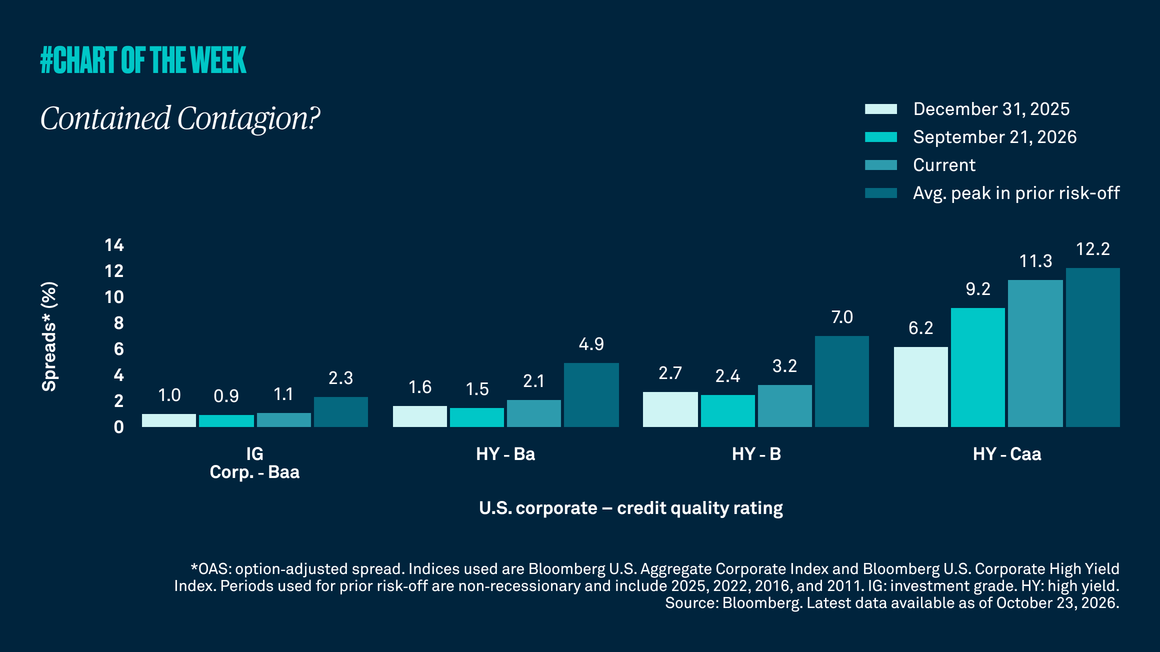
U.S. high yield credit spreads have widened year to date, reflecting greater investor caution about perceived default risk. The move also raises concerns about possible credit contagion. However, because spread widening has been concentrated in the lowest-quality issuers rather than higher-quality issuers, we don’t anticipate broader market stress.

Fed thoughts: Climbing up the learning curve
Article | Macroeconomic

Change can be difficult to navigate, especially when its principal agent explicitly rejects prevailing norms. Less than five months into the job, Federal Reserve (the Fed) Chair Kevin Warsh has put investors in that position, which makes charting the course of monetary policy complicated.

Can the bull run in corporate margins continue?
Chart of the Week | Macroeconomic

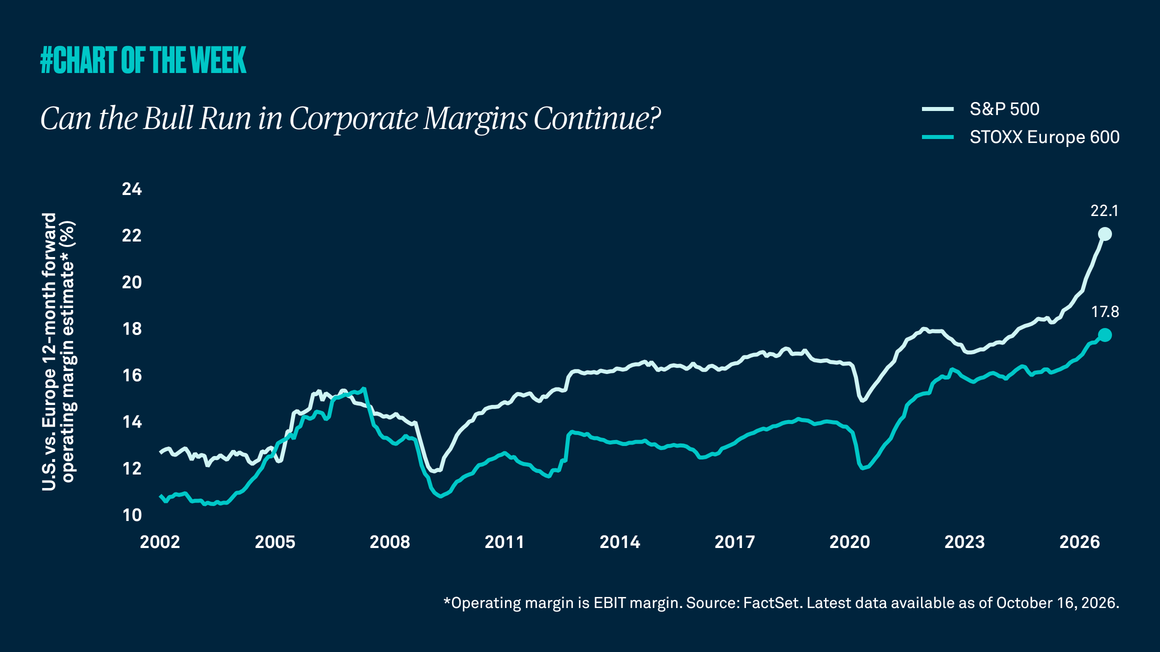
Higher inflation and elevated interest rates typically weigh on corporate profitability, yet corporate margins continue to climb to record highs. While that strength is evident both in the U.S. and abroad, U.S. outperformance versus Europe is now the widest on record. Stronger margins have helped contribute to better-than-expected earnings and reinforce U.S. equity leadership. The question now is whether that strength can persist?

Higher yields, but lower sensitivity
Chart of the Week | Macroeconomic

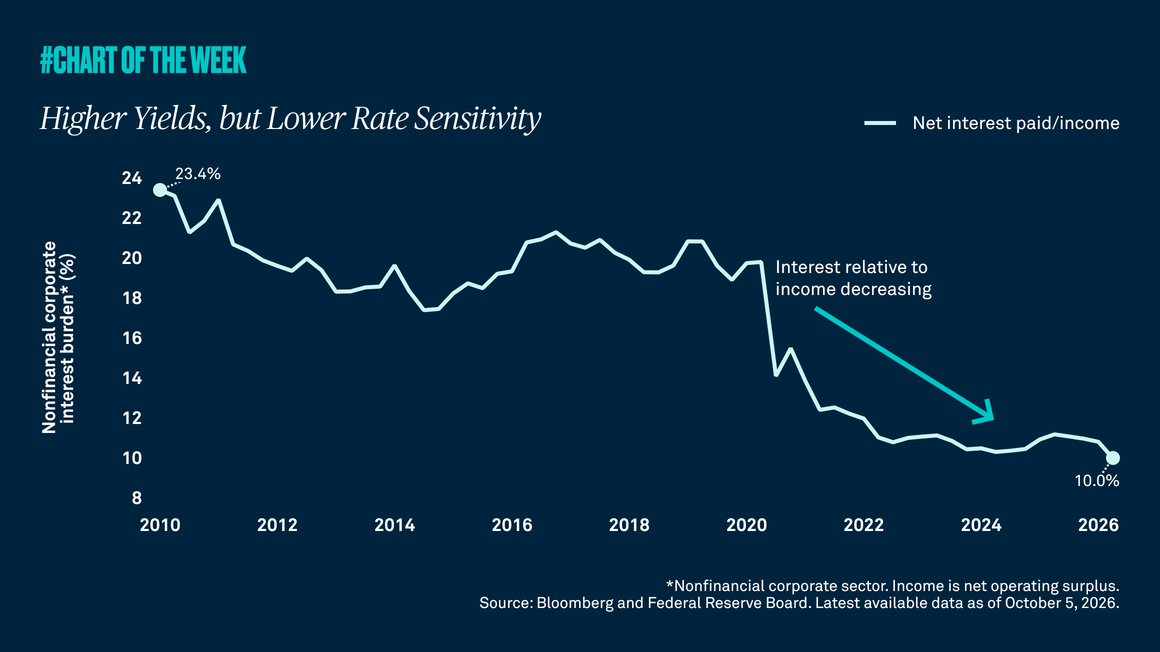
Higher interest rates have become a frequently cited risk to corporate earnings and the economy. The conventional thinking is straightforward: when borrowing costs rise, companies face higher interest expenses, profits come under pressure, and economic growth slows. While there is truth to that relationship, the current cycle may differ from investors’ expectations.

Gathering data
Disclaimer Not Available

This is a marketing communication