Please ensure Javascript is enabled for purposes of website accessibility Optimism Grows Among Small Businesses
ie
en
intermediary
intermediary
false
true
Gathering data
Disclaimer Not Available

Optimism grows among small businesses

Optimism grows among small businesses

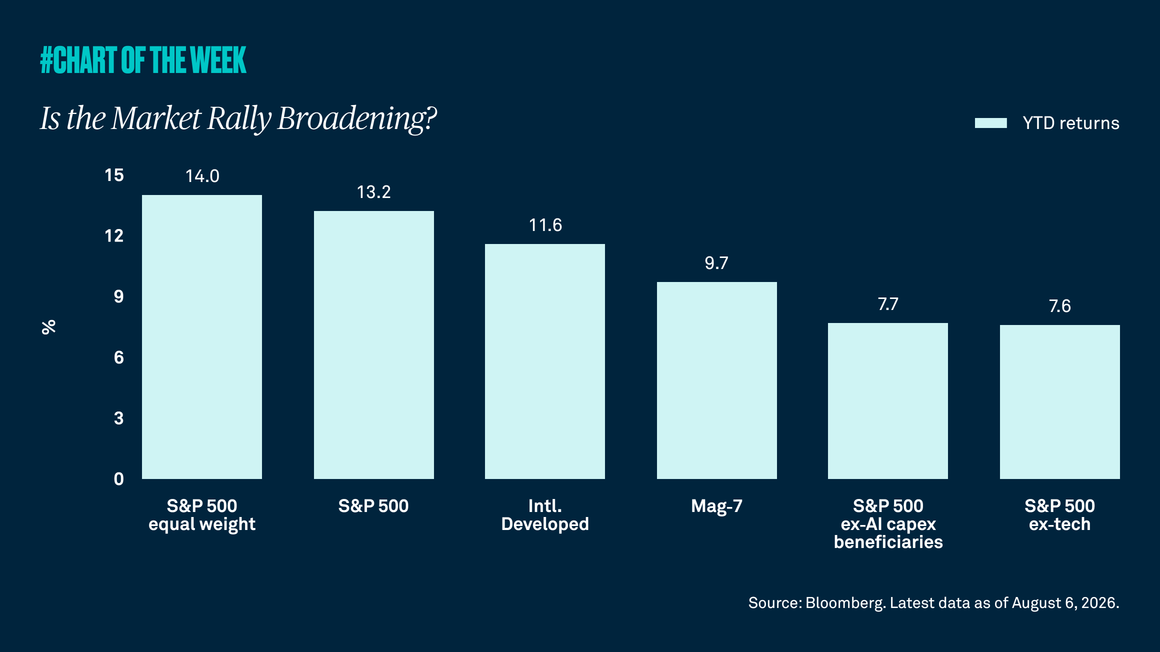
The S&P 500 is trading at record highs, which some investors didn’t see coming after the tariff-fueled drop in April. What may come as a bigger surprise, however, is the rally is broadening beyond big technology companies. Let’s examine different measures that prove this point. 
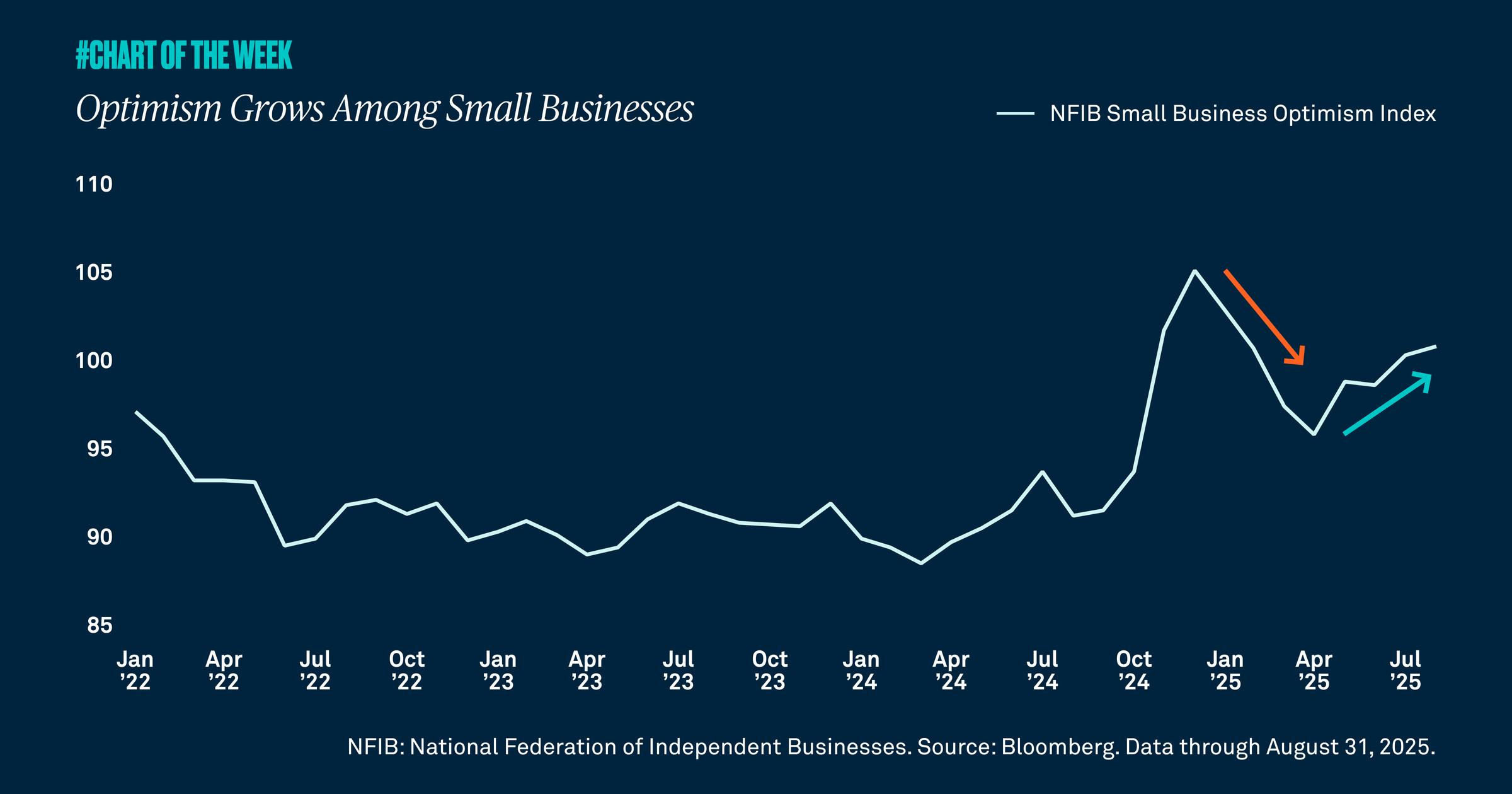

There is a debate among economists about whether growth resilience will weaken heading into the fourth quarter and 2026. While we recognize that job growth has slowed, we find improving business confidence a positive sign for future growth

The NFIB Small Business Optimism Index, a measure of sentiment among small companies, fell sharply from December to April as policy uncertainty spiked. Since April, confidence among small businesses has improved and is now at its highest level since February.

In our view, despite slowing jobs growth, the economy is showing signs that the outlook heading into 2026 is improving. Earnings are strong and growing stronger, and companies only stand to benefit from easing monetary policy. Though gross domestic product may fall short of 2024 performance, we anticipate it will come in positive this year between 1.5%-2%. While we believe improving small business optimism is positive for growth, we will continue to monitor the attitudes of small business owners, watching to learn whether recent momentum can persist. 
RELATED CONTENT
cotw-30-03-2026-thumbnail-580x326px
Chart of the week | Macroeconomic

Markets are reacting to the Middle East conflict with sharp moves across asset classes, signaling broad risk repricing and shifting safe haven behavior. While volatility is elevated, fundamentals like earnings growth continue to support our constructive outlook.

Signals from spreads
Chart of the week | Macroeconomic

Credit spreads have risen yet remain historically low, reinforcing our view that the oil shock is likely temporary — not a driver of long-term growth concerns.

Dollar strength: what does it mean for markets?
Chart of the week | Macroeconomic

Geopolitical tensions have lifted oil prices, sent U.S. stocks slightly lower and driven flows into the safety of the U.S. dollar, which has strengthened versus peers. While a weaker dollar previously supported international equity outperformance, dollar stabilization now suggests that tailwind is fading, underscoring the importance of diversification across regions and asset classes.

Returns after oil spikes
Chart of the week | Macroeconomic

The Strait of Hormuz, which moves about 20% of global oil, has seen many ships that normally travel through it curtail their activity. Consequently, WTI oil was up over 36% in the five days after the oil supply shock began. Yet equities barely budged, signaling a temporary supply shock, not a larger crisis. Historically, after similar price spikes equities tend to move higher while oil prices decline — further evidence for avoiding emotion-driven investing.

Gathering data
Disclaimer Not Available

This is a marketing communication