Please ensure Javascript is enabled for purposes of website accessibility The U.S. Advantage: Higher Productivity
hk
en
institutional
institutional
false
true
Gathering data
Disclaimer Not Available

The U.S. advantage: higher productivity

The U.S. advantage: higher productivity

Lately, non-U.S. equities are outperforming the U.S. Is U.S. exceptionalism dead? Productivity growth tells a more positive story. 
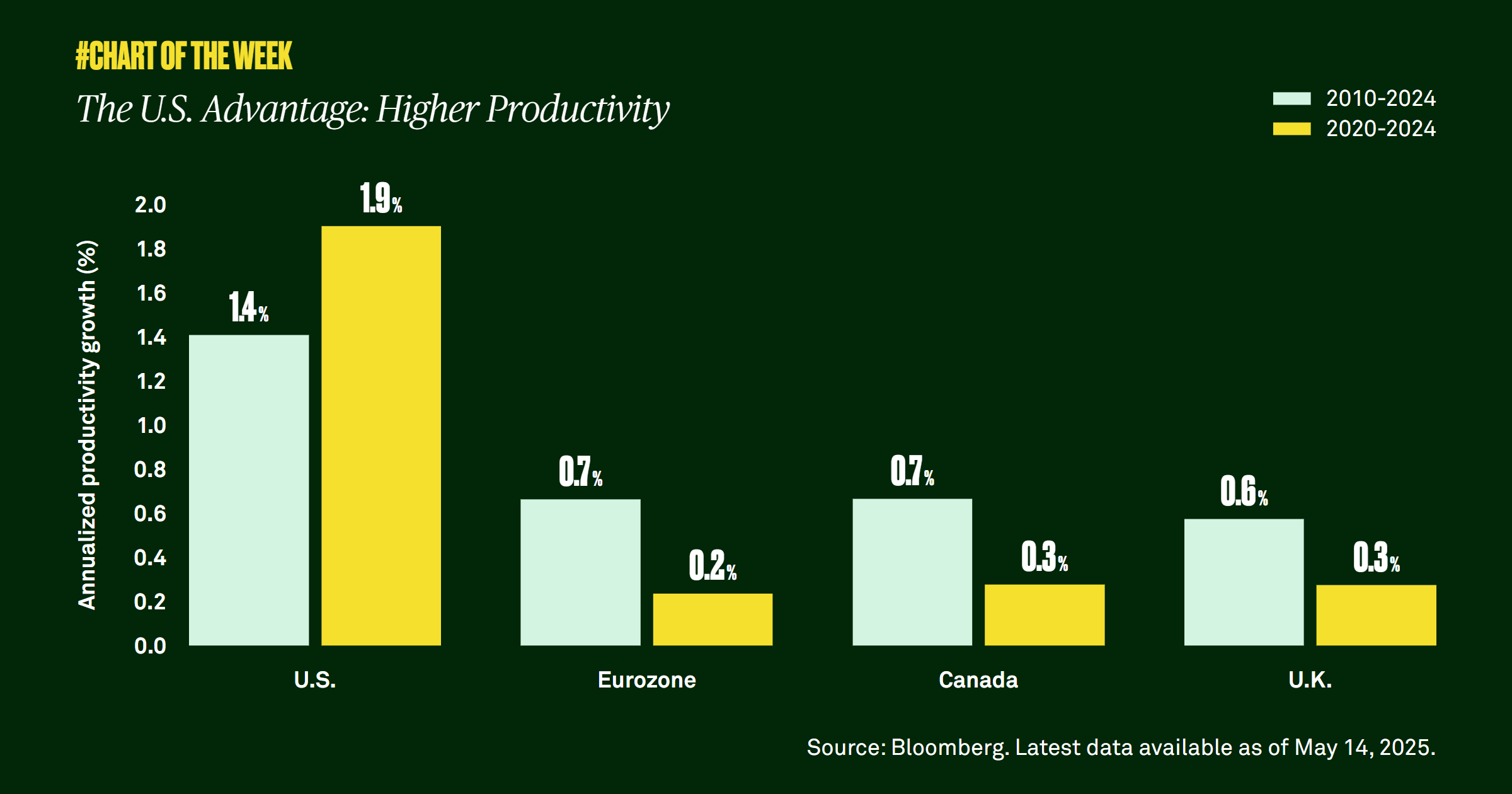


What is productivity and why does it matter to a country or region? For starters, productivity can be defined as economic output per hour of work. It’s one of the most impactful drivers of long-term growth as measured by gross domestic product (GDP), but it doesn’t stop there. GDP growth drives corporate profits, which in turn power higher stock market returns.

Since 2010, U.S. productivity has grown twice as fast as the rest of the world. Not surprisingly, U.S. economic growth and corporate profits have since outpaced the rest of the world. Stronger productivity and leadership in technology are key drivers of the U.S. equity markets’ outperformance relative to non-U.S. In addition, we believe the U.S.’ leadership in and increased adoption of artificial intelligence should continue to provide support.

What could weaken U.S. exceptionalism though is a reversal of the productivity gap between the U.S. and other major economies. However, since the global pandemic, that gap has only widened in favor of the U.S., and we expect that trend to persist. U.S. productivity and its ability to translate into higher corporate profitability are key reasons why we maintain our overweight to the U.S. equities. 
 

RELATED CONTENT
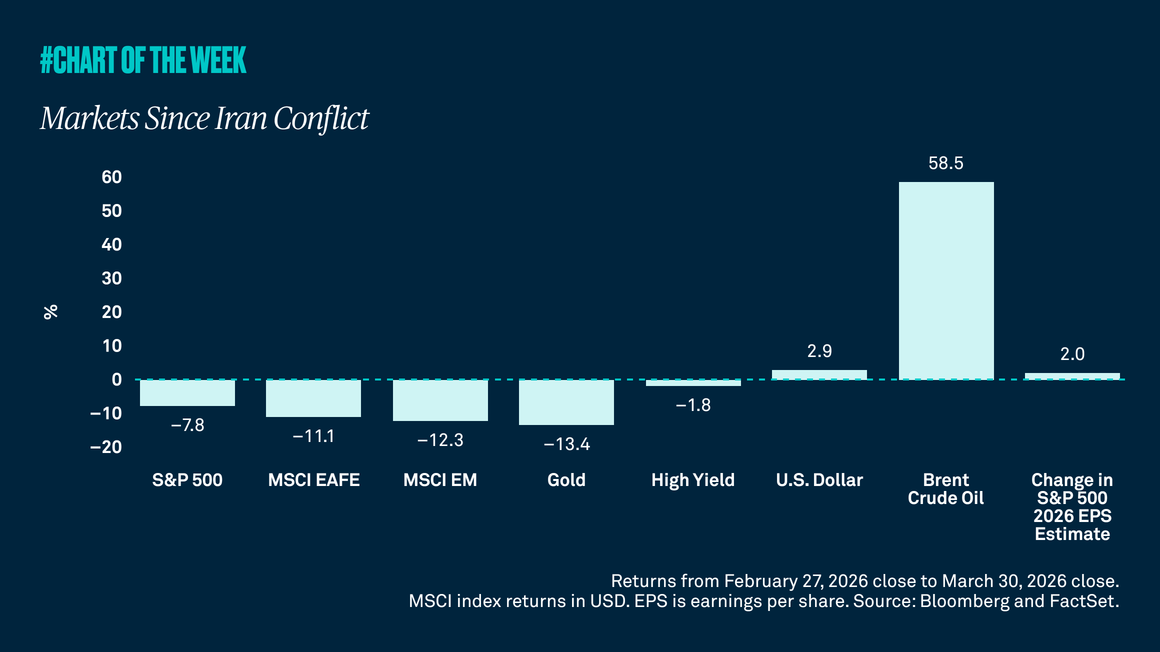
Markets since iran conflict
Chart of the week | Macroeconomic

Markets are reacting to the Middle East conflict with sharp moves across asset classes, signaling broad risk repricing and shifting safe haven behavior. While volatility is elevated, fundamentals like earnings growth continue to support our constructive outlook.

Signals from spreads
Chart of the week | Macroeconomic

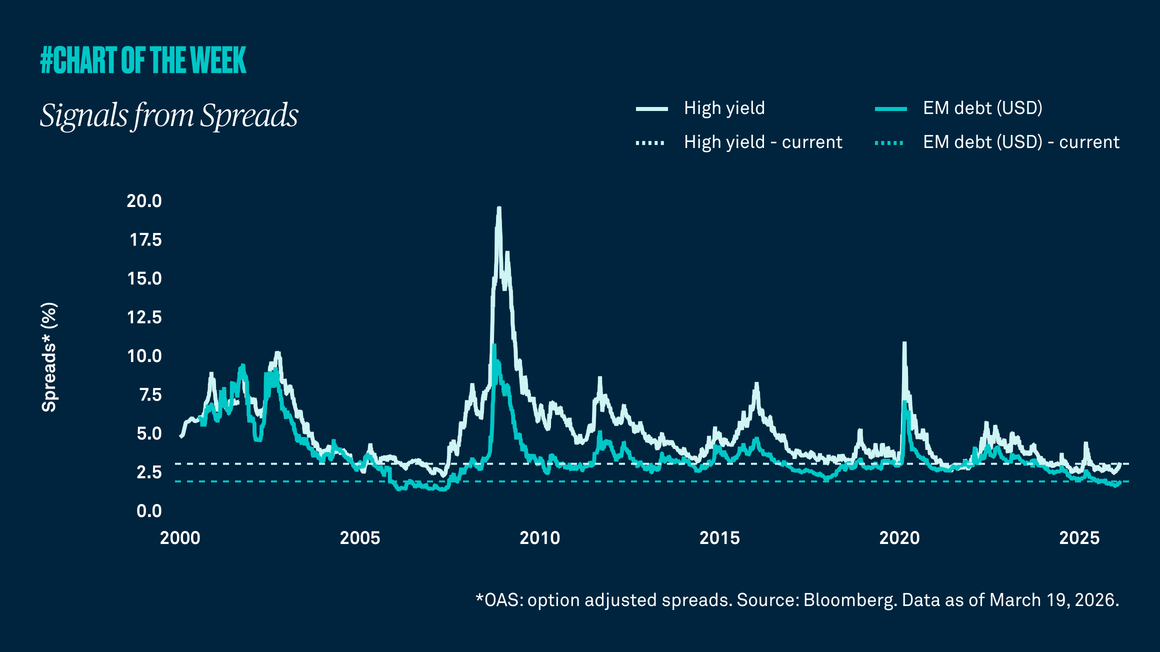
Credit spreads have risen yet remain historically low, reinforcing our view that the oil shock is likely temporary — not a driver of long-term growth concerns.

Dollar strength: what does it mean for markets?
Chart of the week | Macroeconomic

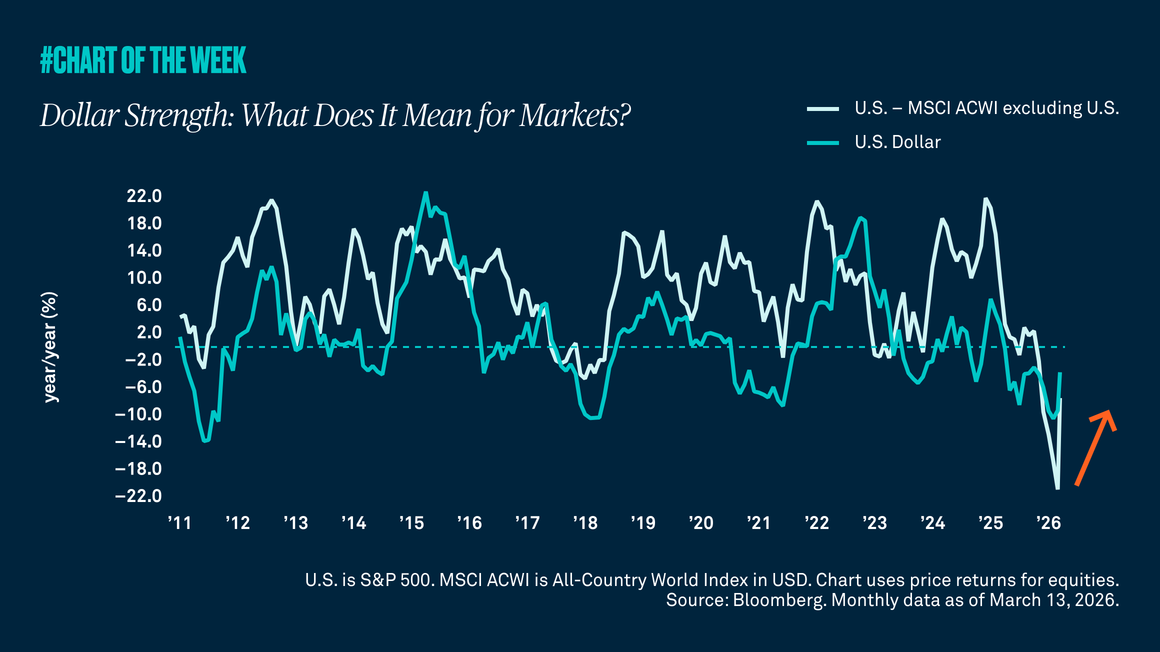
Geopolitical tensions have lifted oil prices, sent U.S. stocks slightly lower and driven flows into the safety of the U.S. dollar, which has strengthened versus peers. While a weaker dollar previously supported international equity outperformance, dollar stabilization now suggests that tailwind is fading, underscoring the importance of diversification across regions and asset classes.

Returns after oil spikes
Chart of the week | Macroeconomic

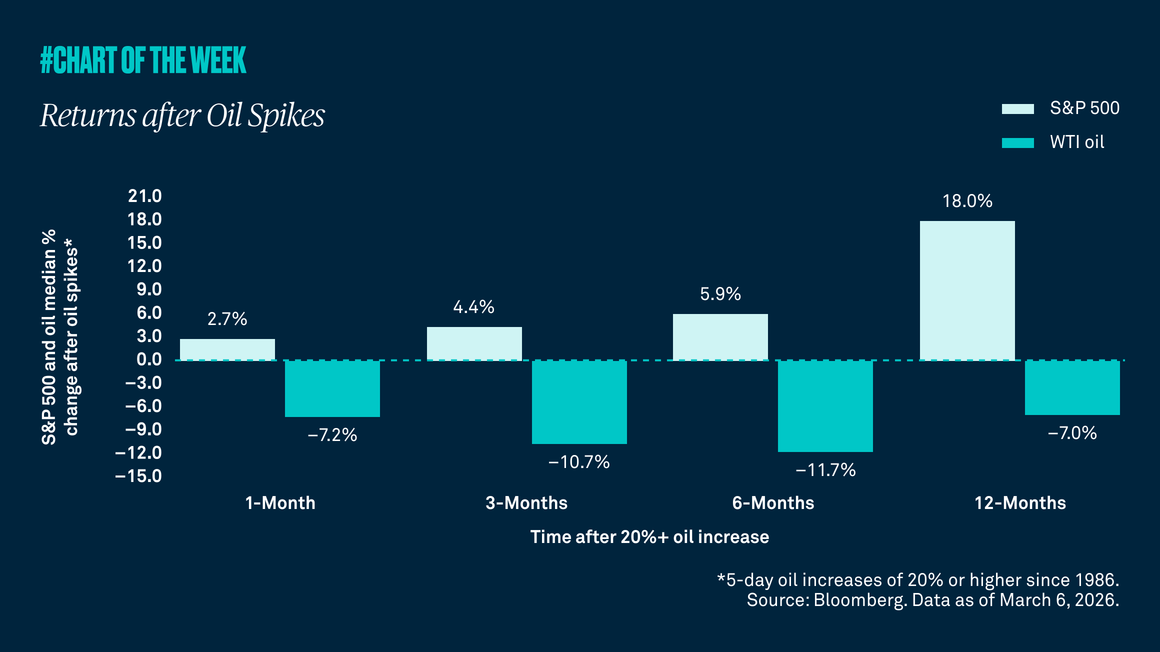
The Strait of Hormuz, which moves about 20% of global oil, has seen many ships that normally travel through it curtail their activity. Consequently, WTI oil was up over 36% in the five days after the oil supply shock began. Yet equities barely budged, signaling a temporary supply shock, not a larger crisis. Historically, after similar price spikes equities tend to move higher while oil prices decline — further evidence for avoiding emotion-driven investing.


For sole and exclusive use by Institutional Investors, Accredited Investors and Professional Investors only. Not for further distribution. This is a financial promotion and is not investment advice. Any views and opinions are those of the investment manager, unless otherwise noted. The value of investment can fall. Investors may not get back the amount invested. BNY, BNY Mellon and Bank of New York Mellon are the corporate brands of The Bank of New York Mellon Corporation and may also be used to reference the corporation as a whole and/or its various subsidiaries generally.  BNY Investments encompass BNY Mellon’s affiliated investment management firms and global distribution companies.  Any BNY entities mentioned are ultimately owned by The Bank of New York Mellon Corporation. In Hong Kong, the issuer of this document is BNY Mellon Investment Management Hong Kong Limited, which is registered with the Securities and Futures Commission (Central Entity Number: AQI762). In Singapore, this document is issued by BNY Mellon Investment Management Singapore Pte. Limited, Co. Reg. 201230427E. Regulated by the Monetary Authority of Singapore (MAS). This advertisement has not been reviewed by the Monetary Authority of Singapore.
 

Gathering data
Disclaimer Not Available

CONTACT US  |  +852 3926 0600