Please ensure Javascript is enabled for purposes of website accessibility Earnings Season Wrapping Up on a High Note
hk
en
institutional
institutional
false
true
Gathering data
Disclaimer Not Available

Earnings season wrapping up on a high note

cotw-11-08-2025-thumbnail

Second quarter earnings season is winding down, but earnings are up, and better than expected. Despite some potentially concerning signals from the real economy, including muted job gains, and possible seasonal volatility, we remain constructive on equities. A positive second quarter earnings season strengthens our conviction. 
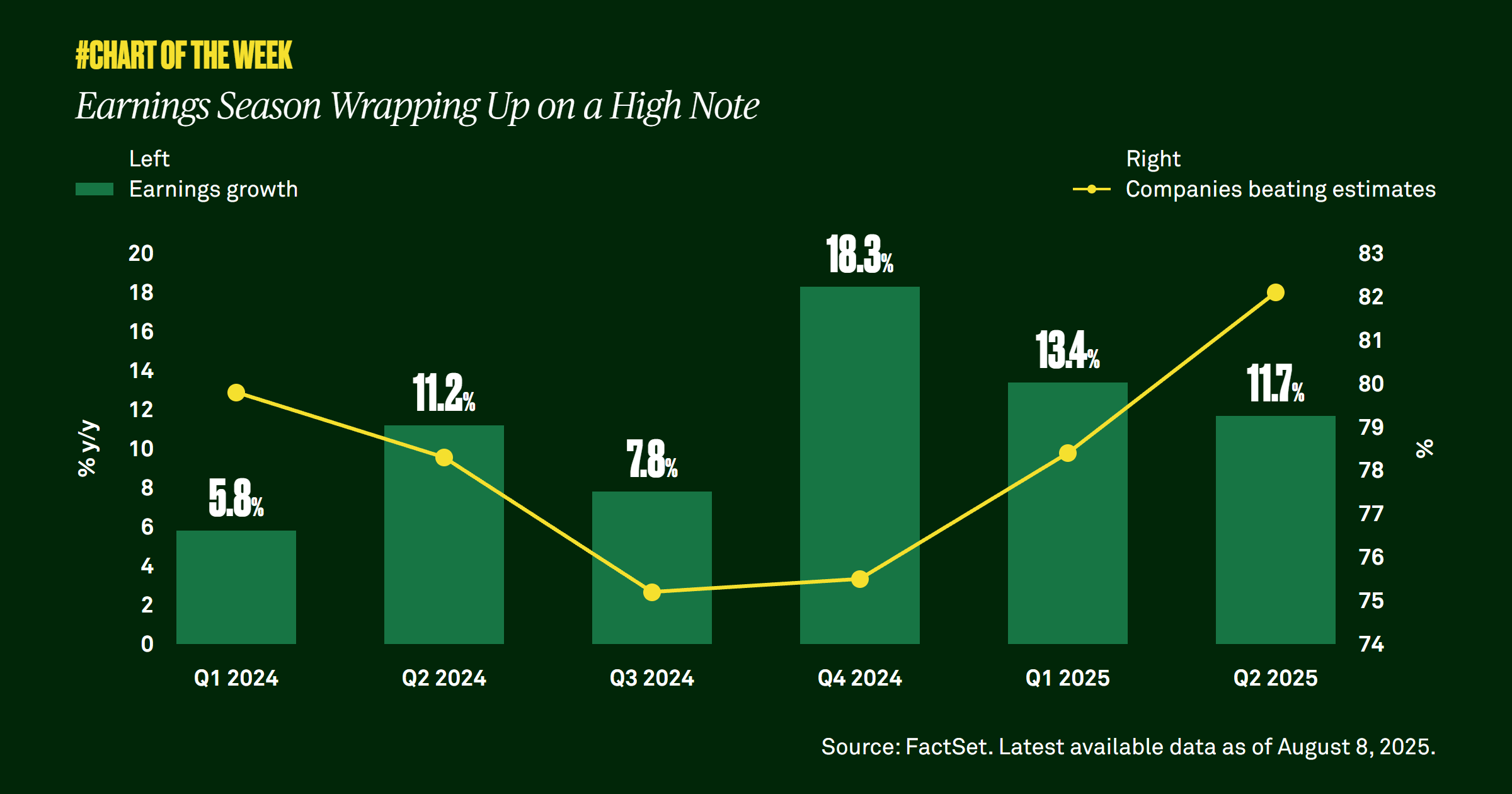


Second quarter earnings season is winding down, and results have delighted many investors. More than 90% of S&P 500 companies have already reported and 82% beat estimates, the highest rate in four years. Once all data comes in, earnings are expected to have grown 11.7% compared to 4.9% projected at the end of June.

Additionally, estimates for the full year have also improved; consensus estimates call for 10.2% annual earnings growth, up from 8.7% in June. Despite signs of potential weakness in the real economy and job market, earnings have been better than anticipated.

Historically, August and September have been seasonally challenging months, suggesting we could see an increase in volatility in the near term, but the ongoing strength of earnings instills us with confidence in equity performance over the long term. We also remain positive on the artificial intelligence (AI) growth story, which bolstered the results of Magnificent Seven companies this past quarter. The innovation’s benefits are not only affecting technology companies; AI is driving margin expansion and productivity enhancements across many other sectors too, further supporting our constructive stance on the future outlook of the U.S. equity market. 
RELATED CONTENT
Markets since iran conflict
Chart of the week | Macroeconomic

Markets are reacting to the Middle East conflict with sharp moves across asset classes, signaling broad risk repricing and shifting safe haven behavior. While volatility is elevated, fundamentals like earnings growth continue to support our constructive outlook.

Signals from spreads
Chart of the week | Macroeconomic

Credit spreads have risen yet remain historically low, reinforcing our view that the oil shock is likely temporary — not a driver of long-term growth concerns.

Dollar strength: what does it mean for markets?
Chart of the week | Macroeconomic

Geopolitical tensions have lifted oil prices, sent U.S. stocks slightly lower and driven flows into the safety of the U.S. dollar, which has strengthened versus peers. While a weaker dollar previously supported international equity outperformance, dollar stabilization now suggests that tailwind is fading, underscoring the importance of diversification across regions and asset classes.

Returns after oil spikes
Chart of the week | Macroeconomic

The Strait of Hormuz, which moves about 20% of global oil, has seen many ships that normally travel through it curtail their activity. Consequently, WTI oil was up over 36% in the five days after the oil supply shock began. Yet equities barely budged, signaling a temporary supply shock, not a larger crisis. Historically, after similar price spikes equities tend to move higher while oil prices decline — further evidence for avoiding emotion-driven investing.

Gathering data
Disclaimer Not Available

CONTACT US  |  +852 3926 0600