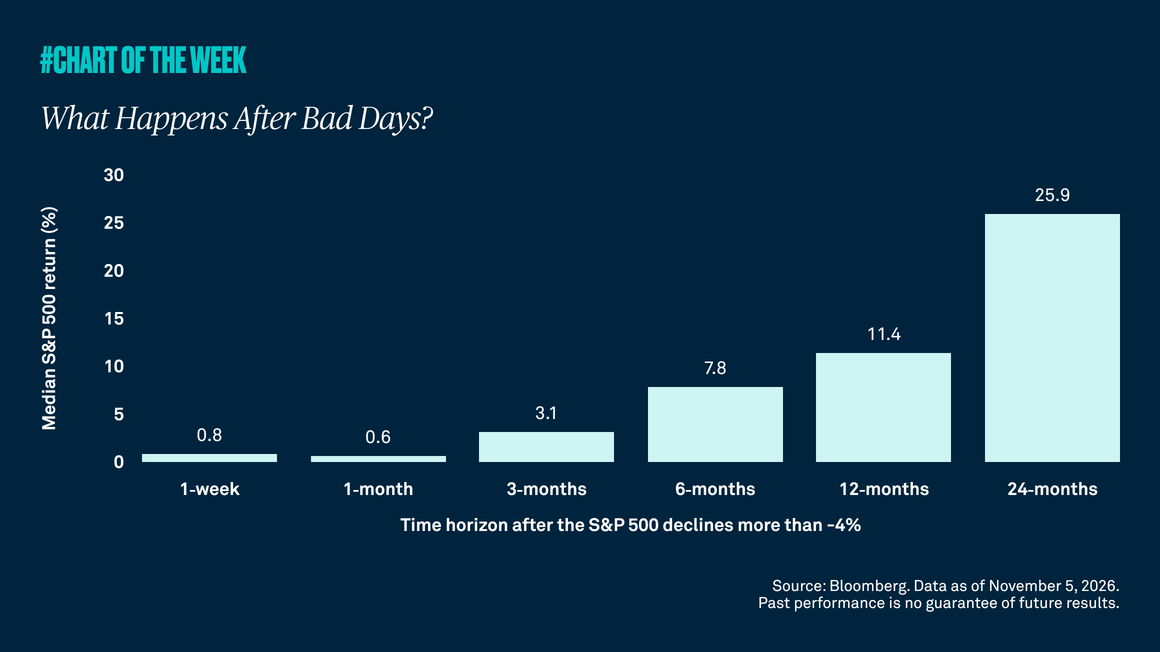
Last week’s selloff pushed the S&P 500 into correction territory, unsettling investors but also creating a more attractive entry point. Pullbacks are a familiar feature of equity markets: The index’s average intra-year decline is approximately 14%. With valuations lower and earnings estimates higher, we remain constructive on the longer-term outlook.
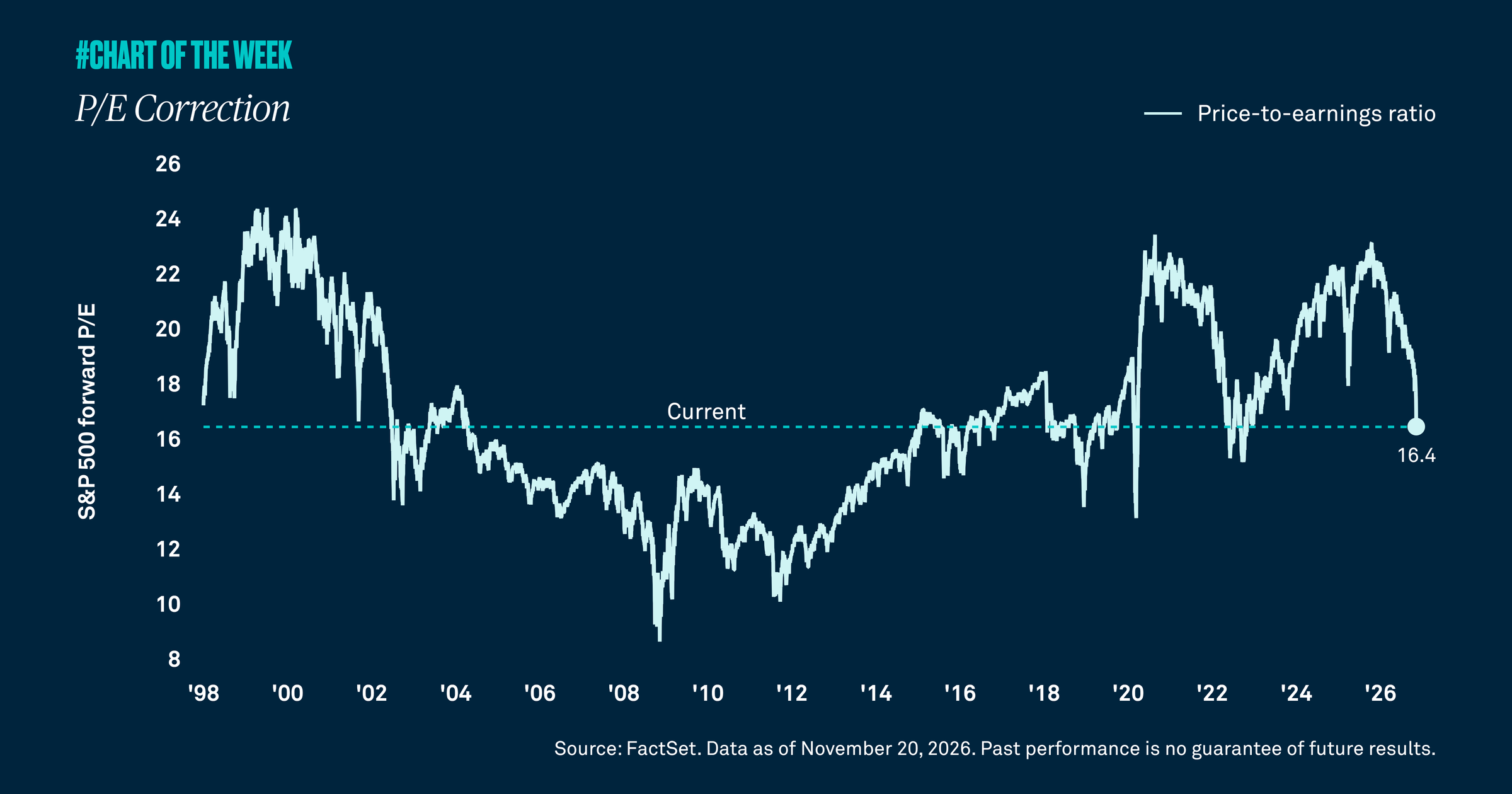
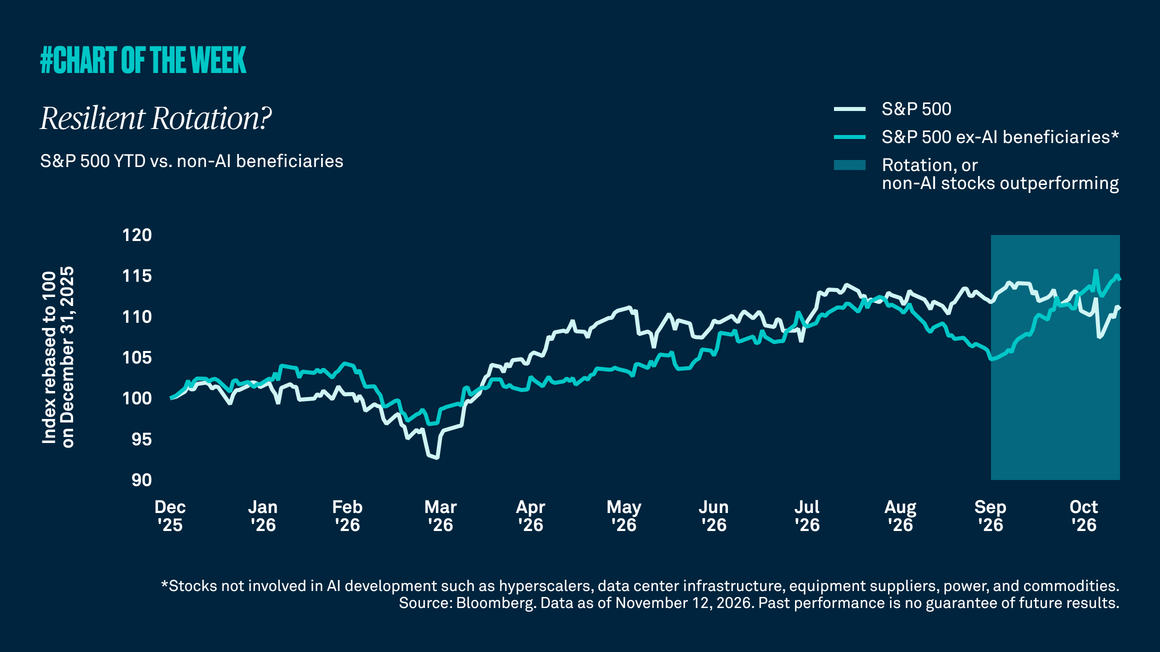
The S&P 500 fell into correction territory, a decline of 10% from its October peak, even as earnings estimates have risen. That divergence reflects multiple compression—investors are willing to pay less for each dollar of expected earnings—rather than a deterioration in earnings expectations. The valuation reset has been substantial. The S&P 500’s forward price-to-earnings (P/E) ratio now stands at 16.4X, down from 19.3X at the beginning of October and a year-to-date peak of 22.4X. The decline has brought the index below our expected P/E range of 17.25X–18.25X, improving the entry point for long-term investors.
That expected range reflects a backdrop that still warrants selectivity. Elevated yields, Federal Reserve tightening, and uncertainty around artificial intelligence capital expenditures could continue to weigh on the multiples that investors are willing to pay. Lower valuations do not eliminate those risks, but they provide a more attractive starting point.
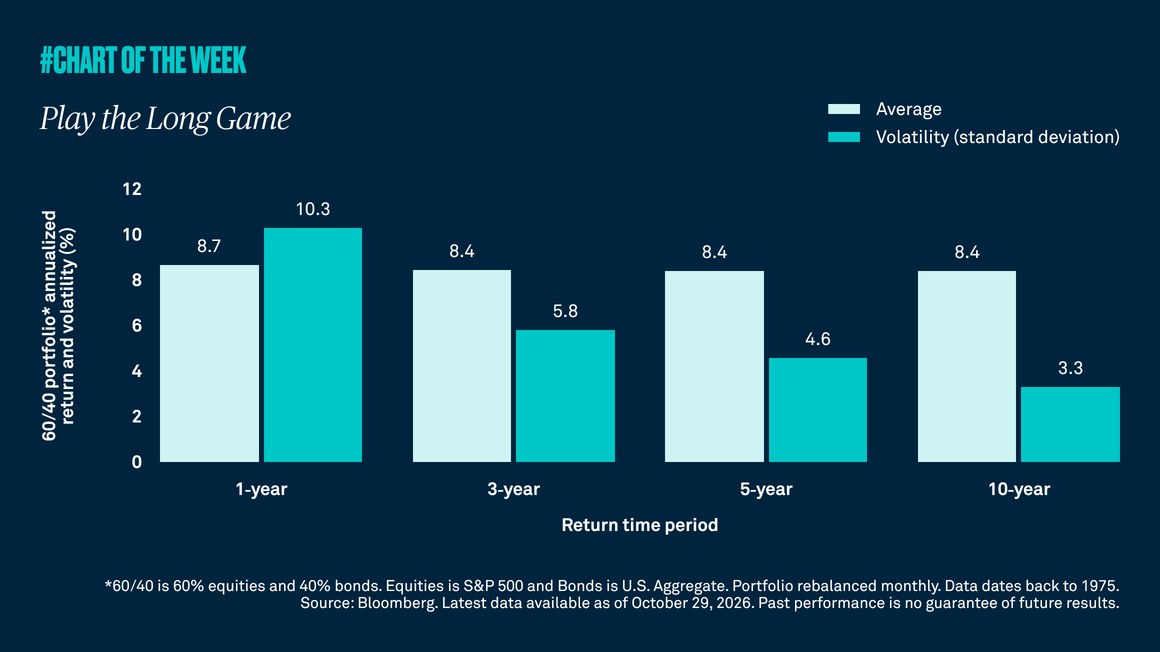
Looking ahead, we expect continued near-term volatility, led by technology stocks. However, we do not anticipate a recession and forecast above-average earnings growth in 2027, albeit slower than 2026. Against that backdrop, we recommend staying fully diversified and invested rather than allowing near-term turbulence to derail long-term investment plans.