Please ensure Javascript is enabled for purposes of website accessibility Bullish on Fed Easing?
be
en
institutional
institutional
false
true
Gathering data
Disclaimer Not Available

Bullish on Fed easing?

Bullish on Fed easing?

As expected, the Federal Open Market Committee delivered another 25-basis point rate cut. Investors are now focused on the pace of cuts from here. However, the more important driver of future equity returns is whether the Fed is easing into an economy that is growing or not. 
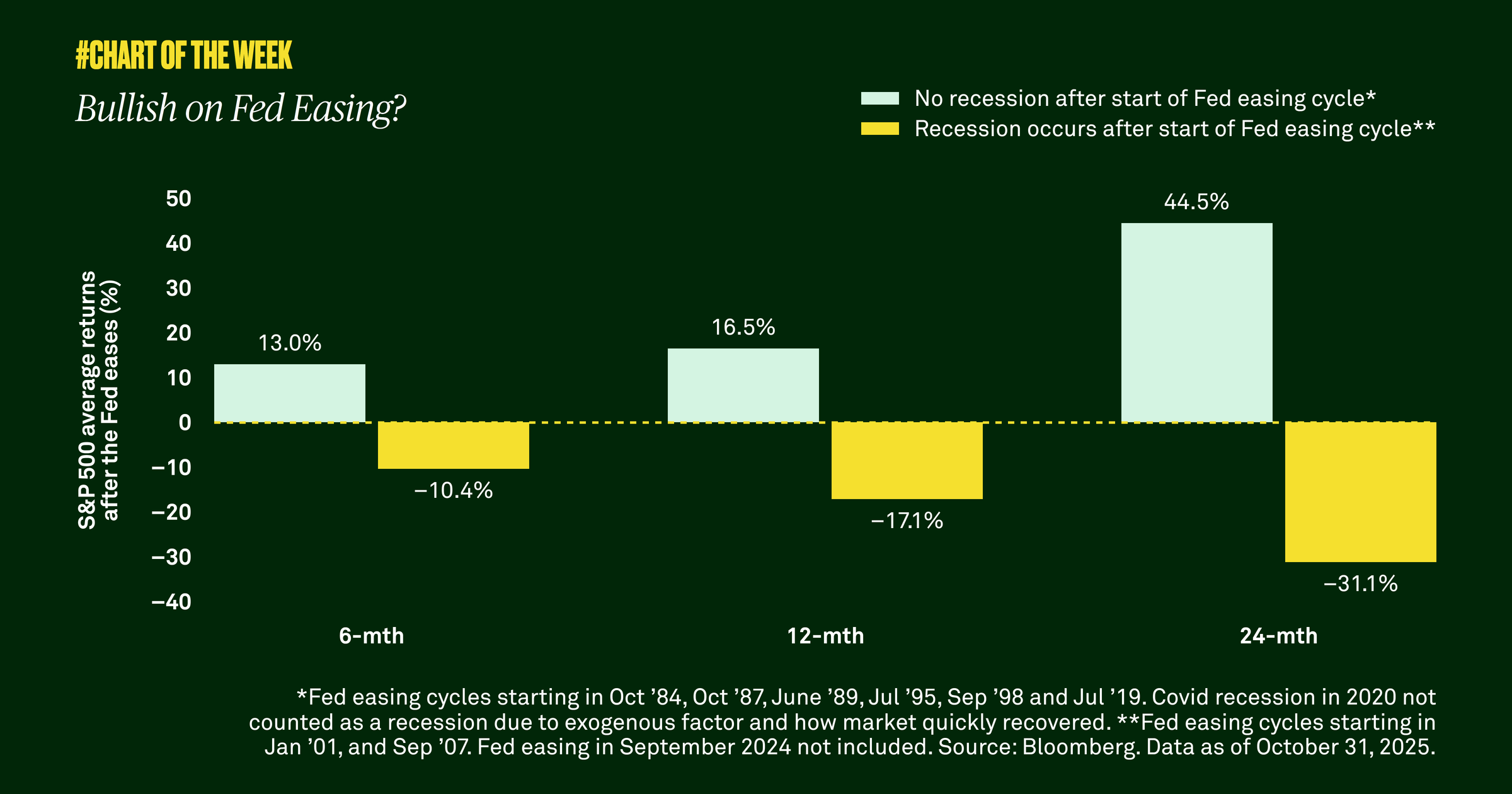

Last week, the Federal Reserve delivered a widely anticipated 25-basis point rate cut, What caught the market’s attention was pushback by Fed Chair Powell on the certainty of a December cut. But, regardless of the pace of easing from here, history tells us that future equity market performance is positive when the Fed eases into a growing economy. 

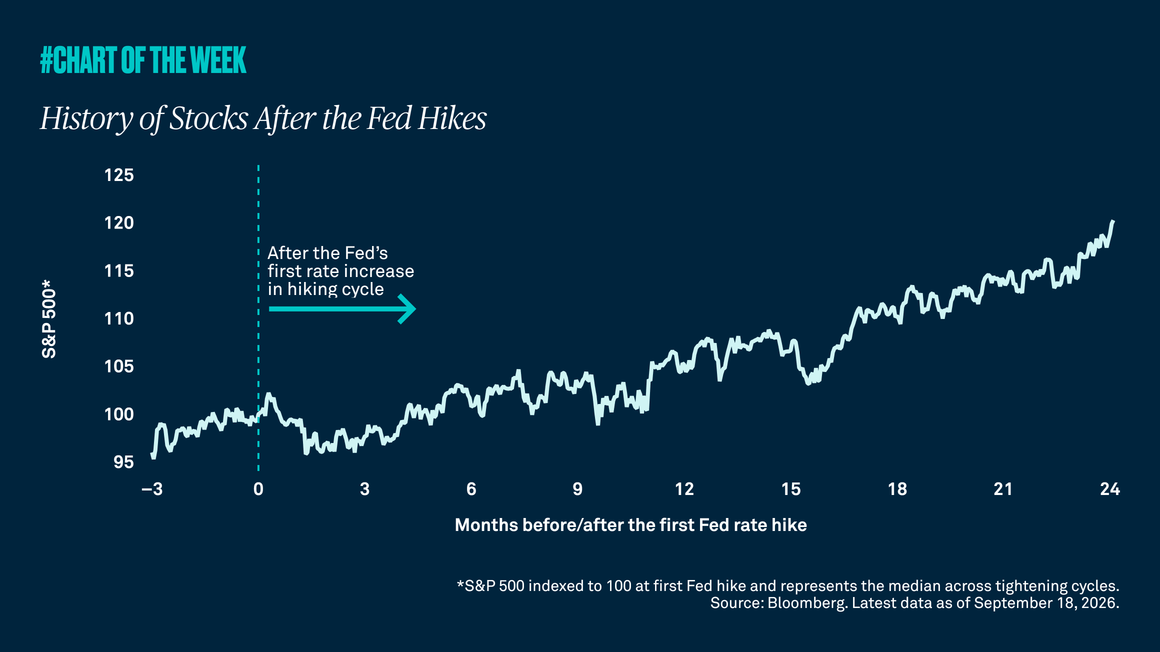
According to our research dating back to the 1980s, stocks delivered an average gain of 16.5% in the 12 months following the first cut of an easing cycle as long as a recession was avoided. The number ticks up to 44.5% over the first 24 months. While the Fed’s easing arguably started last year, we view the latest cuts and future expectations as a new cycle.

Given our outlook for continued positive economic growth over the next year, combined with an improving earnings backdrop, we expect more equity gains to come.  
RELATED CONTENT
Resilience is a historical trend
Chart of the Week | Macroeconomic

The S&P 500’s history shows that despite recessions, wars, inflation, and corrections, the market’s long-term trajectory has remained upward. As the U.S. marks 250 years of resilience, the lesson for investors is clear: wealth is built through patience, discipline and staying invested.

Resilient through uncertainty
Chart of the Week | Macroeconomic

U.S. policy uncertainty has remained elevated and consumer sentiment has weakened. Even so, the economy has stayed resilient, and because growth has held up better than sentiment and headlines suggest, we continue to forecast 2% U.S. growth in 2026, in line with trend.

Getting real in retail
Chart of the Week | Macroeconomic

Despite persistent concerns that sticky inflation would erode purchasing power and drag consumer spending lower, the May retail sales data tells a different story. Spending is up not just in dollar terms, but in quantity, highlighting continued consumer resilience.

Higher inflation, contained expectations
Chart of the Week | Macroeconomic

Inflation has jumped since the Strait of Hormuz closed, squeezing consumers through higher gas and utility bills and pressuring businesses with higher freight and operating costs. Yet, longer-term inflation expectations remain contained, suggesting this looks more like a temporary energy shock than a lasting inflation upswing.

Gathering data
Disclaimer Not Available

This is a marketing communication