Please ensure Javascript is enabled for purposes of website accessibility

Higher Rates, but Lower Sensitivity

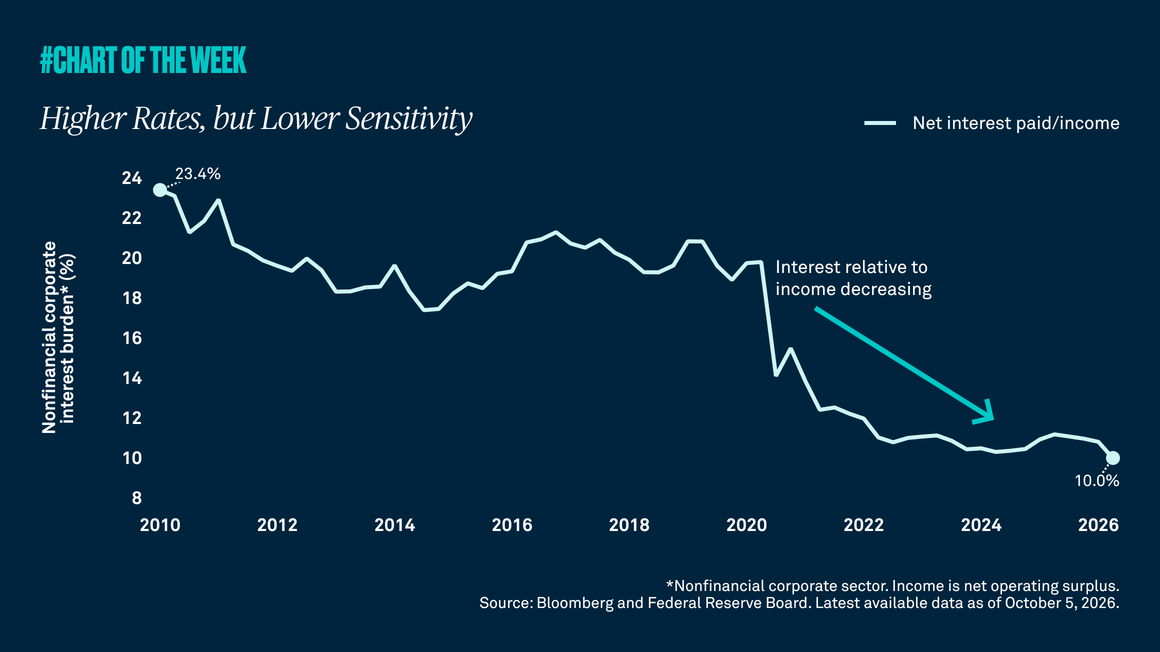
Higher Rates, but Lower Sensitivity

Higher interest rates have become a frequently cited risk to corporate earnings and the economy. The conventional thinking is straightforward: when borrowing costs rise, companies face higher interest expenses, profits come under pressure, and economic growth slows. While there is truth to that relationship, the current cycle may differ from investors’ expectations.

The recent rise in interest rates has raised concerns that higher borrowing costs could weigh on corporate profits and ultimately slow economic activity. However, our analysis suggests that the U.S. corporate sector appears less sensitive to higher interest rates than in prior decades. Specifically, net interest paid as a share of income has fallen from roughly 23% in 2010 to about 10% today — nearly a historic low.

Much of this improvement reflects stronger corporate balance sheets. Many companies refinanced debt at low rates, extended maturities and locked in favorable financing over the past decade. As a result, higher rates have not translated into a proportionate increase in the overall interest burden.

While higher rates may slow economic activity, they do not necessarily imply a recession or sharp drag on earnings. Combined with generally healthy household balance sheets, a lower corporate interest burden suggests the economy may be more resilient than many believe. This backdrop helps explain why consensus expectations continue to call for above-average earnings growth in 2027. While volatility may remain elevated and growth could moderate from recent trends, the fundamental picture suggests that both businesses and consumers are better positioned to navigate a higher-rate environment than in previous economic cycles.

  • Chart of the Week
RELATED CONTENT
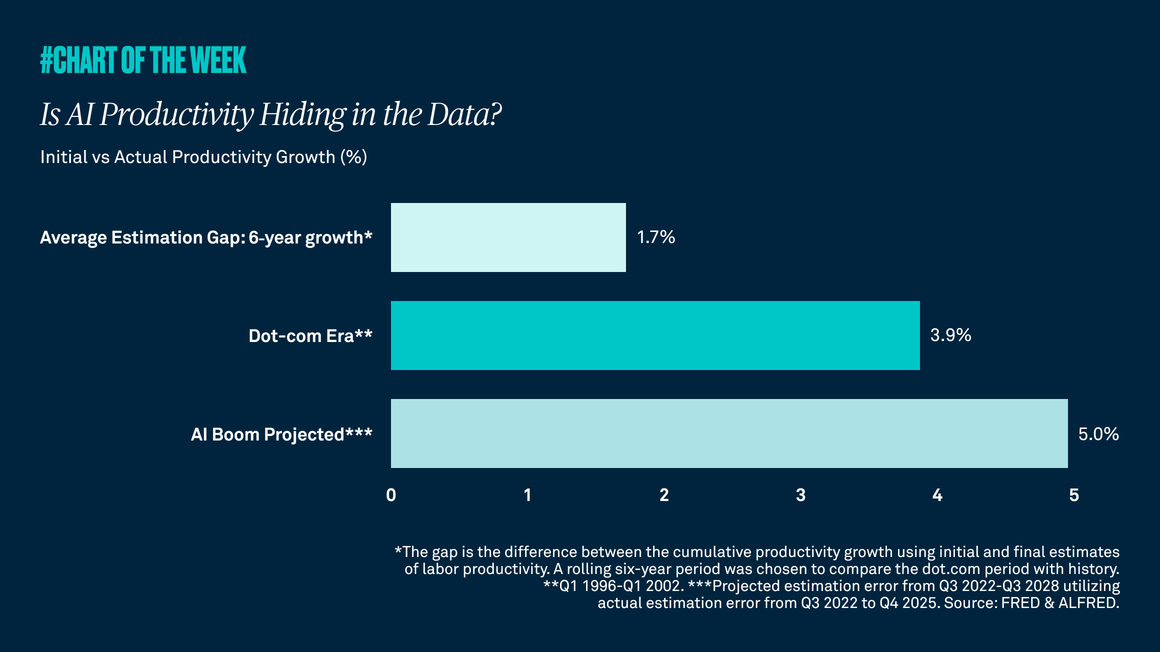
Is AI Productivity Hiding in the Data?
Article  |  Chart of the Week

Both the dot-com era and the rise of artificial intelligence suggest that early productivity data can understate the actual economic impact of transformative technologies. In the case of the internet, later revisions to productivity gains surpassed early estimates. The same may prove true for AI, implying stronger support for growth.

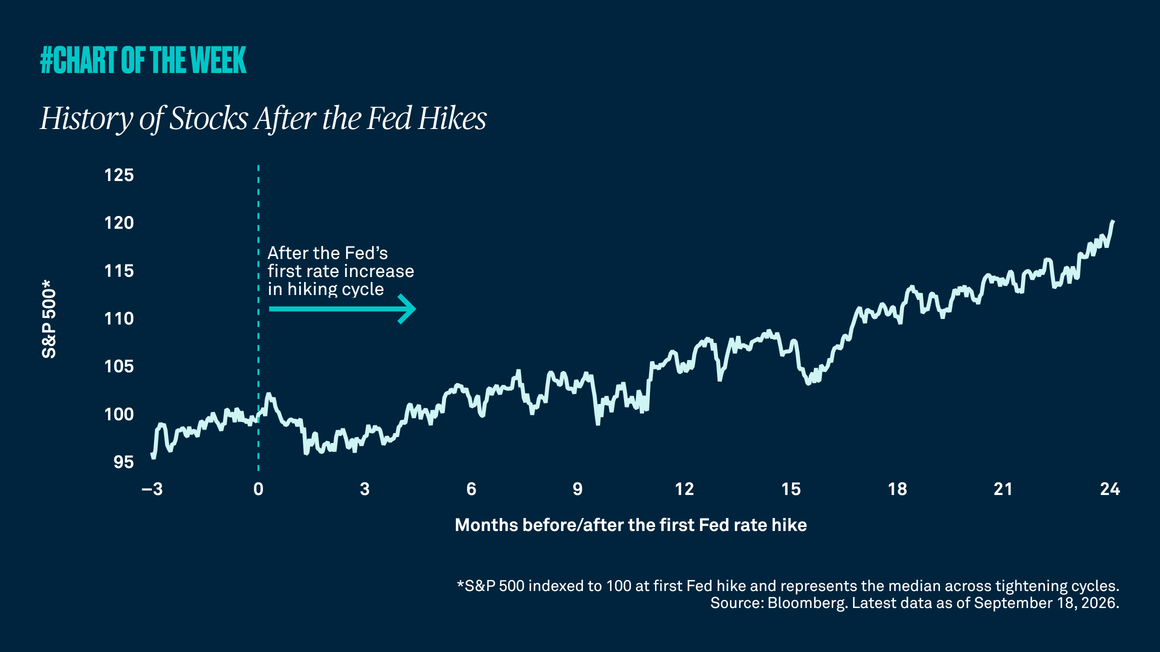
History of Stocks After the Fed Hikes
Article  |  Chart of the Week

Sticky inflation and resilient growth have revived monetary tightening, increasing the risk of higher-for-longer rates and near-term volatility. We still believe economic resilience and strong corporate profits should continue to provide a favorable backdrop for stocks, and would use periods of market weakness to add selectively to equities. Additionally, owning real assets can help hedge against inflation.

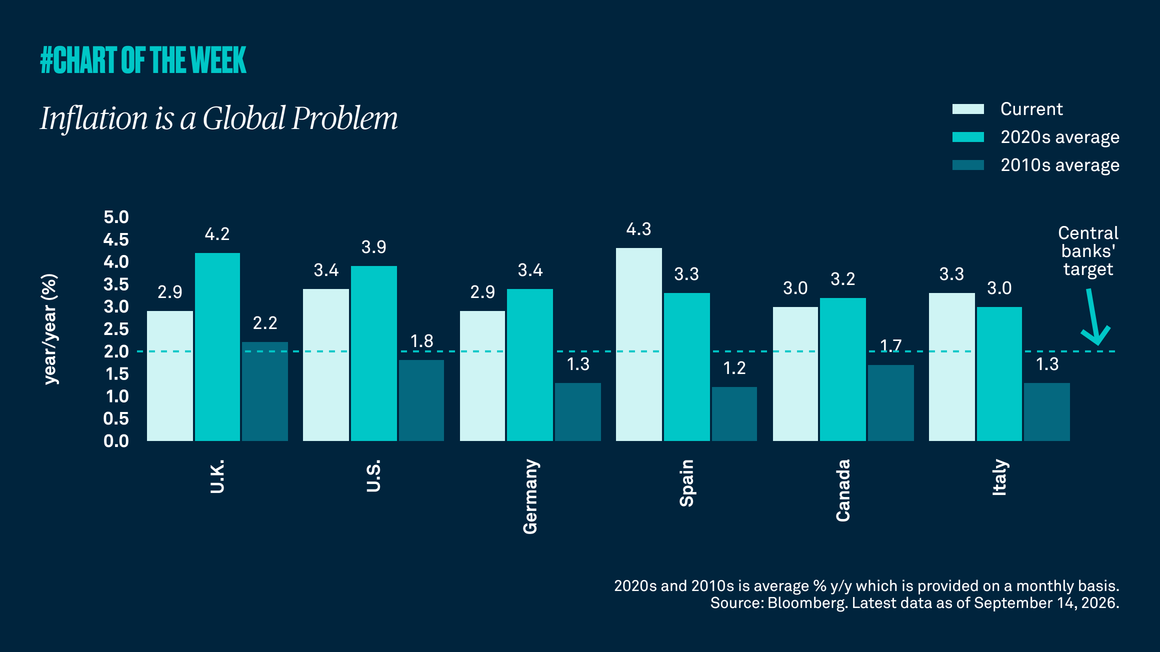
Inflation Is a Global Problem
Article  |  Chart of the Week

Resilient economic growth, sticky inflation driven by higher energy prices and continued geopolitical uncertainty are complicating the path back to central-bank price targets. We believe policymakers are likely to adopt a tightening bias but remain data dependent.

A Good Outlook for Global Earnings
Article  |  Chart of the Week

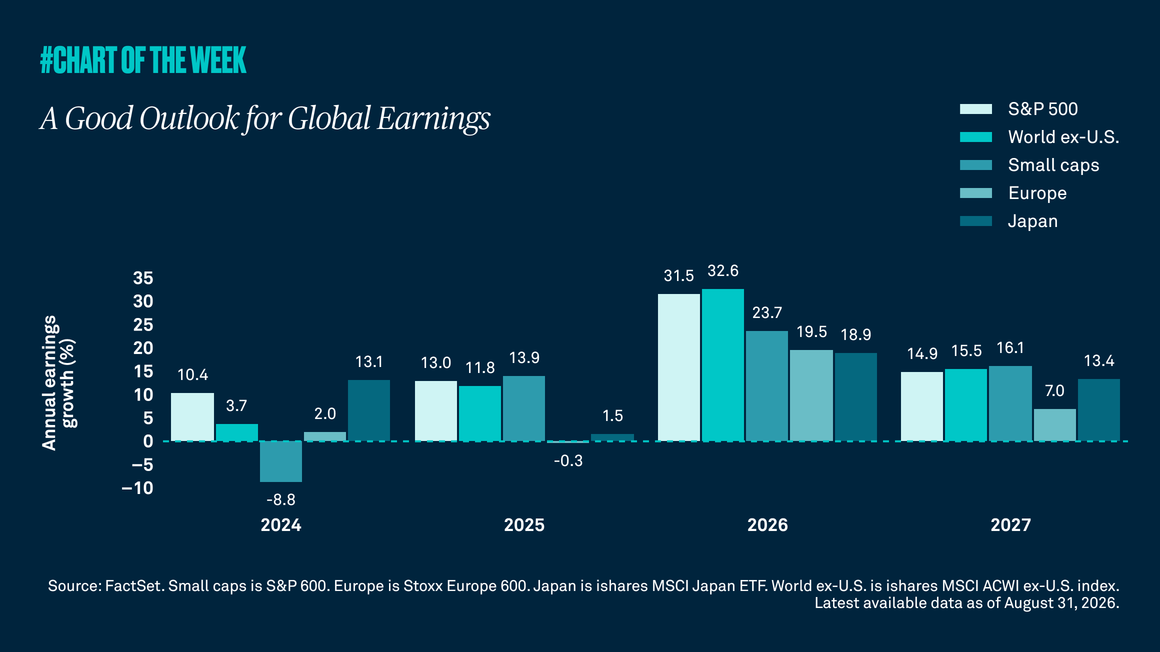
Global earnings growth has been strong this year, led by the U.S. and reinforced by improving profit growth across Europe, Japan and other major markets. While volatility may rise in the near term, above-average earnings and broader global participation remain supportive of global equities.

Past performance is no guarantee of future results. This material is provided for illustrative/educational purposes only. This material is not intended to constitute legal, tax, investment or financial advice. Effort has been made to ensure that the material presented herein is accurate at the time of publication. However, this material is not intended to be a full and exhaustive explanation of the law in any area or of all of the tax, investment or financial options available. The information discussed herein may not be applicable to or appropriate for every investor and should be used only after consultation with professionals who have reviewed your specific situation.


The Bank of New York Mellon, DIFC Branch (the “Authorized Firm”) is communicating these materials on behalf of The Bank of New York Mellon. The Bank of New York Mellon is a wholly owned subsidiary of The Bank of New York Mellon Corporation. This material is intended for Professional Clients only and no other person should act upon it. The Authorized Firm is regulated by the Dubai Financial Services Authority and is located at Dubai International Financial Centre, The Exchange Building 5 North, Level 6, Room 601, P.O. Box 506723, Dubai, UAE.


The Bank of New York Mellon is supervised and regulated by the New York State Department of Financial Services and the Federal Reserve and authorized by the Prudential Regulation Authority. The Bank of New York Mellon London Branch is subject to regulation by the Financial Conduct Authority and limited regulation by the Prudential Regulation Authority. Details about the extent of our regulation by the Prudential Regulation Authority are available from us on request. The Bank of New York Mellon is incorporated with limited liability in the State of New York, USA. Head Office: 240 Greenwich Street, New York, NY, 10286, USA.


In the U.K. a number of the services associated with BNY Wealth’s Family Office Services– International are provided through The Bank of New York Mellon, London Branch, One Canada Square, London, E14 5AL. The London Branch is registered in England and Wales with FC No. 005522 and BR000818.


Investment management services are administered by BNY Mellon Investment Management EMEA Limited, BNY Mellon Centre, 160 Queen Victoria Street, London EC4V 4LA. Registered in England No. 1118580. Authorised and regulated by the Financial Conduct Authority. Offshore trust and administration services are through BNY Trust Company (Cayman) Ltd.


This document is issued in the U.K. by The Bank of New York Mellon. In the United States the information provided within this document is for use by professional investors.


This material is a financial promotion in the U.K. and EMEA. This material, and the statements contained herein, are not an offer or solicitation to buy or sell any products (including financial products) or services or to participate in any particular strategy mentioned and should not be construed as such.


BNY Mellon Fund Services (Ireland) Limited is regulated by the Central Bank of Ireland BNY Mellon Investment Servicing (International) Limited is regulated by the Central Bank of Ireland.


Trademarks and logos belong to their respective owners.


BNY Wealth conducts business through various operating subsidiaries of The Bank of New York Mellon Corporation. BNY is the corporate name of The Bank of New York Mellon Corporation and may be used to reference the corporation as a whole and/or its various subsidiaries generally.


©2026 The Bank of New York Mellon. All rights reserved.

WI-1017422-2026-10-13

Let’s start a conversation.

SUBSCRIBE