
Buffer and bucketing strategies are popular in UK retirement income portfolios. They are intuitive, easy to explain and can give clients confidence during volatile markets.
Key takeaways
- Once a client begins drawing a retirement income, the nature of investment risk shifts to include both asset performance and the magnitude and timing of withdrawals from the retirement portfolio.
- To address withdrawal-associated (“sequencing”) risk and its impact on longer term income sustainability, one strategy is to bucket the portfolio’s assets in line with the retiree’s near-term, medium-term and long-term income needs.
- Buffer and bucketing structures have the advantage of being easy to explain and can give clients confidence during volatile markets, but effective implementation is crucial if they are to serve a retiree’s long-term interests.
In a previous article about managing sequence-of-returns risk in UK retirement portfolios, we drew attention to the Financial Conduct Authority’s (FCA) thematic review of retirement income advice (TR24/1).
In this article, the topic is again the decumulation stage; this time with a specific focus on “buffers and bucketing” strategies – strategies that seek to meet clients’ near-term income needs while also managing longer-term income sustainability. We highlight the risks they seek to address, the behavioural appeal of these strategies in a post-Consumer Duty environment and also some adviser survey findings.
The post-retirement shift in risk
The principle underpinning buffers and bucketing strategies is that the nature of investment risk shifts once a client reaches retirement and begins drawing an income. Longer-term income prospects become a function not only of asset performance, but of the magnitude and timing of withdrawals from the portfolio after the client reaches retirement. Large withdrawals early on in retirement, for example, can have a lasting negative impact if they occur at a time when capital values are depressed.
One solution to address this withdrawal (or sequencing) risk has been to include a cash buffer in the portfolio that provides for the client’s very near-term income needs. This buffer dampens the risk of having to sell assets at difficult moments and thereby jeopardise long-term income sustainability. A bucket strategy builds on this by dividing the portfolio according to an in-retirement time horizon: lower-risk assets for spending (withdrawals) in the short-to-medium near term, with higher-growth assets supporting later years.
The behavioural appeal of a buffer and bucketing structure
The appeal of a buffer and bucketing structure is illustrated in the chart below. A key advantage is its explanatory power: it creates a visible link between investment decisions and spending needs, making it easier to explain to clients why different parts of the portfolio are invested in different ways. For many clients, that clarity of structure is not simply helpful; it is central to their ability to stay committed to the plan when markets become unsettled. And, in a post-Consumer Duty environment, where client understanding and confidence matter more than ever, that is an important consideration.
Reasons for advisers to prefer bucketing strategies
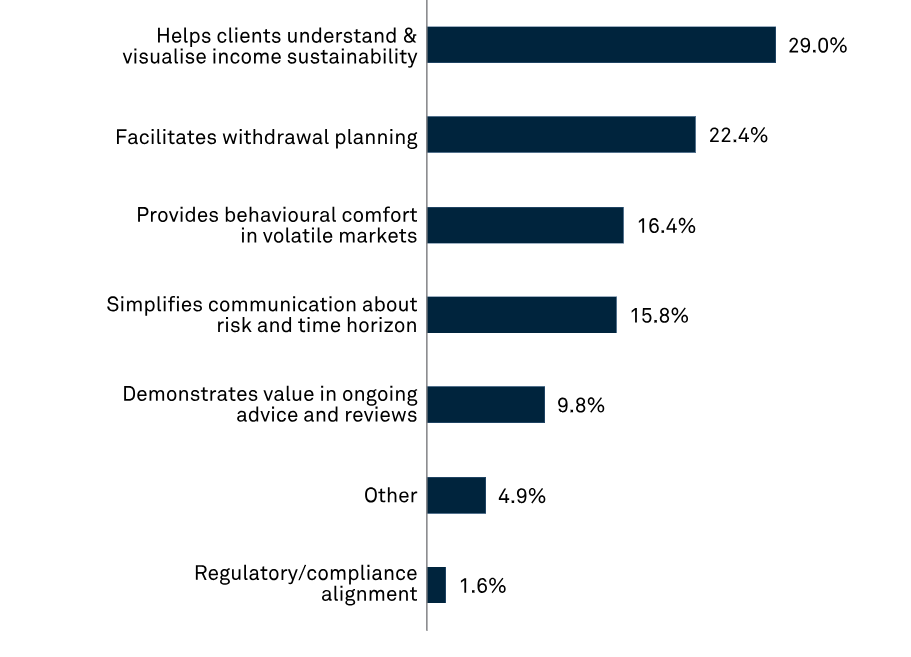
Source: BNY Investments/NextWealth 2026. “What are the main reasons you prefer the bucketing approach?” Research conducted by NextWealth for BNY Investments, based on responses to surveys with 207 retirement-focused financial advisers and 260 consumers of financial advice conducted in November 2025.
Intuitive appeal versus investment efficiency
That said, an intuitive structure and behavioural reassurance do not necessarily equate to investment efficiency. As the survey findings below illustrate, among some UK pension advisers, there are reservations as to whether the use of bucketing strategies improves outcomes for clients1.
Reasons why advisers do not use bucketing strategies
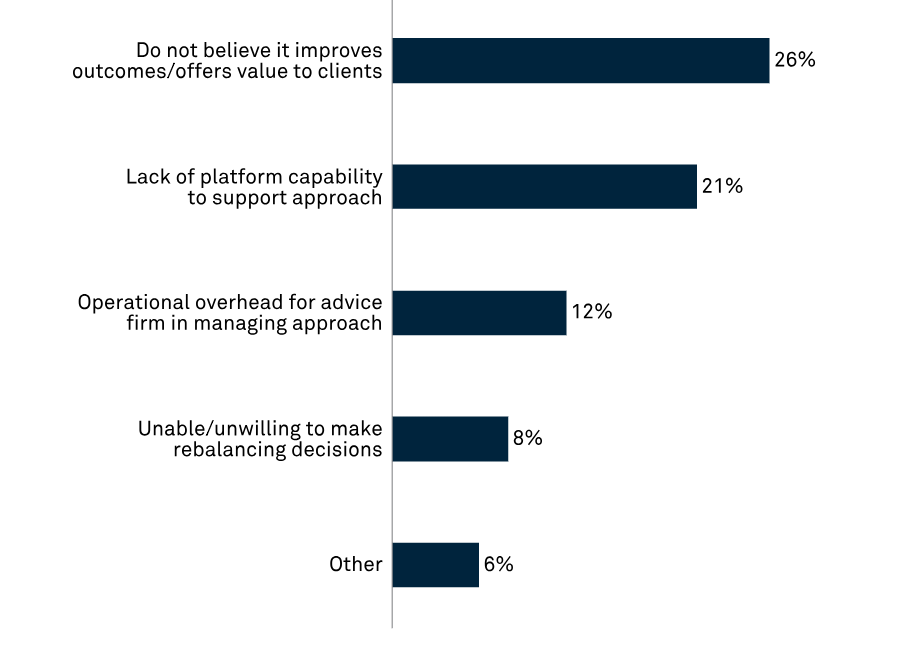
Source: BNY Investments/NextWealth 2026. “Are there any specific barriers preventing you from using a “bucket” approach to investment portfolio structure more frequently?”
The question that arises then is this: Does a structure that reassures clients also serve their long-term interests?
That is where implementation comes into the picture.
Our companion article “Making bucketing work: avoiding the pitfalls”, looks at several implementation issues, with some practical pointers.
1Research conducted by NextWealth for BNY Investments, based on responses to surveys with 207 retirement-focused financial advisers and 260 consumers of financial advice conducted in November 2025.
Important information
For Professional Clients only.
Any views and opinions are not investment advice or a research recommendation.
BNY is the corporate brand of The Bank of New York Mellon Corporation and may be used to reference the corporation as a whole and/or its various subsidiaries generally.
Issued in the UK by BNY Mellon Investment Management EMEA Limited, BNY Mellon Centre, 160 Queen Victoria Street, London EC4V 4LA. Registered in England No. 1118580. Authorised and regulated by the Financial Conduct Authority.
1708852 Exp: 30 June 2027