Please ensure Javascript is enabled for purposes of website accessibility Behind the Numbers: Q4 GDP
sg
en
institutional
institutional
false
true
Gathering data
Disclaimer Not Available

Behind the numbers: Q4 GDP

Behind the numbers: Q4 GDP

Gross domestic product undershot expectations last quarter, but the shortfall appears driven more by the temporary government shutdown than broad-based weakness. Consumer demand remains resilient, and with supportive fiscal policy, easing financial conditions and a steady labor market, the outlook points to a modest acceleration in economic activity this year. 
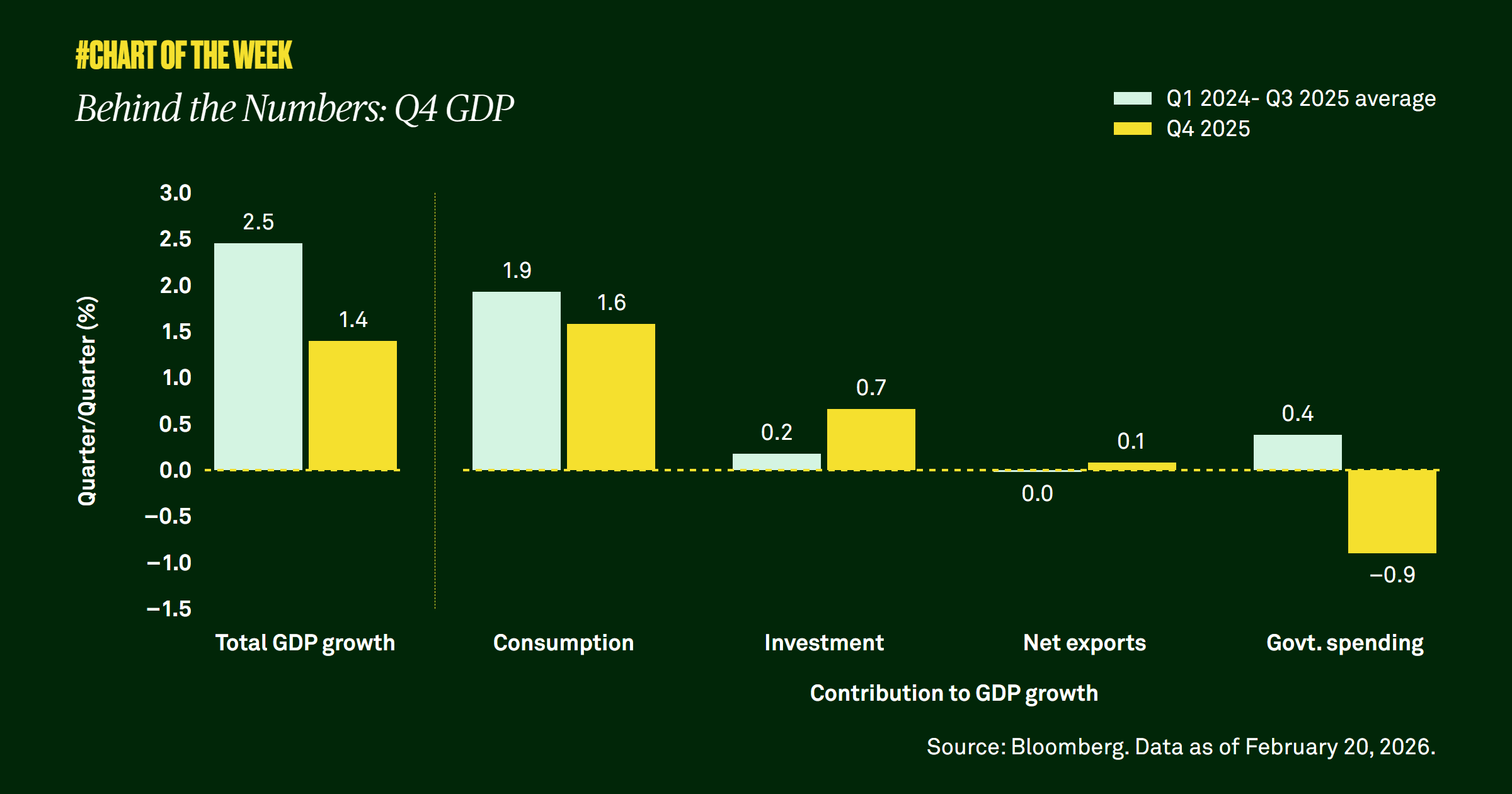

Last week’s fourth quarter gross domestic product (GDP) report came in at annualized pace of 1.4%, disappointing many Wall Street analysts who had anticipated 2.8%. For some investors, the news renewed concerns about an economic slowdown.

Growth was indeed softer than the 3% or more recorded in the previous two quarters, but the drivers of the miss are clear. The biggest drag was government spending at −0.9%, an unusually weak contribution that suggests the fourth quarter could have ended near 2.3% — above trend — absent the 43‑day government shutdown.

Consumption, the largest driver of GDP with a 70% share, slowed slightly to 1.6%, yet it remains resilient and in line with the average since 2024. We believe fiscal stimulus, lower interest rates and a steady job market will support household balance sheets and spending going forward.

Taken together, the evidence suggests the government shutdown — rather than a broad slowdown — drove the shortfall. Consensus GDP is 2.5% this year, and our target of 2.3% closely matches, reflecting our confidence in the economy amid a steady job market and sustained consumer spending.
RELATED CONTENT
What happens on bad days?
Chart of the Week | Macroeconomic

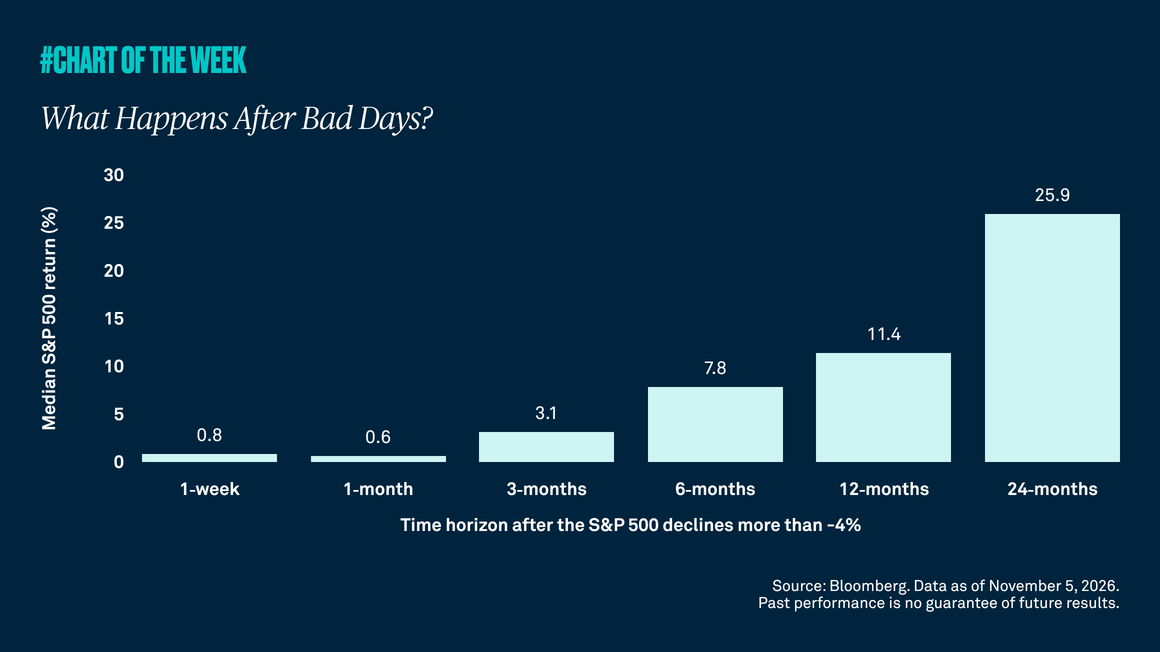
The recent one-day equity selloff reflected weaker sentiment amid election uncertainty and concerns that slower artificial intelligence spending could weigh on growth and earnings. Still, pullbacks of this magnitude have often been followed by solid returns, and we remain constructive given the economy’s resilience and AI’s long-term potential.

Play the long game
Chart of the Week | Macroeconomic

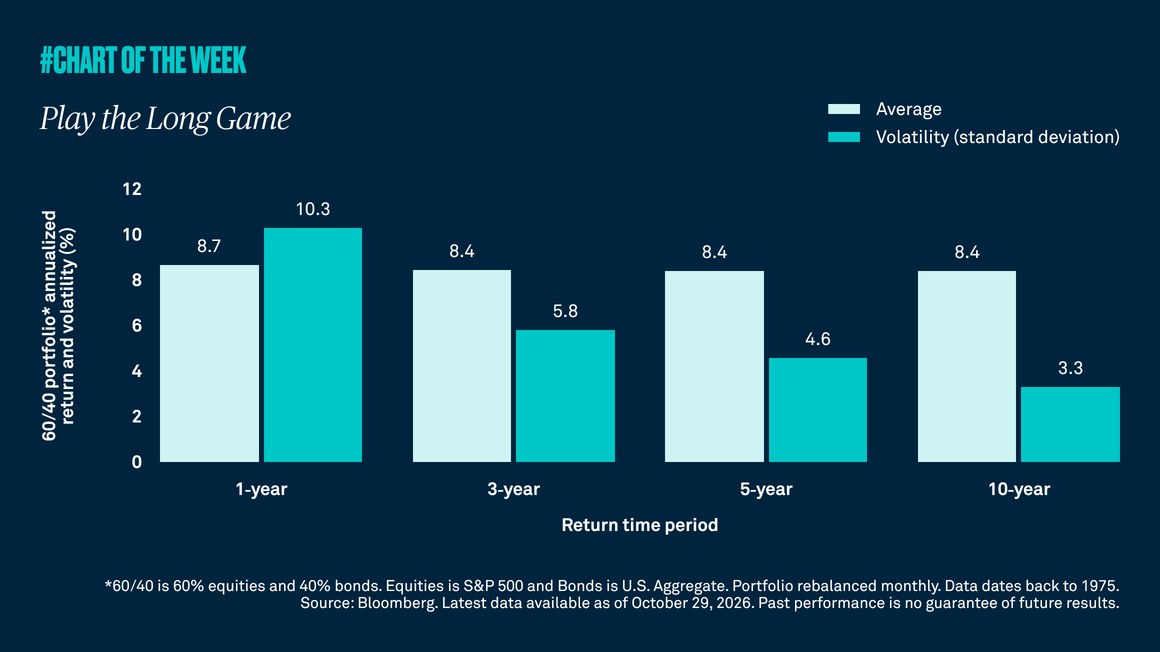
When it comes to investing, time matters. While headlines and short-term perspectives can lead investors to try and time the market, investors have historically been rewarded by playing the long game. Rather than overreacting to market noise, investing over longer time periods can help smooth the ride without sacrificing returns. The lesson: stay diversified and invested for the long term.

Contained contagion?
Chart of the Week | Macroeconomic

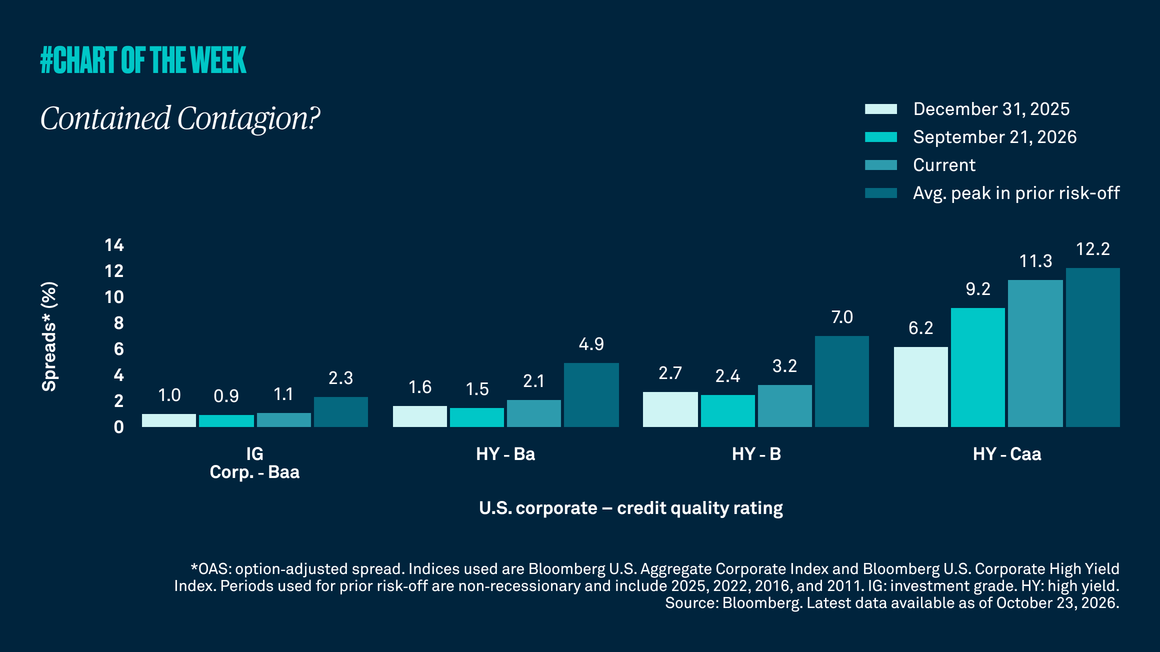
U.S. high yield credit spreads have widened year to date, reflecting greater investor caution about perceived default risk. The move also raises concerns about possible credit contagion. However, because spread widening has been concentrated in the lowest-quality issuers rather than higher-quality issuers, we don’t anticipate broader market stress.

Can the bull run in corporate margins continue?
Chart of the Week | Macroeconomic

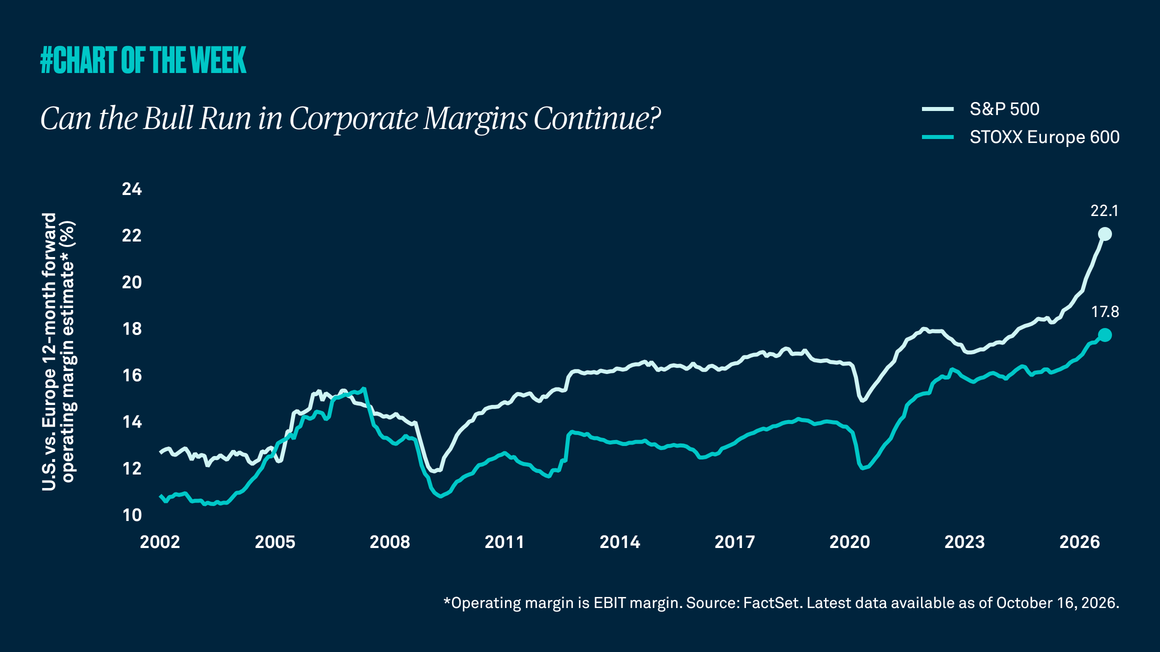
Higher inflation and elevated interest rates typically weigh on corporate profitability, yet corporate margins continue to climb to record highs. While that strength is evident both in the U.S. and abroad, U.S. outperformance versus Europe is now the widest on record. Stronger margins have helped contribute to better-than-expected earnings and reinforce U.S. equity leadership. The question now is whether that strength can persist?

Gathering data
Disclaimer Not Available

CONTACT US  |  +65 6432 0222