Please ensure Javascript is enabled for purposes of website accessibility History of Stocks After the Fed Hikes
master-copy
fr
actualites-et-analyses
false
true

History of stocks after the fed hikes

History of stocks after the fed hikes

As the BNY Strategic Bond Fund marks its fifth anniversary, we reflect on a period of significant change across global fixed income markets.
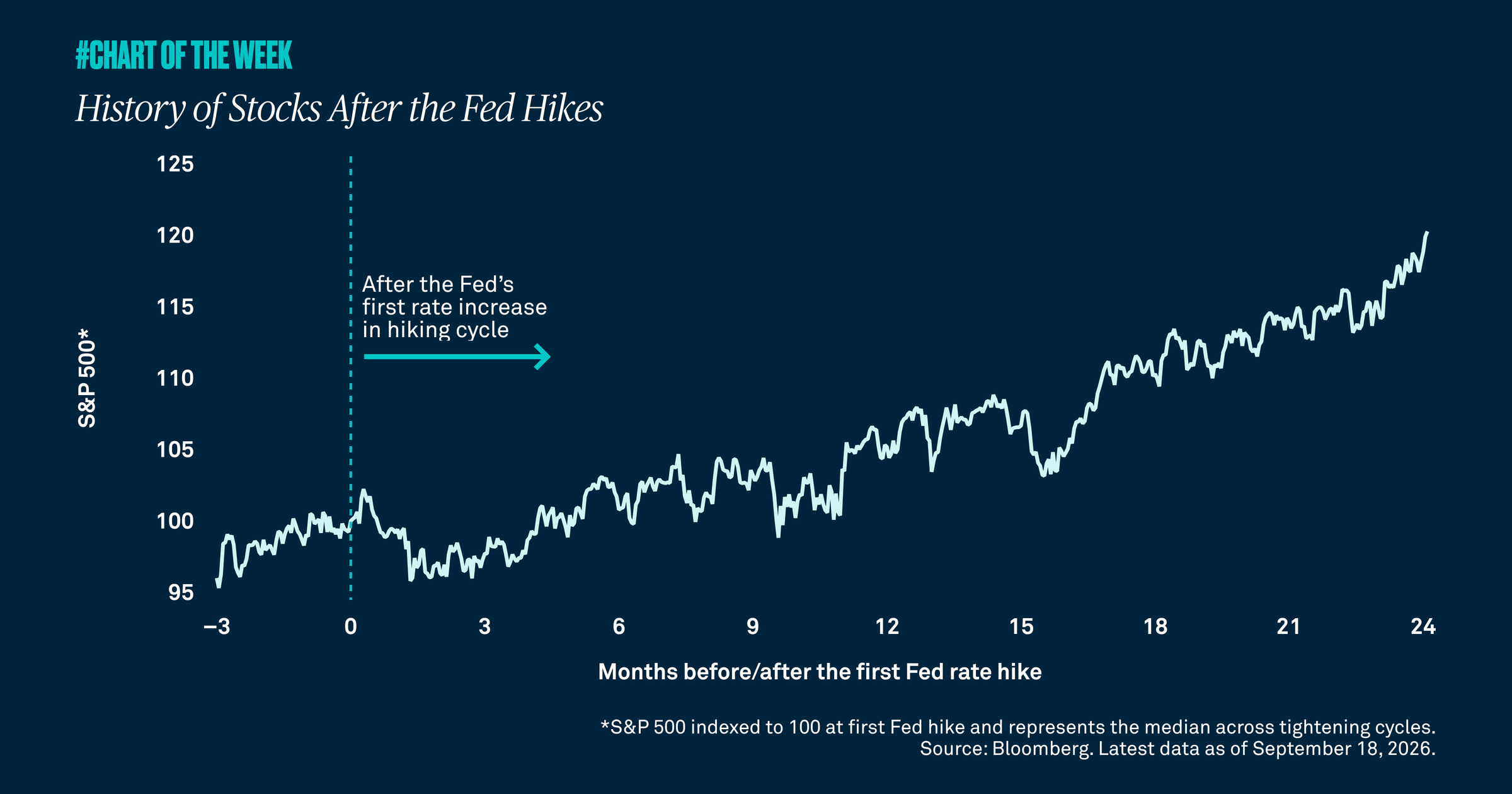
 

Sticky inflation and resilient growth have pushed the Federal Reserve back into a tightening mode for the first time in three years. Last week’s policy announcement suggested that more hikes may lie ahead, raising the risk of higher-for-longer rates. Historically, equities often struggle in the first few months of a hiking cycle as markets adjust to tighter financial conditions, then begin to recover as earnings and growth expectations remain intact.

With yields elevated, policy uncertainty still a factor and midterm election season approaching, near-term volatility could persist, even if the broader economic backdrop remains constructive.

Because we do not expect a recession and continue to foresee resilient earnings growth, we believe periods of market weakness should be viewed as buying opportunities. In addition, we recommend allocating to real assets to hedge against structurally higher inflation and to benefit from the ongoing capital expenditure cycle, which is helping support resilient growth and, in our view, still offers further upside.
AUTRES ARTICLES ASSOCIÉS
Inflation is a global problem
Chart of the Week | Macroéconomique

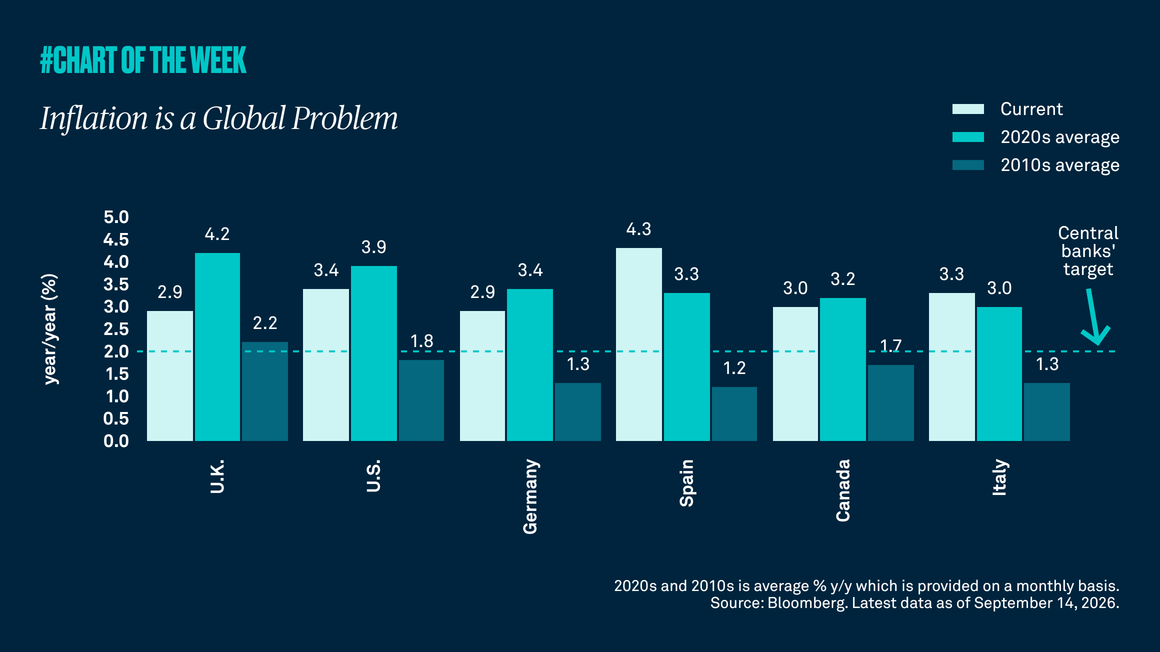
Resilient economic growth, sticky inflation driven by higher energy prices and continued geopolitical uncertainty are complicating the path back to central-bank price targets. We believe policymakers are likely to adopt a tightening bias but remain data dependent.

A good outlook for global earnings
Chart of the Week | Macroéconomique

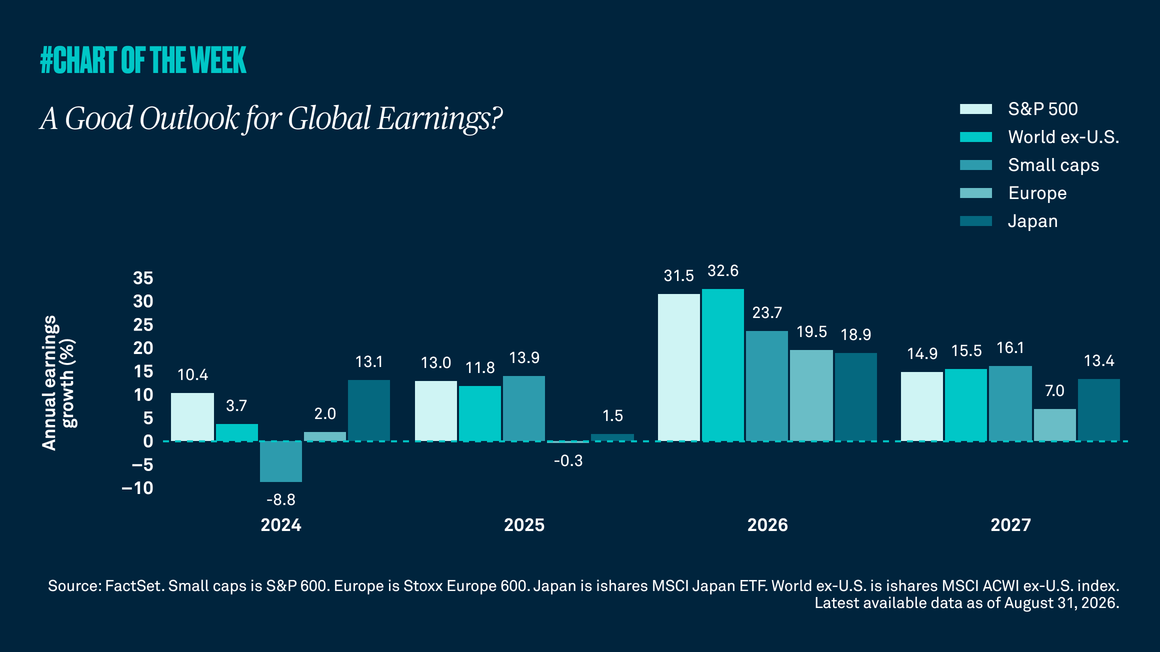
Global earnings growth has been strong this year, led by the U.S. and reinforced by improving profit growth across Europe, Japan and other major markets. While volatility may rise in the near term, above-average earnings and broader global participation remain supportive of global equities.

In a real regime shift?
Chart of the Week | Macroéconomique

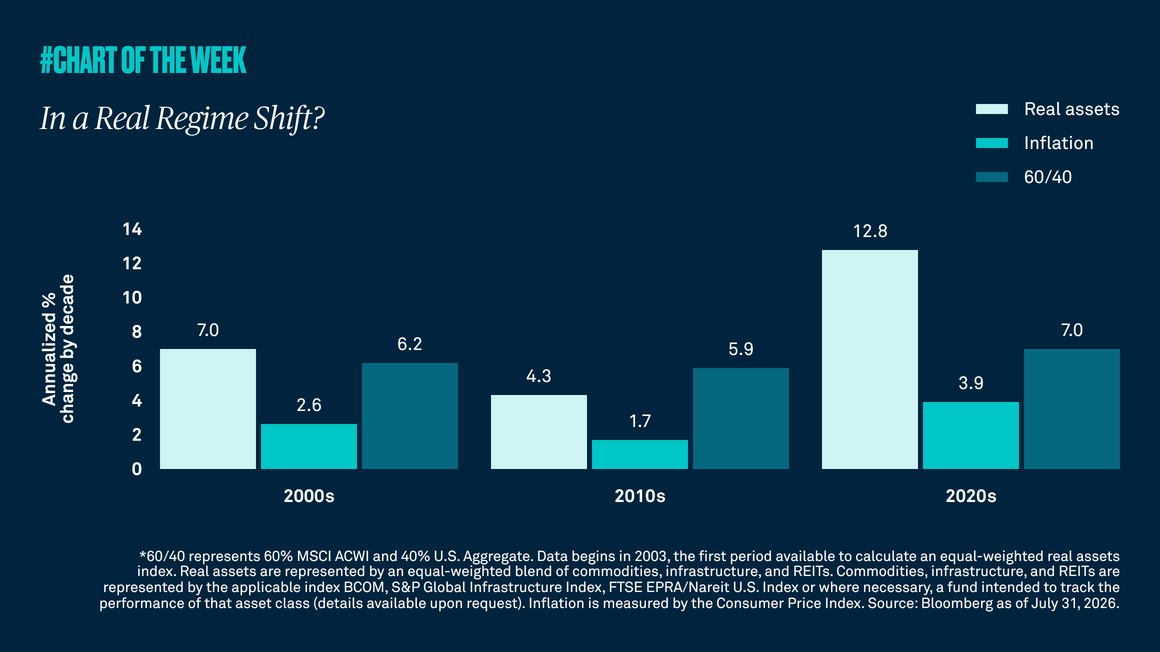
Higher inflation has been a dominant theme of the current decade. In addition to price shocks, it is being shaped by secular investment trends in infrastructure, defense spending, onshoring and the ongoing AI buildout. These structural changes reinforce the case for looking beyond traditional 60/40 portfolios to include real assets as a source of diversification and return potential in portfolios.

Getting real with real assets
Chart of the Week | Macroéconomique

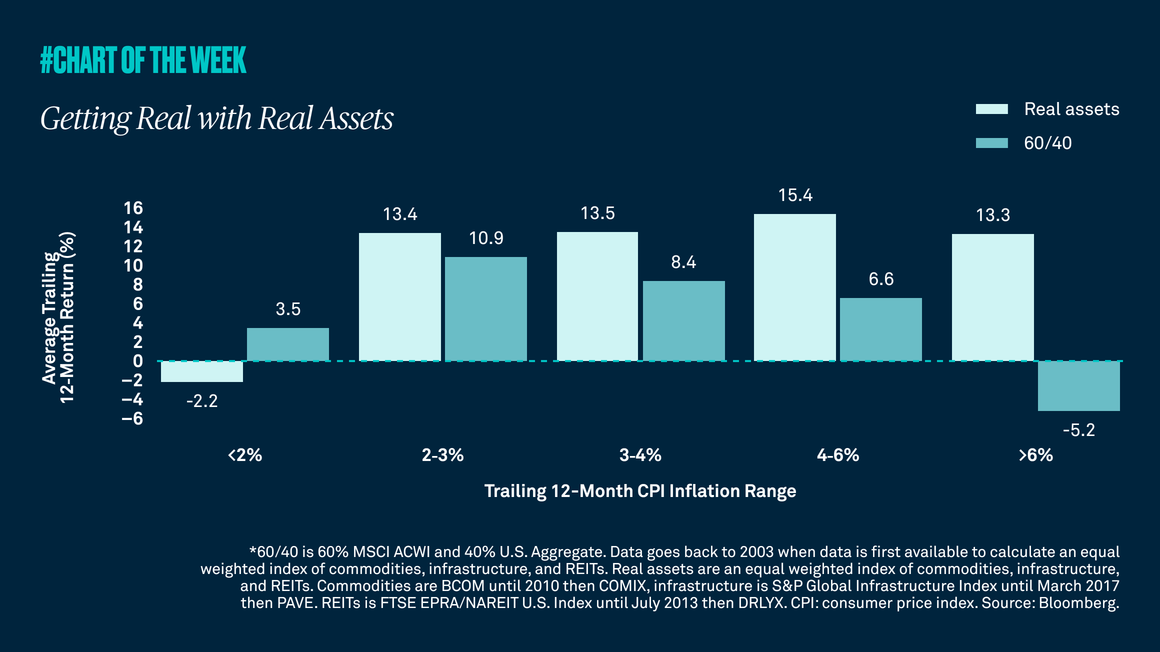
Inflation appears to have transitioned from its pre-Covid average of 2% to a stickier point closer to 3%, and we do not expect a near-term return to prior levels. In this environment, we believe real assets, such as commodities, infrastructure and REITs, can provide inflation protection, diversification and return potential.

Gathering data
Disclaimer Not Available